There is a palpable difference between a team that wins because the puck happened to bounce their way, and a team that wins because they have finally figured out how not to lose.
For the better part of a decade, the Detroit Red Wings have been searching for that distinction. But this season, they seem to have figured it out. Following a gritty 3-2 victory over the New York Islanders at Little Caesars Arena, the Red Wings sit alone atop the Atlantic Division standings.
It is a position that seemed mathematically improbable just a year ago. At this same juncture last season, Detroit was languishing with a 13-17-4 record, looking more like a lottery team than a contender. Today, at 19-12-3, they aren’t just scraping by; they are dictating terms.
While the standings are important, the underlying story here isn’t the points—it’s the process. This surge, capped by a successful road trip where they took nine of a possible 12 points, suggests that the “rebuild” rhetoric can finally be shelved. Under head coach Todd McLellan, the Red Wings have undergone a metamorphosis that is less about flashy talent and more about mental and tactical maturity.
The Psychology of Winning
Talent has rarely been the sole issue in Detroit recently; closing out games has. The most striking improvement this season is the team’s mental fortitude, a buzzword often thrown around in locker rooms but rarely quantified. McLellan made game management a priority in training camp, demanding the team harden themselves physically and mentally. We are now seeing the dividends.
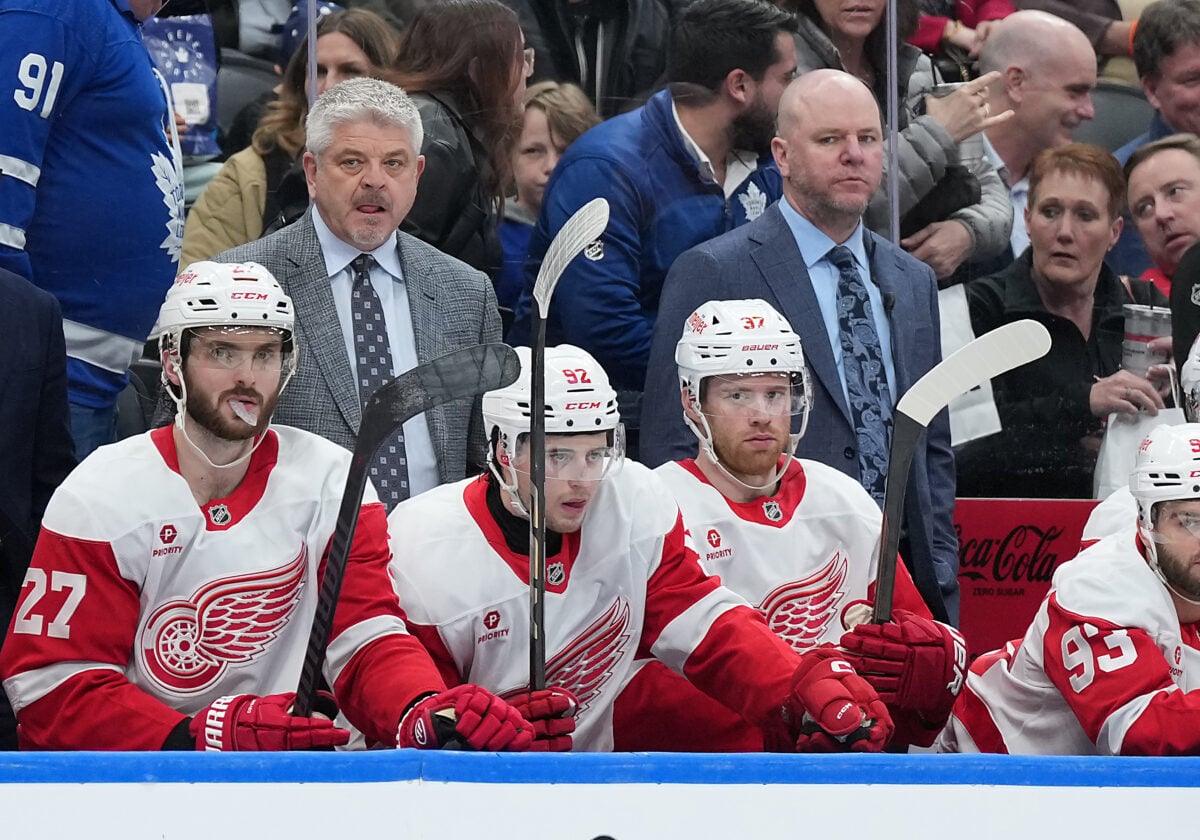
Take the Dec. 13 4-0 win against the Chicago Blackhawks. In previous years—and even earlier this season, like the near-collapse against the Calgary Flames a few days earlier—a four-goal lead was a precarious thing for this group. Against the Flames, they squandered momentum and nearly lost the game. Against Chicago, however, the approach was clinical. They managed the puck, kept shifts short, and suffocated the neutral zone.
Related – Red Wings Still Need to Add a Defenseman
This new composure was perhaps most evident against the Islanders Tuesday night. Historically, New York has bullied Detroit, beating them twice previously by a combined score of 12-2. When the Islanders tied the game at 2-2, the old Red Wings would have likely folded. Instead, as Alex DeBrincat noted post-game, there was no panic on the bench. They didn’t crumble when the equalizer went in, and they stayed patient when the Islanders pulled their goalie.
Captain Dylan Larkin described it as an ability to “hold down the fort.” It’s a subtle shift, but for a knowledgeable observer, it is the difference between a playoff hopeful and a contender.
System Over Self
While the mental shift is crucial, the tactical overhaul under McLellan has been the engine of this turnaround. The Red Wings are simply playing a smarter brand of hockey.
The most noticeable change is the aggression of the five-man forecheck. McLellan has implemented a system that emphasizes controlled aggression and strategic positioning. This isn’t just running around hitting people; it’s about taking away time and space. The result? Opponents are averaging just 27 shots per game. By suppressing shot volume, Detroit is controlling the pace of play and maintaining possession far more effectively than in years past.
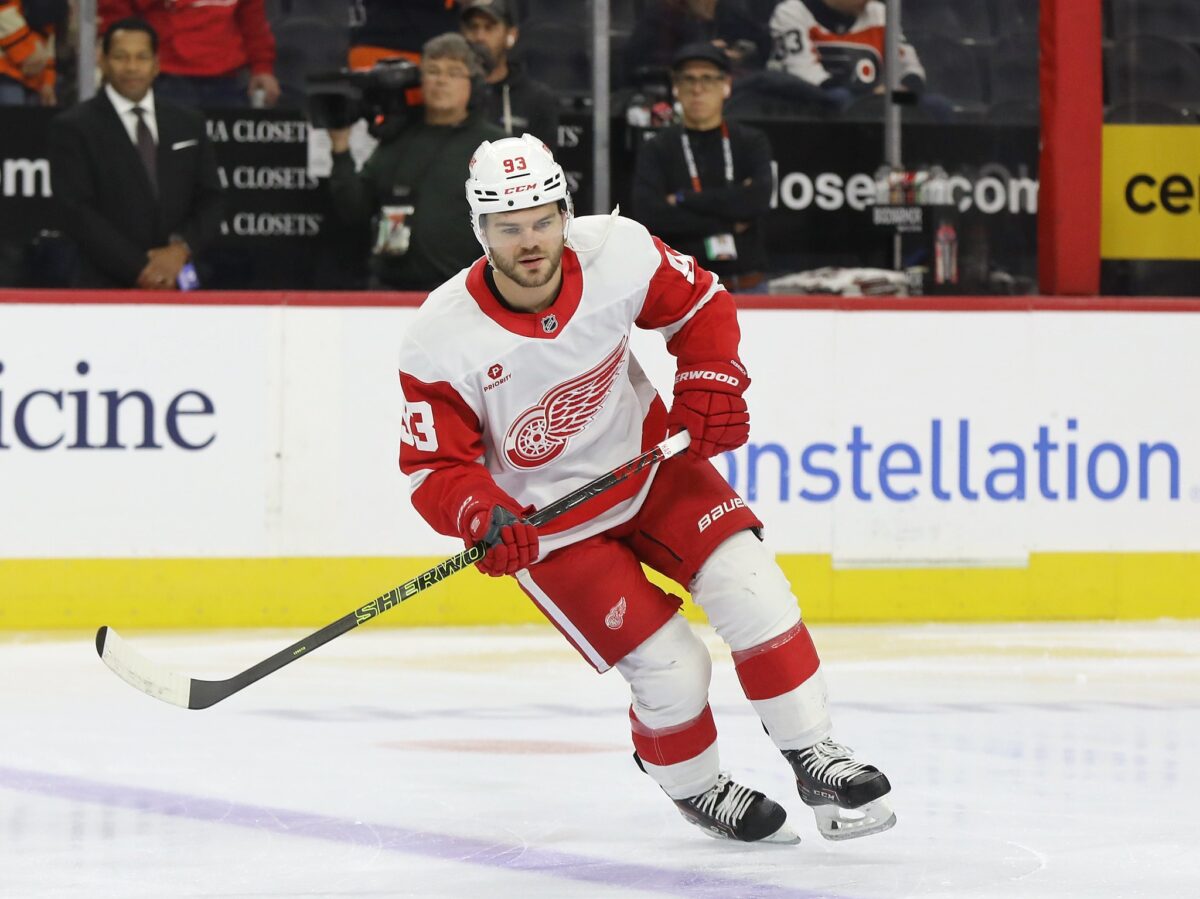
The metrics back the eye test. The team’s shot management has swung from poor to the top half of the league.
Then there is the power play. Their season average of 23.8% ranks eighth in the NHL. That is elite territory. When you can rely on your special teams to bail you out or extend a lead, 5-on-5 play becomes much less stressful.
Depth Charges and a Stabilized Crease
Individual brilliance is still required to win in this league, and Detroit is finally getting contributions from throughout the lineup. The dependence on one line to do all the heavy lifting appears to be fading.
Related – Worst Trades in Red Wings History
The coaching staff’s decision to move Andrew Copp to the second-line center spot, sandwiched between Patrick Kane and DeBrincat, has sparked a secondary scoring resurgence. In seven of the past eight games, at least one member of that trio has found the back of the net. This depth forces opposing coaches to pick their poison, opening up more ice for the Larkin line.
On the back end, the maturation of rookie Axel Sandin-Pellikka has been a revelation. Young defensemen often struggle to balance offensive instincts with defensive responsibility, but “ASP” is currently plus-7 in his last five games with five points to boot. McLellan noted that the rookie’s improved defending has actually conserved his energy for offense, creating a virtuous cycle that makes the Wings much harder to defend against.

Of course, there is John Gibson. The goaltender has been the rock the team needed, winning six consecutive starts and allowing only 12 goals in that span. You can have all the tactical discipline in the world, but you still need a goalie to make the big save when the system breaks down. Gibson is doing exactly that.
The Real Test Begins Now
The Red Wings have undoubtedly turned a corner. They survived a grueling six-game road swing with a 4-1-1 record and have earned their place at the top of the Atlantic. But the NHL season is a marathon, not a sprint.
The schedule now offers a new challenge: five of the next seven games are at home, but four of those are against teams currently holding playoff positions. This homestand will serve as the true litmus test. Can they maintain this level of defensive discipline and mental poise against the league’s elite, night in and night out?
For the first time in a long time, the answer seems to be leaning toward “yes.” The Red Wings aren’t just hoping to win anymore; they expect to. That makes them dangerous.
AI tools were used to support the creation or distribution of this content, however, it has been carefully edited and fact-checked by a member of The Hockey Writers editorial team. For more information on our use of AI, please visit our Editorial Standards page.
