Yesterday, we looked at some of the younger Calgary Flames’ players who are primed to take a step forward during the 2026-27 season. But for every breakout candidate, there’s usually another player facing the challenge of maintaining, or even matching, the production they posted the year before, especially when they will be on a team that is expected to finish near the bottom of the standings again.
Regression isn’t always a bad thing. Sometimes it’s simply the result of unsustainably high shooting percentages, career-best seasons, or favourable circumstances that are difficult to repeat. Other times, age, injuries, or changing roles can lead to a dip in performance. As the Flames prepare for another disappointing season, let’s set some expectations for players who could take a step back this season.
Morgan Frost
After finishing last season with 22 goals, his first time crossing the 20-goal mark in a season, and 43 points for the Flames, he played 1,270 minutes across all 82 games last season. Considering how little the Flames had offensively, it was a very impressive season from Morgan Frost.
After turning 27 back in May, it would be reasonable to expect him to maintain, or even build on, this production, considering he is getting to the age where most would consider him in his ‘prime’. Which is fair, and again this season, as the Flames’ best centre, he’ll likely be given every opportunity to replicate it, still playing top-line minutes.
But my concerns with Frost are not deployment-related; rather, they’re concerning the sustainability of his finishing.
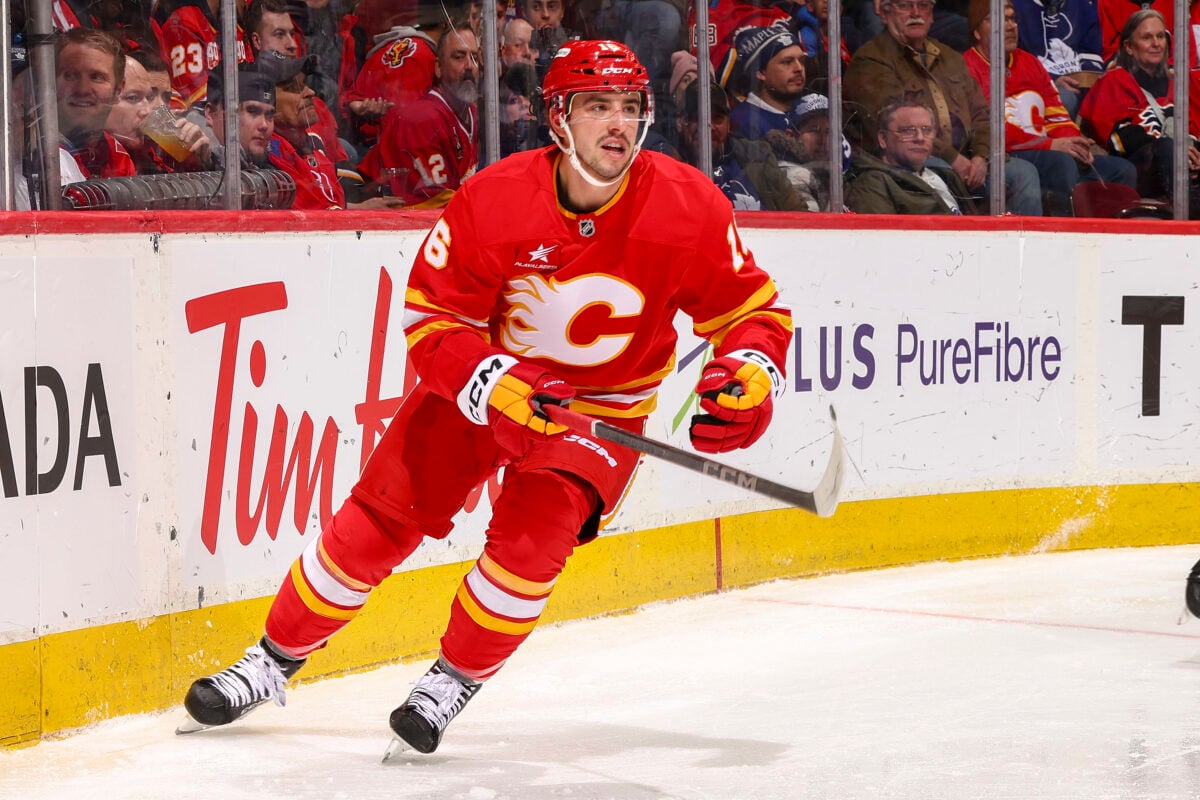
In 2025-26, he finished the season with a 15.71% shooting percentage, which was 3.45% higher than his shooting percentage when he scored his previous career high of 19 goals in 2022-23 and was 5.3% higher than the league average last season.
This was also only Frost’s third time crossing the 40-point mark in his career. His career high of 46 points was also set in 2022-23, when he had an individual point percentage (IPP) of 68.66%, followed by 41 points on a 73.21% IPP in 2023-24. Last season, when he crossed the 40-point mark, he did so on an IPP of just 58.11%, which is more in line with his play-driving numbers from last season, when he had 37 points split between his time with the Flames and the Philadelphia Flyers.
The other piece of this, which I’ll admit is much more speculative, is that last season Frost led the Flames in powerplay goals and points. With the Flames bringing in Simon Nemec, and expecting Matvei Gridin and Zayne Parekh to take on bigger roles, while also hopefully having a healthy Jonathan Huberdeau back in the lineup for the season, there will be plenty more mouths to feed on the man advantage this season; I don’t see their powerplay running through Frost the way it did last season.
My projection is Frost’s finishing regresses towards his 82-game career average of 16 goals this season. He could hit the 40-point mark with assists, but that will depend on who’s around him and if they can put the puck in the net. But between the inflated shooting percentage and somewhat underwhelming play driving, Frost’s regression will come in the goal-scoring department.
Yan Kuznetsov
Before analyzing the numbers, I thought Yan Kuznetsov was in a great spot to build off his rookie season with the Flames. However, there is plenty of reason to be concerned when looking at the underlying numbers.
According to All Three Zones’ advanced analytics, he graded among the worst puck movers in the NHL (from ‘All Three Zones‘, Player Cards, July 23, 2026). This led to the Flames often being hemmed into their own zone, being unable to get up the ice cleanly with Kuznetsov on the ice, which led to him ranking in the 99th percentile in time spent in the neutral zone and below the 50th percentile in percentage of time spent in the defensive zone (via NHL Edge).
The reason his rookie season had me fooled is that all the tools are visible. He skates at an above-league-average rate and is active while out there. He finished second on the Flames in blocked shots, was semi-physical and recorded a shot that topped 100mph last season, which ranked in the top three percent of the hardest shots taken last season.
With the toolkit full, there is reason to believe he could take a step forward. But I don’t see him getting the chance to again this season. With the Flames adding Nemec to the equation and Parekh surely going to take much more ice than he did last season and possibly sliding over to the left side, Kuznetsov will get pushed down the lineup here.
I don’t see him averaging close to the 20 minutes per game he got in last season. This season he’ll be the fifth/sixth defenseman rather than a top-four guy. However, if the puck moving doesn’t improve, there is potential for him to fall out of the rotation for a guy like Hunter Brzustewicz.
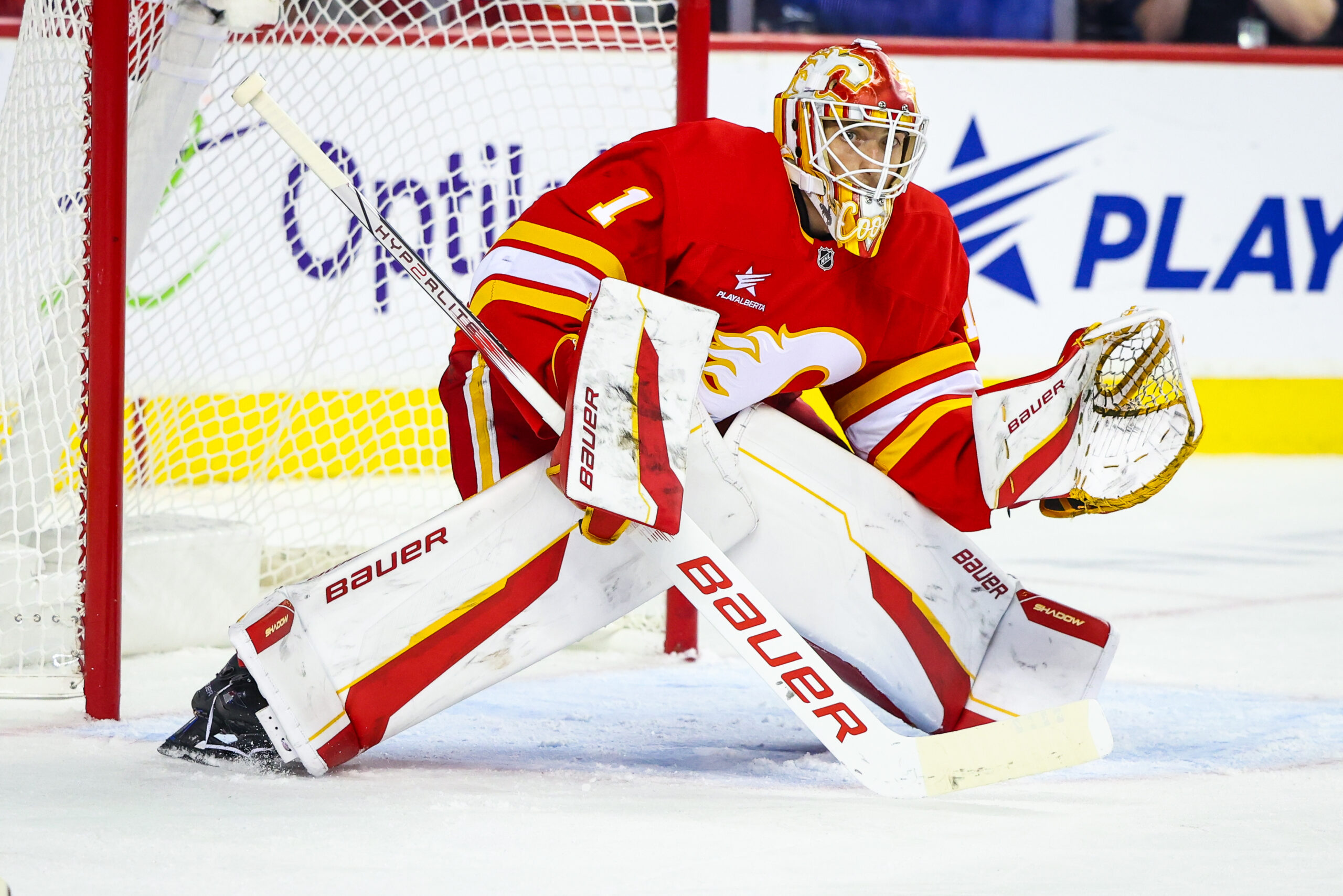
Devin Cooley
This one pains me to say. Devin Cooley quickly became a fan and media favourite with his outgoing personality and his wild and well-articulated thoughts in the various media appearances throughout last season.
Last season was Cooley’s first full season in the NHL. He finished the season with a .909 save percentage, which was the 9th-best rate in the NHL among goalies to play 500 minutes or more. He also ranked among the top-10 goalies in saves and goals saved above expected per 60 minutes.
With that being his first full season in the league, there isn’t much to work off of to say he can’t replicate this season, and I don’t want to be the one to doubt his work ethic, as he has overcome every obstacle in his hockey career up until this point.
The only reason I am thinking we see some regression next season is his high-danger save percentage, which sat at .858 after 2025-26, being the third-best rate among qualified goalies. He was also being forced to save the fourth-most high-danger shots per 60 minutes.
The Flames expected to be just as bad defensively, if not worse, next season. It’s hard to see him reproducing these high-danger save percentages when the results of those chances are inherently random and can often be unsavable.
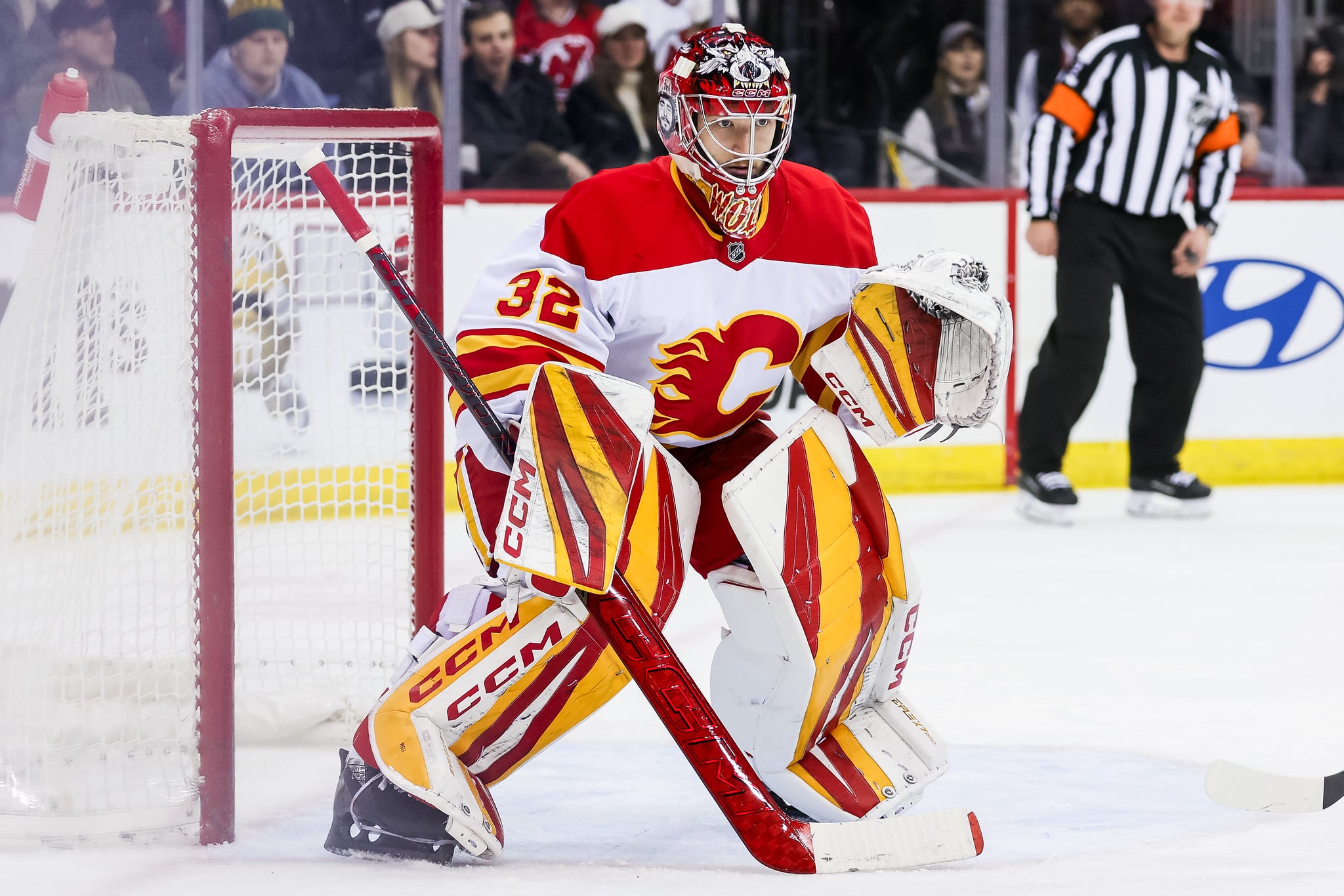
Look at Dustin Wolf, for example; in his rookie season, he finished with a .834 high-danger save percentage, but last season finished with .797, which was the main reason his goals-against average spiked nearly a quarter goal per game in 2025-26, with his rookie season and 2025-26 total save percentages only being .001% different.
I am not concerned that Wolf will fall off a cliff and be unusable at the NHL level by any means. I think it’s necessary to reset expectations so that fans aren’t expecting another season when his numbers rank right alongside the best goalies in the NHL. If his numbers regress toward the league average this season, there isn’t reason to panic. Even at the league average, you can live with that from your second goaltender.
The Bottom Line
Regression is a natural part of the NHL, particularly for a team still in the middle of a rebuild. Frost, Kuznetsov, and Cooley don’t need to have disastrous seasons to take a step back—they’re all coming off season-long performances that will be difficult to repeat for various reasons.
The Flames will still need all three to be important contributors in 2026-27, but if their production slips while younger players continue to develop and take on larger roles, that may ultimately be a worthwhile tradeoff for the organization’s long-term future.
But hey, if the breakout candidates we talked about previously take off in a big way, they could prevent any regression from these guys. We’ll start to find out when the season kicks off in late September.
All stats via Natural Stat Trick unless specified.
Free Newsletter
Get Calgary Flames coverage delivered to your inbox
In-depth analysis, breaking news, and insider takes - free.
Subscribe Free →