


The Toronto Maple Leafs had their chances against the Los Angeles Kings, and for stretches, they looked like a team in control. But hockey, as it often does, is a game of fine margins. One moment of retreat, one lapse in communication, and what felt like a comfortable lead can vanish in an instant.
Related: Kings Defeat Maple Leafs 4-3 in OT
Thursday night’s 4-3 overtime loss was exactly that kind of game: encouraging flashes buried under costly errors. Let’s unpack what worked, what didn’t, and what the Maple Leafs need to carry forward.
3 Positives for the Maple Leafs From the Kings Game
There were positives in this game, and here are three.
Maple Leafs Positive One: McMann Sets the Tone
Bobby McMann was a revelation in the first period. His work ethic, attention to detail, and team-first mentality were evident in both Maple Leafs goals. On the first, he picked up a loose puck at the blue line, skated the length of the ice, and finished like a player fully aware of his tools. On the second, his persistent pressure created the turnover that ignited the play.
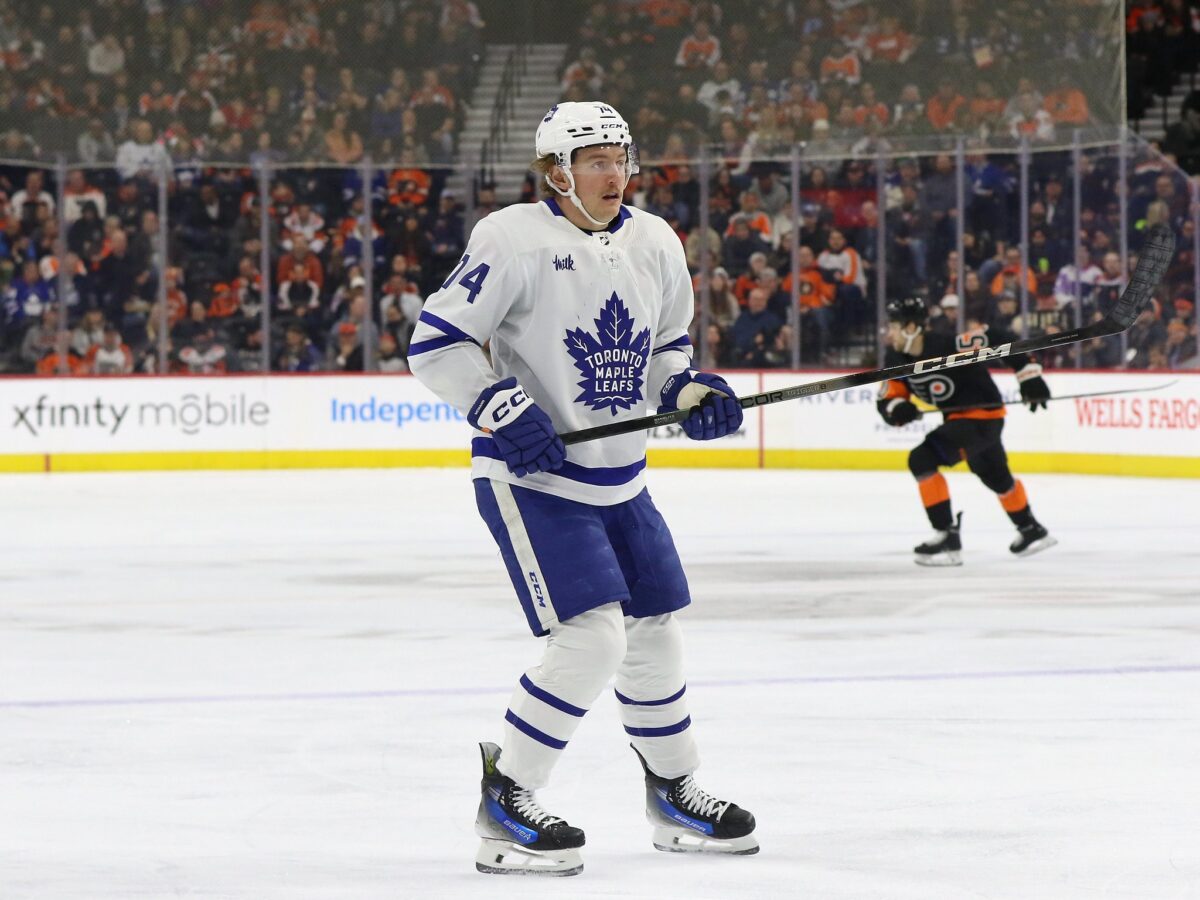
Even when he wasn’t on the scoresheet, McMann was setting conditions for his team’s success. He was winning puck battles, beating potential icings, and giving his teammates the best chance to start shifts with possession. For a team that has struggled with consistency, let’s hope that kind of effort is contagious.
Maple Leafs Positive Two: Defensive Structure Holds Early
With Auston Matthews out, the Maple Leafs needed to simplify. And for a period, they did just that. Morgan Rielly, Max Domi, and the rest of the defensive group made smart reads, kept the middle quiet, and let the Kings fire from the outside, where the goaltending could handle it.
Related: Maple Leafs’ Defence Could Benefit From a Change of Personnel
It was low-event hockey, but sometimes that’s exactly what a team needs to survive. You had to know that head coach Craig Berube loved it. Last night, for a time, they didn’t try to impose a game they couldn’t; they played what was in front of them.
Maple Leafs Positive Three: John Tavares Continues to Score
Tavares, at 34, is still finding new ways to impact the game. He won puck battles, found net-front space, and scored timely goals. Against the Kings, he reminded everyone why he’s still one of the league’s most reliable forwards.

His third-period goal gave the Maple Leafs a crucial lead and could have been the springboard to a strong finish. At the time, it sure felt like it. Then the second half of the game happened.
Even at this stage of his career, Tavares is teaching the team — and fans — that craft and willpower never go out of style.
3 Negatives for the Maple Leafs From the Kings Game
There were also negatives in this game, and here are three.
Maple Leafs Negative One: Second Period Passivity
The Maple Leafs’ first-period composure vanished in the middle frame. Four shots on goal tell the story. The team sat back, retreated too far, and allowed the Kings to generate sustained pressure.
Related: Meeting Maple Leafs’ Greats: Our Readers Share Their Stories
Defensive misreads, giving the opposition too much space, and falling back into the middle of the ice all combined with hesitant puck movement. Retreat turned what had been a controlled game into a scramble. At that point, it simply felt as if the Kings had won the game already. It was only a matter of time before they scored to make it official.
Maple Leafs Negative Two: Late Third-Period Collapse
The tying goal at 6:50 in the third period was a gut punch. The team panicked, lost its push, and failed to engage in crucial one-on-one battles along the boards. At that point, what had been a solid game turned mushy.

A communication breakdown between Jake McCabe and William Nylander left too much ice for the Kings to exploit, and the cracks that had been showing all night widened at the worst possible time.
Maple Leafs Negative Three: Too Many Shots Against and Too Little Composure
Toronto surrendered 37 shots in total, a number far too high for a team that wants to contend. The defensive corps began playing a game of score protection rather than competing. Earlier pressure had been routine and manageable. However, by the third period, fatigue and hesitation were evident. The team left poor Dennis Hildeby exposed, and the game slipped away.
What’s Next for the Maple Leafs?
Four games without a win is an early wake-up call. Injuries and missing stars make every decision on the ice that much more critical. Saturday’s visit to Chicago will test the Maple Leafs’ ability to stick to structure, communicate effectively, and play with the urgency that Tuesday’s collapse lacked.
Related: Inside the Maple Leafs’ Defensive Breakdowns and Broken Structure
The team’s talent is abundant. However, its discipline, patience, and composure must now be non-negotiable. If the Maple Leafs internalize the lessons from this loss, you’d think they could flip the script quickly. If not, those small cracks will keep letting points slip through their fingers.
Saturday’s road game against the Chicago Blackhawks is a chance to put some sunlight back on the scoreboard. This is no longer business as usual in the Ontario capital city.

