For the first time since 2014, the National Hockey League is sending its best to the Winter Olympics. The return to the Games in Milano Cortina 2026 has been a talking point for over a decade, representing the “top of the mountain” for players who grew up idolizing national heroes rather than just Stanley Cup champions.
For the Nashville Predators, the roster announcements brought a mix of validation and stark reality. Four players will pack their bags for Italy, while a few high-profile veterans will be watching from home. But beyond the individual accolades, the Olympic break introduces a logistical headache for General Manager Barry Trotz that could define the franchise’s future long before the puck drops in Milan.
The Chosen Four
Nashville is sending a strong contingent to Europe, comprised of the team’s absolute core.
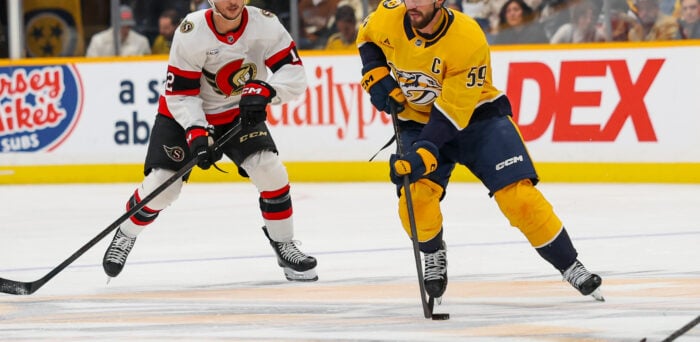
Roman Josi, leading Team Switzerland, is the least surprising headline of the year. Josi is arguably the greatest Swiss player in history. He is the only member of this Predators quartet with previous Olympic experience, having skated in Sochi back in 2014. For Josi, this isn’t just a victory lap; it’s a chance to captain an increasingly competitive Swiss squad that can no longer be taken lightly.
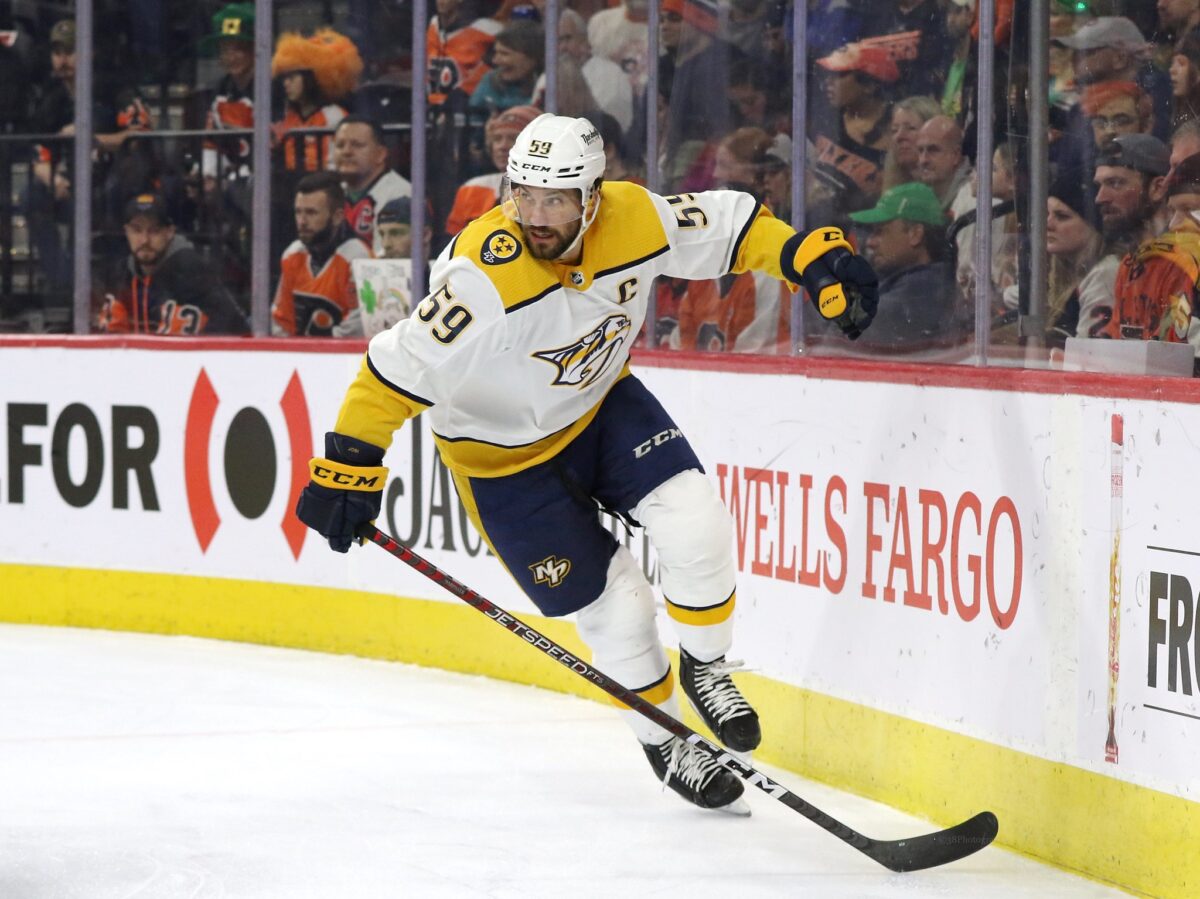
Then there is Filip Forsberg. It feels like a statistical anomaly that a player with Gold Medals at both the World Juniors and the World Championships has never played in an Olympic game. External circumstances—specifically the NHL’s absence from PyeongChang and Beijing—robbed him of two cycles. Forsberg has described this as a lifelong dream, and considering he has medaled in seven of his 10 international appearances, Team Sweden is getting a winger who knows how to win in a short tournament format.
Related – Guide to the 2026 Winter Olympics Men’s Hockey Tournament
The Finnish connection remains strong in Nashville. Goaltender Juuse Saros will finally make his Olympic debut. While he is a veteran of several international tournaments, the Olympics are a different beast. However, if his recent international resume is any indication—including a stifling .943 save percentage at his last World Championship—Finland is in safe hands.
Joining him is Erik Haula, whose selection marks a fantastic return to form. After a nine-year hiatus from the national team that ended only recently, Haula played his way back onto the roster, providing Finland with the kind of two-way reliability that coaches crave in single-elimination games.
Notable Omissions on the Canadian Front
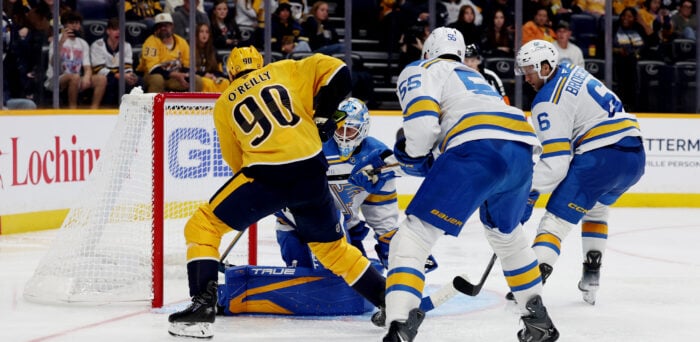
While the “Core Four” celebrate, the silence surrounding Nashville’s Canadian veterans is deafening. It may be too much to explicitly label them as “snubs,” but the absence of Ryan O’Reilly, Steven Stamkos, and Jonathan Marchessault from the Team Canada conversation is significant.

All three are marquee names. O’Reilly, at 34, hasn’t shown significant signs of slowing down, yet the depth of Canadian centers left him on the outside looking in. Stamkos has arguably been a victim of timing; despite heating up recently, a sluggish start to the season likely cost him a spot on a roster that prioritizes current form over legacy. Marchessault, similarly, finds himself in the middle of trade chatter rather than Olympic roster projections.
For the Predators, this is a double-edged sword. While it saves wear and tear on veteran bodies, it also highlights the age curve the team is currently battling. The players going to the Olympics are the drivers of the bus; the players staying home are the ones facing questions about their long-term fit.
The “Unofficial” Trade Deadline
Here is where the situation gets complicated for the front office. The Olympic break creates a massive disruption in the standard NHL calendar, specifically regarding the trade market.
The NHL will implement a roster freeze from Feb. 4 to Feb. 22. During this window, no trades can be consummated. With the actual Trade Deadline set for March 6, the league is effectively losing three weeks of negotiation time.
Related – NHL 2025-26 Power Rankings: Week 13
This turns Feb. 4 into a hard, unofficial deadline. If Trotz intends to move pieces—and reports suggest he is open to moving veterans to inject youth into the lineup—he may not be able to wait until March. He may have to decide the fate of players like O’Reilly, Stamkos, or Marchessault before the Olympic freeze begins.
If the Predators are still fighting for a playoff spot on Feb. 1, Trotz faces a dilemma. Does he hold onto his veterans for a push, knowing the Olympic break might cool their hot streaks? Or does he sell early, before the freeze, potentially signaling a surrender while Forsberg and Josi are overseas trying to win Gold?
The selection of Nashville’s four stars is a testament to the team’s top-end talent. But the weeks leading up to their departure will likely determine what kind of team they return to in late February.
AI tools were used to support the creation or distribution of this content, however, it has been carefully edited and fact-checked by a member of The Hockey Writers editorial team. For more information on our use of AI, please visit our Editorial Standards page.
Free Newsletter
Get Nashville Predators coverage delivered to your inbox
In-depth analysis, breaking news, and insider takes - free.
Subscribe Free →