Within a week of being named co-president of hockey operations for the Vancouver Canucks, Daniel Sedin was already halfway across the world, scouting the World Hockey Championship in Switzerland. It looked like a familiar Sedin trait: quiet, methodical, and getting straight to work without fanfare.
But it also generated a few comments wondering why one half of Vancouver’s new leadership duo was overseas when there’s so much to sort out back home. Although that seems like a fair question, if we zoom out, we can see two things. First, the situation at home is being addressed. Second, two people are doing a job that one person usually does, and that presents a huge advantage.
The Canucks have lots of decisions on their checklist, from staffing to roster direction to figuring out what this next version of the team actually looks like. That reality should help explain why having both Sedins is better than having just one.
The fact is, there isn’t just one president of hockey operations. There are two. Daniel Wagner, probably the Canucks writer I read most, did an excellent review of why having both Daniel and Henrik in leadership roles is twice as good as having one. And the more I think about it, the more insight it gives into how the entire Canucks operation will work.
The “Two Heads Are Better Than One” Reality in Vancouver
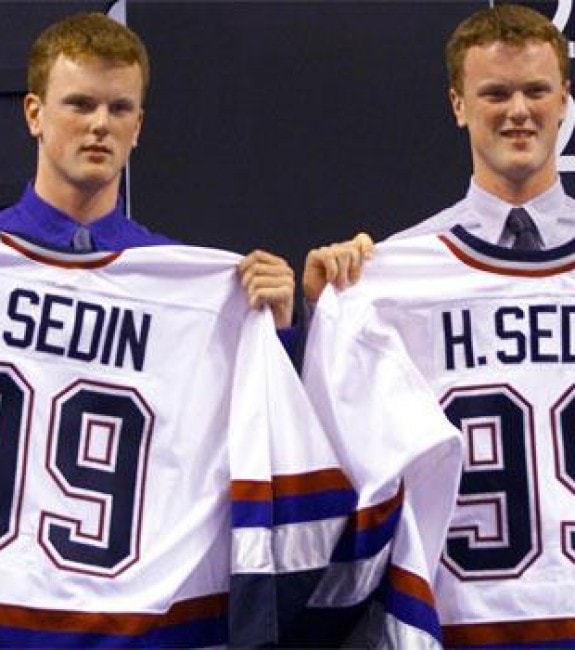
It’s easy to forget how unusual the Sedin story is. Not just in hockey, but in professional sports generally. These are identical twins who played their entire careers together, developed a telepathic connection on the ice, became elite NHL stars, each hit 1,000 points, each won Art Ross Trophies, and both were inducted into the Hockey Hall of Fame.
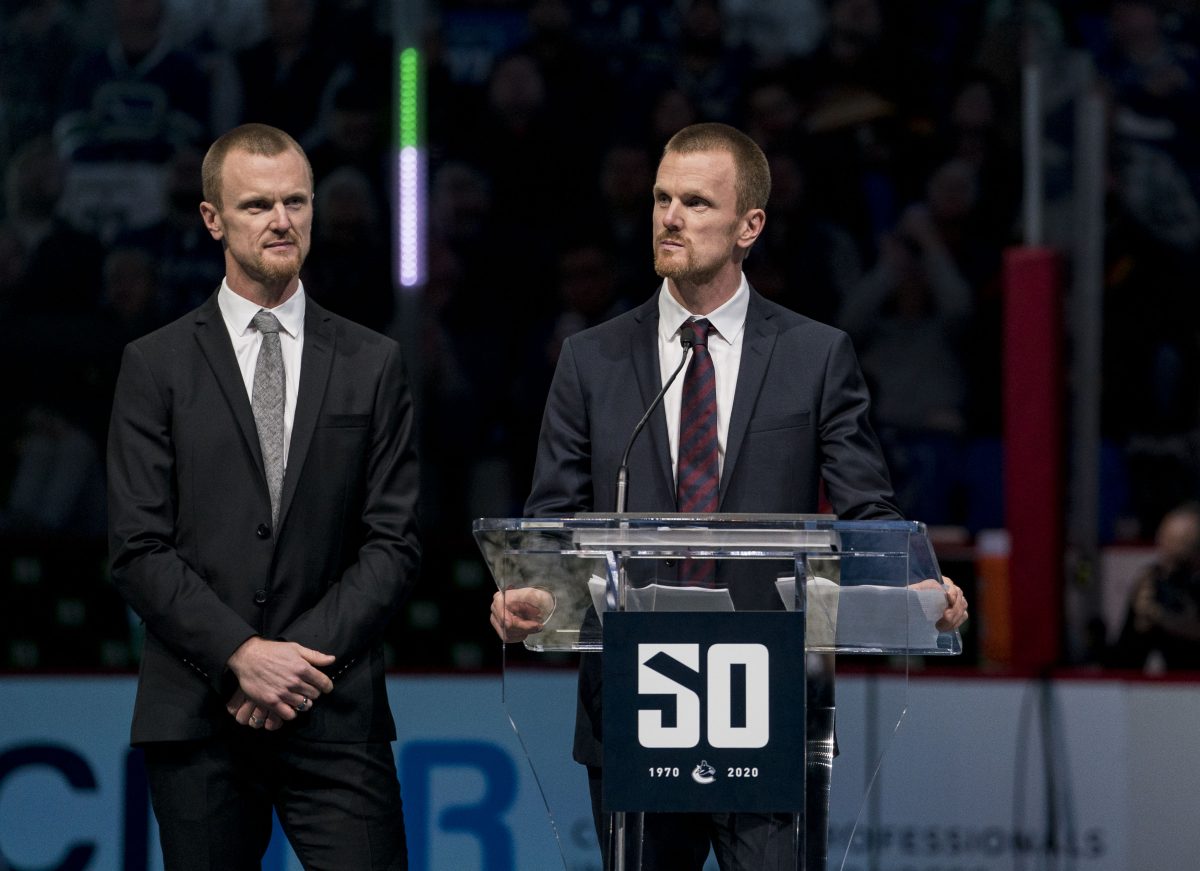
That alone is amazing. Now they’re running an NHL front office together. It’s almost too logical, and internally, that’s how they’ve framed it. In most organizations, if a president of hockey operations is travelling overseas, people immediately assume something is being neglected at home. But in this case, the Canucks literally have attention built into the structure. One is scouting. The other is holding things down in Vancouver. Then they regroup and compare notes.
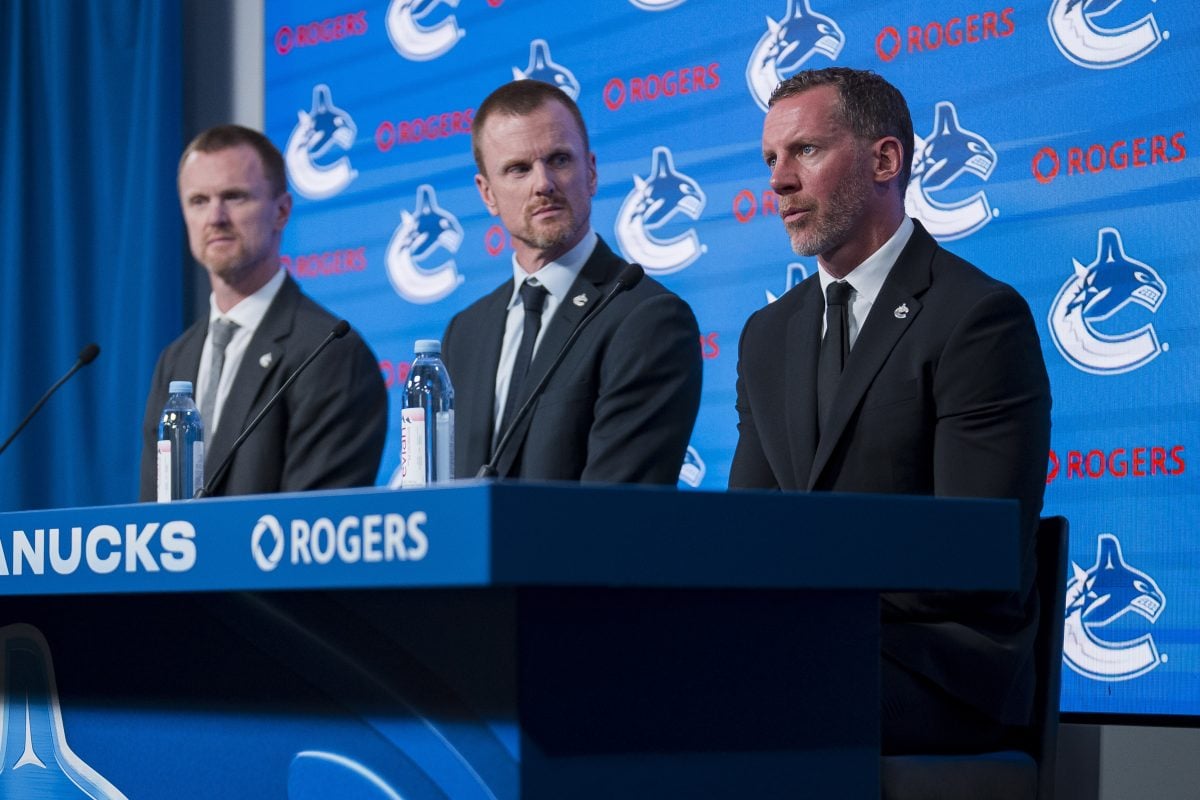
As Henrik Sedin put it at their introductory press conference, having two of them is a strength. Decisions get discussed, challenged, and refined. The promise is that nothing will be rushed or unilateral. Even disagreements, if and when they come, will be handled the same way they have been their entire lives. They talk it out, come to an agreement, and move forward. There’s no internal hierarchy between them. No built-in “final say” figure. Just constant dialogue and shared responsibility. It’s unconventional, but there’s also a wonderful logic to it.
What the Sedins Walked Into with the Canucks
The job they have chosen is not easy. Even in a relatively stable moment, the list of responsibilities is long. Working alongside new general manager Ryan Johnson, the Sedins are expected to help steer the Canucks through a coaching transition, set organizational direction for the offseason, and continue reshaping how the club operates from development through to the NHL roster. That includes everything from scouting and player development to staffing decisions and long-term planning.
There’s also the broader organizational work—aligning departments, reinforcing structure, and in some cases, repairing relationships that may have drifted in recent years. That’s before you even get to the actual hockey decisions.
On one hand, it might seem odd that one of the Sedins went on a scouting trip so soon. But it is also an example of the kind of work structure they’ve chosen to build. They won’t operate from the same office every day, follow the same schedule, or make every decision together in real time. They will divide the work, then analyze what they’ve found and synthesize what to do next.
Daniel goes to Switzerland. Henrik stays in Vancouver. That’s the first sense we have of how this is going to work. Interestingly, they were not chosen out of the blue. They’ve been preparing for this work for the past five years.
Since returning to the Canucks in 2021, they’ve worked in player development roles, scouting support, and various advisory capacities. They’ve seen prospects up close, worked with players on the team’s American Hockey League affiliate in Abbotsford, and have learned how decisions flow through the organization from top to bottom.
As Todd Bertuzzi noted last week, they’ve approached this the way they did in their playing days. They listened for a long time before they chose to talk. They weighed everything carefully, learned a ton, and only then did they start to lead the team.
What’s Next for the Canucks
What makes this situation so fascinating is its uniqueness. The Canucks aren’t simply handing the organization to another executive group; they’re putting two Hall of Fame hockey minds at the center of their leadership structure. Both built their reputations through preparation, intelligence, and a deep understanding of the game. They don’t need to command respect; it comes with what they’ve already accomplished.
If this partnership works as Vancouver hopes, it could become a genuine organizational advantage. The combination of experience, credibility, and hockey knowledge gives the Canucks a leadership foundation that few teams can match. It’s an unusual approach, but it has the potential to help the franchise emerge from years of frustration much faster than many people expect.
Free Newsletter
Get Vancouver Canucks coverage delivered to your inbox
In-depth analysis, breaking news, and insider takes - free.
Subscribe Free →