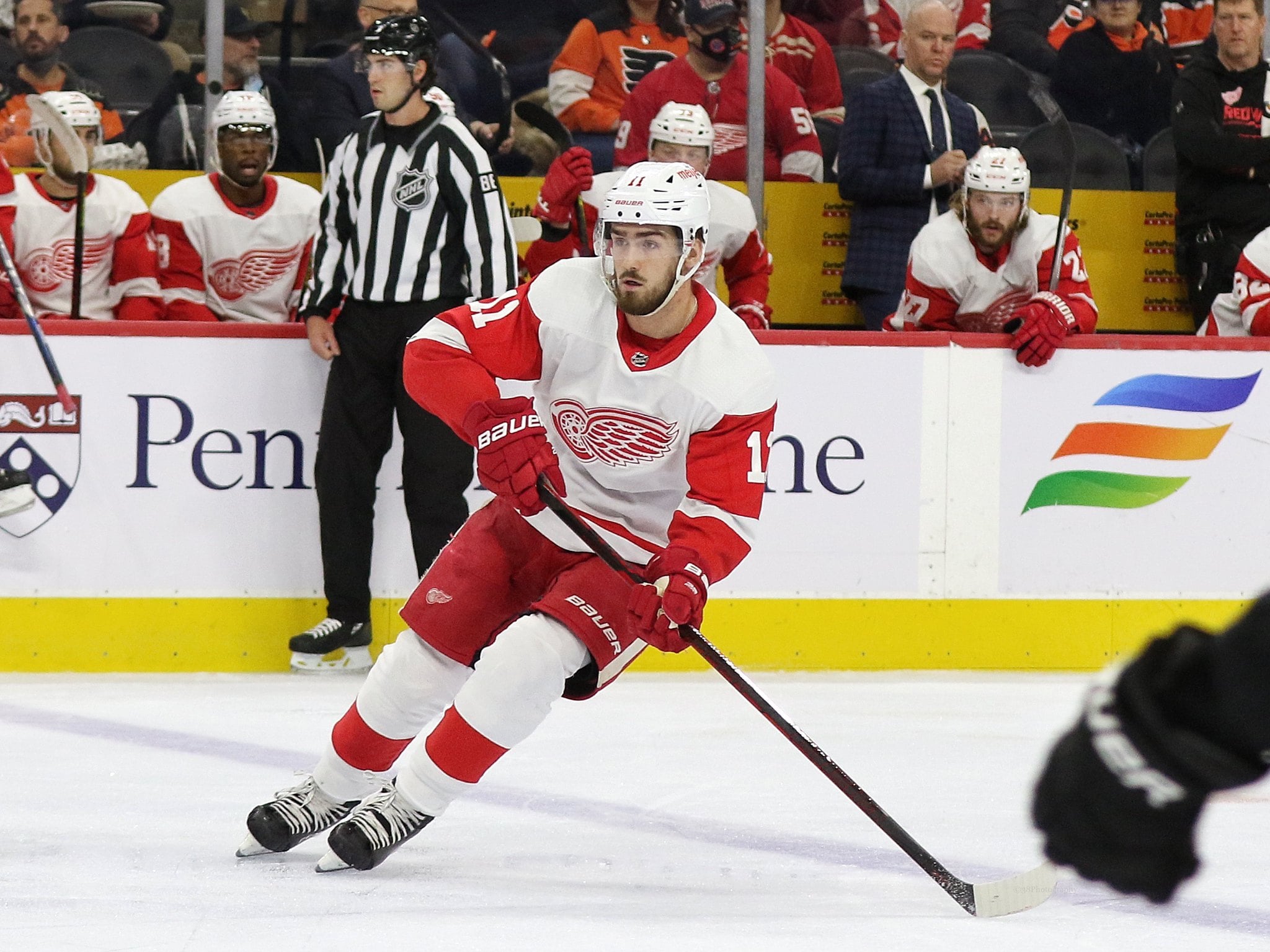
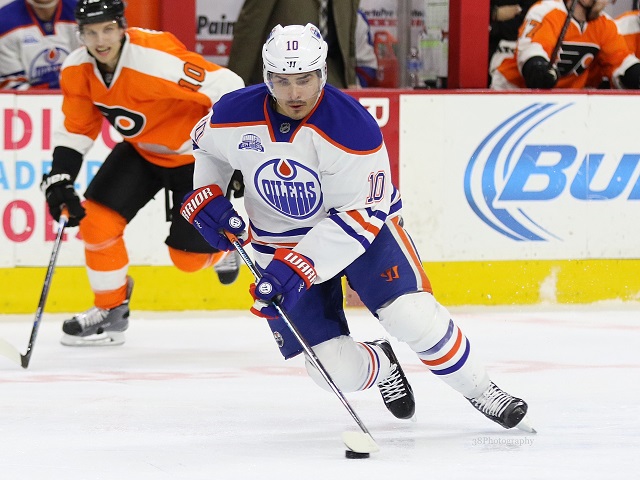
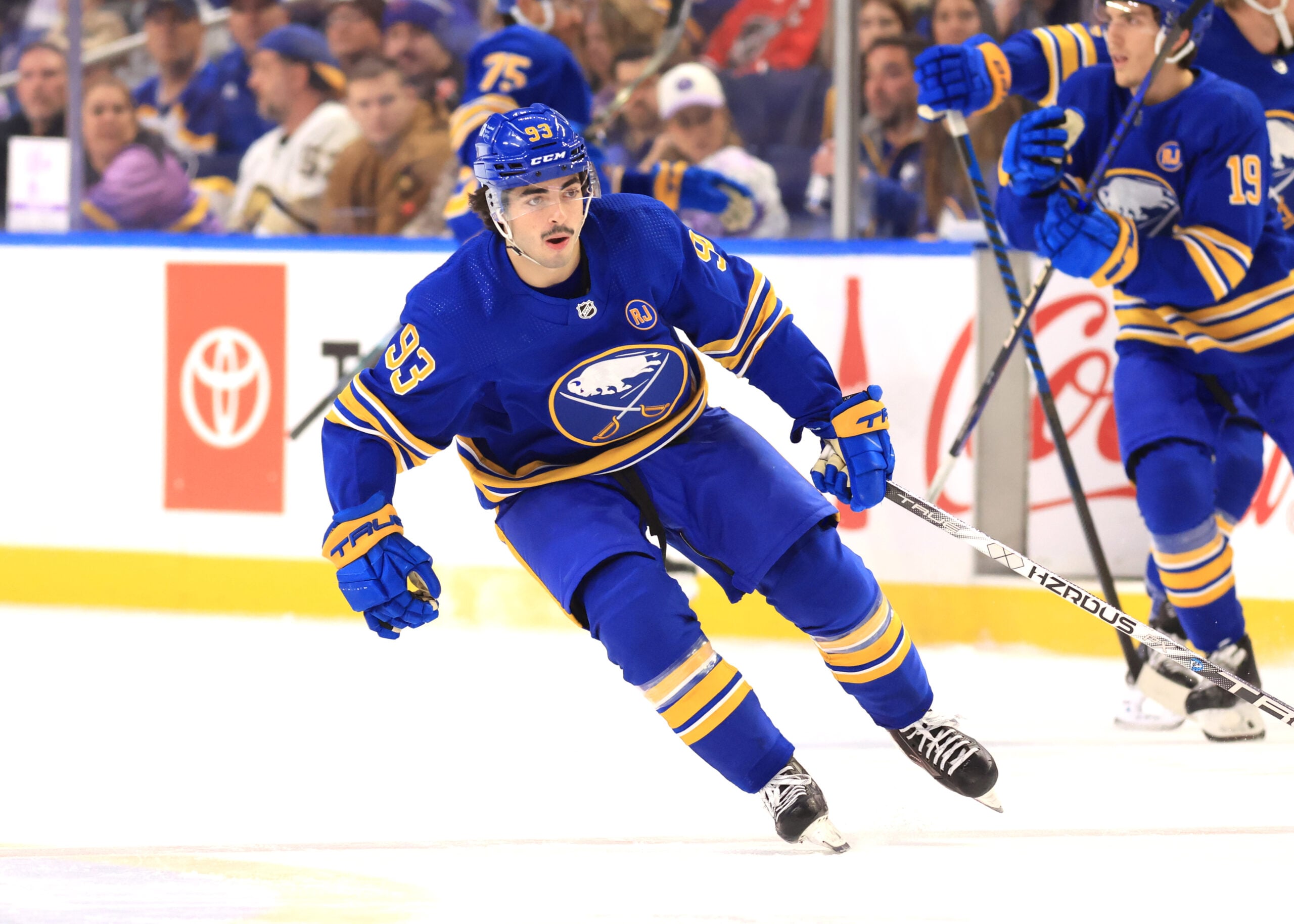
The Buffalo Sabres traded Bowen Byram to climb to fourth overall, then used the pick on the first defenseman off the board, a player most public boards had closer to ninth. Reaches like that usually aren’t blind. They trace back to a new general manager (GM) stamping a philosophy, a roster hole the team needed filled, a trade that reshuffled the board, or a trait a staff decided it couldn’t pass on.
Here are five players who went earlier than the consensus, and the front-office thinking behind each one.
Daxon Rudolph, Buffalo Sabres (Fourth Overall)
The Sabres had not originally expected to pick this high. The Byram trade with the Chicago Blackhawks (Byram and Jordan Greenway for the fourth pick and Louis Crevier) landed days before the draft, and new GM Jarmo Kekalainen’s staff had so little lead time that they hadn’t interviewed Daxon Rudolph at the Combine and met him for the first time the morning of the first round.
It did seem like they had a plan in mind when they landed the pick. Rudolph fits the offensive, puck-moving blue-line style Buffalo leaned on this season behind Rasmus Dahlin, Owen Power, and Mattias Samuelsson, and the 6-foot-2 right shot replaces the offense Byram took with him while adding a handedness the group lacked.
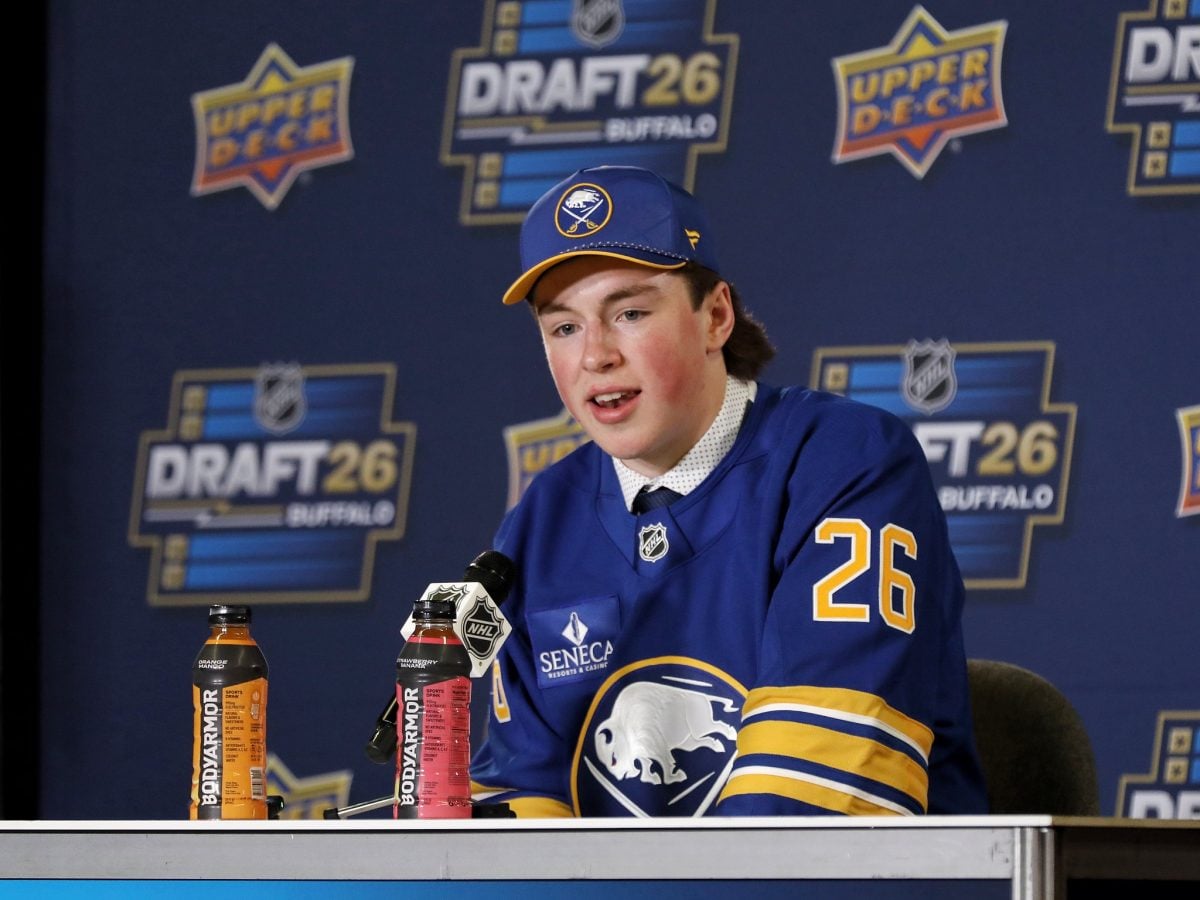
The case is the floor and the production. Rudolph put up 28 goals and 78 points for Prince Albert, third among Western Hockey League (WHL) defensemen, then added 27 points in the playoffs, and he was the fifth-ranked North American skater on NHL Central Scouting’s final list. Daily Faceoff reported scouts comparing him to Zach Werenski.
Kekalainen said the depth on the back end didn’t change the approach, that Buffalo took the best player available, and Rudolph deepens an already strong right-shot prospect group that includes Radim Mrtka and Maxim Strbak. He heads to the University of Denver this fall with a one-year timeline in mind.
Alexander Command, New Jersey Devils (12th Overall)
This was the first draft for New Jersey Devils GM Sunny Mehta, who came up through the analytics side of the Florida Panthers, and the pick feels a bit more analytical. Alexander Command was one of the most model-friendly centers in the class. Byron Bader’s Hockey Prospecting gave him projections close to third overall pick Caleb Malhotra, and his betting odds had climbed toward a top-10 slot by the time the draft started. New Jersey paired that with a roster need. The Devils have skill down the middle in Jack Hughes and Nico Hischier, but spent the season looking soft past their top line, and Mehta’s Florida background runs toward heavy, hard-to-play-against forwards.
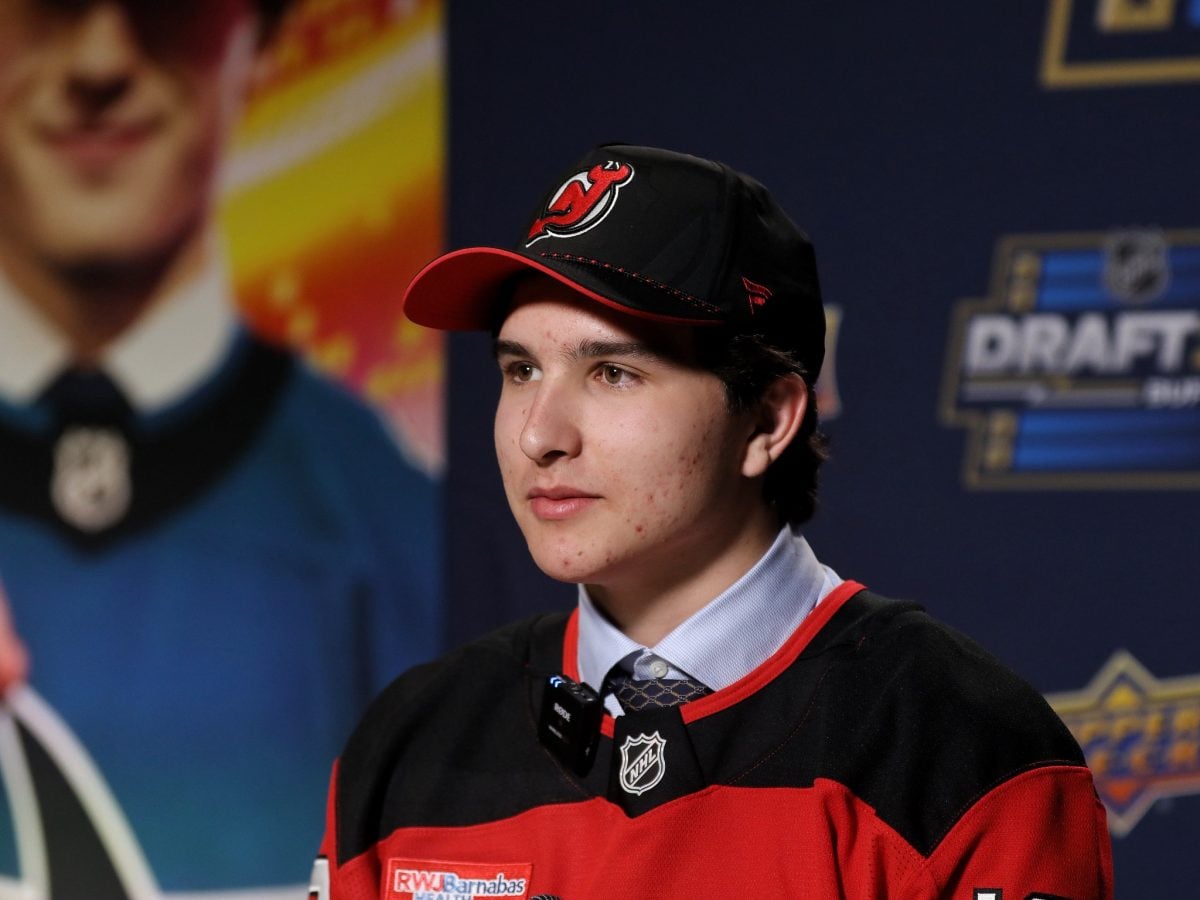
He’s a 6-foot-1 center who plays a 200-foot game with a chip on his shoulder, wins his battles on the wall, and runs a power play with patience. The ceiling reads more third-line than top-six, which is why some boards had him in the high teens, but he projects as the kind of all-situations center who kills penalties and takes hard minutes behind Hughes and Hischier. Command embraced the Hischier comparison himself and named Patrice Bergeron as the player he models.
Jonas Lagerberg Hoen, Ottawa Senators (25th Overall)
This was the widest gap on the board. Elite Prospects had Jonas Lagerberg Hoen around 80th, and McKeen’s listed him 89th in its preseason top 300, both third-round grades, and the Ottawa Senators took him 25th with a pick acquired in the Brady Tkachuk trade. Head scout Don Boyd laid out the plan: the Senators went into the draft wanting to add skill to the lineup. Their prospect depth on defense is strong, with Carter Yakemchuk, Logan Hensler, and Jorian Donovan, so the hole was scoring on the wing, and Lagerberg Hoen is a pure shooter.
An ACL injury in late October ended his season after nine junior games, but before it he was the front-runner for the Swedish junior scoring title, and his shot is the draw, a heavy release off the catch that European scout Anders Ostberg compared to Filip Forsberg. Ottawa did the medical work, with Ostberg praising the rehab, and Boyd said the team feared the winger wouldn’t last to its 32nd pick, – source? so they took him at 25 rather than risk it. He plays in Sweden’s second tier next season after Leksands was relegated.
Gleb Pugachyov, Montreal Canadiens (26th Overall)
The Montreal Canadiens traded up from 28 to 26, sending a 2027 third-round pick to the Vegas Golden Knights, and teams rarely pay to move two spots unless they’re worried their man won’t be there. The reason traces to a need and a pattern. Montreal’s pipeline is rich in skill and short on size and bite up front, and this was the third straight year the Canadiens used their top pick on a Russian forward, after Ivan Demidov in 2024 and Alexander Zharovsky in 2025, a sign of how comfortable their scouting and development staff has become in that market.
Gleb Pugachyov gives them the heaviness. He’s a 6-foot-3 winger and the hardest hitter in the class, a player who already took his power-forward game to men in Russia’s Kontinental Hockey League (KHL) and VHL at 17. General manager Kent Hughes said his scouts compare Pugachyov to Tom Wilson, which captures both the floor and the dream: a bottom-six forechecker at worst, a top-six power forward who blends skill and physicality at best. The counting stats were modest, 10 goals and 14 assists in 33 junior games, the reason his ranking sat in the 40s. He’s signed in Russia through 2027-28, so the runway is long.
Maksim Sokolovskii, Philadelphia Flyers (27th Overall)
The Philadelphia Flyers went the other way on the board math. They traded down from 21 to 27, picking up the 62nd and 120th picks from the San Jose Sharks, confident they could still land Sokolovskii later, and they sweated only when Montreal jumped to 26 before taking Pugachyov. GM Daniel Briere was blunt about the fit: the Flyers don’t have many defensemen, and Sokolovskii fits an archetype the organization keeps stockpiling. Oliver Bonk, David Jiricek, Spencer Gill, and Carter Amico are all sizable blueliners in the system, and a 6-foot-7 shutdown defender suits the defense-first identity the team rode to a playoff series win this spring.

Briere said they don’t expect a big point producer, just a big, physical force who’s tough to face, and he leaned on the traits a staff can’t coach, the frame and the mean streak, plus the month-by-month progression his scouts tracked as Sokolovskii climbed into the London Knights’ top four. His defining feature is his mobility, since a player his size moves like someone far smaller, which is why scouts floated Nikita Zadorov as a comp, a defenseman London also developed. The production says project, two goals and six assists in 44 Ontario Hockey League (OHL) games, and the puck reads have to follow. Philadelphia’s comfort with the London pipeline, which also produced Oliver Bonk, made the swing an easy one.
Rudolph is the steadiest of these five, and a strong freshman year at Denver would back Buffalo reading the board differently than everyone else. The riskiest are Sokolovskii and Lagerberg Hoen, where the puck reads and the surgically repaired knee, not the traits the teams fell for, will decide whether the reaches hold.
The 2026 class was deep enough, especially on the blue line, that teams felt free to trust their own boards over the consensus rankings. Each team has a lot more information and planning that the public is not aware of. Team fit is often hard to understand unless you are in the back offices with each team’s amateur scouts.
Free Newsletter
Get NHL Entry Draft coverage delivered to your inbox
In-depth analysis, breaking news, and insider takes - free.
Subscribe Free →