Quite a few intriguing UFAs remain available, but most of the top names have already signed new contracts. With that, let’s look back on NHL free agency and review some of the worst contracts that teams handed out.
A.J. Greer
A.J. Greer fits the type of hard-nosed forward that Anaheim Ducks GM Pat Verbeek likes, but they sure seemed to overpay for him in free agency. The Ducks signed Greer to a four-year, $4.25 million AAV contract. He’s coming off a career season with the Florida Panthers, but that’s the issue.
Greer finished with 17 goals and 32 points last season, but he did so shooting 16.3 percent, well above his career average of 10.1 percent. His underlying numbers were quite good. He finished with an expected goals share (xG%) above 53 percent and had a positive goal differential at five-on-five, but I wouldn’t bet on him repeating the season he just had because of the high shooting percentage.
Even though this is a new world we live in with the rising salary cap, a $4.25 million cap hit for Greer seems likely to age poorly. The Ducks are already in a cap bind after they matched the Philadelphia Flyers’ five-year, $18 million AAV offer sheet for Leo Carlsson. Adding contracts such as Greer’s only makes their cap crunch even harder to navigate.
Sergei Bobrovsky
Sergei Bobrovsky struggled this past season with the Florida Panthers, totaling a save percentage of .877 while allowing just north of 12 goals above expected. You never know what you’re going to get from goalies from year to year, but the Toronto Maple Leafs are making the bet that he will bounce back.
Still, giving three years and a total of $21 million ($7 million AAV) to a goalie who is showing signs of decline could backfire. New Maple Leafs GM John Chayka did make wholesale changes to the roster, adding a couple of new defensemen and some defensive-minded forwards to the bottom six.
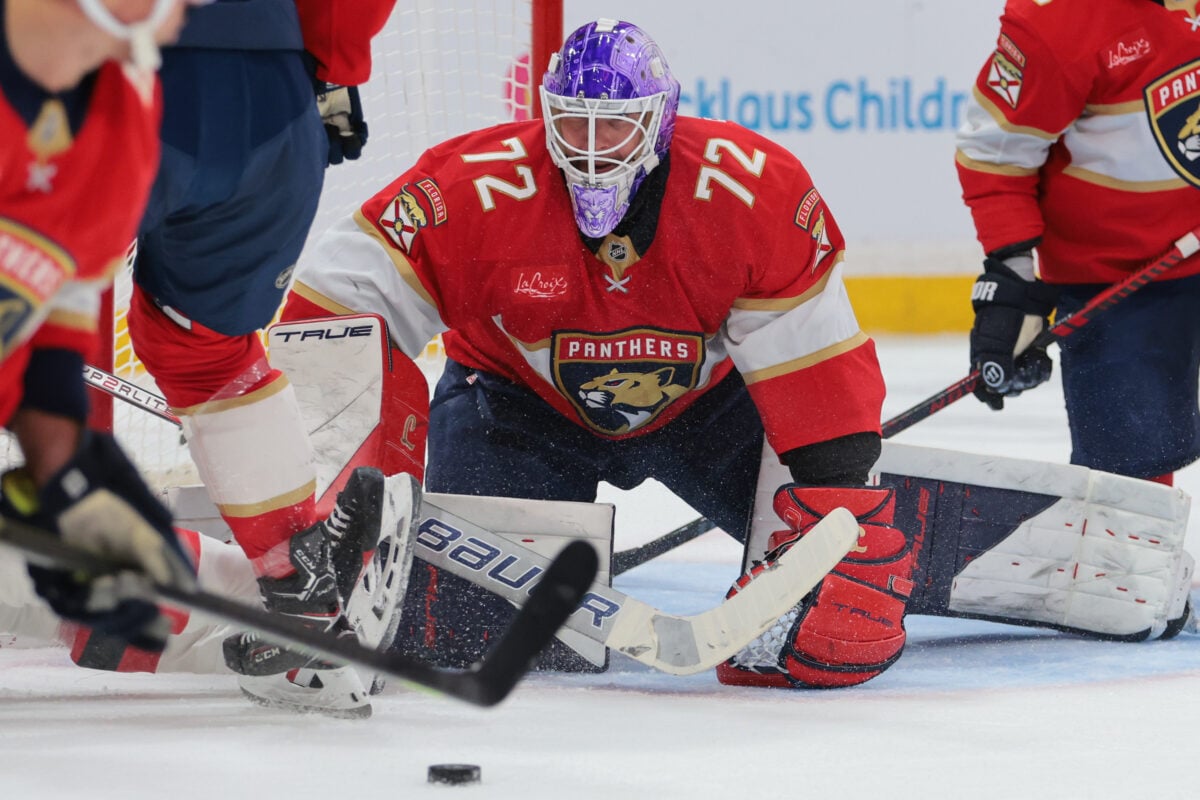
There was a clear vision of how to build the team in front of Bobrovsky, but Father Time is undefeated. It’s possible that Bobrovsky just isn’t what he used to be. No matter how good a team is, below-average goaltending can sink their postseason odds. If he performs similarly to the 2025-26 season, the Maple Leafs will be in trouble again.
Jacob Trouba
Jacob Trouba bounced back last season, at least production-wise. He totaled 10 goals and 35 points in 81 games for the Ducks, but he struggled to defend at a top-four level, which is what the San Jose Sharks are paying him to be. He signed a four-year deal with the Sharks at an AAV of $8.25 million, so he will play a top-pair role.
Still, there are issues with playing Trouba as a No. 1 defender. He struggles to exit the defensive zone cleanly, and his rush defense is a mixed bag. The Sharks will be throwing him over the boards against other teams’ top lines next season, but he doesn’t seem cut out for that role anymore.
Even though the Sharks only signed Trouba for four years, they no longer have a clean cap sheet after acquiring Darnell Nurse from the Edmonton Oilers. Both of these contracts could age poorly once it’s time for the Sharks to pay the big bucks to young stars such as Will Smith and Macklin Celebrini, and those paydays are just around the corner.
Darren Raddysh
The Maple Leafs were one of the busiest teams in free agency. Granted, they acquired Darren Raddysh in a sign-and-trade with the Tampa Bay Lightning, but Raddysh was one of the top UFA defensemen in this year’s class. He’s coming off a career season that saw him total 22 goals and 70 points in 73 games with the Lightning, but can he repeat it?
Raddysh has shown 30-40 point upside before, but the Lightning had a unique setup that allowed him to thrive on the power play and break out last season; 10 of his 22 goals came on the man advantage. He also shot 10.4 percent, above his career average of 7.8 percent. Raddysh does seem like a quality second-pair defender, but the odds of him repeating last season’s output seem unlikely.
The Maple Leafs probably had to make the move for Raddysh because he will bring puck-moving ability to a blue line that sorely needed it. Still, he’s signed until he’s 38, and even with a rising salary cap, this contract could age poorly. Even this coming season, he will probably need to total 45-55 points to be worth the $8.5 million cap hit, but that’s far from a guarantee given his career averages.
Rasmus Andersson
The Vegas Golden Knights are usually ahead of the curve when it comes to roster retention, transactions, etc. They probably see something in Rasmus Andersson that I don’t, but I do struggle to see how his new seven-year, $8.5 million AAV contract ages well.
Andersson did not have a terrible season. Far from it, actually. He totaled 17 goals and 47 points between the Golden Knights and Calgary Flames, but there are some red flags in his game, especially defensively. His rush defense has fallen off a cliff, and he struggles to break out of the defensive zone with possession.
Andersson’s numbers with the Golden Knights were quite good. He totaled an xG% of 55.87 percent after the trade from the Flames, but it was a small sample. He still has plenty of offensive value, but he’s probably best suited for a second-pair role against easier competition on defense. An $8.5 million AAV seems like an overpay for what he offers.
Alex Tuch
Another sign-and-trade, the Washington Capitals acquired Alex Tuch from the Buffalo Sabres, then signed him to an eight-year, $10.5 million AAV deal. He had another great regular season for the Sabres, totaling 33 goals and 66 points in 79 games.
However, Tuch struggled mightily once the playoffs rolled around. He was a complete ghost in the Sabres’ second-round defeat to the Montreal Canadiens, and it could have been due to some early age-related decline. While his skating is still decent, there are signs he’s beginning to lose some footspeed. His skating is a huge part of what makes him so effective, so any further drop-off could quickly become problematic.
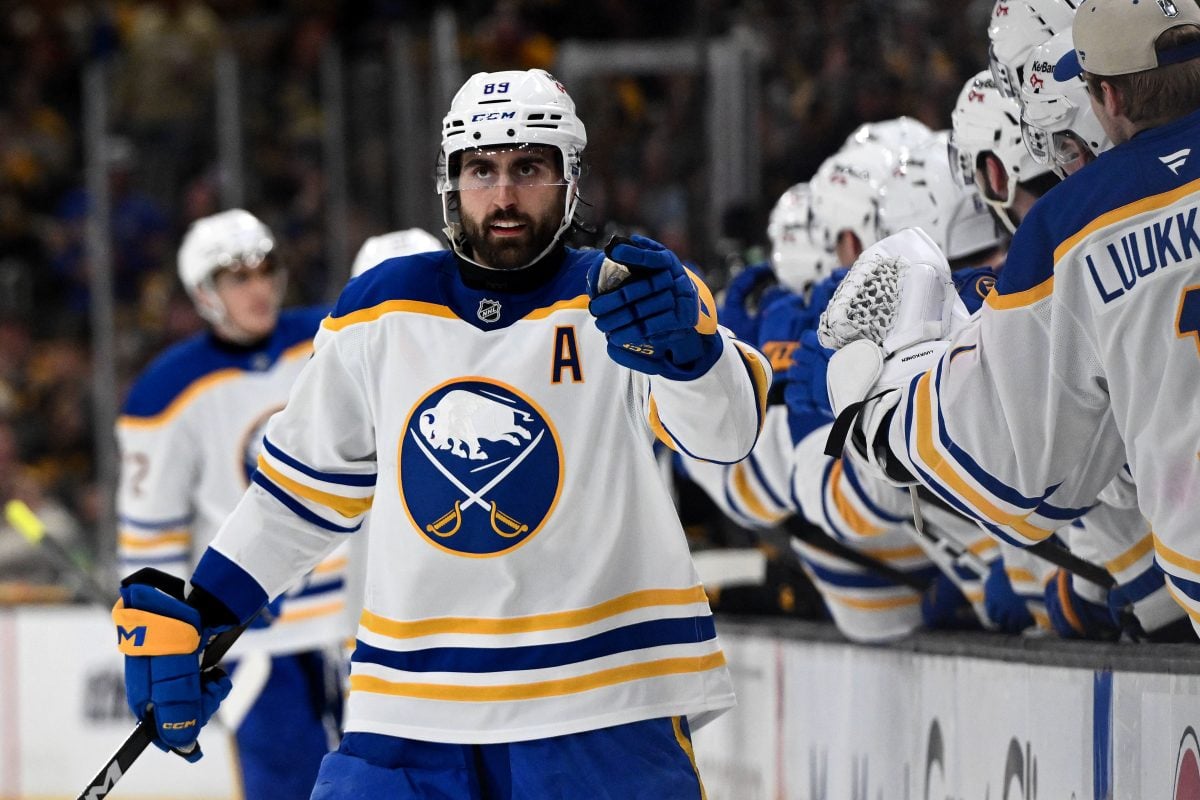
Even though the Tuch contract doesn’t look great, the Capitals will probably get a couple of good years out of him. The problem is that he’s on the wrong side of 30 and is under contract until his age-38 season. A $10.5 million AAV is not pocket change, no matter how much the salary cap rises. This will likely prove to be a problem contract somewhere down the road.
Jeffrey Viel
The Lightning were moderately busy in free agency, with John Carlson being their most notable signing. His new contract looks like pretty good value, but one of the more head-scratching deals was signing Jeffrey Viel to a five-year, $2.5 million AAV contract.
Viel finished this season with three goals and 10 points in 45 games between the Boston Bruins and the Ducks. Before the 2025-26 season, he appeared in just 54 NHL games and totaled five points. The Lightning must see something in him, but his underlying numbers were quite poor this season.
Viel finished with a net rating of -5.3. Even for a fourth-liner, that’s sub-optimal. Teams have made bets like this on fourth-liners before, but they almost never work out. A $2.5 million AAV is not much, but term is always the killer in these deals. Even though that probably helped keep his AAV down, the Lightning might not ever see proper value from this contract.
Vincent Desharnais
One of the more surprising deals of July 1 was the Capitals’ signing of Vincent Desharnais to a four-year, $4.2 million AAV contract. Desharnais posted some impressive underlying metrics defensively last season. He allowed just 2.33 expected goals per 60 minutes at five-on-five, but he doesn’t offer much other than shot suppression.
Desharnais finished with just seven points in 53 games for the Sharks last season. He did average just over 18 minutes of ice time, but that was more a reflection of the Sharks’ blue line than anything else. On a team like the Capitals, he’s closer to a third-pair defender. And even in the rising cap world, a $4.2 million AAV is a touch pricey for a third-pair defender. He’s probably closer to a $2-3 million AAV defenseman.
Time will tell how these contracts look. Some will perform better than expected, while others will likely age as poorly as they looked when signed in free agency. But that comes with the territory when signing UFAs.
Advanced stats from Natural Stat Trick, Hockey Stats, and Hockey Stat Cards
Free Newsletter
Get Free Agents coverage delivered to your inbox
In-depth analysis, breaking news, and insider takes - free.
Subscribe Free →