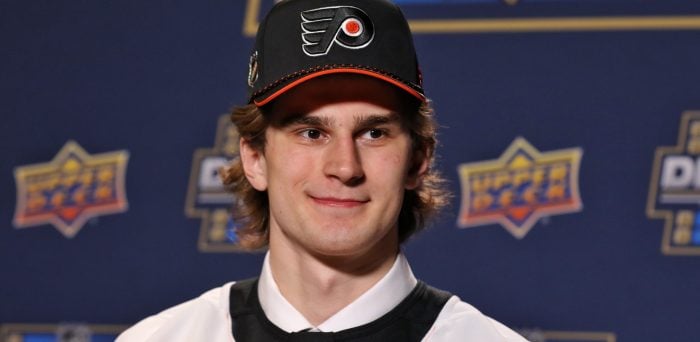
Unfortunately for the Philadelphia Flyers, their record-setting five-year, $18 million cap-hit offer sheet for Anaheim Ducks center Leo Carlsson was matched. The 21-year-old Swede returns to the Golden State.
Even if they didn’t land the player, the Flyers’ heart was in the right place. With that being said, however, let’s look at the big picture. The “New Era of Orange” motto was coined a little over three years ago, yet the team is already willing to trade four first-round picks and commit 17.3% of the salary cap to a forward who hasn’t had a point-per-game season. That’s desperation.
What did the Carlsson swing actually mean, why is the front office this desperate, and can the rebuild be saved? Let’s discuss.
What the Carlsson Swing Actually Meant
For a moment, let’s imagine we lived in a world where the Ducks didn’t match the Carlsson offer sheet, even though it was an “easy decision” according to general manager Pat Verbeek. The Flyers have finally filled their long-term first-line center hole, but now have the same number of first-round draft picks as the Florida Panthers through 2030. Also, they’re paying the player a league-high $18 million annually.
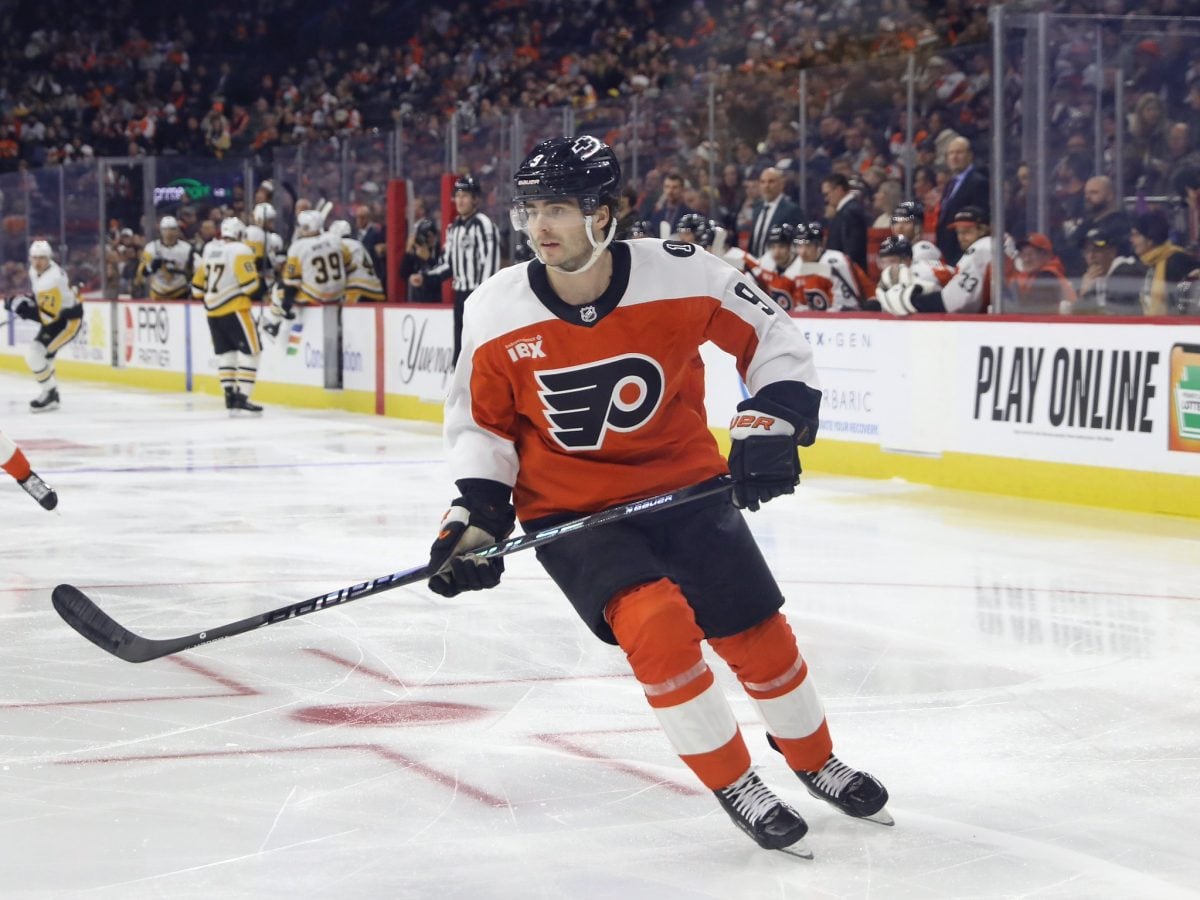
The problem here is that the Flyers’ issues go far beyond a No. 1 center—they still need defensemen for the future. Travis Sanheim, who is 30 years old, can’t hold down the fort forever. Plus, it’s not like the defense is a particularly revered unit even today.
In the reality where the Flyers got Carlsson—the ideal one, mind you—they’d have to figure out a way to acquire two top-pairing defensemen with comparable draft capital to the ultra-aggressive Panthers. Not great.
Now, you can make the argument that Jamie Drysdale could be one of those top-pairing players and that prospects Oliver Bonk, David Jiříček, Maksim Sokolovskii, and others have a chance. But Drysdale has only ever been deployed as a second-pairing defender, and he’s 24 years old. As for the prospects, that’s even more of a long shot. Possible, but a long shot nonetheless.
Furthermore, while I’m as high on goaltending prospect Egor Zavragin as anyone, he plays the most volatile position in hockey. If he’s not the long-term solution between the pipes, that could be another necessary hole to address (Dan Vladař and Joseph Woll will be 29 and 28 by the end of August).
To the Flyers’ credit, landing Carlsson would have opened the door for contention. Had they flipped one or two forwards for some good defensemen, they’d be in a position to win right away. But with the Carolina Hurricanes and the aforementioned Panthers being as potent as they are, going the distance would have been tough. Especially with only one first-round draft pick through 2030.
The Hurricanes highlight the importance of having draft capital. For years, they were always one of the better teams in the Eastern Conference, but far from the best. Then, they signed star winger Nikolaj Ehlers in free agency and dealt a conditional first-rounder, a second-rounder, and 23-year-old prospect Scott Morrow to the New York Rangers for defenseman K’Andre Miller last summer.
Ehlers and Miller played like superstars en route to a Stanley Cup victory for Carolina. Meanwhile, the Rangers’ draft picks became Nos. 26 and 64, and Morrow isn’t a full-time NHLer yet. Ehlers isn’t really relevant to my point, but Miller shows what draft capital can do. Having just a little can land you high-impact guys.
Prospects can compensate for a lack of draft capital, of course. But when Porter Martone and Matvei Michkov were off-limits in Quinn Hughes trade discussions, landing the superstar blueliner became virtually impossible (from ‘The Flyers didn’t land Quinn Hughes. But is a center trade imminent?,’ The Inquirer, Dec. 22, 2025).
The Flyers would be a fun team had they landed Carlsson—no doubt about that. But would they have the assets to build a juggernaut à la Carolina or Florida? Maybe not.
How Did the Flyers Get Here?
The Flyers announced their “New Era of Orange” a little over three years ago. That begs the question: how did we get here already?
It starts with getting too attached to players. The Flyers said from the get-go that they weren’t going to tear things down completely, and that’s fine. But selling only one player with positive trade value in the 2023 offseason—Ivan Provorov—and adding quality depth pieces doesn’t scream “We’re taking this rebuild seriously.”
Few predicted the Flyers becoming a borderline playoff team in the following season, sure, but what did they expect? While Provorov was a key player to lose, Cam Atkinson and Sean Couturier returned after missing the entire previous season, the depth was miles better, and young players unsurprisingly took steps.
So, instead of having a chance to select a game-breaking prospect in the 2024 NHL Draft, such as Ivan Demidov, they were set to pick 12th. They landed Jett Luchanko, who could be a solid third-line center someday, but he doesn’t project to be a superstar like Demidov.
The Flyers’ unplanned regression in 2024-25 actually worked out for them, since they landed Martone in the ensuing draft class, but a veteran-heavy core led the Orange and Black to the playoffs in 2026. In a vacuum, that’s obviously a positive, but the team missed out on the crown jewels of the 2026 draft class (No. 27 pick Sokolovskii could be great, don’t get me wrong).
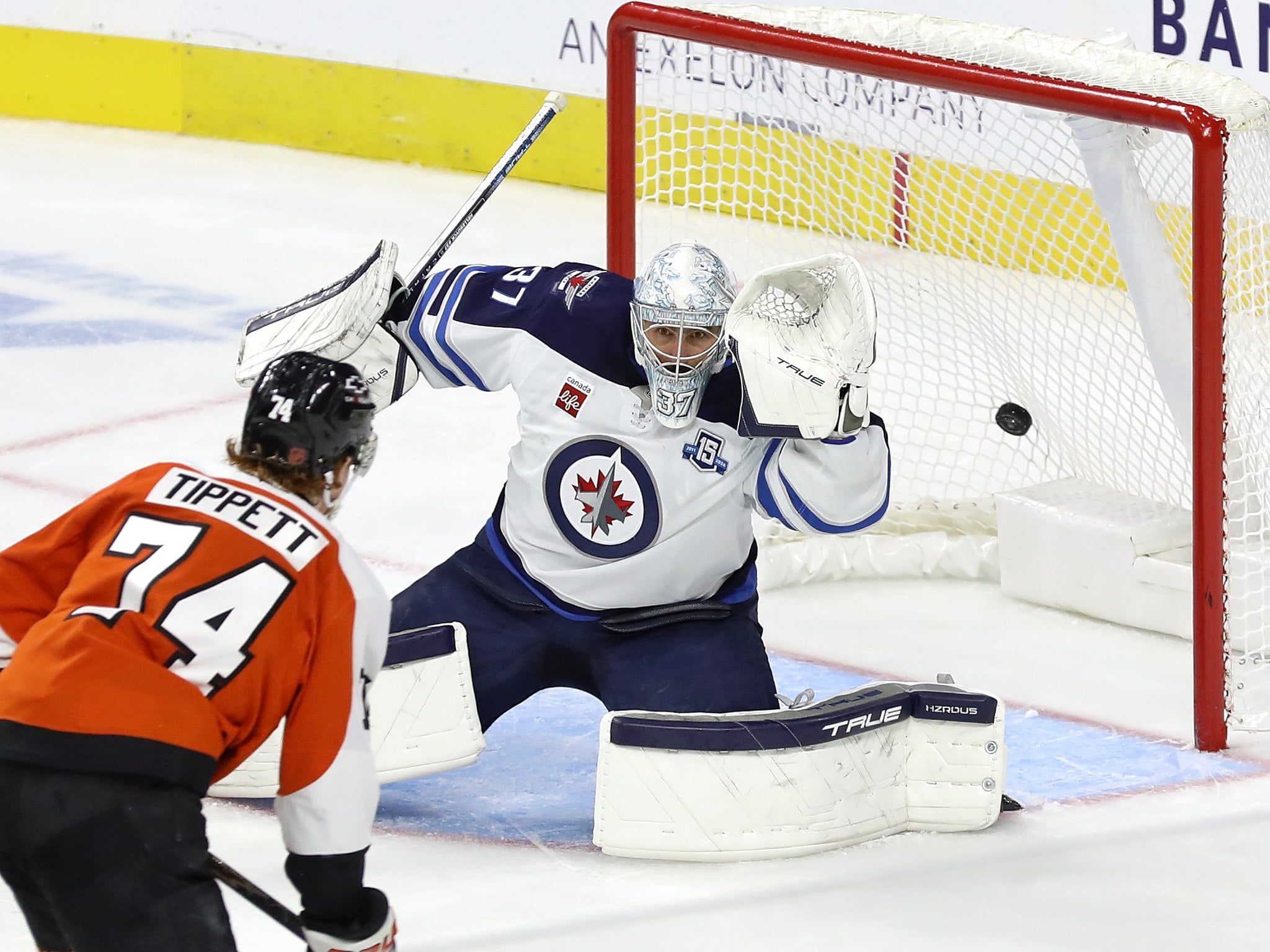
In summary, the Flyers likely missed out on star prospects just by not selling another two or three quality veterans, such as Travis Konecny and Owen Tippett. But we don’t even have to go that far. It would have admittedly been unpopular to sell players of that caliber, even if a rebuilding team really has no business committing long-term to players of their age (now 29 and 27).
Where things really got ugly was in A) the team’s refusal to sell even depth players and B) constant reaches in the draft. For point A, Nick Seeler is a perfect example. Despite almost being 31 years old at the time (March 2024), the Flyers extended him to a four-year contract with trade protection.
A few months later, when cap-dump defenseman Jake Walman and a second-round pick were traded to the San Jose Sharks for future considerations, I was annoyed that the Seeler extension prevented the Flyers from making this move instead. Seeing as Walman only had a two-year contract at the time, I felt that this trade would’ve been a great opportunity to fill a roster spot and gain draft capital in the process.
If you recall, Walman had a breakout campaign for the Sharks in 2024-25 and was flipped to the Edmonton Oilers for a 2026 first-round pick (20th overall) and prospect Carl Berglund.
Of course, I had no idea Walman would break out in the way he did. I was more enticed by the “second-rounder for future considerations” aspect of it all. But that’s what can happen when you remain flexible. The Sharks got a first-round pick, a second-round pick, and 50 games of Walman for free. That’s what a real rebuild looks like.
The Flyers did sell some veteran depth players, with Sean Walker being a primary example—he returned a first-round pick. But that first-round pick was packaged in a deal for the No. 12 pick in the 2025 NHL Draft to land Jack Nesbitt. This is where we get into the “constant reaches in the draft” point.
I want to be clear that I mean no disrespect to Nesbitt. I think he can be a solid bottom-six center, which is what many projected him to be on draft day. But that’s the thing—the Flyers reached, on average, about 20 spots on most people’s boards to land this player.
The same could be said about Luchanko, who was taken one spot ahead of Buffalo Sabres center Konsta Helenius. It’s early in his career, but he looks to be what many called him before draft day: a future top-six center.
The Flyers used three first-round picks (Nos. 12, 22, and 31) to land Luchanko and Nesbitt. Brady Tkachuk was acquired by the Panthers for three first-round picks and a second-rounder. Sure, Florida probably got a discount in that deal, but do we see the problem here?
The Orange and Black had their chances to address their needs. Slowly but surely, those chances are fading away. They only have themselves to blame.
Where Can the Flyers Go From Here?
This is a pretty negative way of putting things, I know. But I think this rebuild can be salvaged, though it would take some guts from the front office.
For starters, the Flyers have to focus more on winning the Stanley Cup than on making the playoffs. That means being content with taking a step back in 2026-27. I’m not saying they should tear everything down, but I am saying that 27-year-olds Noah Cates and Tippett, as well as 31-year-old Rasmus Ristolainen, should be traded as soon as possible.
Cates is a high-end 3C, Tippett is a top-six energizer, and Ristolainen is an exceptional No. 4-5 defenseman. That can get you a lot on the market. I’m making up the trade returns, so bear with me, but let’s say those three get you three first-round picks and two B-level prospects.
In this scenario, the Flyers could prioritize playing the young guns, have a better chance of landing a good prospect in the 2027 NHL Draft, and have a boatload of assets and cap space to make a splash next summer (with the target being a younger player).
Will Philadelphia actually do this? Not to this extent, but with the team only making depth additions this summer while its Eastern Conference rivals were a bit more aggressive, it’s possible that the season doesn’t go to plan and the Flyers decide to sell. So, there is hope.
Landing Carlsson would have been terrific for the Flyers, but make no mistake: the offer sheet was a sign of desperation. Things are salvageable, but general manager Daniel Brière will have to commit to the future for that to happen.
Free Newsletter
Get Philadelphia Flyers coverage delivered to your inbox
In-depth analysis, breaking news, and insider takes - free.
Subscribe Free →