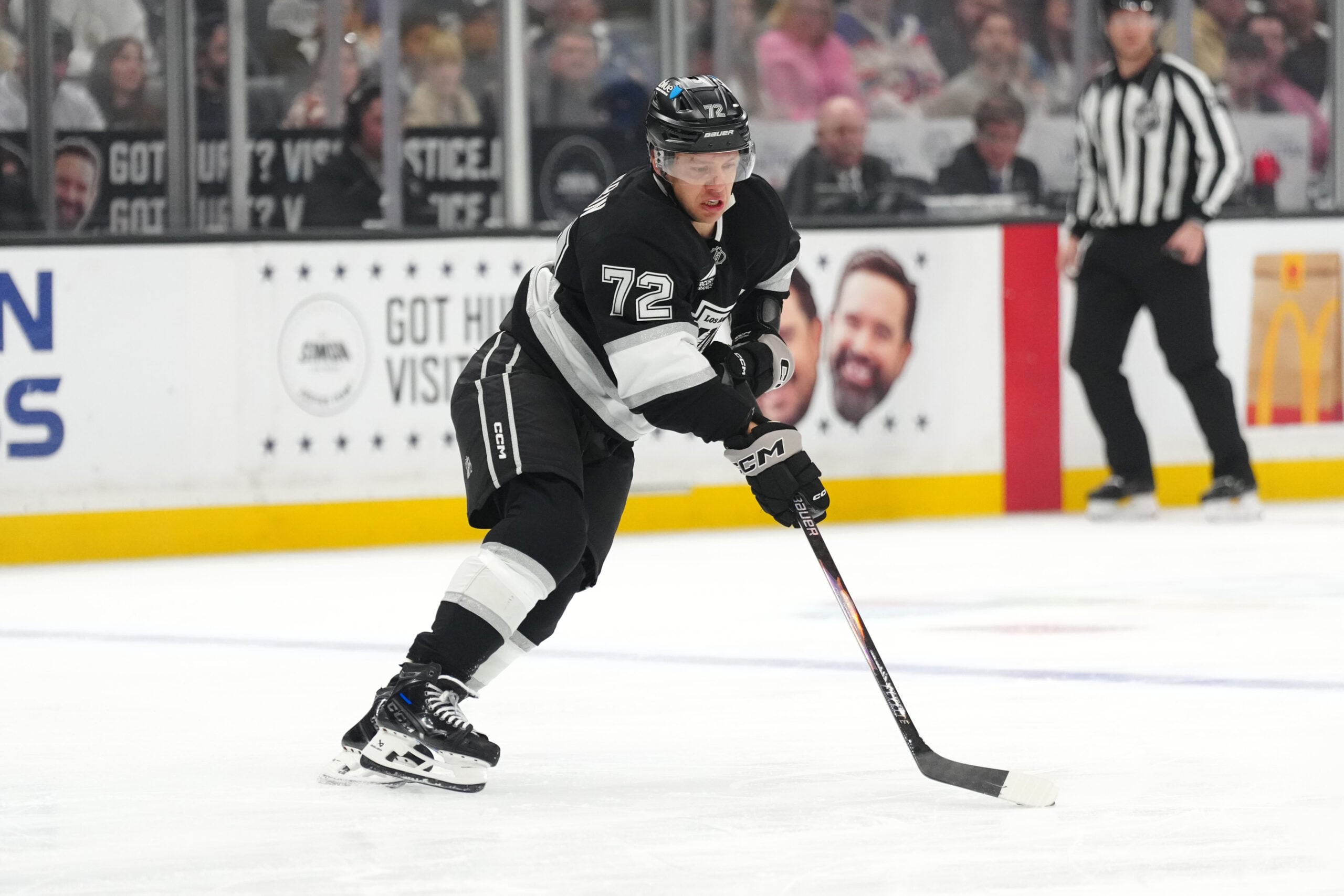
If there is one definitive truth we have come to learn about Kent Hughes’ tenure as general manager (GM) of the Montreal Canadiens, it is that he detests navigating an 84-game calendar without a safety net. In the modern NHL, structural depth isn’t just a luxury item you look for at the trade deadline; it is the currency that buys a franchise peace of mind through the gruelling winter months. Which is why the Canadiens signed right-handed defenceman Reilly Walsh.
So, when word trickled out that Walsh had mutually terminated his contract with the Kontinental Hockey League (KHL) Barys Astana, it was quickly leaked that he was to return to North America on a projected one-year, two-way deal with the Canadiens, the underlying logic immediately crystallized. This wasn’t a headline-grabbing blockbuster designed to shift the balance of power in the Atlantic Division. Instead, it was a classic, targeted depth acquisition aimed squarely at shoring up Montreal’s bottom defensive tier while managing a fluid developmental landscape down the road in Laval.
The Bottom-Pair Domino Effect
To truly understand why the Canadiens prioritized securing Walsh’s signature, one must look at the bottom of the current blue line blueprint. The modern game requires a third pairing capable of more than just surviving “sheltered” minutes; it requires the capability to transition and start a fast break offence.
The American Hockey League (AHL) affiliate Laval Rocket was also dealt a blow when 45-goal scorer and reigning CHL Defenceman of the Year Bryce Pickford underwent significant shoulder surgery, an intervention shelving him for a substantial chunk of his upcoming rookie professional campaign. Injuries are rarely isolated incidents; they trigger a dangerous domino effect that stretches straight up to the NHL roster.

Without Walsh, a single injury in Montreal’s top four would force head coach Martin St. Louis to disrupt the entire ecosystem. A prospect might be prematurely graduated, or a bottom-pairing regular would be dangerously miscast in high-leverage shutdown situations. At 27 years old, Walsh represents the experience needed and the style of play to absorb these temporary tremors. He provides an offensive element that allows the Canadiens to preserve the roles of their top-four mainstays, ensuring the bottom pair remains a functional asset rather than a liability.
The Impact on Bottom Pairing Deployment
The most compelling internal dynamic of the Walsh signing lies in how it impacts veteran right-shot defenseman Alexandre Carrier. He is locked in with a $3.75 million AAV cap hit for one more season, providing the NHL club with its only truly NHL-proven depth on the right side of the blueline.
Carrier’s value to St. Louis stems from his defensive reliability, penalty-killing metrics, and capacity to chew up defensive-zone-starts. However, a major concern for management has been the temptation to overwork Carrier or force him into situations, such as quarterbacking a second power-play unit or top-pairing penalty-killing units, that pull him away from his primary shutdown identity.
Rather than competing with Carrier for ice time, Walsh’s profile as an undersized puck-moving specialist allows him to act as a more than adequate replacement on the right side of a bottom pairing if needed. In this dynamic, Carrier’s role remains unchanged, and more minutes aren’t thrust onto him. If Walsh is ever recalled to the NHL roster, he steps into a slightly different role than his, as an offensive and transition engine. By deploying Walsh in insulated, offensive-zone environments, the coaching staff can leverage his knack for clean zone exits and playmaking without forcing him into situations that expose his defensive limitations.
This stark contrast in style creates a structural advantage for the Canadiens’ coaching staff through optimizing their deployments and managing minutes played. Ultimately, Carrier’s status as a top-four or premium bottom-pair standard remains entirely unchallenged; instead, Walsh represents a highly specialized insurance policy that guarantees the veteran won’t be stretched thin or miscast when the inevitable winter injuries hit the roster.
The European Re-Invention
There will inevitably be those who look at Walsh’s track record and point to his winding path through the AHL. Drafted 81st overall by the New Jersey Devils in 2017 out of Harvard, Walsh logged 304 games in the minors with the Birmingham Devils, Utica Comets, Providence Bruins, and Ontario Reign. He scored 38 goals and 158 points. In that time, he provided dynamic and creative play with the puck but often left coaches wanting more in terms of physical containment and defensive zone awareness.
When faced with a career crossroads, Walsh elected to pack his bags and sign with Barys Astana in Kazakhstan. Playing on a severely challenged club that wound up winning just 16 games, Walsh didn’t just survive, he thrived offensively, scoring 16 goals and 46 points in 68 games
Walsh finished the campaign tied as his team’s absolute leading scorer. More impressively, his 46 points placed him fourth among all defensemen across the entire KHL.
Finding a Fit
The wide European ice sheets allowed him to fully weaponize his skating stride. He operated with confidence that allowed his elite puck-retrieval skills and lateral vision to dominate, something he will need to replicate on the smaller ice surfaces in North America. He wasn’t simply a passenger trying to avoid mistakes; he became the focal offensive engine for his club. For Walsh, the KHL served as an ideal showcasing ground, where he sharpened the exact transition skills the Canadiens value.
When Walsh chose to walk away from his contract extension in Astana, he did so because a legitimate NHL path had reopened. Hughes likely didn’t promise him an everyday role next to Kaiden Guhle or Arber Xhekaj. Instead, it was likely a competitive opportunity to be the “first man up” when injuries inevitably strike the NHL roster.
The Canadiens have routinely valued having an articulate, puck-moving veteran on the periphery who can step into a dressing room, carry himself with professionalism, and execute clean zone exits without requiring a prolonged adjustment period. The signing of Chris Wideman out of the KHL before the 2021 season is a good example. At a low-risk, one-year term, Walsh checks the boxes on a depth piece on that organizational checklist.
The Reinbacher Factor: Insulation vs. Internal Competition
Beyond the immediate NHL implications, the acquisition of Walsh sends a fascinating ripple effect that goes directly to the development of the franchise’s main hope to anchor a top-four pairing one day on the right side, David Reinbacher.

Conventional hockey wisdom suggests Walsh was signed to help insulate Reinbacher and hopefully prevent the Austrian defender from being forced into a role before he is fully ready. Now, if he earns an NHL role out of training camp, with Pickford sidelined, Walsh can easily absorb Laval’s number-one pairing and power-play duties in Laval, allowing the AHL club to remain competitive.
The reality of this signing also points to a much sharper truth: Walsh isn’t just a shield, he is a veteran addition to create internal competition.
The Canadiens’ front office has consistently preached that roster spots and premium ice time must be earned, not gifted by draft pedigree. By introducing a 27-year-old veteran coming off a 46-point KHL season, Hughes has essentially thrown down a gauntlet. If Reinbacher wants the NHL job, or even top-pairing AHL minutes and primary power-play looks, or even the “first-man-up” recall designation to Montreal, he will have to outplay a seasoned professional who matches his right-hand shot and possesses more refined and developed puck-retrieval skills.
This internal friction is exactly how elite cultures are forged. Reinbacher won’t just be gifted developmental repetitions; he will have to fight for them against an older, highly motivated competitor who knows his own NHL window is closing. If Reinbacher wins that battle, his path to the Montreal blue line becomes undeniable. If Walsh holds him off, the Canadiens enjoy premium, over-indexed minor league depth. It is a win-win move for the front office.
The Quiet Catalyst
As the Canadiens prepare to open training camp later this fall, the focus will understandably remain on the high-flying names at the top of the marquee. Fans will flock to see the growth of the young forward core, the maturation of the starting goaltending tandem, and the flashy end-to-end rushes of the premier defensive prospects.
But seasoned hockey minds know that a successful season isn’t just won on the backs of superstars; it is preserved by the competence of depth charts. Don’t sleep on the addition of Reilly Walsh. In the grand calculation of an 84-game schedule, sometimes the quietest depth signings end up screaming the loudest when the games matter most. Walsh arrives in Montreal not to support established players like Carrier, but to push the youth and ensure that the entire defensive apparatus remains perfectly insulated.
Free Newsletter
Get Montreal Canadiens coverage delivered to your inbox
In-depth analysis, breaking news, and insider takes - free.
Subscribe Free →