When the Vegas Golden Knights pulled the trigger on the summer’s biggest blockbuster, acquiring Mitch Marner via a sign-and-trade with the Toronto Maple Leafs, the intent was unambiguous. This was not a move designed to merely keep the playoff window open; it was a move designed to kick the door off its hinges.
The franchise, never shy about star hunting, handed Marner a staggering eight-year, $96 million contract with a $12 million annual cap hit. The logic was that inserting an elite playmaker next to Jack Eichel and Mark Stone would create an offensive juggernaut capable of reclaiming the Stanley Cup.
We are now deep enough into the season to move past the initial “adjustment period” excuses, and the returns on that massive investment are looking complicated. While it hasn’t been a disaster, the Marner experiment in Nevada is exhibiting worrying symptoms that feel uncomfortably familiar to those who watched him in Ontario. The start has been deemed disappointing, not because of a lack of talent, but due to a misalignment between production and pay grade.
More Playmaker, Less Game-Breaker
To the casual observer, glancing at Marner’s stat line might suggest business as usual. He sits second on the team in scoring with 25 points in 25 games. In a vacuum, that is respectable production. However, in a hard-cap system, $12 million players are not judged in a vacuum.

The concern lies in the trajectory. Marner started his Vegas tenure with a burst of energy, recording 19 points in his first 15 games. It looked as though the change of scenery had unlocked a new gear. But the engine has since sputtered. In the 10 games since, the dynamic winger has only managed six points.
He is currently on pace for 82 points. For the vast majority of the NHL, an 82-point season is a career year. For a player commanding one of the highest salaries in the league, it represents a regression. The Golden Knights didn’t pay for a supplementary piece; they paid for a driving force, and right now, Marner is trailing Jack Eichel’s production by a significant margin.
The root of this statistical dip is a perplexing reluctance to pull the trigger. Marner has always been a pass-first player, but his current shot volume has plummeted to alarming lows. He has just five goals on the season and one in his last 12 contests.
Marner is also currently projecting toward a career low in shots on goal (148). In the modern NHL, you cannot simply look for the perfect pass; you have to keep the goaltender honest. Right now, opposing netminders know Marner isn’t looking to score.
The “Kryptonite” of High-Risk Hockey
If the lack of goal-scoring is a slow burn of frustration, the turnovers are the flashpoints. Vegas head coach Bruce Cassidy runs a system predicated on responsible puck management, particularly in high-leverage situations. This philosophy is currently clashing with Marner’s high-risk, high-reward style.
Related – Marc-André Fleury Curse Continues to Hit Teams
The fan base’s patience was tested severely on Nov. 22 against the Anaheim Ducks. In overtime, Marner attempted a blind backhand pass—a signature move that is dazzling when it works and catastrophic when it doesn’t. This time, it was the latter. The resulting turnover led directly to the game-winning goal.
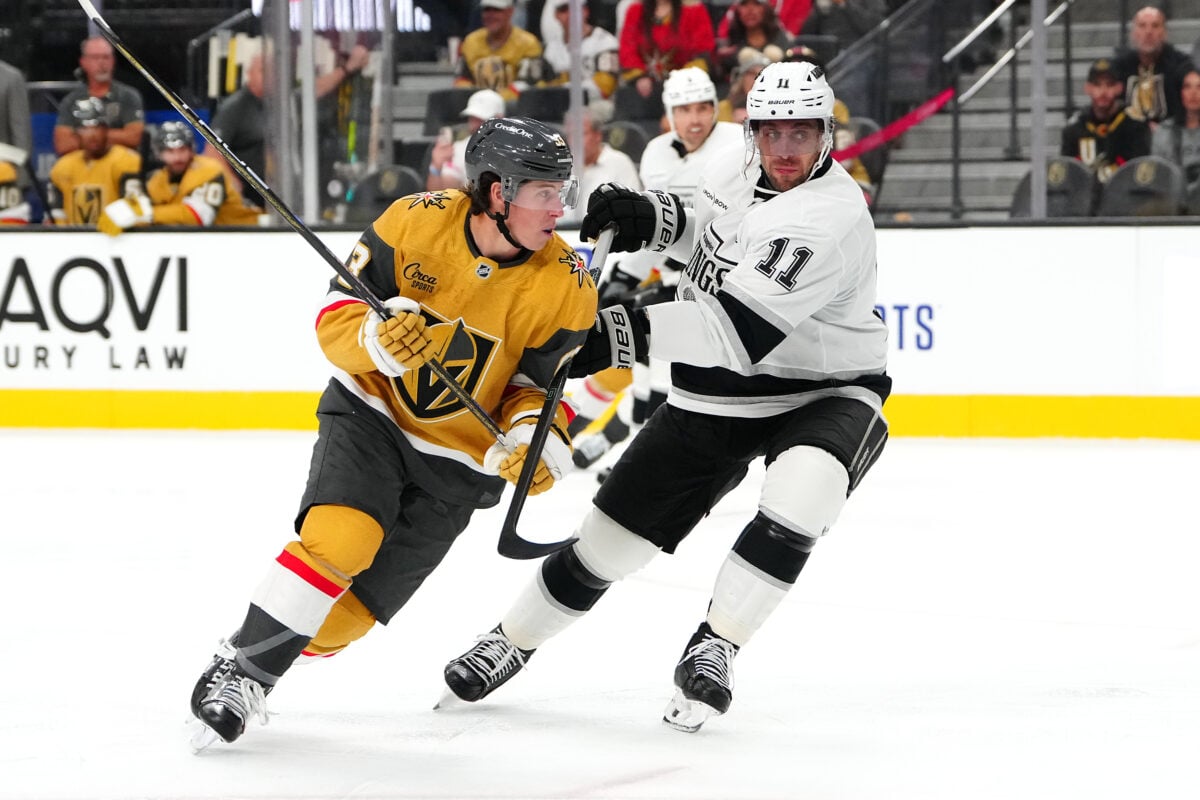
This wasn’t an isolated incident. Cassidy has been vocal about the team’s inability to manage the puck in extra time, noting that Vegas has lost multiple games where possession was squandered within seconds. While the coach speaks in generalities about the team, the videotape points to Marner’s specific brand of carelessness.
The Echoes of Toronto
Perhaps the most unsettling aspect of this early rough patch is the sense of déjà vu. The narrative surrounding Marner in Toronto was that he possessed elite offensive instincts, but was prone to shrinking in big moments and overcomplicating the game when pressure mounted.
Vegas fans, who have been spoiled by a winning culture since the team’s inception, are not known for their boundless patience. The term “overhyped bomb” has already begun circulating in local discourse. There is a growing sentiment that the $96 million contract may have been an emotional overpayment rather than a calculated valuation.
Meanwhile, a segment of the Maple Leafs’ fanbase feels a sense of vindication. The “stupid blind backhand passes” that Toronto supporters lamented for years have now become a talking point in the desert. It serves as a reminder that a player’s habits rarely vanish simply because they put on a different jersey.
Life Without Auston
From a hockey ops perspective, the biggest variable is the separation of one of the league’s most potent duos. For years, Marner and Auston Matthews operated in a symbiotic relationship: Marner the architect, Matthews the finisher.

The divorce seems to be affecting both parties, but Marner’s struggle to adjust is palpable. He looks for passing lanes that used to contain the best goal scorer on the planet, only to find they are now occupied by players who, while talented, do not possess that specific release. Marner is receiving the ice time and the deployment necessary to succeed, but his chance generation metrics are down. He is trying to play “Toronto hockey” in a Vegas system, looking for a linemate who isn’t there.
A Call for Evolution
The season is far from over, and Marner is too talented to be written off in December. However, the path to salvaging this season—and living up to that contract—requires an evolution in his game.
He needs to look no further than his own captain for a blueprint. Eichel faced similar criticisms regarding his perimeter play and reluctance to shoot earlier in his career. He adjusted, increased his shot volume, and is now on pace to tie a career high in goals.
Related – Golden Knights at the Quarter-Mark: Resilience is the Name of the Game
Marner must realize that in Vegas, he cannot just be the setup man. He needs to take the initiative, simplify his decision-making in the defensive zone, and most importantly, put the puck on the net. The Golden Knights bet their future on Marner being a superstar. It is time he started playing like one, rather than just being a highly paid passenger.
AI tools were used to support the creation or distribution of this content, however, it has been carefully edited and fact-checked by a member of The Hockey Writers editorial team. For more information on our use of AI, please visit our Editorial Standards page.
Free Newsletter
Get Vegas Golden Knights coverage delivered to your inbox
In-depth analysis, breaking news, and insider takes - free.
Subscribe Free →