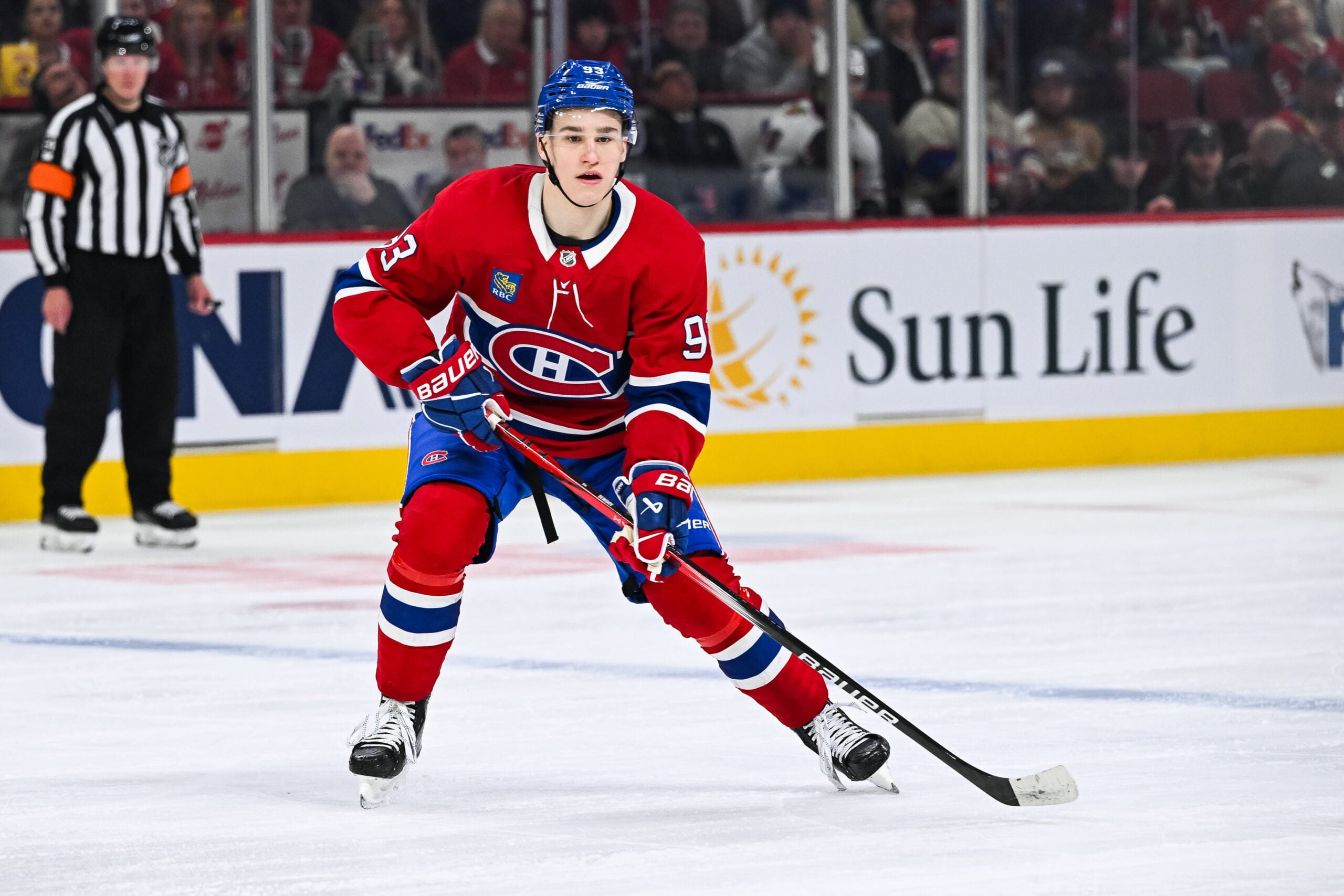
When the Canadiens signed Alexandre Texier to a two-year contract extension in January, only seven weeks after bringing him in as a free agent, the reaction was mixed. Some saw it as a smart, affordable bet on a useful player who had quickly fit in. Others wondered why Montreal needed to move so fast on a player that the St. Louis Blues had moved on from after only eight games.
Fast forward to now, after a seven-game series against the Tampa Bay Lightning and five games against the Buffalo Sabres, and the narrative has changed considerably. The answer did not come through regular-season production. It came through playoff hockey, where depth players either disappear or force themselves into meaningful roles against tighter checking and stronger competition.
What the Doubters Were Saying
Texier signed a two-year extension on Jan. 14 after producing 16 points in 25 games during the strongest stretch of his NHL career. Jan. 7 brought a three-point performance against the Calgary Flames, his 100th NHL point. Twenty-four hours later, he scored a hat trick against the Florida Panthers in a 6-2 win that pushed Montreal into first place in the Atlantic Division. It was comfortably the best offensive stretch of his NHL career.
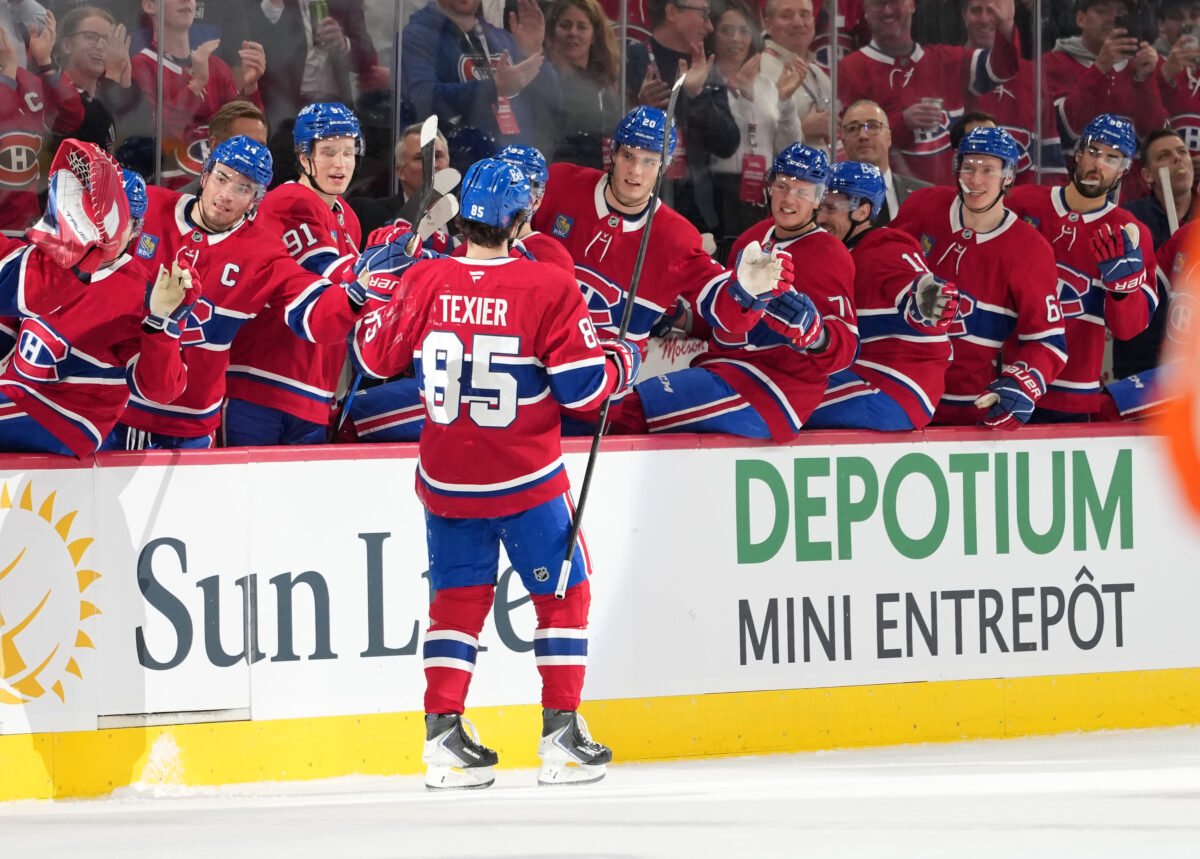
Skeptics still questioned the context. Montreal’s lineup was thin, and Texier spent significant time beside Nick Suzuki and Cole Caufield. Critics argued those opportunities would disappear once the roster stabilized. Questions surfaced about his fit alongside skill players, with some suggesting he lacked the profile of a true top-line forward and might be more valuable as a trade asset than as a long-term piece.
Texier then represented France as its lone NHL player at the Milano Cortina 2026 Olympics while managing a lower-body injury that had already cost him three games before the break. He played through it overseas and returned to Montreal, still physically compromised. Reduced minutes followed. Healthy scratches followed. A long absence stretched from late March until the playoffs opened. Many interpreted that sequence as proof Montreal had acted too quickly on the extension.
The Injury Nobody Really Discussed
Texier’s lower-body injury appeared far more significant than the original “day-to-day” label suggested. He missed games before and after the Olympic break, continued playing through the break, and did not rejoin Montreal’s lineup until the postseason began in April.
Long absences tied to undisclosed lower-body injuries rarely point to something minor, particularly during a playoff race when lineup spots become increasingly difficult to hold. Montreal’s handling of Texier increasingly looks less like uncertainty about the player and more like caution during recovery while the organization absorbed criticism surrounding the contract.
The Playoffs Changed the Conversation
Tampa Bay was likely the most difficult first-round opponent Montreal could have drawn. The Lightning played a heavy, incredibly intense playoff style in front of Vezina Trophy finalist Andrei Vasilevskiy, and the margin for error was barely noticeable. Four games required overtime, every game was decided by a single goal, and the series became one of the tightest, most closely contested playoff battles in recent memory.
That environment tends to expose depth players quickly, which made Texier’s contributions more significant. Game 3 became an early turning point. With the series tied 1-1, Texier scored his first playoff goal in seven years and added an assist in a 3-2 victory. Game 5 brought another game-winning goal. Across seven games against Tampa Bay, he produced three points, all directly tied to critical Montreal wins.
The underlying numbers further strengthened the case. Midway through the series, head coach Martin St. Louis reunited Texier with Kirby Dach and Zachary Bolduc. The line functioned nominally as a third unit but played far closer to a second line at five-on-five. The trio led Montreal with more than 57 percent of expected goals while generating more high-danger chances than they surrendered. Texier posted the strongest expected goals share on the line, reflecting impact at both ends of the ice.
His effectiveness went beyond scoring totals. Texier pressures defenders aggressively on the forecheck, wins races to loose pucks, and creates turnovers through pace and anticipation. His shifts consistently tilt possession without requiring constant puck touches or offensive-zone starts. Nothing about his game looks forced, which is precisely why it translates effectively to playoff hockey.
St. Louis referenced that directly during the regular season when he said, “He has all the tools to do what his brain is telling him to do. He’s not trying to reinvent anything.” That willingness to remain within the team concept rather than chase individual offence becomes especially valuable in the postseason, where mistakes tend to decide games more than creativity.
What the Numbers Say Now
The raw totals look modest, particularly after an absence of more than a month due to injury. But the underlying numbers were more encouraging. A positive shot-attempt share and a 60.5 percent goals-for percentage at five-on-five meant Montreal controlled the play and outscored opponents with him on the ice. In the NHL, they call that “playing the right way.”
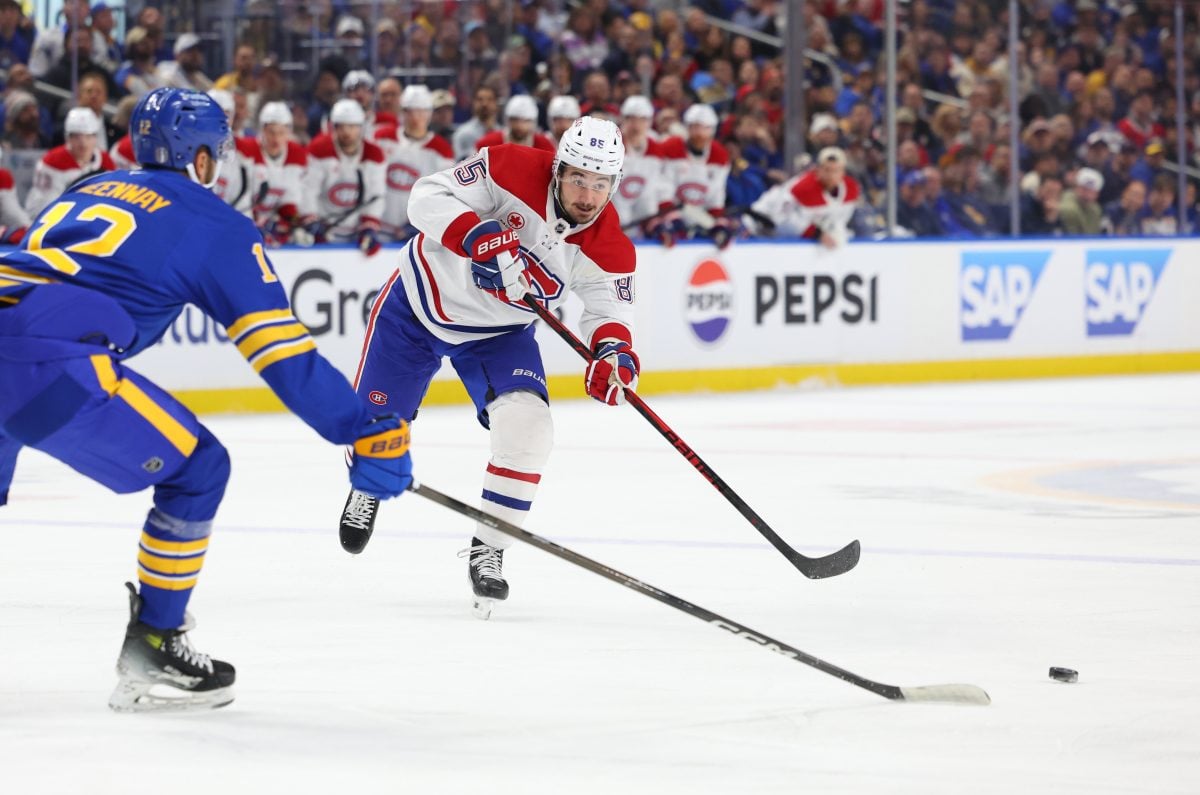
Through 12 playoff games, he has added three goals and two assists while consistently winning puck battles, protecting the puck well, and making the kind of quick, simple plays playoff hockey demands. At $2.5 million annually through 2027-28, the contract already looks team-friendly. The salary cap continues rising, and playoff-capable middle-six forwards at that price rarely stay available.
The Canadiens Trusted Their Evaluation
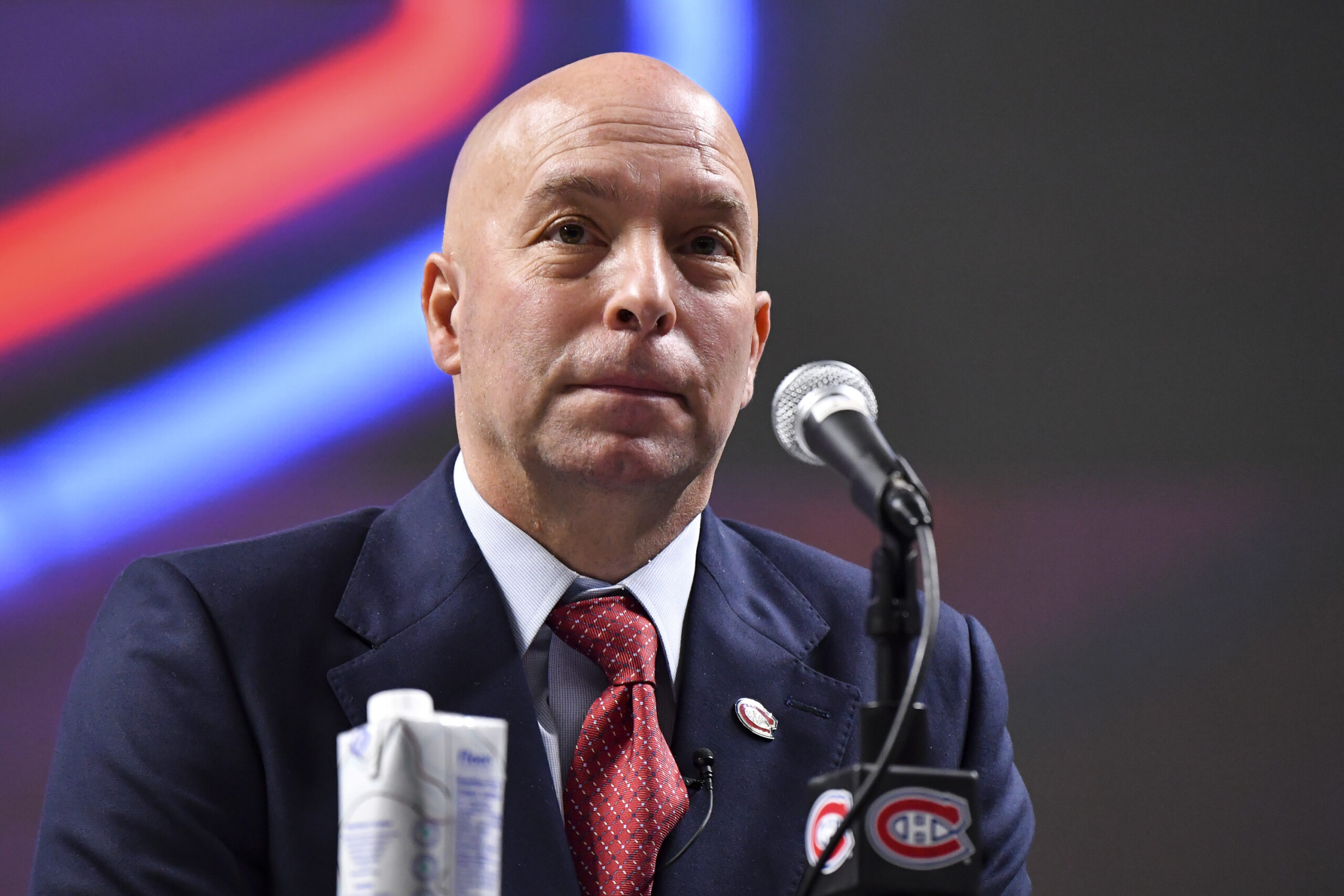
Canadiens fans have begun to recognize a pattern under this management group. Kent Hughes and Jeff Gorton repeatedly identify value before broader consensus catches up, whether through trades, contracts, or player evaluation.
Texier’s extension fits neatly into that pattern. Criticism followed immediately after the signing, intensified during his injury absence, and grew louder once healthy scratches entered the picture. Hughes, however, had already seen the details firsthand: the skating, the processing speed, the composure under pressure, and the competitiveness that emerged after difficult stretches in Switzerland and St. Louis.
Those traits rarely reveal themselves fully in a 25-game sample, particularly during the regular season. The playoffs tend to clarify which players can maintain their effectiveness as games tighten defensively and physically, and Texier has handled that environment well.
Game 5 against Buffalo offered another example. Thursday night, with Montreal trailing 2-1 and momentum shifting toward the Sabres, Texier tied the game nine seconds after Buffalo regained the lead. Alexandre Carrier’s shot deflected off his skate as he battled for positioning at the top of the crease. The goal reflected the kind of contribution playoff teams depend on: timing, positioning, and a willingness to fight through difficult areas during critical moments.
Montreal eventually won 6-3, taking a 3-2 series lead and moving within one victory of the Eastern Conference Final. Texier reached the scoresheet again, continuing a postseason run that increasingly validates Montreal’s decision to commit to him before the rest of the market fully understood the player the organization believed it had acquired.
Free Newsletter
Get Montreal Canadiens coverage delivered to your inbox
In-depth analysis, breaking news, and insider takes - free.
Subscribe Free →