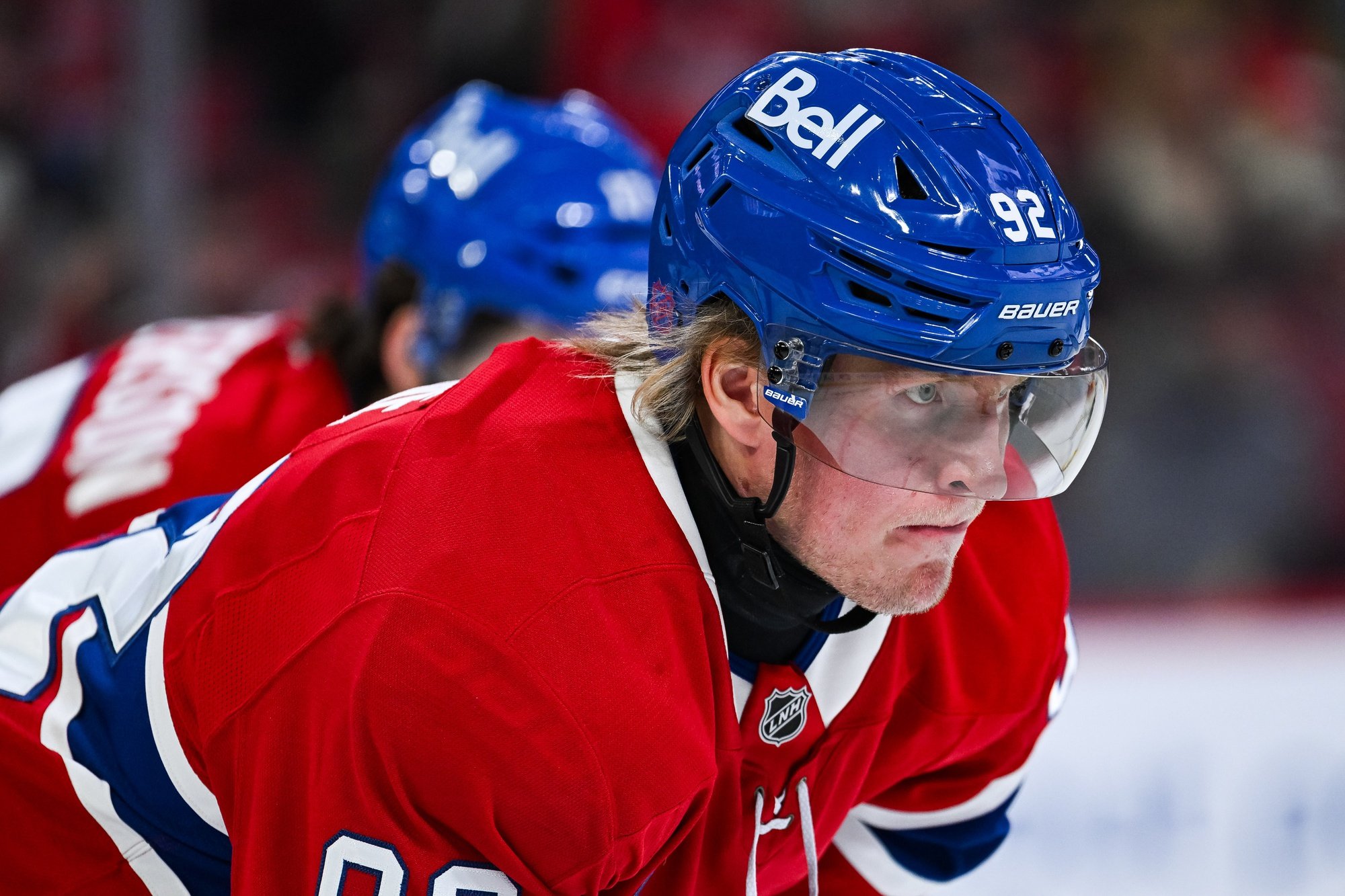
After being picked up by the Utah Mammoth in the 2025 NHL Entry Draft with the 110th overall pick, Belarus’ Yegor Borikov has crossed the ocean to sign with the club. The 20-year-old forward signed a three-year entry-level contract with the Mammoth in early May, bringing an end to a successful Kontinental Hockey League (KHL) career that saw him develop into one of Dinamo Minsk’s most reliable young talents.
In this translated interview, originally appearing on Belarusian portal Onliner, Borikov talked about Utah’s constant involvement in his development, his readiness for the NHL challenge, and his ambitions for the future.
**You can read the original interview in the Russian language by Anton Sherevinov on Onliner by clicking here**
Borikov wasn’t a household name when Utah called his name last summer. But the Mammoth organization quickly showed they were serious about their investment, maintaining constant contact with the young winger throughout the 2025-26 season. “Utah was always in touch,” Borikov said.
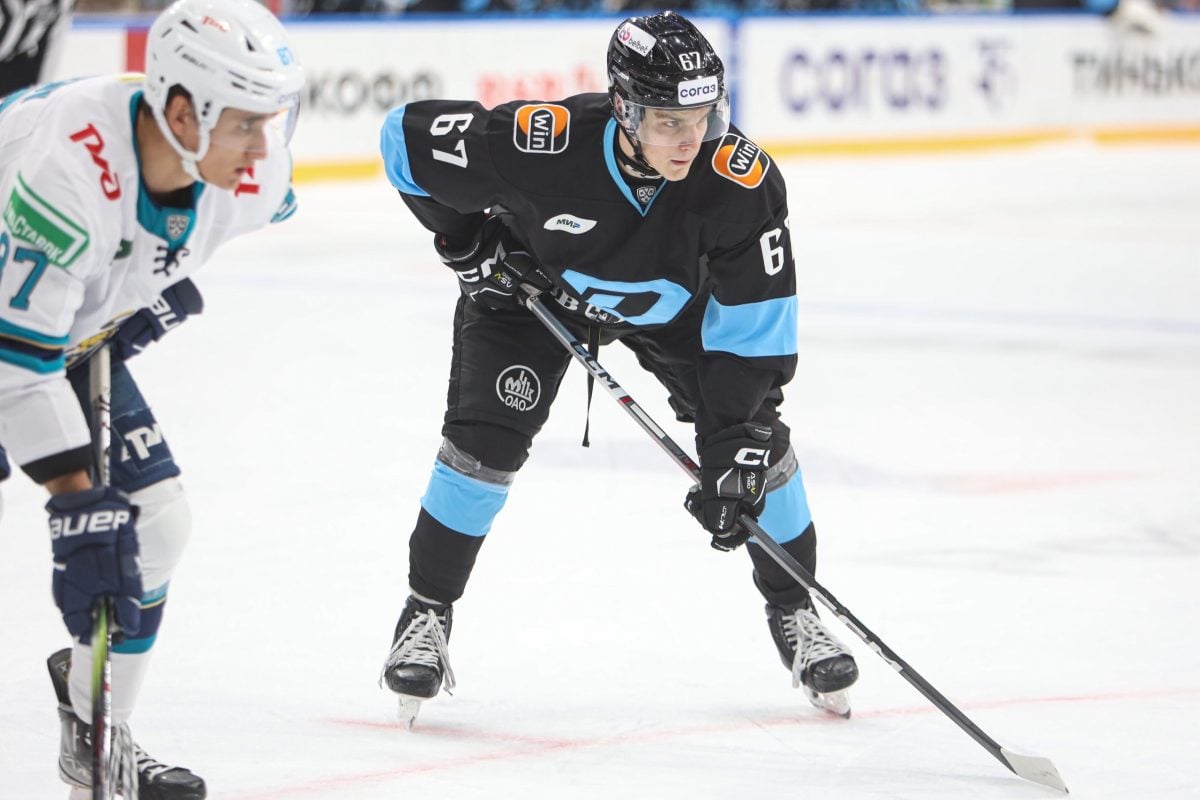
“I would say they led my entire season. The Utah staff responsible for developing young hockey players were always in contact with me. If I had any injuries, they would talk to me via video, clarify the nature of the damage, and advise me on how best to recover. The goal was one—to bring me into the best shape. I saw their commitment, their interest, and I made my decision about the contract with that in mind.”
Borikov’s Breakout Season
Borikov’s 2025-26 campaign justified Utah’s faith. In 59 regular-season games with Dinamo Minsk, he recorded 16 goals and 14 assists for 30 points—all career highs. He finished second on the team with 78 hits and contributed four game-winning goals. During the 2024-25 KHL postseason, he scored seven goals in 11 games, tying Evgeny Kuznetsov‘s record for most goals in a single KHL playoff run by a player age 20 or younger.
“Playoffs are the best time in hockey,” Borikov reflected. “I went out on the ice thinking that I was enjoying the moment. It worked out for me because we had a good line with Chris Tierney and Daniil Lipsky—we played together for half the season and understood each other. Tierney did a lot for us in defense and in attack; there was chemistry. I scored in the first game, felt confident, and went further on those emotions.”
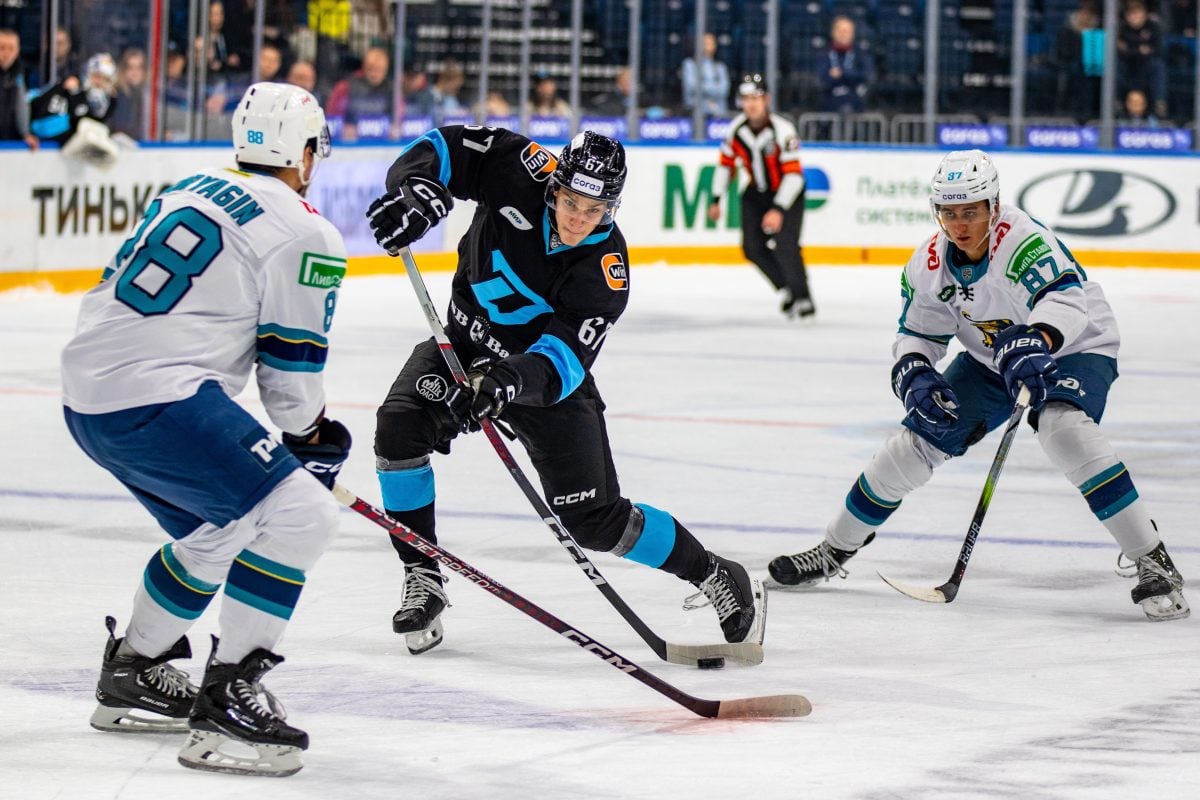
The announcement of his signing with Utah sparked some discussions on whether he is ready to move to the NHL at such a young age. “I don’t think anything about it. These people just need to understand that this is a hockey player’s decision,” Borikov said. “They say ready, not ready… How do you know who is ready and who isn’t? I understand that such is the job of experts—to discuss hockey and players. I treat this adequately. And I haven’t heard much negativity. People have the right to say that. Time will tell.”
When asked directly if he believes he’s ready for the challenge, Borikov was emphatic: “I’m ready!”
The Road Ahead
Borikov’s move to Utah will begin in early July when he attends the team’s development camp. He’ll then return to his native Belarus for the summer before heading to Salt Lake City in mid-August to prepare for training camp, which opens in September.
“I want to arrive a couple of weeks early to get settled, get used to the time zone, adapt to the city and the local residents,” Borikov explained.
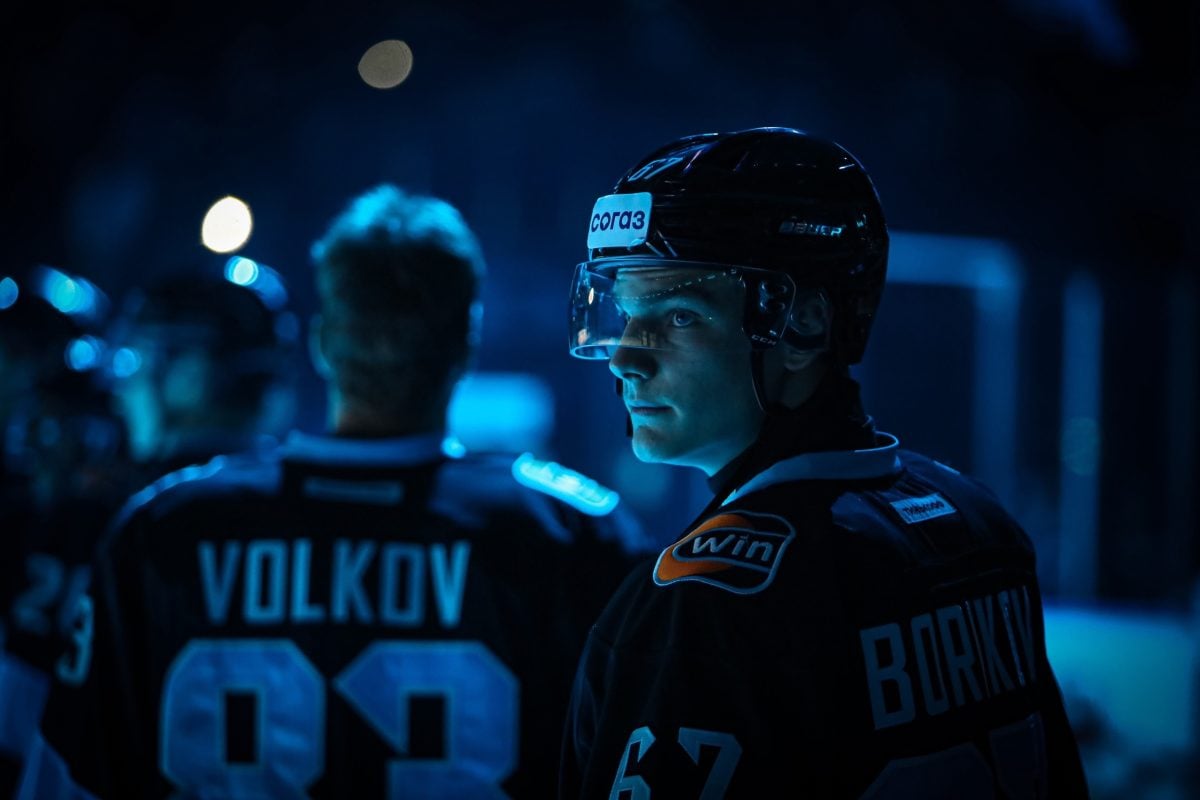
The winger has been studying his new home city and likes what he’s learned. “I watched a lot of videos about the state and the city and talked with the Dinamo Minsk’s North American players,” he said.
He continued, “Everyone who has been there says it’s a very cool city—mountains, a big lake, friendly people. The taxes, by the way, are not as high as in New York, for example. I also learned that it’s a religious city with many Mormons. Establishments close early, and it’s a very calm, family city with lots of parks and beautiful nature.”
For a hockey player trying to focus on his development, Borikov sees the environment as ideal. “It’s a perfect city for a hockey player—no temptations. And for Belarusian hockey, this place is iconic because that’s where our team beat the Swedes at the 2002 Olympics.”
Difficulties and Improvements
One area where Borikov acknowledges he needs improvement is his English. While he can handle hockey terminology and basic conversations—teammate Robert Hamilton, who spent the last four seasons in the KHL after more than 200 career games in the American Hockey League (AHL), recently told him his English was “night and day” compared to when he first joined Dinamo three years ago—Borikov knows contract negotiations and complex discussions require more fluency.
“I’ll definitely work with a tutor; I need to focus on that,” Borikov said. “Knowledge of the language directly affects the relationship between player and coach so that both he understands me and I understand him. In the future, this will help.”
Before making his decision, Borikov consulted with several Belarusian players who have NHL experience. He spoke with Ilya and Alexei Protas, Artyom Levshunov, Egor Sidorov, Andrei Loshko, and Egor Sharangovich—all of whom supported his move.
“They said that even if they send me down to the AHL, it won’t be a tragedy,” Borikov explained. “After all, if someone on the main team gets injured, they can call me up to the main roster at any time.”
The young forward also expressed deep gratitude to Dinamo head coach Dmitry Kvartalnov, who gave him his opportunity in professional hockey. “He always believed in me. He gave me a chance, told me how to act, how to train, how to recover. He showed me all the nuances of how to go from the level of junior hockey to adult hockey. I am very grateful to him.”
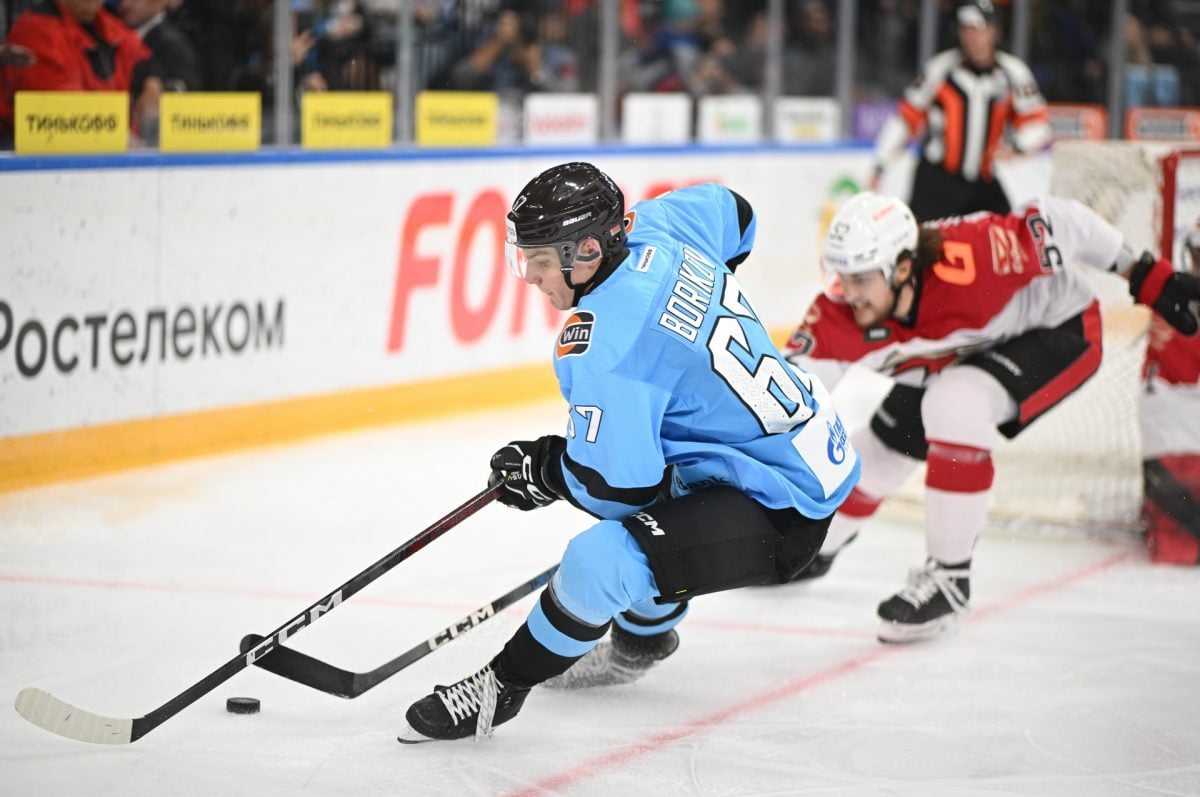
Kvartalnov’s parting advice was practical. “Watch your health; you need to gain a little weight because the guys there are physically a bit stronger. This is primarily so you don’t get injured often.”
Home Connection
Borikov hails from Zhlobin, a small Belarusian city that has become a surprising hockey talent factory. Its best product is Chicago Blackhawks defenseman Levshunov. Borikov’s father, Alexander, is deputy director of the Belarusian Metallurgical Plant and serves on the supervisory board of the local team, Metallurg Zhlobin.
“I’m proud of my father—he’s done a great job achieving such a position; he’s an example to me,” Borikov said. The younger Borikov credits his father with instilling the competitive edge that defines his game. “Everything that is hockey in me—audacity, work ethic, character—my father instilled. From childhood, he constantly hammered this into me and explained it. If I didn’t finish running somewhere, I immediately heard a shout from the stands. I understood that I needed to work so I wouldn’t get yelled at after the game.”
The city’s hockey infrastructure also played a crucial role. “In Zhlobin, the doors of the ice palace were always open,” Borikov recalled. “You could come at any time, take the key, and go to the gym. And the coaching staff is excellent… all these specialists invested a lot in us.”
Looking to the Future
While Borikov is focused on making the NHL roster, he hasn’t forgotten his ultimate goals. “Win the Stanley Cup, the Olympics, the World Championship with the Belarus national team,” he said when asked about his hockey dreams. “I think every boy dreams about this. God willing, everything will work out.”
For now, though, Borikov is taking things one step at a time. “I don’t build expectations; I just live for today, develop, and try to become better,” he said. “Through this, I want to achieve success. I’m not predicting anything. When I go, then I’ll study America from the inside.”
If things go well as they can, soon Zhlobin will put on the map yet another high-level player.
Free Newsletter
Get Utah Mammoth coverage delivered to your inbox
In-depth analysis, breaking news, and insider takes - free.
Subscribe Free →