There’s a strange rhythm to this time of year in Toronto Maple Leafs hockey coverage. The games are over, the noise has settled, and yet it doesn’t feel like anything is truly finished. It feels more like a pause between chapters than the end of one. After years of covering the team, I find myself in a unique place — waiting for things to come together, wondering if this is finally the stretch where the pieces click, and reflecting on just how many versions of this team I’ve seen come and go.
Every offseason brings its own version of change, but this one feels a little different. Maybe it’s because so many familiar names are still floating in and out of the conversation, or maybe it’s because the questions feel older than the answers we keep trying to find.
Reading Steve Simmons’ Toronto Sun column on Sunday sparked that familiar train of thought — the kind that pulled me back through different eras of this team, different hopes, different outcomes. It made me think about the early days of my time covering the Maple Leafs, back when everything still felt like it was in front of them rather than repeating itself (from Steve Simmons, Toronto Sun, “Sidney Crosby’s decision to play at Worlds surprised Team Canada leaders,” May 17, 2026).
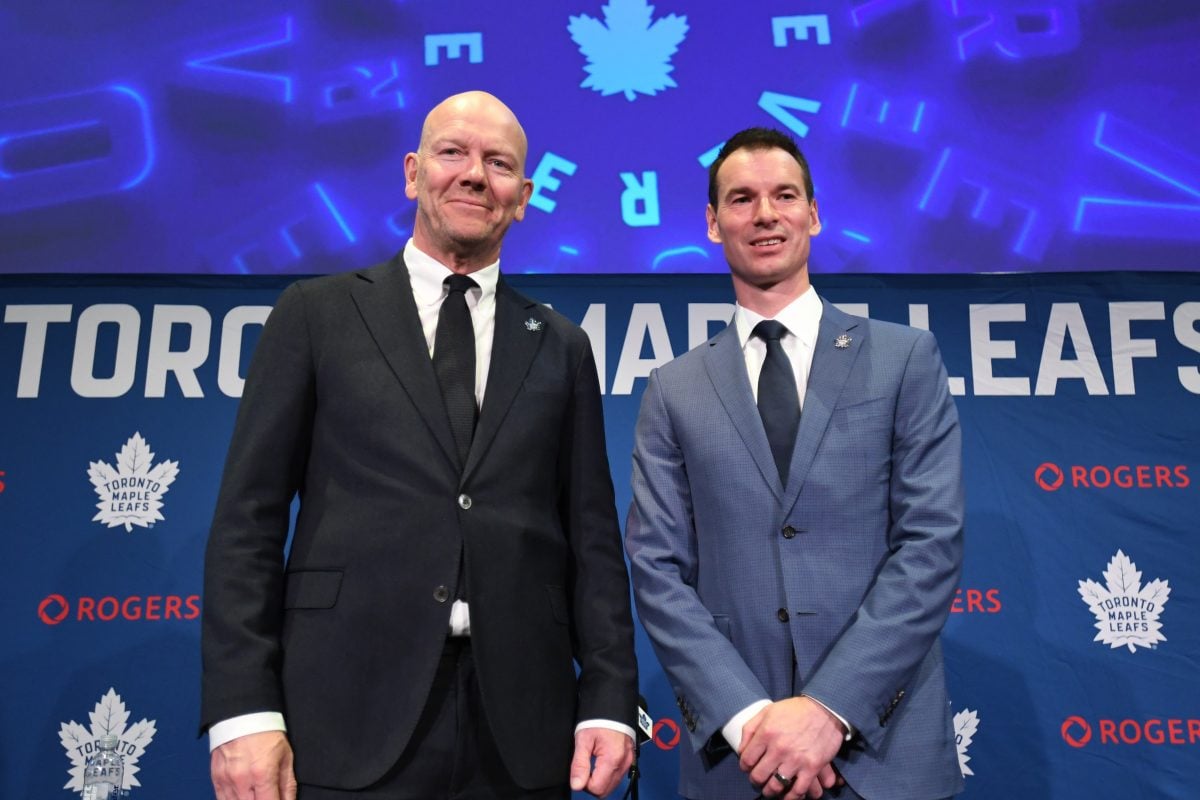
That’s the tension right now: looking back and looking forward at the same time. The Maple Leafs are once again in a moment of transition, and even if the roster changes aren’t fully clear yet, the feeling around the organization is. Something is shifting again. The question, as always, is whether this time it leads somewhere successful.
Here are three areas of my own reflections. Without any pressure, I would love to hear readers’ own reflections on the team over the past decade.
Remembering Sheldon Keefe — The Coach Who Kept It Together
Thinking about Toronto’s coaching picture inevitably brings Sheldon Keefe back into focus. When he stepped in after Mike Babcock, the situation wasn’t just about systems or tactics. It was about stabilizing a team that was drifting. And for huge periods, he did exactly that. The Maple Leafs played faster, more structured hockey, and for a time, it genuinely looked like the group had found its identity.
One of my favourite things about Keefe is that he brought Pierre Engvall with him from the American Hockey League (AHL) Toronto Marlies, and Engvall turned into something like an Energizer Bunny for stretches of that era. He did a bit of everything — killing penalties, forechecking, bringing straight-line speed — and at times he really changed the pace of games just with his energy.

Engvall also had some skills that sometimes get overlooked, especially when he was used in the right role. There were times when he looked like a genuinely useful middle-six asset rather than just a depth forward. Engvall was also the fittest skater on the team, the kind of player who could wear down opponents over a shift. In a similar way, David Kämpf brought that same level of fitness with him. Later on, he filled a similar role. He was reliable in specific matchups and defensive situations.
What I always appreciated about Keefe was that he wasn’t afraid to bring in younger players he trusted from his own system and give them a real chance. Engvall is a good example of that — a player he believed in and elevated, even when the previous coaching regime under Babcock likely wouldn’t have used him the same way. Keefe also saw value in Pontus Holmberg, who was let go and is now playing a solid depth role with the Tampa Bay Lightning.
As well, Fraser Minten got an early-season look with Keefe during the 2023–24 campaign, a brief NHL stint that showed the coach was willing to test him in real minutes sooner than later. It’s fair to wonder whether Keefe might have kept him around longer if he’d stayed behind the bench, given his tendency to trust young players in short, evaluative runs.
Coaches rarely last long in Toronto, and Keefe eventually ran his course here, but his time shouldn’t be reduced to playoff results alone. There were seasons where his teams played some of the most coherent hockey the franchise had seen in years. Now in New Jersey, his situation is unsettled again, with organizational changes creating uncertainty about his future. That alone keeps his name relevant in coaching discussions across the league.
For all the debate that followed him here, Keefe remains one of the more composed, modern-thinking coaches I’ve seen behind the Maple Leafs bench in my time covering the team. Whether he gets another long runway somewhere else will be an interesting subplot to watch.
Frederik Andersen — Quiet Consistency That Still Echoes
Frederik Andersen doesn’t usually come up in loud conversations anymore, but his career continues to build in the background in a way that deserves attention. For Maple Leafs fans, he represents a very specific era — the steady presence in net during a stretch when the team was still trying to define itself as a contender.
Andersen was acquired by the Maple Leafs from the Anaheim Ducks on June 20, 2016. The move was made by then–general manager Lou Lamoriello as part of an effort to finally stabilize the goaltending position in Toronto after years of uncertainty in net.

(Amy Irvin / The Hockey Writers)
The Maple Leafs sent a 2016 first-round pick (30th overall) and a 2017 second-round pick to Anaheim in exchange for Andersen. He immediately stepped into the role of clear No. 1 goaltender and became a key piece of the team during the Babcock era, handling a heavy workload and bringing consistency in net during a transitional period for the franchise.
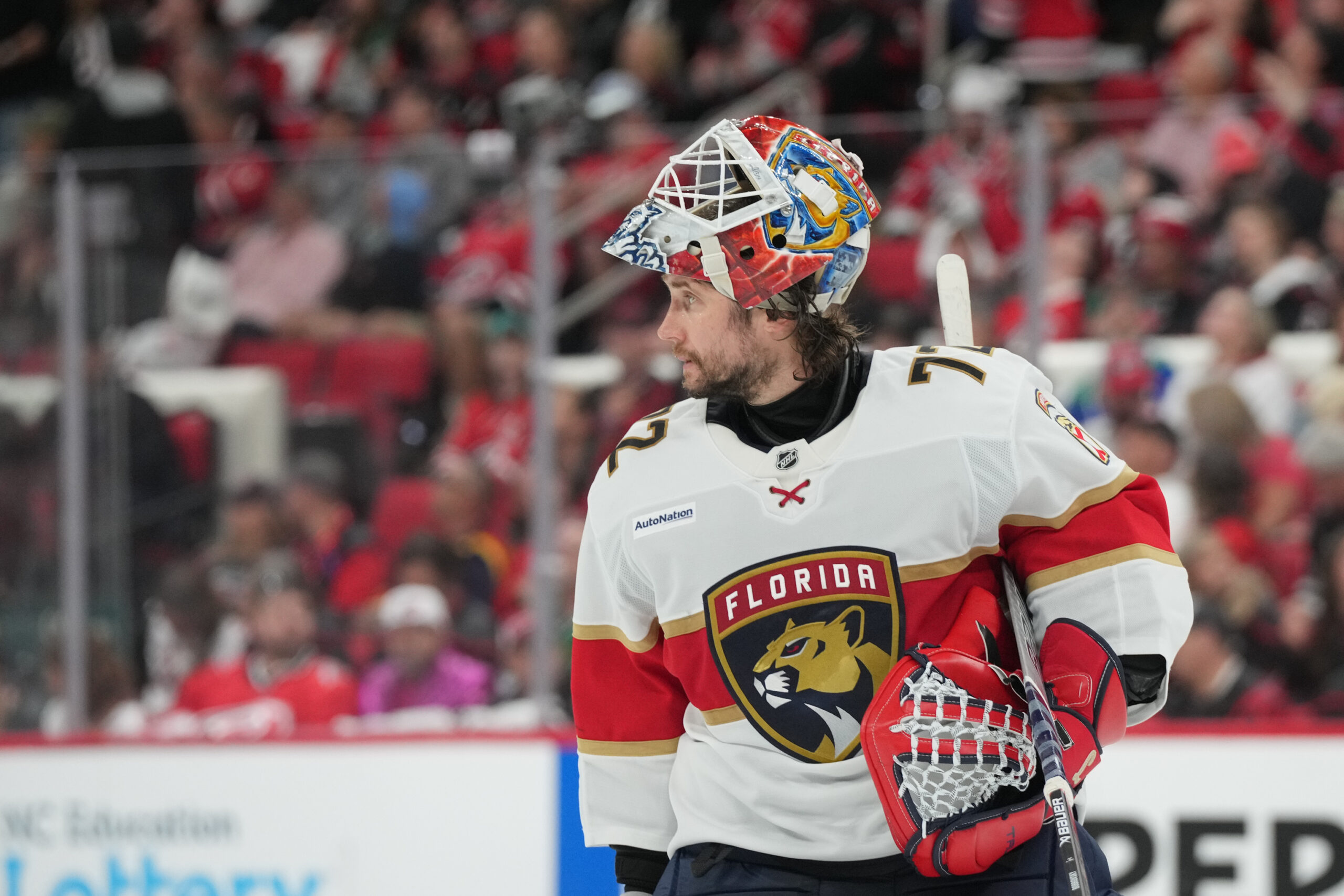
Even now with Carolina, the 36-year-old Andersen continues to add to an impressive résumé. Passing Jonathan Quick on the all-time playoff starts list is one of those milestones that sneaks up on people until you realize just how long he’s been doing this, and at what level.
There’s hardly any flash in Andersen’s game, no dominant narrative that follows him around. Instead, it’s longevity, professionalism, and a consistent ability to handle heavy workloads when called upon. For Toronto, he’s a reminder that not every valuable player leaves behind a dramatic legacy — some just accumulate respect over time.
Marner vs. Kessel: Two Polarizing Maple Leafs From Different Eras
One of the reasons the comparison between Mitch Marner and Phil Kessel keeps coming up in Maple Leafs conversations is that, in some ways, they’re almost polar opposites — even if people keep linking them because they left Toronto with similar fan sentiment. These similarities are mostly surface-level rather than structural.
Kessel was a very specific kind of player: an elite scorer with a unique shape and style who produced in Toronto during a period when the team wasn’t particularly successful in the regular season. After leaving the Maple Leafs, he went on to win Stanley Cups in Pittsburgh, where he was part of a deeper, more structured roster that better supported his strengths. He later added another Cup in Vegas, which only reinforced how valuable he can be in the right environment.
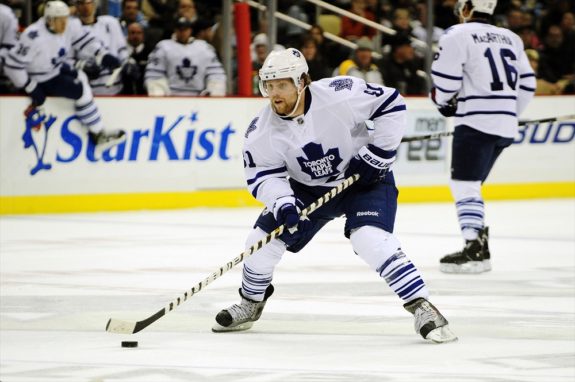
Marner, on the other hand, is a more complete, two-way winger with a well-rounded game. His impact goes beyond scoring, but his time in Toronto has been defined more by playoff expectations than regular-season production. How he is ultimately remembered will depend heavily on what comes next in his career, just as Kessel’s legacy was shaped in part by what followed his departure from Toronto.
Both players were elite offensive talents, both faced intense scrutiny in Toronto, and both left with fans still debating what their time here actually meant. But the context around them was completely different. Marner spent his prime on highly competitive Maple Leafs teams alongside Auston Matthews, where expectations extended beyond regular-season success to deep playoff runs. Every postseason loss became part of his individual narrative, and his recent playoff success elsewhere has only complicated how his Toronto years will be judged.
Kessel’s role was almost the opposite. He was the primary scoring threat on Toronto teams that often lacked the depth or structure to contend in the playoffs. When he moved on, he joined environments in Pittsburgh and later Vegas that were built to maximize his offensive strengths rather than carry them.
Same level of talent, different ecosystems. That distinction shaped their careers in the Blue & White.
What Comes Next for the Maple Leafs?
The reality for the Maple Leafs is that nothing here is fully settled yet. Not the roster direction, not the coaching landscape, not even the identity of the team heading into next season. This is a franchise that has lived in transition for years, and yet each new version still feels like it’s trying to solve the same central question: what will it take to move from contender to champion?
The uncomfortable truth is that there are no guarantees the next iteration will be any clearer than the last. But there is change coming, whether incremental or significant, and that alone creates a sense of anticipation that hasn’t really gone away.
Fans may not know exactly what next season will look like yet, and internally, the organization likely doesn’t either. But the expectation remains that the Leafs will ice a competitive team, one that carries both pressure and possibility in equal measure.
It’s that balance — between hope and uncertainty — that defines this moment. And as always in Toronto, it makes the season ahead worth watching, even if nobody is quite sure where it’s headed yet.
Free Newsletter
Get Toronto Maple Leafs coverage delivered to your inbox
In-depth analysis, breaking news, and insider takes - free.
Subscribe Free →