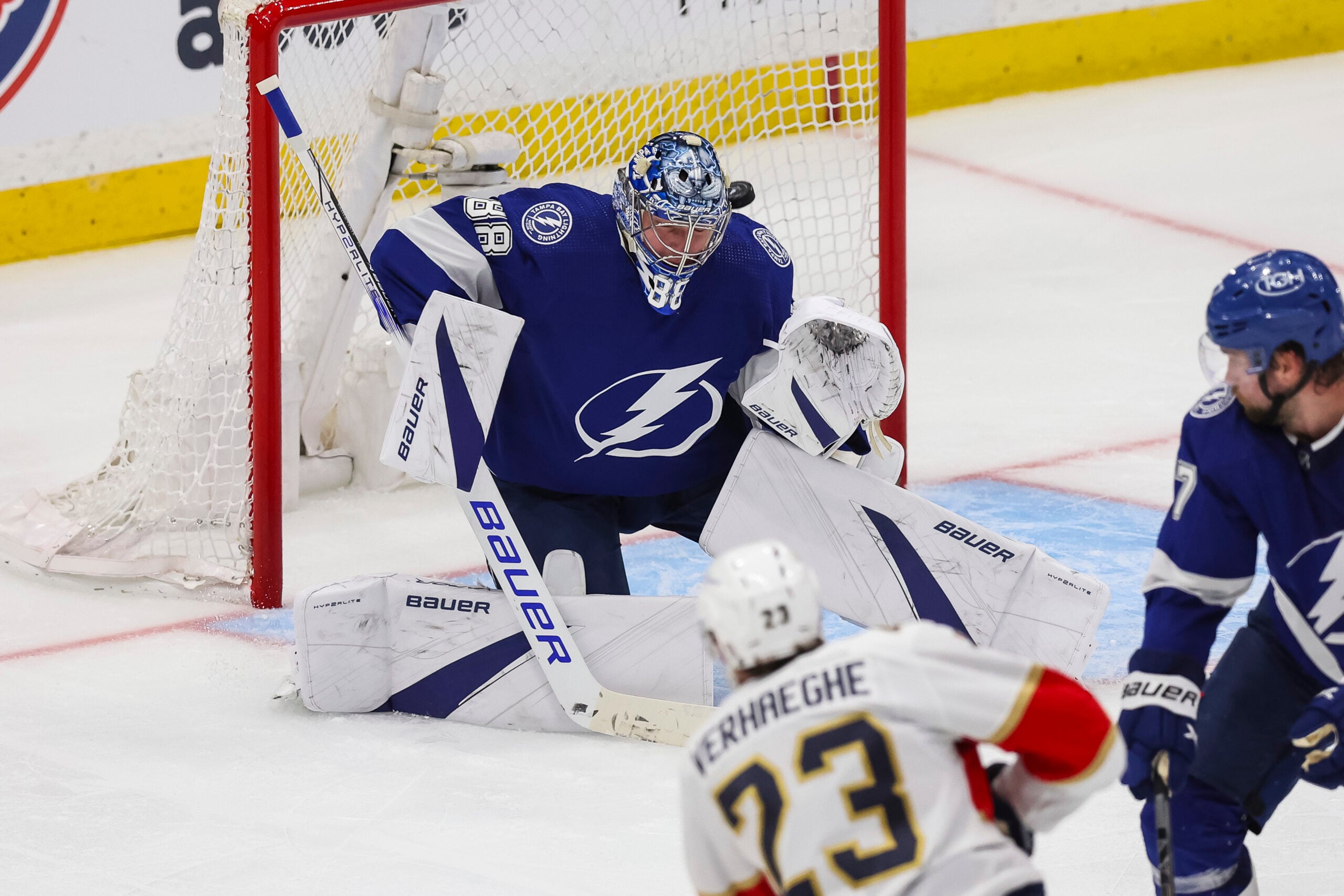
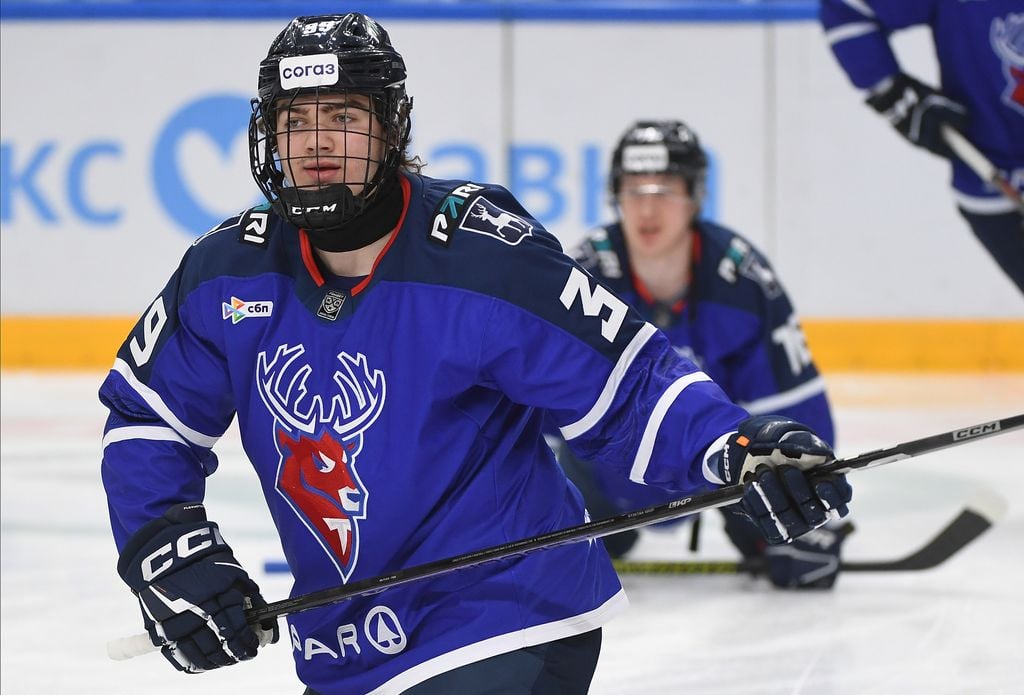
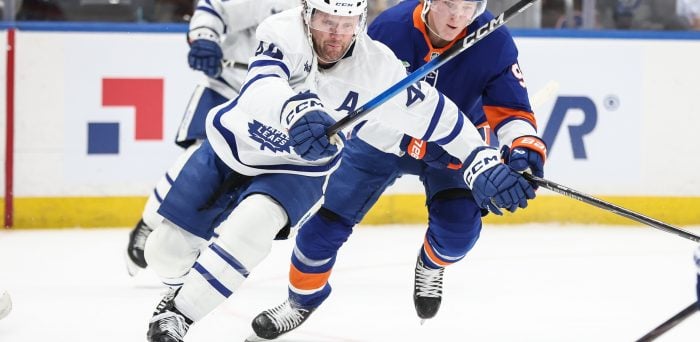
The Richter scale does not lie, even if hockey traditionalists occasionally do. When the seismograph at Collège Jean-de-Brébeuf registered a 0.5 magnitude tremor following Alex Newhook’s overtime winner on Monday night, it captured more than just the euphoria of 21,000 fans inside the Bell Centre and another 20,000 on the asphalt outside. It recorded the exact moment a four-year rebuilding project announced itself as one of the most dangerous young teams in the NHL.
By dispatching the Buffalo Sabres in a gruelling, seven-game, second-round series, the Montreal Canadiens not only advanced to their first Semi-Finals since 2021 and first Eastern Conference Final since 2015, but they also provided a roadmap for modern franchise architecture.
Yet, the conference finals are no place for self-congratulation, and it does not mean the team can be considered a perennial Stanley Cup contender. The Buffalo series was an absolute dogfight, just like their first-round series against the Tampa Bay Lightning. Montreal trailed early and often, surrendering the opening goal in five of seven contests, and found themselves hemmed into their own zone for massive chunks of Game 7 by a ferocious Sabres forecheck.
If General Manager (GM) Kent Hughes and Head Coach Martin St. Louis want this run to be the dawn of a dynasty rather than a magical, lightning-in-a-bottle cameo, they must consider the Sabres series a diagnostic test. Here are some structural truths and tactical lessons revealed by Montreal’s seismic triumph over Buffalo.
Lesson 1: Structural Foundation and the Art of High-Volume Drafting
For years, conventional wisdom stated that a successful rebuild required starting from scratch. Montreal’s ascension, however, proves that a rebuild relies not only on maximizing the trade value of assets already within the organization but also on identifying core players while executing a high-volume draft strategy.
Before Hughes completed his first trade, he identified the team’s foundational pieces already in place. The Canadiens possessed an enviable young core that had been insulated and developed through the club’s late-stage competitive years.
Nick Suzuki, who was acquired in the 2018 Max Pacioretty trade, was already on track to become a premier top-line center. On his wing was Cole Caufield, drafted 15th overall in 2019, who provided an elite scoring threat. Another core piece was Kaiden Guhle, who has proven his worth in these playoffs. He was drafted 16th overall in 2020 and provides a structural anchor who complements the team’s highly mobile blue line.

These players were already developing before the rebuild began in earnest, giving management a monumental head start. Once the roster reset commenced under Hughes, the front office weaponized cap space and traded veterans to pile up draft capital. They did not try to draft perfectly; they used a shotgun style, drafting often. They were rewarded, hitting home runs on uniquely gifted prospects by letting their developmental pipeline work.
The turning point of the rebuild happened during the 2022 NHL Draft, when Montreal capitalized on both immense luck and sharp scouting. Winning the draft lottery handed them the first-overall selection, which they used to select Juraj Slafkovsky. While critics initially questioned the pick over more conventional options, the front office prioritized ceiling and physical projection. Slafkovsky’s explosive 30-goal 2025-26 campaign validated that patience.
Later in that same draft, the front office struck gold by turning a trade-deadline asset (acquired by flipping defenseman Brett Kulak to the Edmonton Oilers) into the 62nd overall pick, used to select Lane Hutson. The undersized but offensively transcendent defenseman, who was still available due to his size, shattered rookie blue-line scoring records with a 66-point regular season and won the Calder Trophy.
He followed it up with a 78-point sophomore season in 2025-26. His ability to play heavy minutes against top opposition while providing significant offensive production changed the dynamic of Montreal’s transition game against the Sabres’ heavy forecheck.
Another piece of the offensive puzzle, but definitely not the last, dropped into place at the 2024 Draft. After enduring a third consecutive season at the bottom of the standings, Montreal secured the fifth-overall selection and snagged elite Russian playmaker Ivan Demidov. Demidov’s sublime puck-handling and high hockey IQ translated instantly to North America, yielding a spectacular 62-point rookie season.
By trusting its scouting staff and collecting multiple picks, Montreal insulated itself against the inevitable misses of the draft floor. The modern blueprint isn’t about tanking until you get a single generational saviour; it is about establishing a high-volume pipeline that allows you to cultivate stars from every round of the draft.
Lesson 2: Depth Is Where Series Are Won
With shrewd trades and signings, Hughes added vital playoff performers like Newhook, Noah Dobson and depth scoring from Zachary Bolduc. While the Suzuki-Caufield-Slafkovsky top line naturally commands the headlines and the bulk of opposing defensive game plans, Game 7 proved that playoff advancement is a depth exercise.
Throughout the final two periods of Game 7, Buffalo’s top defensive pairings effectively choked out the Suzuki line. The Canadiens struggled to clear their own zone, turning the puck over repeatedly along the boards and leaning entirely too heavily on predictable breakout strategies. Enter the second line of Newhook, Jake Evans, and the rookie Demidov.
For the second consecutive series, Newhook played the role of Game 7 hero, this time in overtime. His speed, combined with Evans’ relentless defensive reliability and Demidov’s sublime puck-handling, provided the only consistent offensive zone pressure Montreal could muster in the game’s final 40 minutes.
In the regular season, teams win with their stars. In May and June, they win because depth scoring treats a deadlocked hockey game like a personal sandbox. The investment Hughes made in acquiring Newhook from the Colorado Avalanche using an excess first-round pick (acquired in the Ben Chiarot trade) has turned into pure post-season gold.
Lesson 3: The Goaltending Paradigm Has Shifted
We must talk about Jakub Dobes. The narrative entering the series was whether the 24-year-old fifth-round pick from 2020 could withstand the psychological crucible of Stanley Cup pressure. When Dobes was shelled for six goals on 33 shots in Game 6 and was eventually pulled in the loss, some members of the media were critical, but he still had a positive goals saved above expected, indicating the 8-3 loss could have been far, far worse.
The ghosts of Carey Price and Patrick Roy always hover over the Bell Centre crease, and a lesser netminder would have crumbled under that weight. Instead, Dobes delivered a Game 7 performance for the ages, stopping 37 of 39 shots. He survived goal-mouth scrambles, withstood a controversial unpenalized collision from Jason Zucker, and held the fort while Buffalo dominated the shot clock.
The lesson here is tactical insulation. Dobes was excellent, but he succeeded because the defensive structure around him didn’t panic. When he was down and trying to seal the post in the second period, Hutson slid into the net behind him, using the goaltender’s own equipment to seal the opening.
Montreal no longer needs a goaltender to play like an immortal deity every single night to win a series. They need a goaltender who can recover from a disaster, reset his mechanics, and make the specific three or four “impossible” saves required during an opposing third-period push. Dobes proved he has that psychological baseline.
The Canadiens’ rebuild is ahead of schedule, plain and simple. Hughes has orchestrated a masterclass in asset management, balancing draft-and-develop patience with aggressive, calculated trades for premium pieces like Dobson and Newhook.
The 0.5 magnitude microearthquake registered in Montreal wasn’t just a reaction to a single hockey goal. It was the structural shifting of the NHL’s competitive landscape. The Canadiens are no longer a cute story, a Cinderella squad, or a rebuilding project with potential. They are a problem for the rest of the league. Regardless of the outcome of the Eastern Conference Final, make no mistake: the foundation has been poured, and the blueprint for the Canadiens to become Cup contenders again is on display.
Free Newsletter
Get Montreal Canadiens coverage delivered to your inbox
In-depth analysis, breaking news, and insider takes - free.
Subscribe Free →