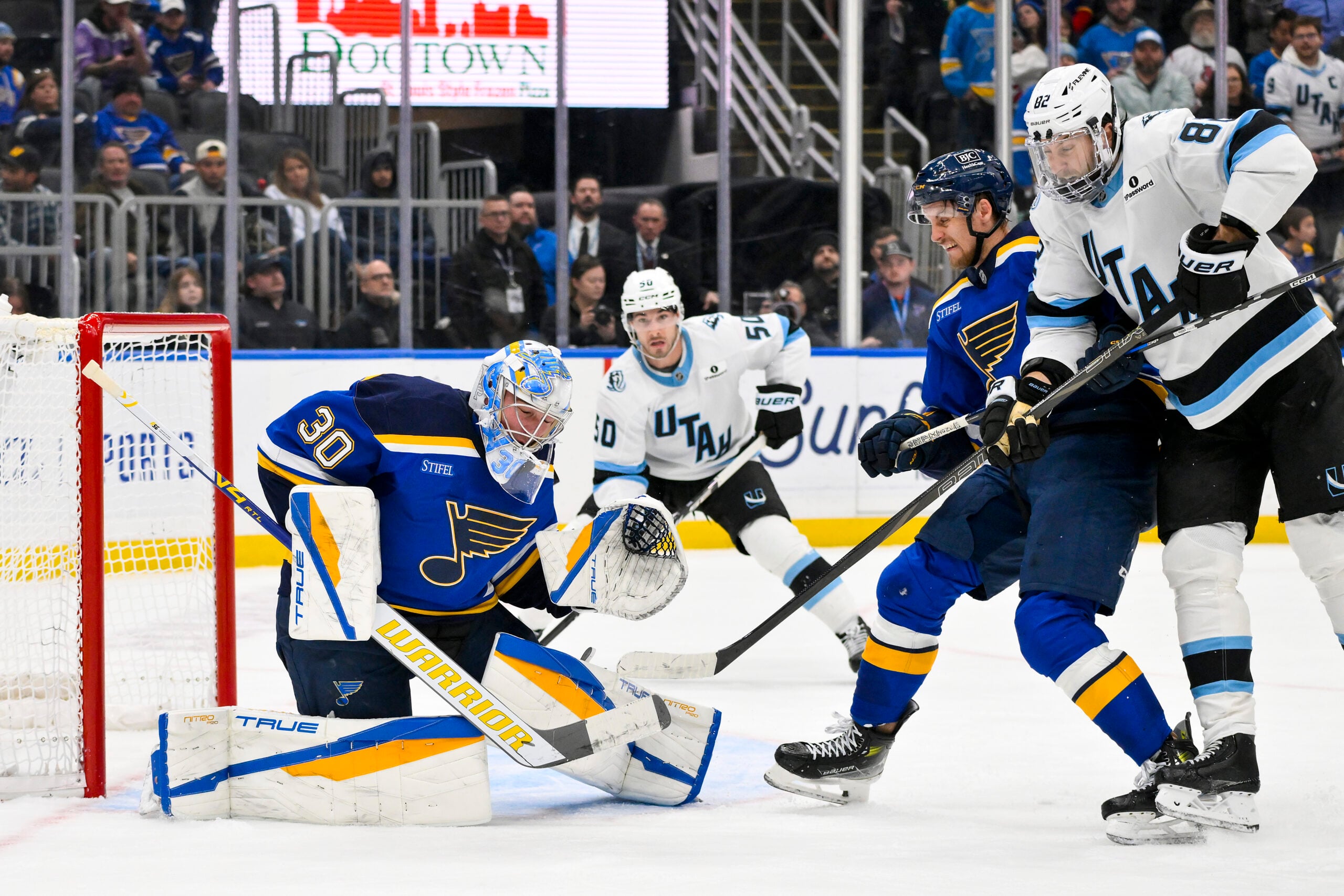
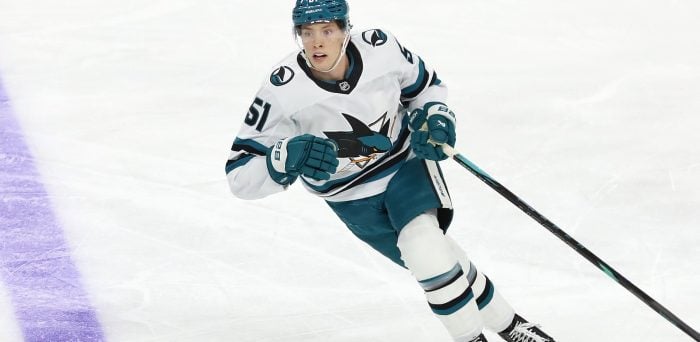
It could be argued that the NHL has not seen a league-shattering move of this magnitude since the Wayne Gretzky trade. On Friday, July 3, the Philadelphia Flyers tendered an offer sheet to 21-year-old Anaheim Ducks center Leo Carlsson that would make him the highest-paid player in hockey: $18 million across five years. The contract structure is even more ridiculous, as it’s set to pay him $39 million in the next 12 months.
If the Ducks match the contract, they’ll be stuck with one of the most ludicrous contracts ever. If they don’t, they receive the Flyers’ next four first-round picks, spanning from 2027 to 2030.
For some background, Carlsson was the second selection in the 2023 NHL Draft and recorded 28 goals and 39 assists across 70 games last season. Those 67 points probably underrate his offensive impact, as he is one of the most dazzling young playmakers in the sport, but it’d be hard for anyone to live up to an $18 million cap hit—there’s a case for the Ducks not to match here.
Let’s go over four key points in this situation, looking at the data, using some logic, and diving into the rumor mill along the way.
Four First-Round Picks vs. Leo Carlsson: Looking at the Data
I was inspired by a post from JFreshHockey on Twitter/X to simulate whether four first-round picks—particularly in the second half of the first round—could replace Carlsson’s impact. To test this, I randomly selected four skaters taken between picks 17 and 32 in the analytics era (2007-08 to present) and recorded their expected goals above replacement (xGAR) during their age-25 season.
To expand on the methodology, xGAR, measured by Evolving-Hockey, finds how many goals a skater provides above or below a replacement-level one. In other words, the metric is another way to calculate impact. Next, I used players’ age-25 seasons since that is more or less their prime.
Finally, the reason I used draft picks 17 to 32 is that if the Ducks don’t match, they can expect the four first-round picks to be around that range (and that was JFreshHockey’s methodology, who is much smarter than I am). The four skaters must have recorded a minute of ice time to qualify, even though not all draft picks between 17 and 32 do so at age 25.
Now, let’s get into the data. As a reference point, we’ll use Carlsson’s xGAR last season: 14.7. However, he missed 12 games due to injury, and at his age, he should probably have another gear. But for simplicity, I stuck with what we actually know about the Swedish star.
I did 10,000 simulations of the four randomly selected 25-year-old skaters drafted between 17 and 32, and the results were extremely close to Carlsson’s most recent season. The four skaters had a median xGAR of 14.6. They combined to beat Carlsson’s 14.7 xGAR at a 49.51% rate—basically a coin flip.
While this is a fun exercise that gives us a better idea of what draft picks in the second half of the first round become, there are several factors that we must consider.
For starters, even in the simulations where Carlsson’s xGAR is beaten, you’ll take him over the players. As an example, 2017-18 Kevin Hayes and 2015-16 Radko Gudas combined for a 15.5 xGAR. That’s a solid second-line center and a capable No. 4-5 defenseman, but are they truly more valuable than Carlsson? No.
On the other hand, you can always trade first-round picks—and for a player who doesn’t cost $18 million annually. Brady Tkachuk, for example, cost three first-rounders and a second-rounder. That’s perhaps an unfair comparison, as the Florida Panthers had leverage to acquire him, but those picks are gold on the market.
It’s also possible to do a mix of both. If you like a prospect enough, using a first-round pick to draft them isn’t a bad idea. If a can’t-miss player is on the market, you have the picks to scoop them up. Even under a rising salary cap, the financial freedom and plethora of assets are worth noting. Especially when the Ducks already have Cutter Gauthier, Jackson LaCombe, and Beckett Sennecke proving to be high-end players in their young careers.
Can Verbeek Go Back on His Word?
On July 2, before Carlsson was offer-sheeted, Sportsnet insider Elliotte Friedman reported that the team “guaranteed it will match any (offer sheet) attempt on Leo Carlsson, and the reason the Ducks haven’t made many moves is to make sure to be in a safe cap position.”
So, it ends there, right? Well, not exactly. After the Flyers called the Ducks’ bluff, Friedman wrote of Ducks general manager Pat Verbeek, “He warned everyone the Ducks would match any offer. That said, I have no doubt the number caught him completely by surprise. I’d bet Verbeek thought maybe 15. Maybe.”
Verbeek isn’t just any general manager—he is notoriously stingy. There was a time when Mason McTavish and Trevor Zegras were viewed as cornerstones for the Ducks. When they became restricted free agents for the first time, both missed training camp because they didn’t get their extensions done in time. This isn’t something that happens regularly to other teams.
Now, Verbeek’s toughness is being tested. Does he go back on his word but simultaneously stick to his principles? Or does he live up to his word, going against what he has continuously preached as a general manager?

Let’s revisit the Friedman comment. “I’d bet Verbeek thought maybe 15. Maybe.” Carlsson is set to make $18 million. If the McTavish and Zegras offers got a $3 million boost, trust me, they would not have held out for as long as they did. That’s a significant amount of money, and the Carlsson contract’s bonkers structure is also worth considering.
Perhaps Verbeek believes that Carlsson is too important to let go regardless of circumstance. But matching an offer sheet shows weakness, in a sense. Gauthier and Sennecke will have to sign big-money contracts eventually. Though I’m sure they and their agents will understand that the Carlsson situation is unique, it’s also an opportunity for the two youngsters to make more money. If you rule with an iron fist and say “nobody, not even Carlsson, is above the team,” that leverage kind of vanishes.
This situation isn’t just “match Carlsson and live happily ever after.” There are long-term ramifications here. What statement will Verbeek make?
Does Carlsson Want to Spend His Prime Years in Anaheim?
As we speak, there isn’t a reason to believe that Carlsson wants out of Anaheim. But it’s an important question to ask: does he want to spend all of his prime years there?
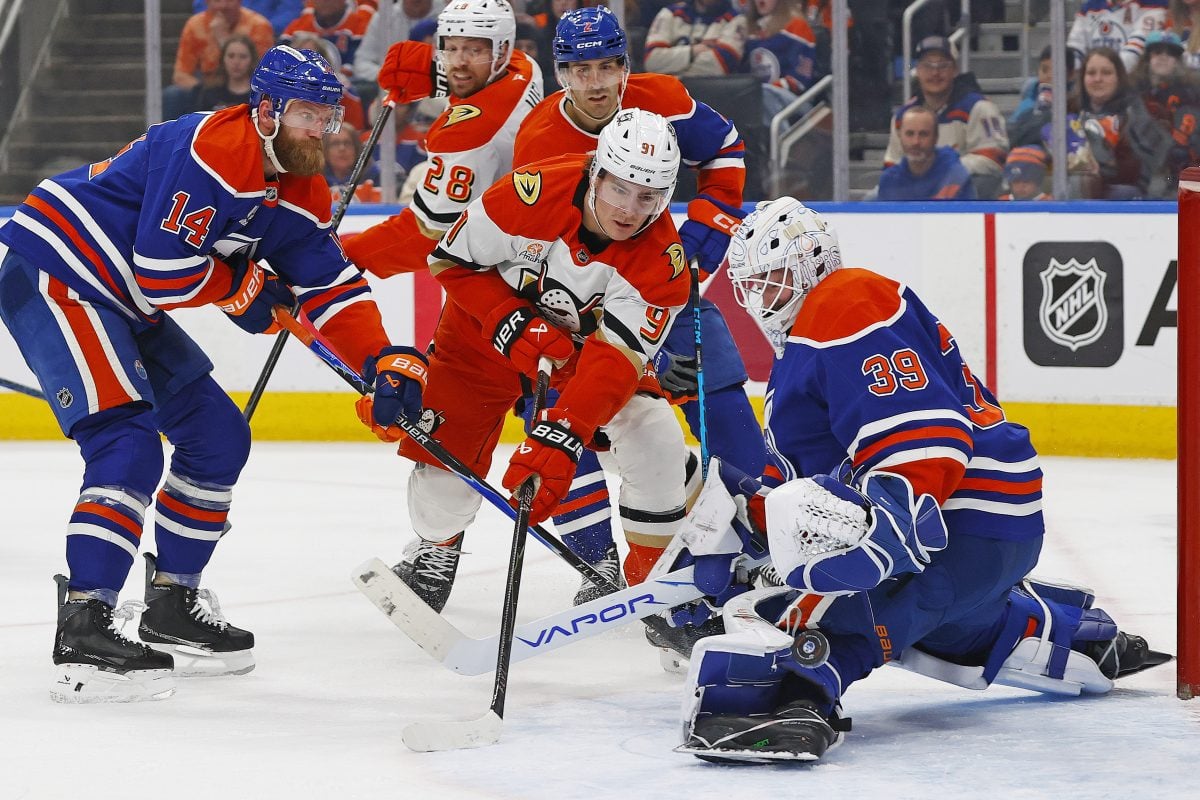
Would matching such a ridiculous offer sheet make Carlsson want to be a Duck for life? Possibly. But if he’s not 100% committed to re-upping after the five years are up, it’s an even greater risk to match the offer sheet. You ought to be pretty certain that the 21-year-old is going to stick around.
Last season, Carlsson was my favorite non-Flyer to watch. But even I can admit that he won’t provide $90 million of value (that’s how much he will make) over the next five seasons. There are only a handful of players who can accomplish that, and this is one who is averaging 58 points per 82 games in his NHL career—not 80 or 90. So, you have to be getting more than just five years of this player.
The Human Element in Hockey
Finally, there is the human element. I touched on this a bit previously, but the idea is that front offices are inclined to bet on themselves. Every team has an analytics department, and I’m sure that they are valued, but let’s think about what not matching the Carlsson offer sheet does for the Ducks.
First of all, they have Gauthier, LaCombe, and Sennecke as a very strong core. That’s two top-line wingers and a No. 1 defenseman. The Ducks also have a good prospect pool with several potential impact guys and a current roster that had a 9-3-0 record when Carlsson was out of the lineup. Adding four first-rounders to that would be incredible. The scouts would be overjoyed, even if some of the picks could get traded.
Some people in the Anaheim front office may argue that Carlsson isn’t valuable enough to the team to sacrifice $18 million annually and turn down four first-round picks. Again, the team won 75% of its games without him, albeit in a small sample. Plus, no owner wants to pay that bonus-heavy deal. Willing to? Maybe. Want to? No.
When the offer sheet went down, my immediate thought was that the Ducks would match, seeing as they have the cap space to do it ($35 million). But now that I’ve taken time to process it, the decision isn’t exactly as clear-cut as I thought it would be for the Ducks. There are so many factors for them to mull over until a final decision has to be made on Friday, July 10.
Free Newsletter
Get Philadelphia Flyers coverage delivered to your inbox
In-depth analysis, breaking news, and insider takes - free.
Subscribe Free →