- Penguins End a Long Wheeling Connection
- Everblades Bring a Strong Winning Environment
- Penguins’ Ownership Connection Explains the Move
- Distance Becomes Pittsburgh’s New Challenge
- ECHL Role Is Bigger Than People Think
- Wheeling Loss Still Has a Human Cost
- Everblades Could Help Raise Standards
- Penguins Need a Clear Development Plan
- Penguins’ Switch Has to Prove Itself
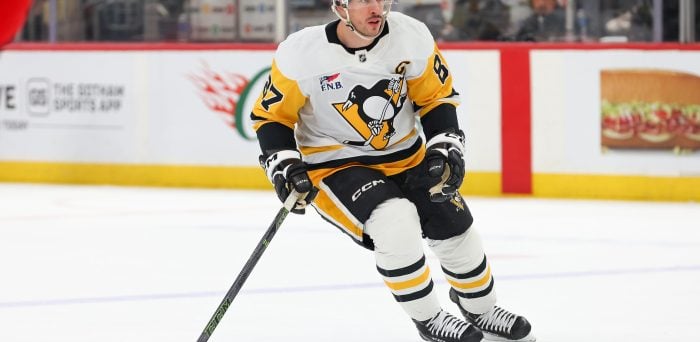
The Pittsburgh Penguins’ move from the Wheeling Nailers to the Florida Everblades could be viewed as a minor-league business decision. That would be the easiest way to explain it. It would also miss the larger point. This is a development decision now.
The Penguins officially named the Everblades as their new ECHL affiliate for the 2026-27 season, ending a 29-year relationship with the Nailers. The move gives Pittsburgh a new secondary development affiliate behind the Wilkes-Barre/Scranton Penguins of the American Hockey League (AHL), but it also changes a setup that had been familiar, regional and easy to understand for nearly three decades.
Wheeling was close. It was familiar. It gave the Penguins a nearby ECHL partner that fit naturally into the organization’s Pennsylvania-West Virginia development map. Florida gives Pittsburgh something different: an affiliate tied to ownership, a championship-caliber ECHL operation and a much larger geographic gap between the NHL, AHL and ECHL levels.
That tradeoff is what makes the move worth examining. The Penguins are not only changing logos at the bottom of the organizational chart. They are changing how their development pipeline is arranged.
Penguins End a Long Wheeling Connection
The Penguins’ split with the Nailers ends one of the longest-running affiliate relationships in the sport. Pittsburgh’s 29-year affiliation with Wheeling gave the organization a local ECHL partner that became part of the franchise’s player-development identity.
That relationship had practical value. Wheeling is close enough to Pittsburgh and Wilkes-Barre/Scranton that movement between levels felt simple. Players, staff members and organizational decision-makers did not have to treat the ECHL affiliate like a distant satellite. The geography made the setup convenient, especially for short-term assignments, injury coverage and player evaluation.
There was also a fan connection. Penguins fans in Western Pennsylvania and West Virginia could follow prospects or organizational depth pieces without feeling disconnected from the larger system. That type of regional link may not decide NHL roster moves, but it helps create a fuller organizational ecosystem.
The Nailers also mattered because the ECHL is not only about future NHL stars. Many players at that level will never become full-time NHL contributors, but the league still plays a role. It gives goaltenders starts, defensemen minutes, late-blooming forwards a chance to grow and organizations a place to manage depth. For Pittsburgh, Wheeling had long filled that function.

Ending that relationship is not automatically wrong. It is, however, meaningful. The Penguins are moving away from familiarity and proximity, which means the new setup has to offer real advantages.
Everblades Bring a Strong Winning Environment
The biggest argument for the Everblades is not difficult to find. Florida has been one of the ECHL’s strongest organizations.
The Everblades won the 2026 Kelly Cup, giving the franchise its fifth championship and fourth title in five seasons. Florida has become the kind of minor-league team that expects to win, and that environment can help players learn what competitive standards look like even outside the NHL and AHL. The 2026 Kelly Cup title is only the latest example of how successful the Everblades have been.
That winning culture should matter to the Penguins. Pittsburgh is trying to rebuild part of its prospect pipeline while still staying competitive at the NHL level. A strong ECHL affiliate can help reinforce habits, accountability and structure for players who are not yet ready for the AHL.
The Everblades also give Pittsburgh a more established hockey operation than many ECHL clubs could provide. Florida’s recent run is not a one-season spike. The franchise made ECHL history with a three-peat from 2022 through 2024, then returned to the top in 2026. A team with that kind of track record can offer structure, expectation and stability.
For players on the margins of the AHL roster, that is valuable. The ECHL is often where organizations send players who need more ice time than they would get higher in the system. A strong affiliate gives those players a better environment to develop instead of merely filling games.
Still, winning in the ECHL is not the same as developing Penguins prospects. Florida can be an excellent ECHL team and still require adjustment as a Penguins affiliate. The two goals should support each other, but they are not automatically identical.
Penguins’ Ownership Connection Explains the Move
The ownership connection makes the switch easier to understand. The Hoffmann Family of Companies acquired a controlling interest in the Penguins, and the same ownership group already owns the Everblades. That relationship made an Everblades affiliation feel likely once the sale became official. The Penguins’ ownership announcement specifically noted that the Hoffmann family owns the Everblades, which made the ECHL question one of the first organizational changes to watch.
There are obvious business advantages to aligning the NHL and ECHL clubs under the same broader ownership umbrella. Communication can be cleaner. Philosophies can be aligned more directly. Resources may be easier to coordinate. The Penguins can build a tighter relationship with an affiliate that is no longer just a partner, but part of the same larger ownership picture.
That could help. Minor-league affiliation only works if the NHL, AHL and ECHL teams share enough communication to make player assignments useful. If Pittsburgh wants a goalie to play more games, a defenseman to focus on puck touches or a forward to work on details away from the puck, the message has to reach the coaching staff at the lower level.
The question is whether the business logic helps the hockey product. Ownership alignment can improve communication, but it does not erase the distance between Pittsburgh, Wilkes-Barre/Scranton and Estero, Florida. It also does not remove the human side of ending a long relationship with a nearby affiliate.
That is where the Penguins have to be careful. This move can be both understandable and complicated.
Distance Becomes Pittsburgh’s New Challenge
The biggest concern is geography. The Nailers gave Pittsburgh a nearby ECHL affiliate. The Everblades do not. That changes how the Penguins will manage recalls, assignments and evaluation between the three levels of the organization. It does not make the move unworkable, but it does make coordination more important.
Travel is not the only issue. Staff visibility changes too. With Wheeling, Pittsburgh and Wilkes-Barre/Scranton staff could keep a closer eye on players in person. A trip to Florida is a different commitment. Video, reports and regular communication can cover much of the gap, but development still benefits when decision-makers can see players live and interact with coaches directly.
This could be most noticeable with goaltenders. The Penguins have a young goalie group that already needs careful handling. Artūrs Šilovs is the most NHL-tested option, Sergei Murashov has major upside, and Joel Blomqvist remains part of the broader picture. Pittsburgh’s biggest goalie questions already make the position one of the most important parts of the organization.
ECHL goalie usage can become critical when an organization has several young netminders competing for starts. If Murashov and Blomqvist are both in Wilkes-Barre/Scranton, another prospect or depth goalie could need consistent games elsewhere. That makes the relationship with Florida important.

The Penguins cannot allow distance to weaken the quality of feedback. If anything, they need stronger communication because of it.
ECHL Role Is Bigger Than People Think
The ECHL is easy to overlook because it sits below the NHL and AHL. For fans, most attention goes to the big club and the top prospects. For organizations, the ECHL can still serve several important functions.
It is a place for depth players to play real minutes instead of sitting. It can be a landing spot for young goaltenders who need starts. It gives late-round picks, undrafted signings and organizational depth pieces a chance to build professional habits. It also protects the AHL roster when injuries or call-ups create movement.
Pittsburgh has several players whose development could be affected indirectly by the ECHL setup. The Penguins’ young-player pipeline has more names than it did during some leaner years, and not all of those players can get prime NHL or AHL minutes at the same time. The ECHL can become the overflow valve, but only if the affiliate is aligned with the NHL organization’s priorities.
That is why the Florida arrangement has to be more than a business match. The Penguins need the Everblades to serve Pittsburgh’s player-development goals while still running their own successful ECHL operation.
Those priorities can create tension. ECHL teams want to win games, sell tickets and maintain their own identities. NHL teams want their contracted players placed in roles that help them improve. A good affiliation balances both sides.
Florida’s recent success suggests the Everblades know how to win. Pittsburgh has to make sure that winning environment also creates meaningful progress for the players it sends there.
Wheeling Loss Still Has a Human Cost
The move also has an emotional component that should not be dismissed. Wheeling was not just a name on a spreadsheet. It was the Penguins’ ECHL partner for 29 years. Fans, staff members, players and local hockey people built a connection through that affiliation. When a relationship lasts that long, ending it naturally creates frustration.
The Nailers’ side of the story is not irrelevant. Local reporting on the end of the affiliation included disappointment from Wheeling leadership, along with recognition that the ownership connection between the Penguins and Everblades made the change easier to understand. That combination is probably how many people around the Nailers feel: disappointed, but not shocked.
For Pittsburgh, the challenge is to respect the history while moving forward. The Penguins should not pretend the Wheeling relationship was disposable. It helped the organization for nearly three decades and gave fans a nearby connection to the developmental side of the franchise.
At the same time, professional sports organizations change. Ownership groups change priorities. Affiliations shift. The Penguins are allowed to decide that the Everblades offer a better fit under the new structure.
The risk is public perception. If the move is viewed only as ownership steering business toward an owned property, the development argument becomes harder to sell. The best way to answer that concern is simple: make the new setup work for players.
Everblades Could Help Raise Standards
The optimistic view is that the Everblades can raise standards within the Penguins’ lower-level pipeline. Florida is not a weak affiliate. It is a championship operation with recent proof. That can be a strong environment for players who are learning how to become professionals. Winning teams usually demand details. They create pressure. They make every lineup spot competitive.
That could help younger players who need structure. A prospect assigned to Florida should not feel like he has been sent to a forgotten level. He should be entering a team with expectations, experienced coaches and a standard that matches Pittsburgh’s larger development goals.
This is especially relevant for players who may not be ready for the AHL. The jump from junior or college hockey to the AHL can be difficult. The ECHL can soften that transition without removing accountability. If Florida gives those players major minutes in a winning environment, the move could benefit Pittsburgh.

The Everblades also give the Penguins another connection point in a market where ownership already has deep ties. That could mean better resources, cleaner operational alignment and more direct oversight than a typical affiliation.
The setup has upside. It just has to be used properly.
Penguins Need a Clear Development Plan
The most important part of the switch will not be the announcement. It will be the plan that follows.
Pittsburgh has to define how it wants to use the Everblades. Will Florida be a true development affiliate for Penguins-contracted players? Will it mainly serve as depth support for Wilkes-Barre/Scranton? How often will Pittsburgh send staff to Estero? How will the Penguins track players’ progress from a distance? How much influence will the NHL club have over usage? Those answers will decide whether the move helps or complicates the pipeline.
The Penguins have already entered a phase where player development carries more weight. Ben Kindel, Rutger McGroarty, Ville Koivunen, Owen Pickering, Murashov, Blomqvist and others represent different parts of the next wave. The NHL roster still belongs to Crosby, Malkin, Kris Letang and the established veterans, but the future depends on younger players becoming more than possibilities.
Pittsburgh’s prospect-focused roster questions show how many young players need clearer paths. The ECHL may not decide the future of the top prospects, but it can shape the depth underneath them.
That depth matters. Championship organizations are built with more than stars. They need reliable call-ups, developed goaltenders, steady defensemen and players who can move through the system without being rushed.
The Everblades can help with that, but only if Pittsburgh treats the ECHL level as part of the development structure instead of an afterthought.
Penguins’ Switch Has to Prove Itself
The Penguins’ ECHL switch is understandable. It lines up with ownership. It connects Pittsburgh to a successful Everblades organization. It gives the team a new development partner with a strong winning record.
It also creates new questions. The distance from Pittsburgh and Wilkes-Barre/Scranton is real. The loss of the Wheeling connection is real. The perception concerns are real. The development responsibilities are real.
That makes this more than business. It is a test of whether the Penguins can modernize their minor-league setup without losing some of the practical advantages they had before.
If the Everblades become a true developmental partner, the move could work well. Pittsburgh would gain a championship-level ECHL affiliate, stronger ownership alignment and another piece of a cleaner organizational structure. If communication slips or player usage becomes disconnected, the move could make the pipeline more complicated than it needs to be.
The Penguins have made their decision. The new map is set. Now they have to prove it helps the players who are supposed to travel through it.
Free Newsletter
Get Pittsburgh Penguins coverage delivered to your inbox
In-depth analysis, breaking news, and insider takes - free.
Subscribe Free →