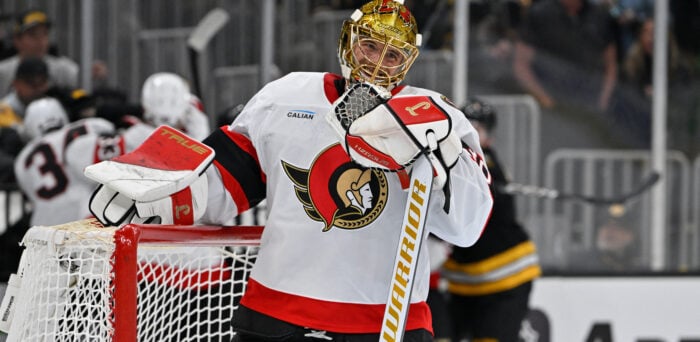
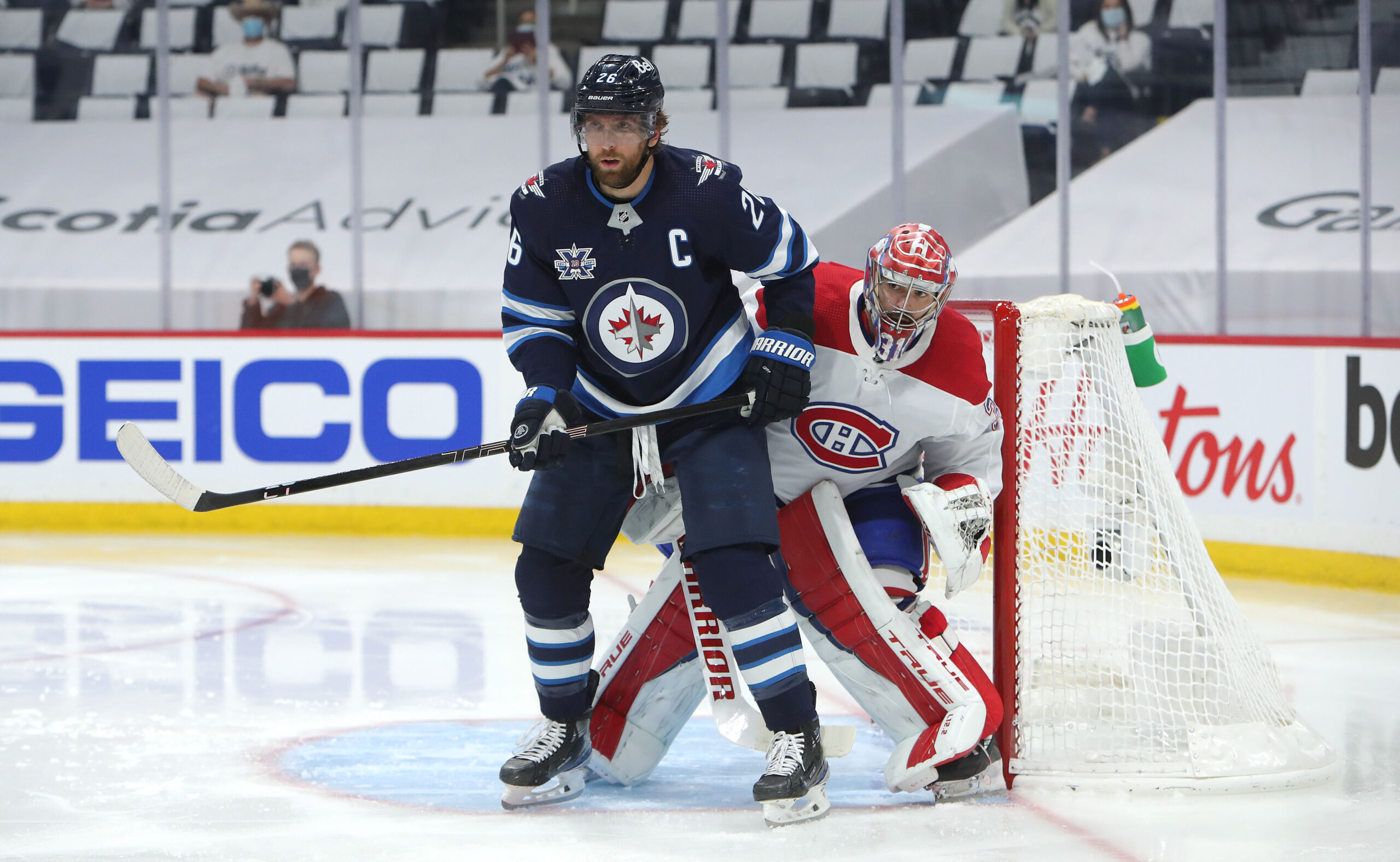
With William Eklund sidelined, the Ottawa Senators are reportedly exploring the trade market for forward help, according to Bruce Garrioch of Postmedia. The timing makes sense. Ottawa has aspirations of remaining competitive in the Atlantic Division, and losing a forward creates another hole in a lineup that could use additional offensive depth.
One name that came to mind is Patrik Laine.
The 2016 second-overall pick doesn’t necessarily fit the traditional description of what the Senators are reportedly seeking, particularly given that he is currently an unrestricted free agent. However, that may be precisely what makes him an intriguing option. Rather than surrendering valuable draft capital or a roster player in a trade, Ottawa would only need to commit salary-cap space.
The Senators currently have $3,535,787 in available cap space, meaning they could comfortably accommodate a short-term, inexpensive contract. Laine could potentially be signed for somewhere around the league minimum, or close to the $850,000 that David Perron received from the Dallas Stars.
On paper, it’s an opportunity worth exploring. Laine is a former 40-goal scorer who, as recently as 2022-23, recorded 52 points in 55 games. He is also just 28 years old. For a team looking to replace some of Eklund’s offensive production, the appeal is obvious.
In many ways, these are the types of buy-low opportunities that can pay significant dividends. The Florida Panthers have built much of their success by identifying players whose value had dipped and giving them an opportunity to rediscover their game. Acquisitions such as Sam Bennett, Carter Verhaeghe, and Gustav Forsling are prime examples of players who found the right environment in Florida and became integral pieces of a championship roster. Ottawa could look at Laine through a similar lens, betting on his talent rather than his recent production.
But there is a reason Laine is available at such a discount.
The Problem With Patrik Laine
Injuries have significantly derailed Laine’s career, and the player Ottawa would be acquiring today is a far cry from the one who once established himself as one of the NHL’s most dangerous goal scorers.
His decline isn’t simply reflected in his offensive production. Even his NHL EDGE skating data paints a concerning picture. During his last meaningful stretch of games with Montreal in 2024-25, Laine fell below the 50th percentile across all skating categories, including max speed, burst, and distance.
Compare that with his last particularly productive season in 2022-23, when he was considerably more explosive. Across 55 games, Laine ranked in the 71st percentile for 18-20 MPH bursts and the 79th percentile for 20-22 MPH bursts.
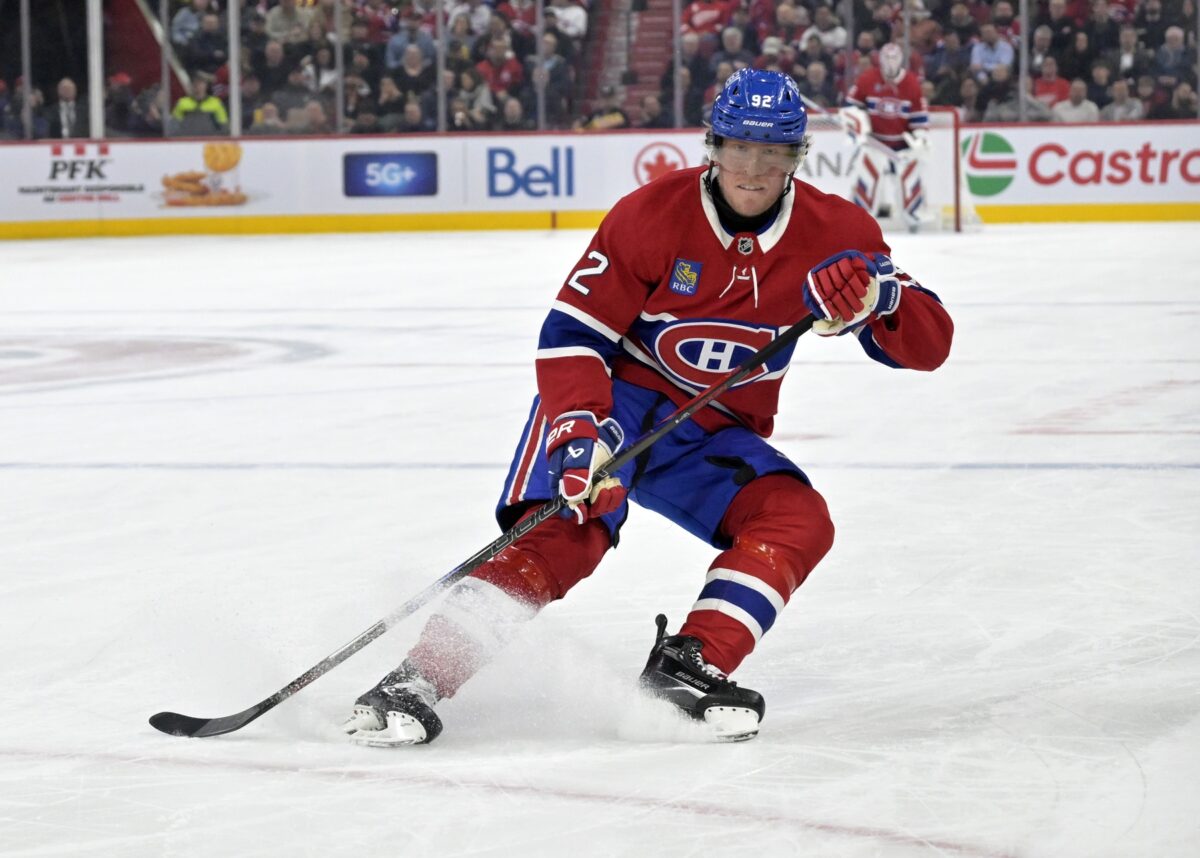
That difference matters because Laine’s game has always relied heavily on his ability to create separation and get his devastating shot off. If he can no longer consistently generate that separation, it becomes increasingly difficult for him to make plays, even though he still attempts to do so.
However, the concerns surrounding Laine extend beyond his injuries and declining mobility. He has always been a major negative impact on his team’s ability to generate quality scoring chances.
His power-play production has historically been excellent, largely because of his elite shooting ability. But at even strength, the underlying numbers have consistently painted a different picture. Laine has not recorded a season above 50% in Corsi since 2017-18. He has also never finished a season above 50% in expected goals percentage (xG%) or high-danger chances for percentage (HDCF%). Those numbers raise questions about what exactly Laine would bring to a team outside of his ability to finish scoring chances.
A One-Dimensional Offensive Game
Some of Laine’s underlying struggles can be attributed to his defensive engagement. He has historically been susceptible to getting hemmed into his own zone, and his defensive contributions have rarely been a strength.
But there is another issue that is arguably just as concerning: his puck management. Laine has consistently struggled to generate positive results as a puck carrier, particularly when attempting to gain the offensive zone. Despite those difficulties, he frequently defaults to carrying the puck himself rather than utilizing his teammates to facilitate entries. Laine became nearly the most inefficient puck carrier in the NHL.
The results have not been particularly encouraging. During a limited sample in 2023-24, Laine turned the puck over on nearly one-quarter of his zone-entry attempts.
Even during his 2024-25 season with the Montreal Canadiens, Laine ranked fourth on the team in controlled zone entries, but the problem was that those entries rarely translated into quality scoring chances.

That is a significant problem for a player who already struggles to generate offence through possession. Whether it is a lack of acceleration, an inability to create a secondary move once a defender reads his initial approach, or simply poor decision-making, Laine has struggled to consistently translate his puck touches into quality offensive opportunities.
His issues don’t end at the blue line, either. Laine has rarely been particularly effective at using his linemates to generate opportunities in the offensive zone, and his effort on the forecheck has often left something to be desired.
Essentially, Ottawa would be acquiring a player whose offensive value is heavily concentrated in one particular skill: his shot.
The Power Play Is Laine’s Saving Grace
There is, however, one area where Laine could immediately address a significant weakness in Ottawa’s lineup: the power play.
The Senators currently rank 29th in the NHL, converting on just 13.6% of their opportunities. For a team with playoff aspirations, that is simply not good enough, and finding a way to generate more offence with the man advantage should be a priority. This is where Laine becomes particularly intriguing.
Throughout his career, Laine has been an elite power-play weapon, with approximately 76% percentile power-play player. His ability to score from both the middle-danger and high-danger areas makes him particularly difficult to defend, especially when he gets time and space to unleash his shot.
During his last relatively healthy season in Montreal, Laine recorded 15 power-play goals, including 10 from the mid-danger area. That production demonstrates something Ottawa desperately needs: a player who can consistently convert power-play opportunities rather than simply generate shots.
Assuming he is healthy, Laine could immediately become one of Ottawa’s primary power-play options. His one-timer alone would force opposing penalty kills to respect another shooting threat, potentially creating additional space for players like Tim Stützle, Brady Tkachuk, and Drake Batherson.
There is a legitimate argument that Ottawa doesn’t need Laine to be a complete five-on-five player to justify the signing. If he can provide a significant boost to a struggling power play while chipping in some secondary scoring at even strength, he could offer considerable value on an inexpensive contract.
Is Laine the Right Bet?
There is still an argument to be made for taking a chance on Laine.
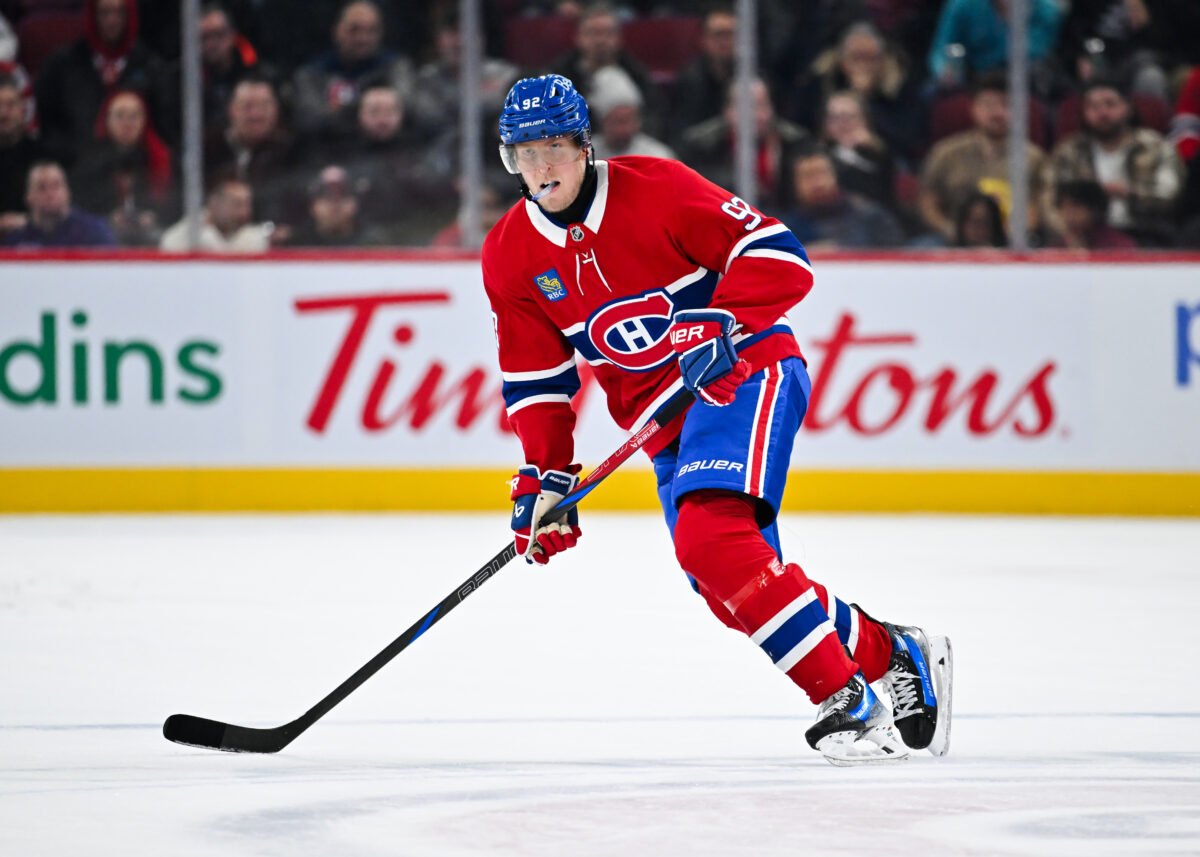
He was once one of the NHL’s premier goal scorers, and players with his shooting ability don’t become available at this price very often. At 28, there is also a possibility that he has more left in the tank than his recent seasons would suggest.
Furthermore, Laine could have considerable motivation to make this opportunity work. If this is one of his final chances to establish himself as a productive NHL player, there is reason to believe he could be more receptive to changing certain aspects of his game.
That could mean becoming more responsible defensively, making quicker decisions with the puck, and putting a greater emphasis on forechecking and backchecking rather than relying almost exclusively on skating through defenders.
Still, there is an important distinction between a player who has struggled because of injuries and one whose underlying game has consistently presented problems.
Even during his prime, Laine was never particularly effective at driving possession or consistently generating quality scoring opportunities at five-on-five. Those concerns existed before his injuries became a defining part of his career.
Ultimately, I don’t think Laine would necessarily move the needle for Ottawa, particularly if the Senators intend to replicate the style of play that made them successful last season. This is a team that wants to control possession, dictate the pace of play, and generate offence through sustained pressure in the offensive zone.
Laine doesn’t necessarily fit that identity. His limitations as a puck carrier, his inconsistent forechecking, and his inability to consistently drive play at five-on-five could make him a difficult fit in Ottawa’s system.
The power-play upside is certainly appealing, and at the right price, there is little harm in exploring the possibility. However, the Senators need to be careful not to confuse an elite shot with an elite offensive player.
At the end of the day, Ottawa can only dress 12 forwards, and it is unlikely Laine would be an upgrade over anyone in the Senators’ current starting lineup, even if acquiring him costs nothing beyond cap space. Laine could help fix Ottawa’s power play, but he might not be the offensive weapon they are looking for.
Free Newsletter
Get Ottawa Senators coverage delivered to your inbox
In-depth analysis, breaking news, and insider takes - free.
Subscribe Free →