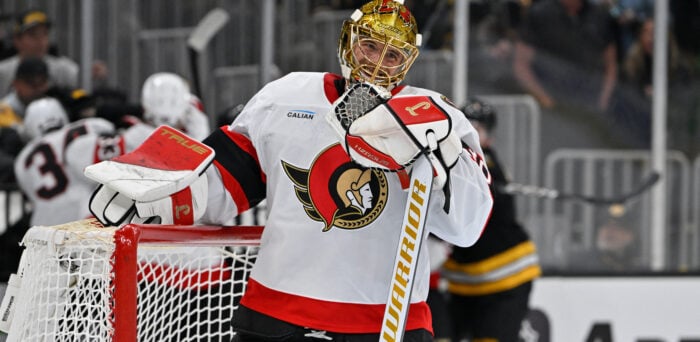
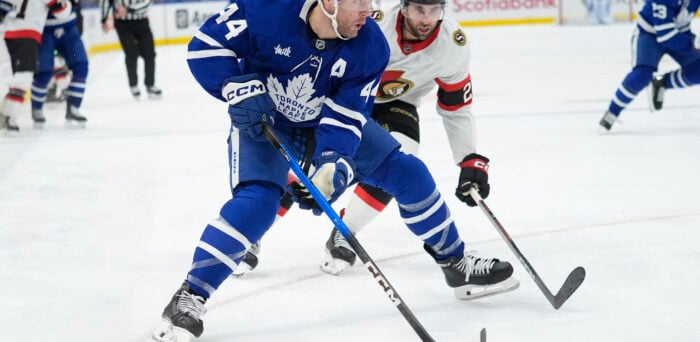
The Ottawa Senators are reportedly exploring the possibility of acquiring forward reinforcements, according to Bruce Garrioch. With the team locked in a competitive battle in the Atlantic Division for a playoff spot, adding another impact forward could be an important step in keeping pace with the teams around them.
So far, Ottawa has held its own in a tightly-contested division. However, the long-term absence of William Eklund creates another challenge for a team that cannot afford to lose ground in the playoff race. If the Senators want to remain competitive in the Atlantic and make a meaningful push toward the postseason, they may need to look outside the organization for another offensive weapon.
The Senators have the draft capital and young assets to make a significant move if they decide to pursue an impact forward. Ottawa holds all of its picks in the first four rounds over the next four years, in addition to the Florida Panthers’ 2027 second-round pick and conditional 2029 first-round pick acquired in the Brady Tkachuk trade. Combined with a collection of young players who could be included in a package, Ottawa has the assets to put together an attractive offer for an impact forward.
1. Nikita Kucherov – A Superstar Who Could Transform Ottawa’s Offence
If the Senators are serious about adding an elite offensive weapon, it is difficult to find a more intriguing option than Nikita Kucherov. The Tampa Bay Lightning winger remains one of the most dangerous offensive players in the NHL and is coming off an MVP season. Despite not being the fastest skater, Kucherov continues to demonstrate an elite ability to generate offence through his vision, puck distribution, and hockey IQ.
His underlying numbers reinforce just how effective he remains. Kucherov ranks in the 95th percentile in expected goals percentage, 93rd percentile in zone shots, 91st percentile in entries with possession, and 99th percentile in primary shot assists. Those are exceptional numbers and demonstrate that even as his skating has slowed, his ability to create offence has not gone away.
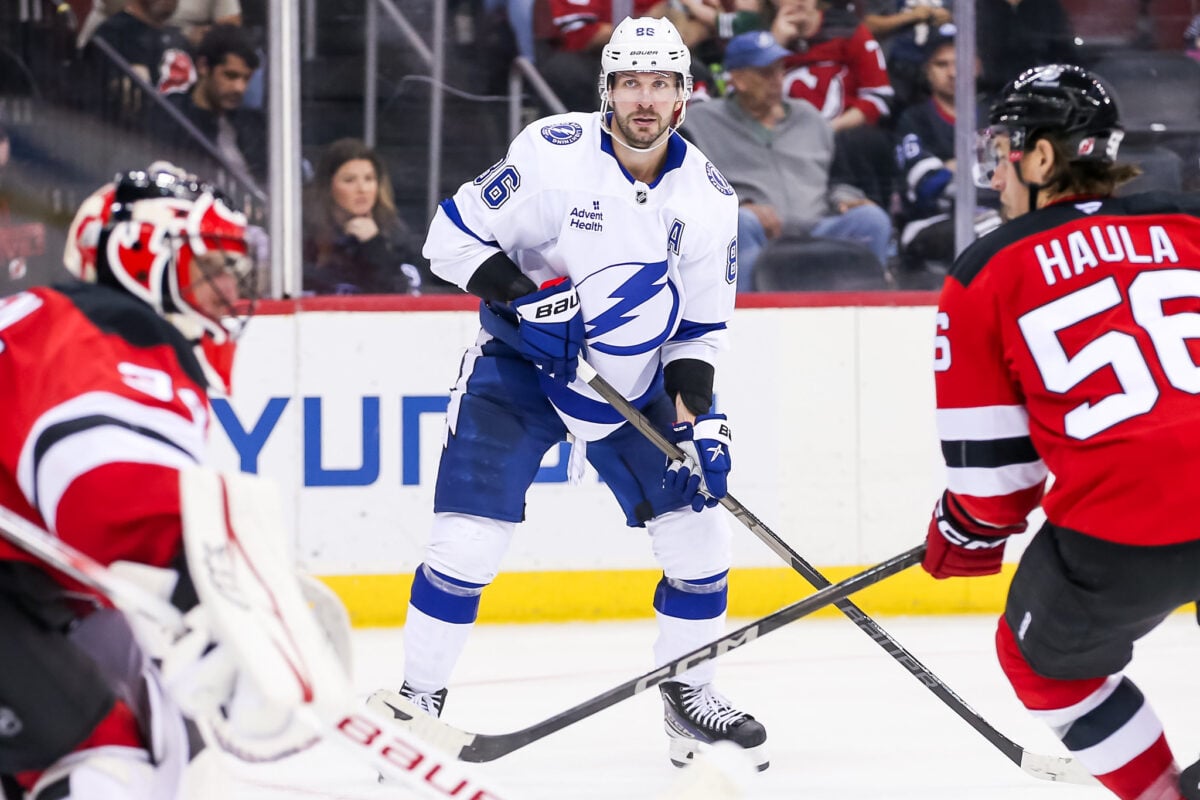
Kucherov is a very different player from Tkachuk, who the Senators lost last summer. He is not particularly involved in the physical side of the game or the forecheck, but he would bring an entirely different dimension to Ottawa’s offence. His ability to carry the puck through the neutral zone, create scoring opportunities and generate offence from seemingly nothing could replicate, if not exceed, much of the offensive production Ottawa currently receives from its top forwards.
There are, however, some significant obstacles. Kucherov is reportedly seeking a trade and is believed to be looking for a substantial payday on his next contract. Reports have also suggested that the Toronto Maple Leafs and Montreal Canadiens could be destinations he would consider. That potentially makes Ottawa an interesting alternative, particularly if Kucherov is open to Canadian Markets.
Ottawa has approximately $28.7 million in projected cap space next season, giving the organization some financial flexibility. However, the Senators also have several notable holes to address with outgoing unrestricted free agents. Committing $20–22 million of that available space to Kucherov could make filling out the remainder of the roster considerably more challenging.
There is also the question of age. Kucherov is 33 and will eventually begin experiencing a more significant decline. Paying a premium for an aging superstar, particularly one looking for a massive long-term commitment, carries considerable risk.
Still, elite offensive talent does not become available very often. If Kucherov is genuinely willing to consider Ottawa, the Senators should look at what it would take to bring him aboard.
2. Elias Pettersson – A Potential Buy-Low Opportunity
Elias Pettersson presents a very different type of opportunity for the Senators. Unlike Kucherov, Pettersson is not coming off another elite offensive season, but rather arguably his worst. There were reports last year that the Canucks would have had to pay to get him off the team. He appears to be putting together a bounce-back campaign after a difficult stretch, recording 18 points in his first 17 games.
While his production is encouraging, his underlying numbers suggest he has not quite returned to the level of a 100-point player. Nevertheless, there are some encouraging signs in his game that suggest a potential resurgence could be underway.
Pettersson currently leads Vancouver in expected goals share, offensive-zone entries, and offensive-zone retrievals. He also ranks second on the team in loose-puck recoveries. Those numbers indicate that he is becoming increasingly involved in driving possession and generating offensive opportunities.
The biggest indicators in Pettersson’s game are his skating speed, shot rate, and shot speed. During his best seasons, he ranked in the 90th percentile or higher in skating bursts, shots per game and average shot speed. While he has improved in all three categories compared to last season, he has not quite returned to the elite levels he demonstrated during his prime.
That is what makes Pettersson such an interesting potential trade target.
Vancouver is rebuilding and has struggled significantly this season. Before Pettersson’s early-season resurgence, there were rumours the Canucks were considering moving him during the summer. His recent improvement may have changed the organization’s thinking, but the possibility of acquiring a high-end offensive player at a discounted price is certainly intriguing.

His contract, which previously looked like a significant liability, is also becoming more manageable as the NHL salary cap continues to rise. That changing cap landscape makes the financial commitment considerably easier to justify than it would have been a few years ago.
For Ottawa, the biggest question is the price tag Pettersson would require. The Senators would essentially be betting that his current improvement is the beginning of a return to his previous form rather than a temporary hot streak.
There is also the positional question. Pettersson is a centre, and Ottawa arguably has one of the strongest centre groups in the league. With Tim Stützle, Dylan Cozen, and the organization’s existing depth down the middle, adding another centre is not necessarily an obvious roster priority.
However, talented offensive players of Pettersson’s caliber do not grow on trees. The opportunity to acquire a potentially undervalued offensive asset, particularly one who could drive play at his rate, may be too good for Ottawa to ignore.
If the Canucks are willing to entertain a reasonable offer built around draft capital, Pettersson could represent one of the more intriguing high-upside trade opportunities available to the Senators. At 27 years old, he fits the age of Ottawa’s young core.
3. Jake DeBrusk – A Complementary Scoring Winger
If Ottawa is unwilling to surrender the assets required to acquire a superstar or take a financial gamble on Pettersson or Kucherov, Jake DeBrusk could be a more practical alternative.
Pettersson’s Vancouver teammate has reportedly already expressed a desire to leave the rebuilding Canucks despite not formally asking for a trade, potentially making him another name worth monitoring as the trade market develops.
DeBrusk does not possess the same offensive ceiling as Kucherov or Pettersson, but he is a proven scoring winger who could complement Ottawa’s existing top six. He is off to a solid start this season, recording 10 points in 15 games, and currently leads Vancouver in scoring chances by a considerable margin.
What makes DeBrusk particularly interesting is that he offers more than just offensive production. He has been reasonably effective on the forecheck and in offensive-zone retrievals, ranking third on Vancouver. He has also shown a willingness to play physically and compete for pucks. Debrusk is also third on the team in expected goals for percentage, although the Canucks as a team struggle significantly to control play.
That type of game could be particularly valuable in Ottawa. DeBrusk would not necessarily need to be the primary offensive driver on his line. Instead, he could complement a playmaker such as Cozens or Stützle, providing another scoring option while contributing to the forecheck and creating opportunities through offensive-zone pressure.
His contract is also relatively manageable, making him a potentially attractive addition from a cap perspective. However, that affordability could work against Ottawa when it comes to acquisition cost. With a reasonable contract and a proven ability to produce offensively, Vancouver could command a significant return if multiple teams become interested.

Ultimately, DeBrusk is not the type of player who would fundamentally change Ottawa’s offensive identity. He is more of a complementary piece than a franchise-changing acquisition. But if the Senators decide there is too much long term risk in Kucherov or Pettersson, DeBrusk could be an effective alternative who strengthens the forward group without requiring the same level of financial or roster commitment.
Final Thoughts
Ottawa has several different avenues it could pursue if it decides to add another forward. Kucherov would represent a massive offensive upgrade, Pettersson offers the possibility of acquiring a top talent that may be a distressed asset, and DeBrusk provides a more complementary scoring option.
The Senators are in a competitive Atlantic Division race, and Eklund’s long-term absence only increases the importance of finding additional offensive support. Whether they pursue a superstar or a more complementary piece, adding another capable forward could make a significant difference in their playoff aspirations.
The question is how aggressive Ottawa is willing to be. With limited opportunities to acquire high-end offensive talent, this could be an important opportunity for the Senators to strengthen their roster.
Free Newsletter
Get Ottawa Senators coverage delivered to your inbox
In-depth analysis, breaking news, and insider takes - free.
Subscribe Free →