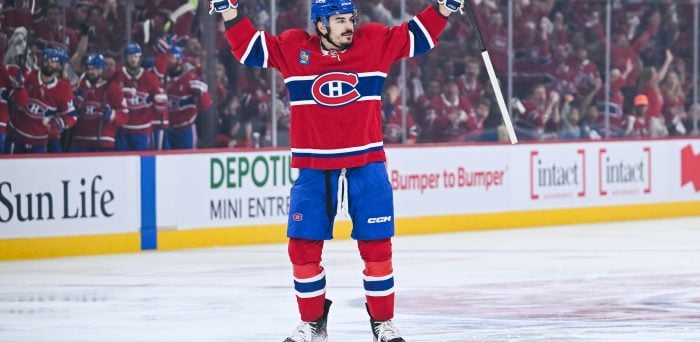
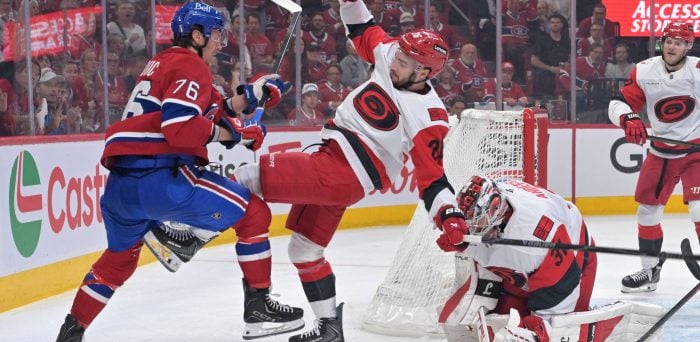
The Montreal Canadiens‘ unexpected run to the Eastern Conference Final didn’t just excite a fanbase, it accelerated a timeline. Kent Hughes is no longer managing a rebuild. He’s managing a contender in progress, and the decisions he makes this summer will define how quickly this team takes the next step. With several key contracts expiring and a cap situation that requires surgical precision, the 2026 offseason is shaping up to be one of the most consequential in recent franchise history.
The Canadiens currently project to have roughly $9 million in cap space heading into 2026-27, a number that looks workable on paper until you factor in the restricted free agent (RFA) negotiations that must happen before July 1.
Kirby Dach: Take the Risk
Kirby Dach‘s contract expires this offseason, making him an RFA. His qualifying offer sits at $4 million, a lot of money for a player who has dealt with repeated injury issues. However, his playoff performance changed the conversation. In the regular season, Dach played 37 games and posted 15 points while returning from a long-term injury. In 19 playoff games, he contributed five points, including four goals, with a plus-6 rating. This was the player the Canadiens expected when they acquired him.
The injury history is real and can’t be ignored. Over the last four seasons, Dach has played just 154 games out of a possible 328. But at 25 years old, with a playoff performance that reminded everyone of his ceiling, Hughes should extend the qualifying offer and pursue a short-term deal. A two-year contract, somewhere between $4 and $5 million per year, gives both sides an exit ramp if things go sideways again while keeping a player who showed he can contribute when healthy.
Zachary Bolduc: Bridge Deal, No Questions Asked
Zachary Bolduc got off to a strong start in his first season with Montreal but faltered after the midpoint, ultimately posting 12 goals and 18 assists while being healthy scratched on multiple occasions. A bridge contract likely makes sense for both sides.
That said, his playoff impact earned him significant goodwill. The line of Bolduc, Alexandre Texier, and Dach, widely considered a depth unit entering the playoffs, emerged as Montreal’s most productive trio, generating offence consistently and bringing physicality in key moments. That’s not something a team discards easily.
A two-year bridge around $2.5–$3 million average annual value (AAV) is the sensible play. It rewards his playoff showing without overpaying for an incomplete regular season, and it gives Bolduc a real shot at earning a long-term deal based on production rather than projection. His impact during the playoffs, along with his potential ceiling, makes compelling arguments in his favour, though a bridge deal remains the most likely scenario.
Arber Xhekaj: Extend With Caution
Arber Xhekaj is a polarizing case. His physical presence and locker room energy are genuine assets, but his underlying defensive numbers have been a concern. The Canadiens will likely try to shore up their defence with more veteran talent, with their penalty kill finishing in the bottom half of the league this past season. Xhekaj’s role in that unit adds another variable to the negotiation.
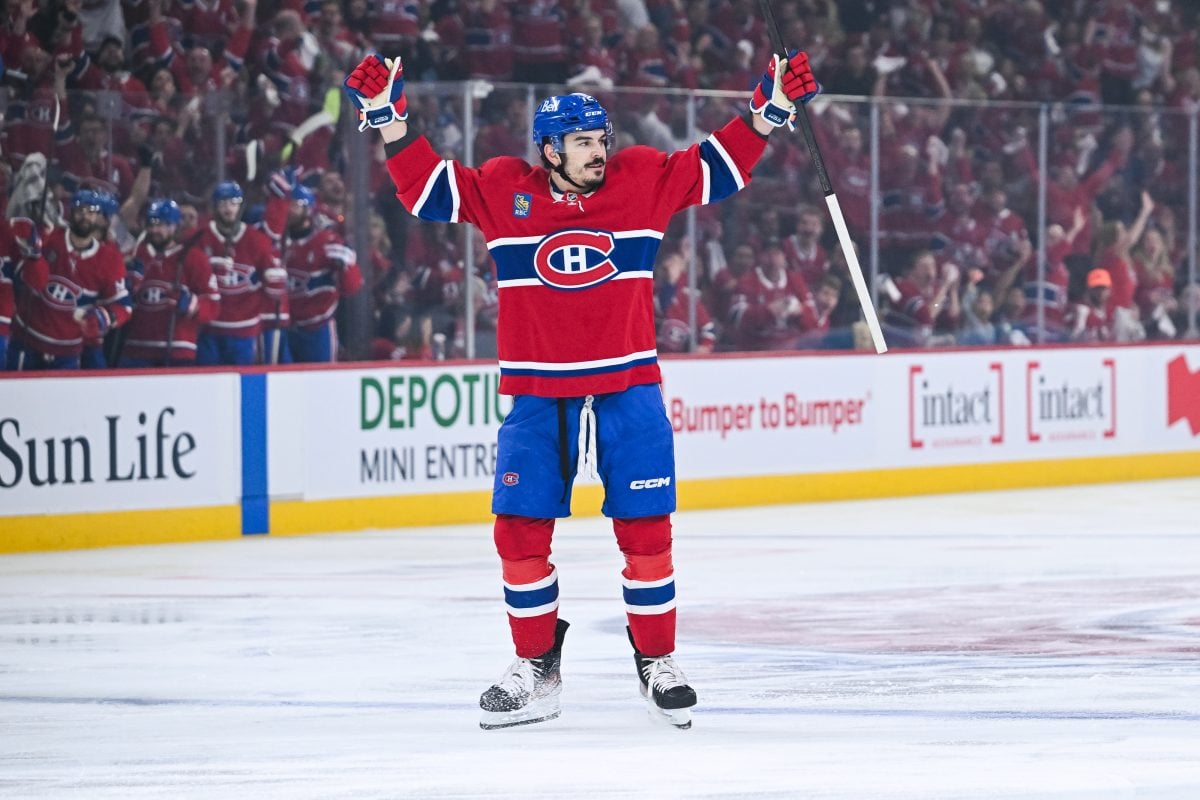
Still, his playoff performance bought him credibility. When Noah Dobson went down, Xhekaj stepped up and played some of his best hockey of the season, bringing physicality, energy, and stability that the Canadiens needed badly. Hughes should re-sign him, but on a reasonable deal that doesn’t hamstring the team’s ability to upgrade elsewhere on the blue line. Something in the $2.5–$3 million range over two to three years reflects his actual value without overcommitting.
Brendan Gallagher: Trade First, Buy Out If Needed
This one hurts. After 14 seasons and over 900 games in a Canadiens uniform, the Brendan Gallagher era in Montreal is coming to an end. Following an emotional end-of-season press conference where Gallagher made it clear he would be moving on, his agent has reportedly been granted permission to speak with other teams to facilitate a possible trade.
Gallagher remains signed through next season at $6.5 million with a full no-move clause and will have to be moved via a trade that he approves or a buyout. That cap number is significant for a rebuilding team trying to create flexibility, and the Canadiens have made it clear they’d rather find a trade partner than absorb a buyout. Montreal could retain salary, attach assets, or ultimately pursue a buyout if no trade materializes, but with trade discussions now officially underway and Gallagher openly preparing for a new chapter, the Vancouver Canucks appear to have emerged as a logical frontrunner.
From a pure cap management perspective, trading Gallagher with salary retention and recouping a mid-round pick is the best-case outcome. A buyout clears the cap hit faster but costs the team real dollars spread over two years. Either way, Hughes moves on and likely sooner than later.
Patrik Laine: A Mutual Goodbye
Patrik Laine will be an unrestricted free agent, and based on his end-of-season comments, he no longer sees himself in the Canadiens’ plans for next season. Given that he appeared in only five games this season due to injury, that’s not a surprise, but it still stings given the potential he showed when healthy.
The injuries make him eligible to receive performance incentives on a one-year contract, and a few teams should be willing to offer a lower base salary with upside built in, given his elite scoring ability when healthy. But that’s a gamble Montreal has already made twice. Hughes should let him walk, wish him well, and redirect those dollars toward players the organization can count on.
Samuel Montembeault: The Writing Is on the Wall
Samuel Montembeault’s place has been taken. Jakub Dobes seized the opportunity when given a chance late in the season and throughout the playoffs, and the organization also holds Jacob Fowler in high regard. It would be fairly on-brand for the Canadiens to give Montembeault a chance elsewhere, whether via trade or waivers.
At $3.15 million, his cap hit represents money that can be redirected. Dealing him, even for a modest return, would be the cleanest outcome. If he is put on waivers, another team almost certainly scoops him up. He’s a serviceable backup-to-tandem goalie, and there’s a market for that. The Canadiens simply no longer have a spot for him.
The Big Picture
If the Canadiens can move Gallagher’s $6.5 million and deal Montembeault at $3.15 million, they could become significantly more aggressive on the trade and free agent front this summer. That’s the offseason Hughes is working toward: clearing the deck on the contracts that no longer fit the direction of the franchise, locking up players who earned their place during this playoff run, and using the remaining space to add the impact centre this team still needs.
The rebuild isn’t over. But with the right moves this summer, the window is about to open for real.
Free Newsletter
Get Montreal Canadiens coverage delivered to your inbox
In-depth analysis, breaking news, and insider takes - free.
Subscribe Free →