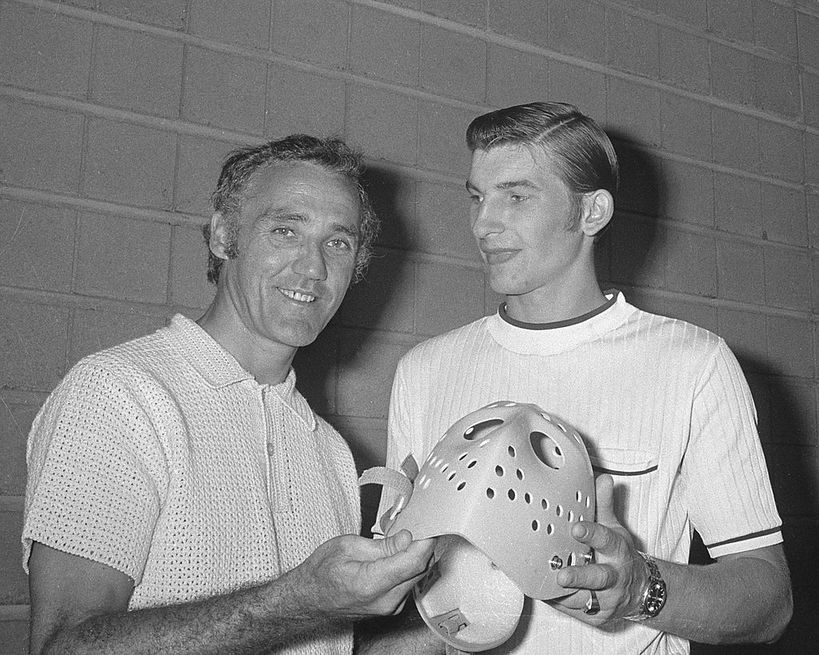
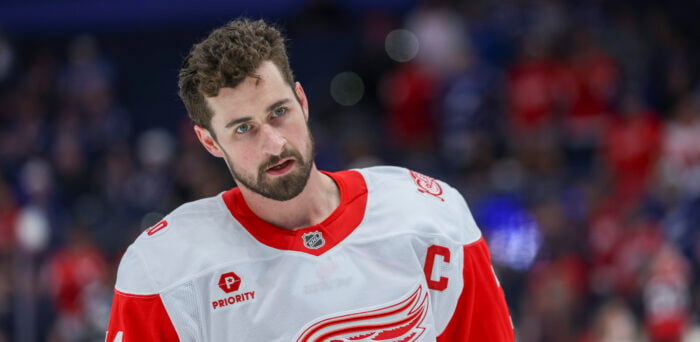
The electric atmosphere inside the Bell Centre prior to the start of Game 4 of the Eastern Conference Final (ECF) provided a connection between this year’s Montreal Canadiens roster and the Cinderella run of 2010 which has been forever linked to one player, Jaroslav Halak. He carried the team’s ceremonial torch into the arena, sending a raucous hometown crowd into a frenzy.
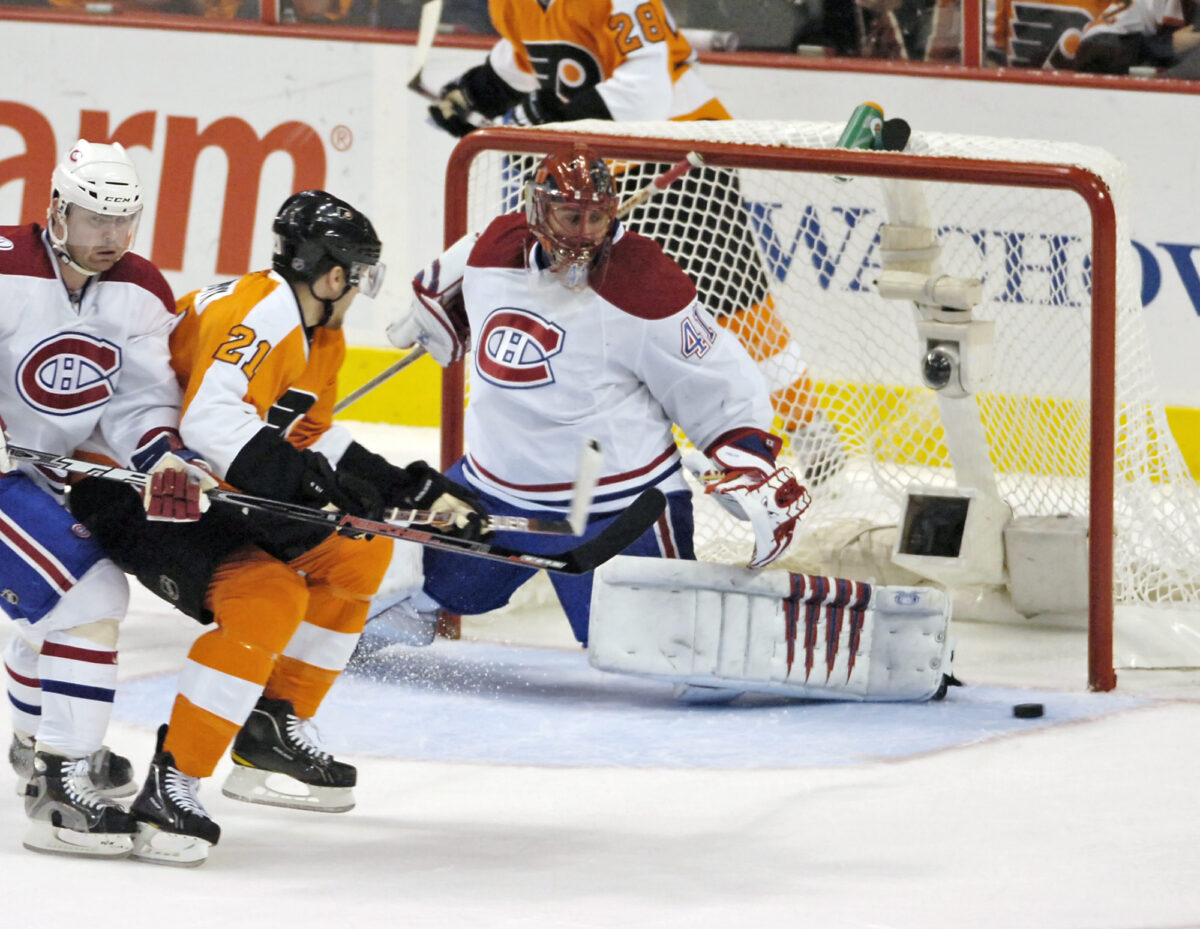
Walking into the lower bowl, the 41-year-old Slovak held a stop sign emblazoned with the name “DOBES” representing current rookie sensation Jakub Dobes on his 25th birthday, which is a direct nod to the signs fans held up during Halak’s underdog goaltending magic in 2010 as he also backstopped the Canadiens to two Game 7 road victories in a postseason. This symbolic passing of the flame vividly reawakened the memories of 2010, uniting two distinct generations of Montreal hockey under the shared banner of an improbable spring run.
While the nostalgia on the ice felt identical, the DNA of these two modern Cinderella squads could not be more different. The 2010 roster that Halak backstopped was a mercenary unit; an expensive, quick-fix veteran lineup built through aggressive trades and free agent signings that quickly dissolved once the magic wore off. In stark contrast, the 2026 Canadiens team fighting the Carolina Hurricanes represents a more methodical, bottom-up, organic rebuild. Where 2010 relied on an aging blue line and a desperate hot streak, 2026 boasts a draft-and-develop core featuring elite point producers, dynamic puck-moving defencemen, and a structural framework designed for long-term sustainability.
Roster Philosophy
The primary differences between the 2010 and 2026 Canadiens lie in their team construction philosophy, star offensive power, and the pedigree of their young core. While both teams captured the city’s imagination by making unexpected runs to the ECF, they were built very differently.
The construction of the 2010 Canadiens was defined by a massive, high-priced summer overhaul orchestrated by general manager (GM) Bob Gainey. Rather than building patiently from within, management opted for an aggressive “retool” by turning to external avenues to instantly reshape the franchise’s identity. This strategy led to a heavy reliance on a decorated group of newly acquired veterans, bringing in established names like Michael Cammalleri, Brian Gionta, and towering defenceman Hal Gill. This helped him in convincing Scott Gomez to accept a trade to Montreal in a deal that many deem to be one of the worst in the team’s history. They were all added to help spearhead a veteran-heavy locker room built for immediate playoff contention.
In sharp contrast, the foundation of the 2026 version of the Canadiens represents a complete philosophical shift, engineered through an intentional, multi-year, bottom-up rebuild. Spearheaded by GM Kent Hughes, this modern iteration of the team completely abandoned the temptation of quick-fix free agent signings in favour of a patient, long-term blueprint. By stripping down the old roster and maximizing premium assets, management successfully prioritized systemic growth over immediate gratification, setting the stage for a structurally sound franchise.
Roster Construction
The structural divergence between the 2010 and 2026 Canadiens is most glaringly evident up front, where the definition of offensive star power has been completely rewritten. The 2010 squad completely lacked individual triple-digit point producers or elite snipers, functioning instead as a grinding, blue-collar committee. Tomas Plekanec led that team with a modest 70 points in the regular season, forcing the club to rely on a balanced offence and a highly structured power play to scratch out goals.
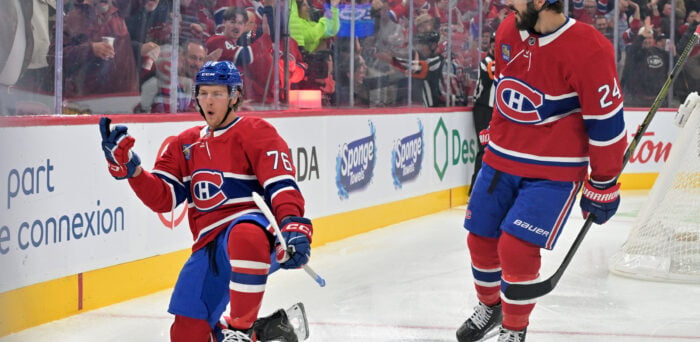
Conversely, the 2026 roster features a reliance on skill players with legitimate, game-breaking NHL superstars who are actively shattering historic franchise milestones. Captain Nick Suzuki broke a staggering 40-year drought in Montreal by recording the first 100-point season since Mats Naslund did so in 1985-86, while elite sniper Cole Caufield became the team’s first 50-goal scorer since 1990, giving the modern lineup a lethal, high-octane punch the 2010 team simply never possessed.
While the offensive strategies are quite different, the goaltending storylines between these two eras share an almost mystical symmetry. The 2010 postseason run was defined entirely by the legendary “Halak’d” phenomenon, an unforgettable stretch where an unheralded Halak stood on his head to single-handedly upset the powerhouse Washington Capitals and Pittsburgh Penguins. At that time, a young Carey Price was merely a backup finding his footing in his NHL shadow.
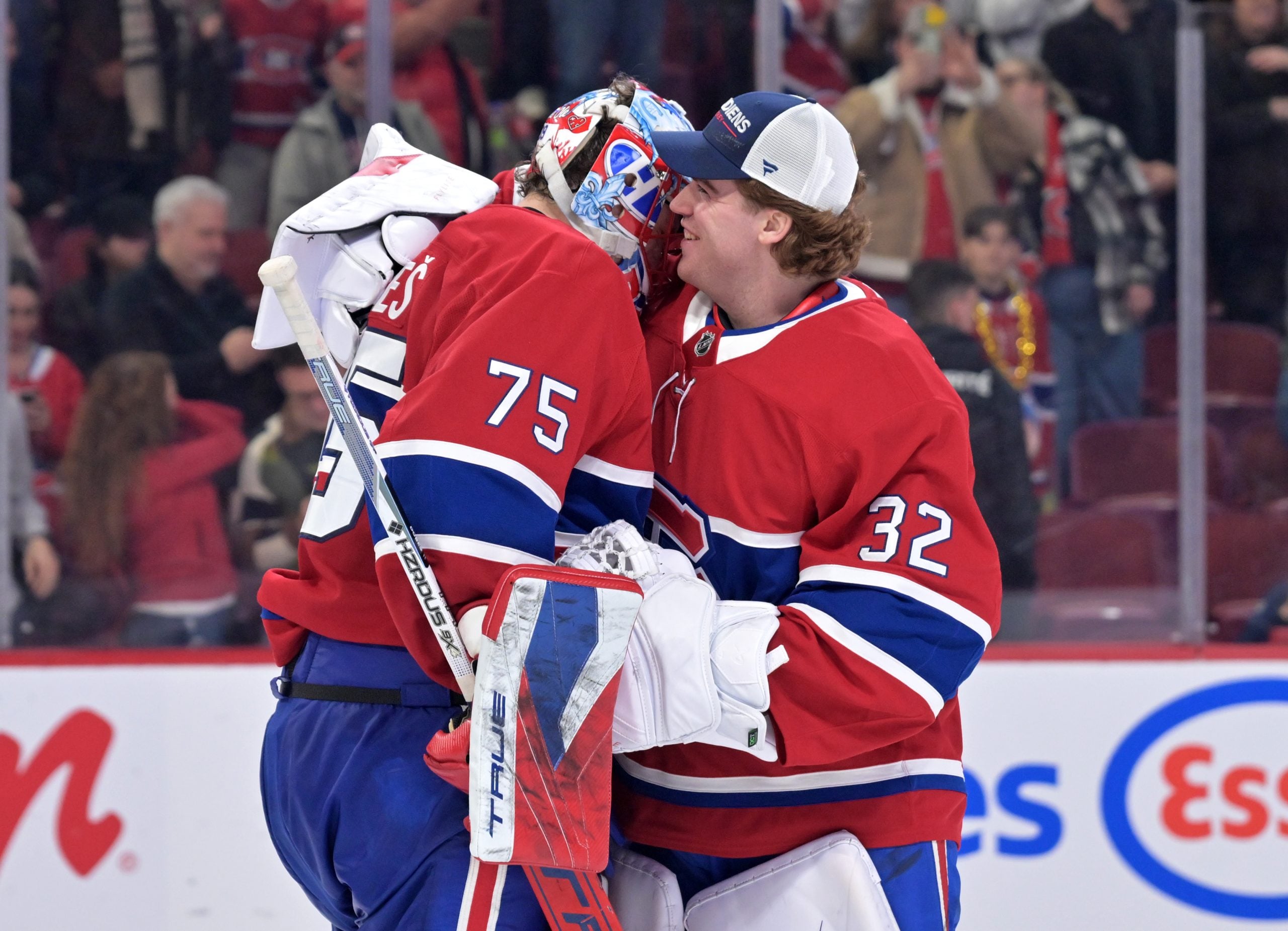
In an eerie mirror image of history, the 2026 crease relies on 24-year-old rookie sensation Jakub Dobes, who replicated Halak’s underdog magic by stealing two daunting Game 7 victories on the road this spring. Much like 16 years prior, Dobes handles the heavy lifting while an elite goaltending prospect of the future, Jacob Fowler, watches from the bench as the backup finding his own footing.
The blueprints used to construct the blue lines further illustrate how hockey has evolved over nearly two decades. The 2010 defence was a towering, physical, and veteran-heavy unit designed purely to clear the porch and protect the low slot. Anchored by rugged, stay-at-home defensive pillars like Gill, Josh Gorges, and Roman Hamrlík, their primary objective was to absorb punishment, block shots, and suppress high-danger chances. With the injury to star defenceman Andrei Markov, the lone spark of modern flair on that backend came from a raw, high-energy rookie named P.K. Subban, who injected a rare dose of dynamic offence into an otherwise rigidly conservative and bruising defensive corps.
The 2026 blue line, by contrast, has completely abandoned the heavy, stationary approach of yesteryear in favour of a highly dynamic, modern, and offensively explosive philosophy. Instead of bruising glass-and-out defenders, this modern defensive group revolves around elite puck-movers and exceptional skaters who drive transitions and dictate the pace of the game.
Led by the mesmerizing vision of Lane Hutson, the steady all-situations poise of Kaiden Guhle, and the elite playmaking of Noah Dobson, this defensive unit functions as a mobile five-man attack. While the 2010 defence was built to survive inside their own zone, the 2026 blue line is weaponized to exit the zone instantly, transforming defence into dangerous offence in a matter of seconds.
Modern Sustainability
When evaluating the long-term viability of the two rosters, the 2026 organic rebuild model stands out as significantly more sustainable than the 2010 quick-fix retool. Even with the remaining needs, such as a top-six centre, being put on full display in the ECF. The fundamental difference lies in how each roster was assembled and budgeted. While the 2010 team was put together to maximize a fleeting competitive window with immediate, external upgrades, the 2026 team was engineered from the ground up to establish a perennial contender. While the current roster has made an ECF appearance, the rebuild is far from over. This architectural shift from short-term desperation to methodical planning completely alters how long the franchise can stay at the top.
The structural flaws of the 2010 model were largely driven by a crushing, self-imposed desperation from the front office. Gainey faced immense pressure from ownership, the fan base and media to build an immediate winner to coincide with the franchise’s historic Centennial celebrations. This suffocating “win-now” necessity forced management to abandon long-term patience, trading away elite future assets, such as top defensive prospect Ryan McDonagh, for established veterans who could theoretically deliver a 25th Stanley Cup during the team’s 100th anniversary window.
Consequently, this Centennial-driven urgency locked the team into a reliance on aging veterans whose rapid declines crippled the franchise’s cap space. High-priced stars acquired under this pressure declined quickly, leaving the team saddled with toxic, unmovable contracts like that of Gomez. Because the front office had emptied the prospect cupboard to chase immediate glory, the American Hockey League (AHL) affiliate was left depleted of inexpensive talent; instead, it was manned by players that were considered busts, like Louis Leblanc. This means the team lacked any internal safety net once those expensive veteran contracts aged out.
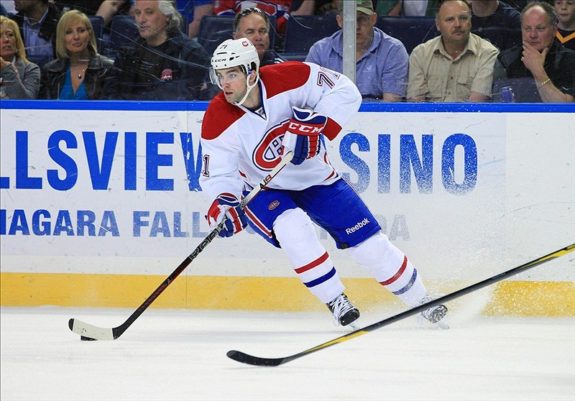
Ultimately, the 2010 team’s postseason success was a fragile illusion built upon extreme goaltending over-reliance. Halak’s historic hot streak masked the massive structural flaws of a roster rushed together for an anniversary marketing campaign. Because the team lacked a developmental foundation, the competitive peak lasted only a year or two before collapsing into another rebuild. By correcting these historical mistakes, the 2026 strategy has traded a high-pressure, lightning-in-a-bottle window for an enduring blueprint capable of sustaining elite success for a generation.
The starkly contrasting paths of the 2010 and 2026 Canadiens underscore how much the modern game and the franchise’s construction philosophy have evolved. The 2010 squad was an expensive, high-pressure veteran mercenary unit built out of immediate Centennial necessity, resulting in a fragile, short-term competitive window that relied heavily on a hot goaltender that hid its deep structural flaws.
By contrast, the 2026 team fighting the Hurricanes at the Bell Centre is more sustainable over the long-term. While it also has excellent youthful goaltending, it also boasts a homegrown young core of elite draft-and-development point producers, dynamic puck-moving defencemen and top-tier prospects engineered by Hughes to become a perennial contender.
While the nostalgic pass of the torch from Halak to Dobes, the current rookie sensation, before Game 4 beautifully captured the identical underdog magic that can unite a city in an improbable springtime run, it also put the ultimate success of this modern blueprint into focus. The “win-now” desperation of yesteryear has officially been replaced by a structurally sound, multi-year organizational strategy designed to stay at the top for all of the prime years of this young core group.
Free Newsletter
Get Montreal Canadiens coverage delivered to your inbox
In-depth analysis, breaking news, and insider takes - free.
Subscribe Free →