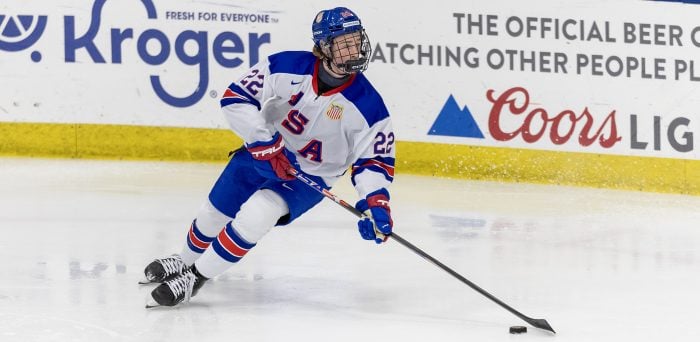
The St. Louis Blues made a series of aggressive moves throughout the 2026 NHL Draft, using the first round to add prospects and retool their roster.
St. Louis opened with the No. 11 overall pick before later moving picks No. 15 and No. 29 to the Anaheim Ducks in a deal for center Mason McTavish. Earlier in the week, the Blues had already acquired the No. 16 selection from the Washington Capitals in the Jordan Kyrou trade, giving them multiple swings in the opening round.
With a mix of original picks and acquired assets, the Blues leaned heavily into center depth while navigating an evolving draft board.
Here are the grades for each of their first-round decisions.
Mason McTavish Deal – C+
The deal that sent picks No. 15 and No. 29 to Anaheim for McTavish gives St. Louis a young center with clear tools, but also some real question marks after a difficult season.
McTavish’s year in Anaheim never fully stabilized, with inconsistency in his offensive production and noticeable issues in his skating and defensive engagement. At times, his game looked out of sync, leading to a reduced role and uneven impact even in key moments.
The appeal for St. Louis is still obvious. He is a physical, capable two-way center who can drive play off the cycle and shift between center and wing. In the right environment, there is a belief that his game can be simplified and more consistent.
But the concern is whether the production and overall impact justify the cost. Two first-round picks are a significant price for a player coming off a year where his overall game regressed, and he struggled to consistently drive results at both ends of the ice.
It’s a clear bet on a bounce-back driven by tools and projection rather than recent performance. A C+ reflects both the upside and the uncertainty attached to his current level of play.
No. 11 – C Tynan Lawrence (B-)
With the 11th overall pick, the Blues selected center Tynan Lawrence out of Boston University, continuing to address their need for long-term depth down the middle.
Lawrence, a 6-foot, 185-pound center from Fredericton, New Brunswick, spent the 2025-26 draft season split between the United States Hockey League’s (USHL) Muskegon Lumberjacks and Boston University in Hockey East. He opened the year with Muskegon, producing 17 points (10 goals, seven assists) in 13 games before making the jump to the NCAA in January.
At Boston University, Lawrence finished with seven points (one goal, six assists) in 18 games. While the offensive numbers were modest, his impact came in other areas as he adjusted to the pace and structure of the college game.
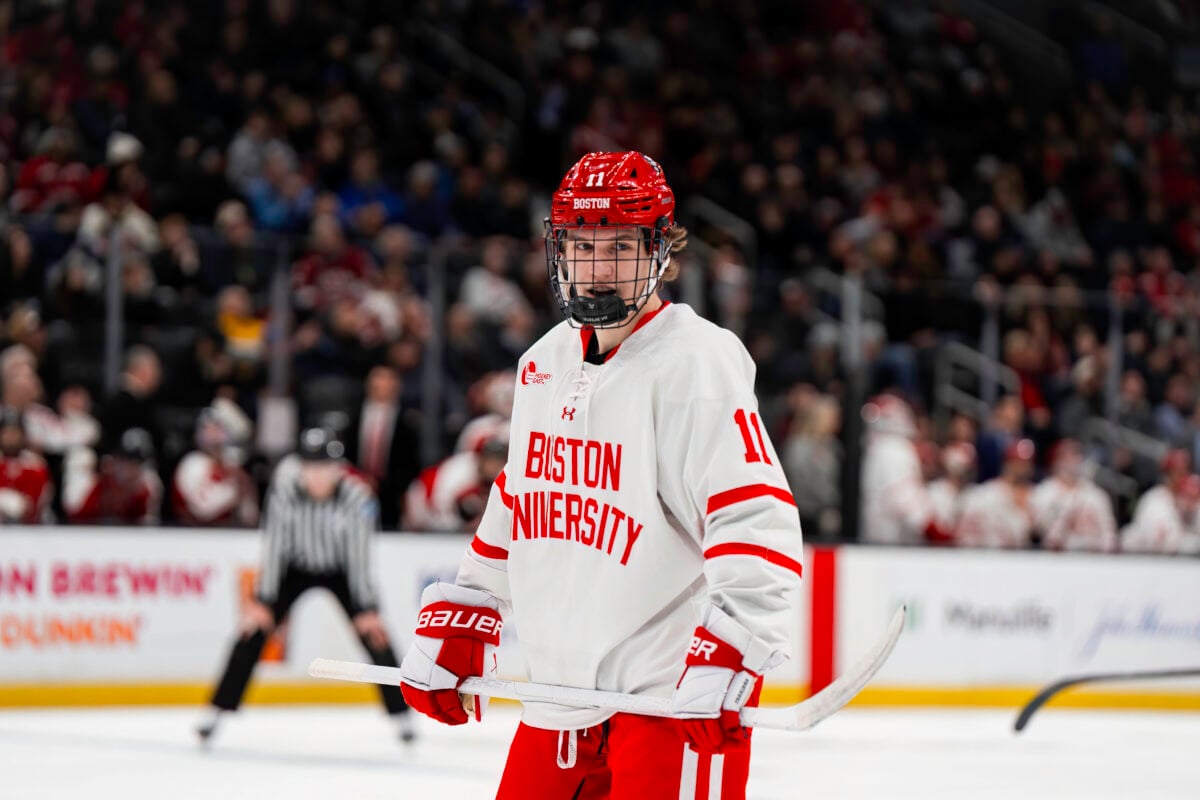
Lawrence is viewed as a reliable, defensively responsible center who plays with strong detail in his own end. He uses an active stick, smart positioning, and strong reads in transition to disrupt plays and move the puck cleanly up ice. However, his offensive game remains limited at this stage, and there are still questions about whether he will develop enough scoring touch to move beyond a matchup role.
For St. Louis, the pick aligns with organizational need, but it is more of a safe projection than a swing on higher-end skill. The Blues have lacked consistent center depth in their system, and Lawrence projects as a lower-risk, lower-ceiling option who may top out in a bottom-six to middle-six role.
A B- grade reflects the solid floor and defensive reliability, but also the lack of high-end offensive upside compared to other players still available on the board.
No. 16 – C Maddox Dagenais (C)
After trading picks No. 15 and No. 29 to acquire McTavish, the Blues used the No. 16 selection on center Maddox Dagenais from the Quebec Maritimes Junior Hockey League’s (QMJHL) Quebec Remparts.
Dagenais is a 6-foot-4, 196-pound left-shot center from Montreal who took a notable step forward in his draft year. He recorded 62 points (30 goals, 32 assists) in 62 games during the 2025-26 season after posting 26 points in 43 games the season prior. He also showed improved consistency over the course of the season, with more impact in puck battles and better detail in his defensive zone play.
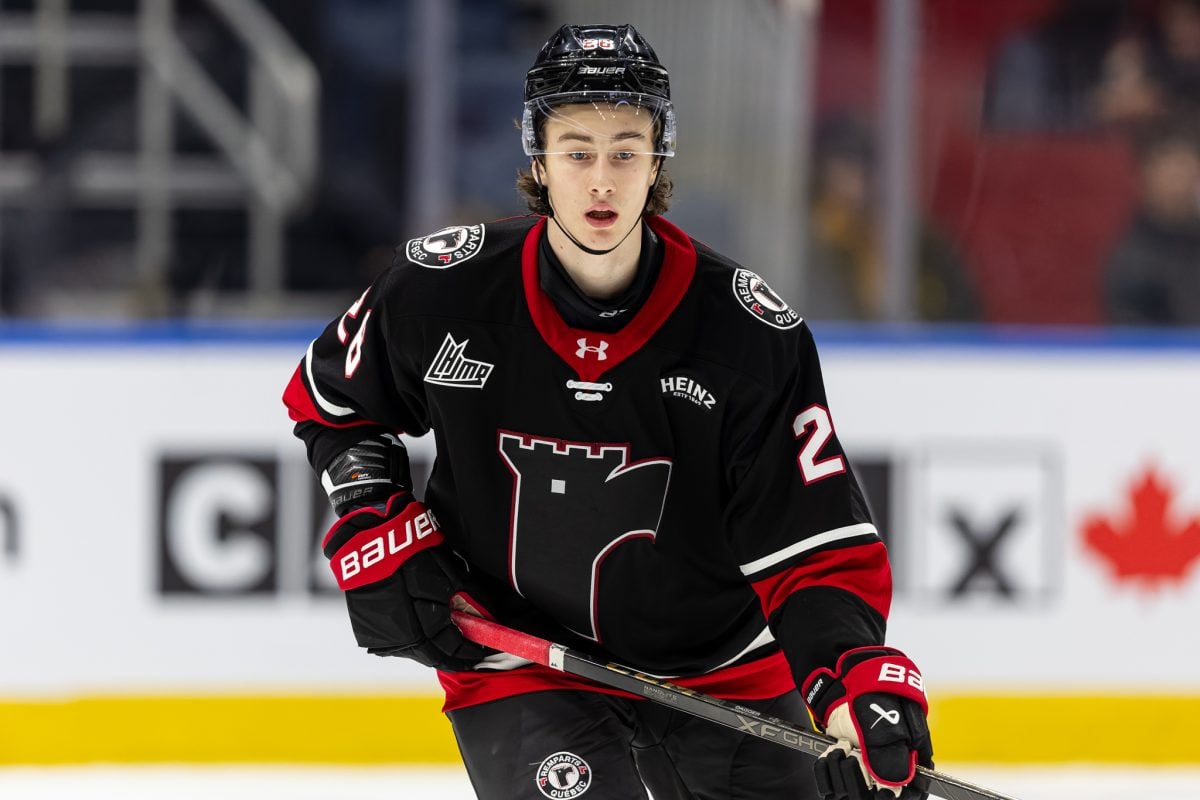
He is viewed as a big, versatile forward who can play center or shift to the wing. He uses his size to protect pucks and win battles along the boards while bringing a strong straight-line game and a developing two-way presence. His shot is a clear strength, and he projects as a potential middle-six forward, but his offensive ceiling is still considered more projectable than dynamic.
With the Blues already selecting a center earlier in the draft and acquiring McTavish in a trade, the fit becomes more complicated. McTavish can also fill a wing role for St. Louis, including on the left wing, which gives the organization some flexibility.
However, the decision to pass on a natural winger such as Ethan Belechtz, who was available at the time, appears to be tied in part to concerns about his lack of top-end speed and overall skating ability, which may have lowered his appeal in that range of the draft. That’s where the C grade comes from, on top of already adding multiple centers.
Good, Not Great for the Blues
By the end of the first round, the Blues’ draft night had taken on a completely different shape than it started with.
What began with the No. 11 pick quickly turned into a series of moves that shifted their approach on the fly, most notably the trade that sent picks No. 15 and No. 29 to Anaheim for McTavish. Each decision kept the Blues active throughout the first round.
The grades below reflect that mix of fit, value, and timing. Lawrence at No. 11 projects as a long-term piece down the middle, while Dagenais at No. 16 brings size and versatility, though the value of the pick will be debated given how the board unfolded.
Free Newsletter
Get St Louis Blues coverage delivered to your inbox
In-depth analysis, breaking news, and insider takes - free.
Subscribe Free →