Morale was high for the Philadelphia Flyers after ending their playoff drought last season. Boasting a young roster that improved between the pipes over the summer, the city of Philadelphia finally had a hockey team again.
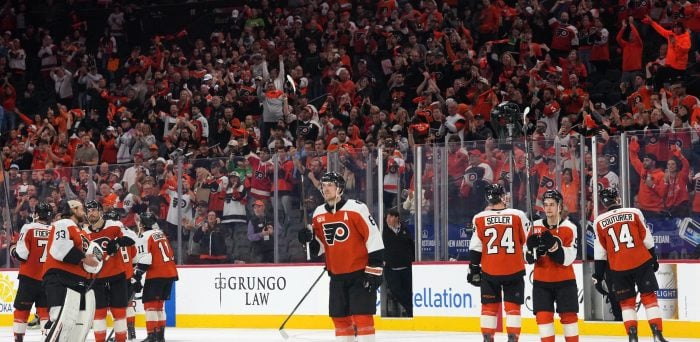
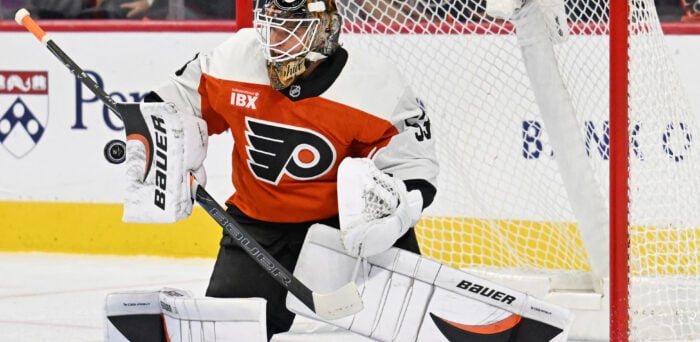
The immaculate vibes immediately faded when the Orange and Black dropped their home opener 7-0 to the Pittsburgh Penguins. That game was a one-off in the final score, but the team remains winless through five contests. They are one of three clubs left still seeking that first victory.
What’s the historical significance of the Flyers’ start? Here’s a breakdown of the numbers.
Teams to Lose Their First 5 Games in the Salary Cap Era
Since the salary cap era began in 2005-06, a total of 24 teams have started off their season winless through five games. The San Jose Sharks are the only team to reach the five-game mark without a win in consecutive seasons, with their drought spanning from 2023-24 to 2025-26.
In an ironic twist, of the 24 teams to start off that slow, all but one of them missed the playoffs. The lone exception was the Flyers themselves in 2008-09, as they went 44-24-8 the rest of the way after starting off with a 0-3-3 record.
There is a clear distinction between that rendition of the Orange and Black and this one, however. Philadelphia had the seventh-best odds to win the Stanley Cup entering that campaign, according to Hockey Reference—a bounce-back was expected. On the contrary, the 2026-27 Flyers were projected to miss the playoffs by bettors.
The Flyers had poor stretches last season and made the playoffs regardless, so this could just be bad timing. But through five games, Philadelphia has legitimately been the worst team in the NHL, so maybe it’s not.
Can the Flyers Turn It Around?
Now, just because the Flyers have had league-worst metrics to open the season doesn’t mean they’re destined to miss the playoffs. The Orange and Black went 4-9-4 between Jan. 8 and Feb. 25 last season, which I assumed would get them a one-way ticket to the draft lottery, but a near-perfect post-Olympic stretch sent them to the postseason.
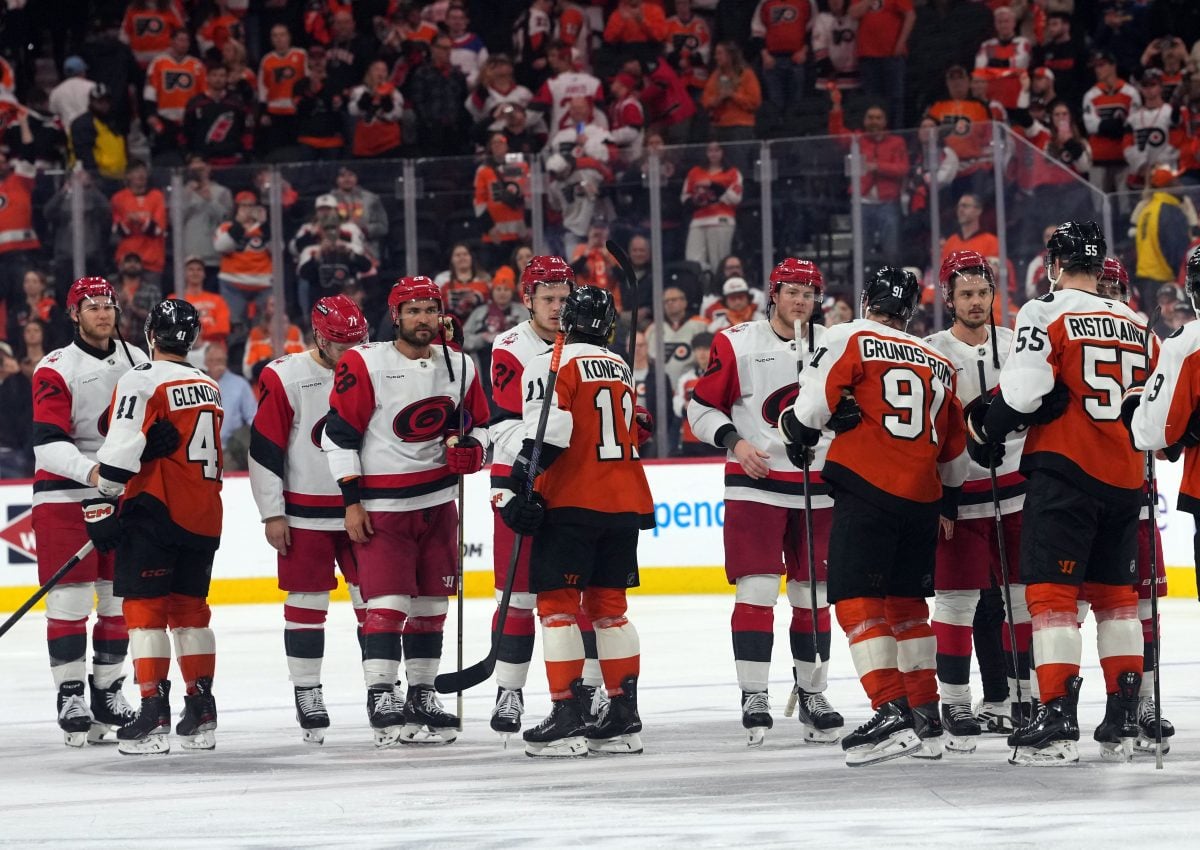
It should be noted, however, that the Flyers’ on-ice play was fine during that stretch. According to Hockey Stats, their 48.5% expected goal share at 5-on-5 ranked 22nd in the league. Their goal share, at 37.5%, underperformed that mark by 11 points. Their 95.58 PDO (a sum of save and shooting percentage—an indicator of bad luck) was the main culprit for the drought.
The Flyers’ PDO has still been a problem to open 2026-27, but the difference is that they deserve their fate. Their putrid 32.4% expected goal share is the worst in the NHL, and their 26.7% goal share, while worse than their expected mark, doesn’t misrepresent what they are right now. Philadelphia has a 97.68 PDO, sitting 22nd in the NHL.
With that being said, the Flyers weren’t playing good hockey in January and February, either. They improved their game substantially and got some favorable puck luck in the process (fourth-best PDO). So, turning it around wouldn’t be unprecedented.
At this point in time, though, the assumption should be that the Flyers miss the playoffs. They were viewed as an on-the-cusp team heading into the campaign, and now they’re in a hole. Their game against the Ottawa Senators was encouraging, as they finally outshot an opponent, but both clubs played well enough to win. So, you’re going to lose some of those.
Flyers Must Avoid Repeating Mid-2010s
This is where we get into the broader aspect of things. It’s too early to say this definitively, but the Flyers sure do seem to be headed to another mid-2010s era, when the team was frustratingly mediocre.
Recently, prospect analyst Corey Pronman wrote an article projecting the NHL’s standings in five years. Seeing as Philadelphia officially started its rebuild in 2023 (but drafted fifth in 2022), the 2030-31 season should be when the team is an established contender. He had the Flyers 14th in the standings (from ‘Projecting the 2030-31 NHL standings: Which teams will be competing for the Stanley Cup?,’ The Athletic, Aug. 21, 2026).
Does one person’s assessment mean the Flyers are destined for mediocrity? No. But I’ve had the same feelings for a while. When you compare what Philadelphia has to other teams in the league, it simply falls short.
You also have to question the Flyers’ vision. Head coach Rick Tocchet is good at squeezing wins out of a team, but we’re seeing some of the downsides of his hiring right now. Porter Martone and Matvei Michkov—easily the two most important people in the organization—have a combined two points thus far, and they’re only averaging 14:11 of ice time. On the flip side, Elias Pettersson has finally found his confidence after notoriously losing his star form under the same head coach.
The Flyers knew what they were getting into with Tocchet, seeing as he’s been in the NHL coaching business for 24 years. This isn’t to say he’s not the right person for the job, but what we’re seeing now was always a plausible outcome.
You can disagree with my assessment of the future and Tocchet. But what we can agree on is that, by any means necessary, the Flyers cannot repeat the mid-2010s. Their disappointing start through five games could be nothing, or it could be a sign of what’s to come years down the line.
Free Newsletter
Get Philadelphia Flyers coverage delivered to your inbox
In-depth analysis, breaking news, and insider takes - free.
Subscribe Free →