There are moments in every season when a team has to decide who it really is. Saturday night (Oct. 18) felt like one of those for the Toronto Maple Leafs. Visually, the game wasn’t pretty. The numbers at five-on-five said they were fine—positive in all the right analytics—but something in the feel of the game was off.
Related: Sheldon Keefe 2.0: The Devils Unlocked a Smarter, Stronger Coach
This is supposed to be a team with new DNA, built in the image of Craig Berube’s no-nonsense, hard-edged philosophy. But if we’re being honest, we haven’t seen that version of the Maple Leafs yet.
The results so far are caught in between eras – too skilled to be heavy, too heavy to be skilled. And that’s why it’s time for this group to lean fully into the identity the organization has been promising since Berube walked through the door.
What Does the Maple Leafs’ “New DNA” Really Mean?
General manager Brad Treliving didn’t reshape the bottom six for fun. The Maple Leafs’ offseason plan was to build a roster that finally pushes back, that makes opponents pay a price for parking in front of the net or skating freely through the neutral zone. Bigger, tougher, more physical. Those were the words. But for all the talk about DNA, we still see too much of the old team’s habits – circling, reacting, waiting for someone else to engage.
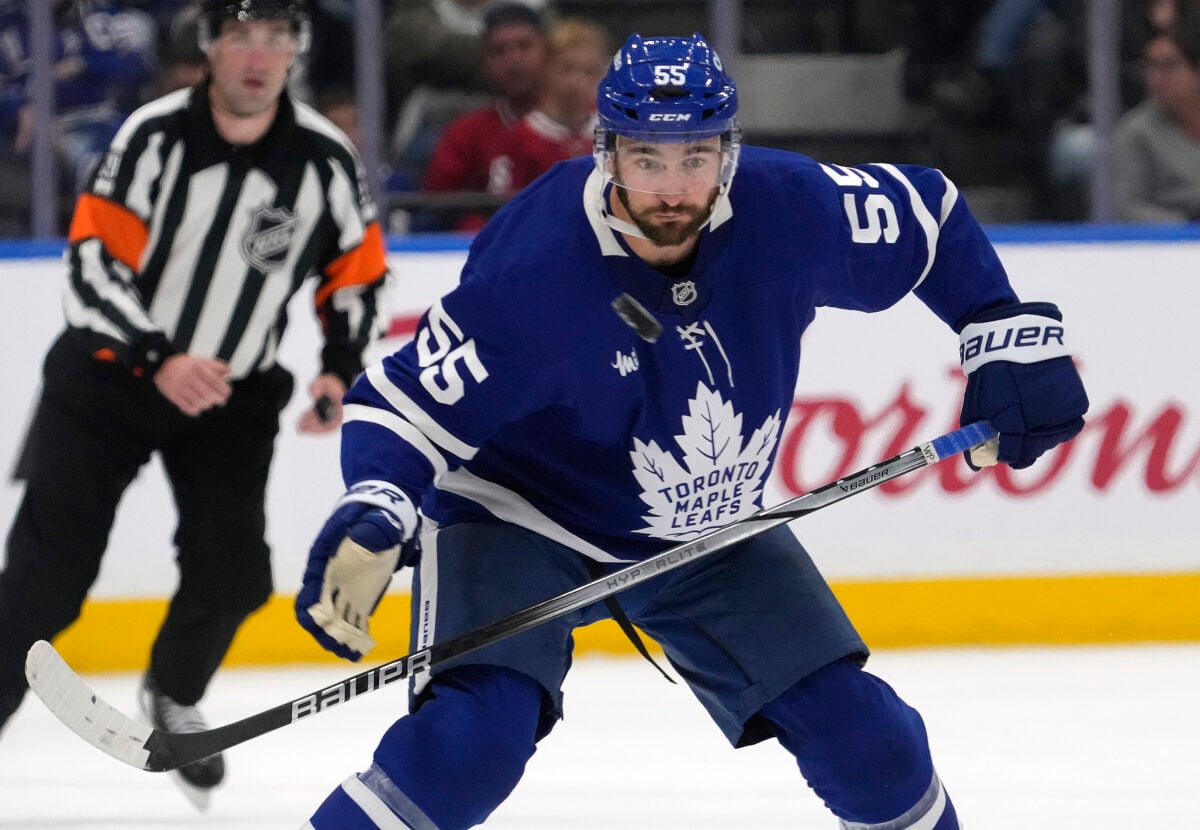
Being physical doesn’t mean running players through the boards on every shift. It means owning the space. It means that when the other team’s defencemen see blue sweaters, they know it’s going to hurt to make a play. That isn’t visible yet. Maybe that’s because the players getting the most ice time – guys like Matthews, Nylander, and Rielly – aren’t physical by nature. But that’s exactly why Berube’s structure needs muscle mixed throughout the lineup.
Time to Spread the Maple Leafs’ Toughness Around
Right now, the Maple Leafs’ size and edge are concentrated in the bottom six. That’s not enough. Teams spread out scoring for balance; Toronto needs to spread out the physicality for impact.
Related: Stolarz’s Criticism Explains Maple Leafs’ Lack of Playoff Success
Take Bobby McMann, who leads all forwards with 26 hits. He doesn’t need to score to make a difference – just give John Tavares some space to work. Slot him on that line and let him bang on the forecheck. Then look at the Matthews unit. Rather than slotting in skill-for-skill players like Max Domi or Mattias Maccelli, why not give Dakota Joshua or Nicolas Roy a shot?

Joshua had a few top-line shifts recently and didn’t look out of place. Roy, at 6-foot-4, brings reach and presence, even if he still needs to find that extra snarl. One of them belongs up there permanently.
Related: Stolarz’s Honesty Tests Berube’s New Maple Leafs DNA
If Joshua or Roy move up, the other can anchor the third line with Easton Cowan and Domi – two players who can skate, make plays, and stir the pot. The fourth line? That should be Berube hockey in its purest form: Sammy Blais, Scott Laughton when healthy, and Steven Lorentz. Three guys who hit, battle, and make the ice a little smaller for the other team.
Maple Leafs Need to Move On From the Wrong Fits
We all like Nicholas Robertson, but it’s time to be honest – he doesn’t fit this team. Toronto seems afraid to trade him for fear he’ll become the next Jared McCann or Mason Marchment, but holding on out of fear isn’t leadership. Robertson plays a fast, perimeter game. That’s not the team’s identity anymore. The same might be said of Maccelli, who flashes creativity but fades under pressure.

Calle Järnkrok is a different story. He’s not big, but he’s smart and steady – an ideal 13th forward who won’t cost you a game. David Kämpf could also fit that bill, bringing more size and penalty-killing reliability if the team wants a heavier look in that role.
The Message From the Maple Leafs’ Bench to the Room
Berube and Treliving didn’t build this roster to be middle-of-the-road. They built it to be miserable to play against. The players who buy into that will stay. The ones who don’t – no matter their skill level – will eventually fade from the lineup. That’s the evolution we’re watching in real time.
Related: Alexander Mogilny: The Great Russian Enigma
This roster has been carefully retooled to create its new identity. The Maple Leafs have to stop dabbling in it and start owning it. Play mean. Protect your goalie. Hit first, ask questions later.
What’s Next for the Maple Leafs?
Toronto faces a stretch of games that will test its backbone. The numbers may suggest they’re fine, but the eye test indicates they’re not dangerous enough. We’ve seen this movie before – great on paper, polite on the ice. This time, it has to change.
We don’t need them to become the Broad Street Bullies overnight. But we do need to see them act like a team that finally understands what its DNA really is. If Berube’s going to build something lasting here, it won’t start with systems or slogans. It’ll start with sweat, hits, and a little bit of defiance.
Because until the Maple Leafs feel different, all this talk about identity doesn’t mean much at all.
[Note: I want to thank long-time Maple Leafs fan Stan Smith for collaborating with me on this post. Stan’s Facebook profile can be found here.]
