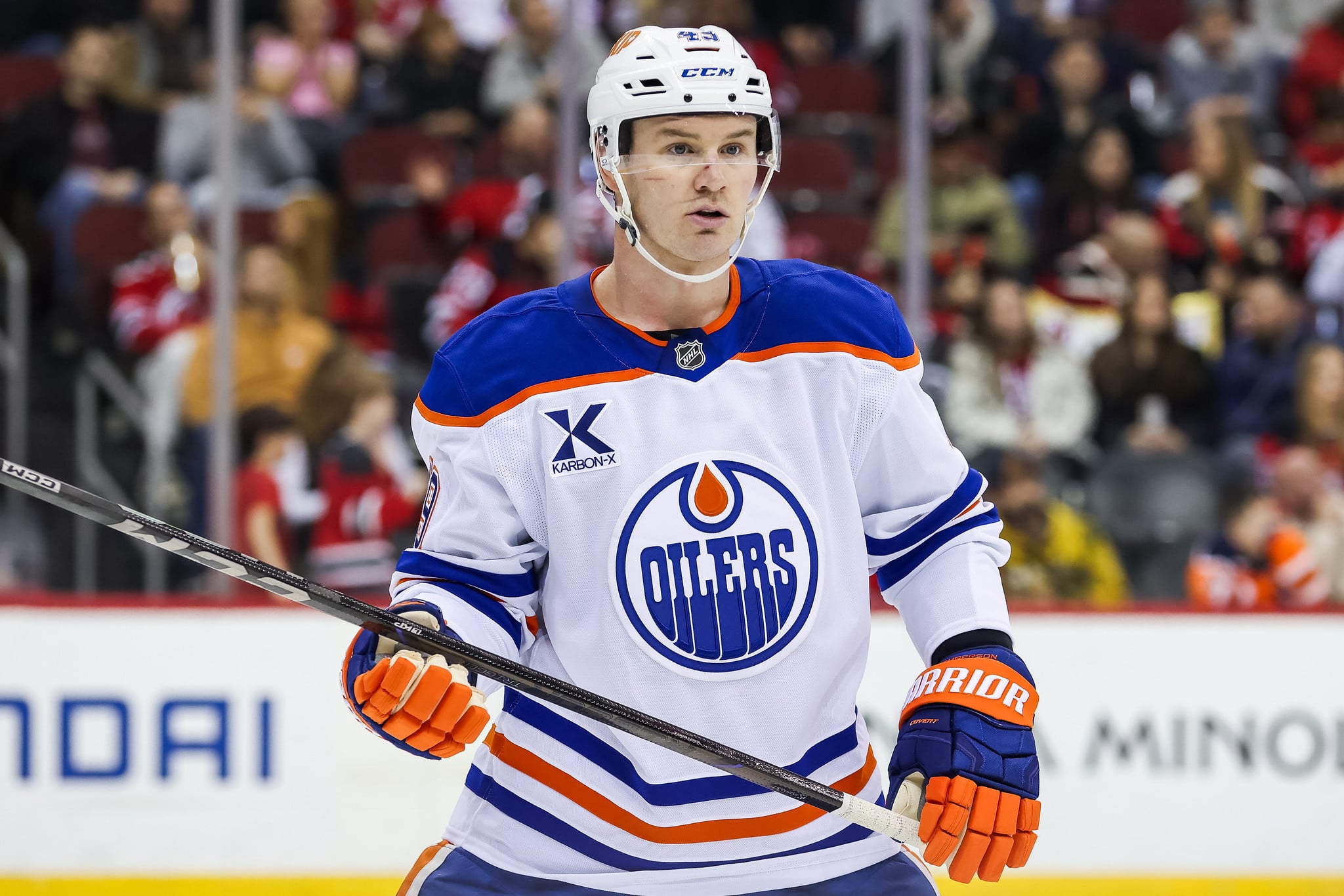
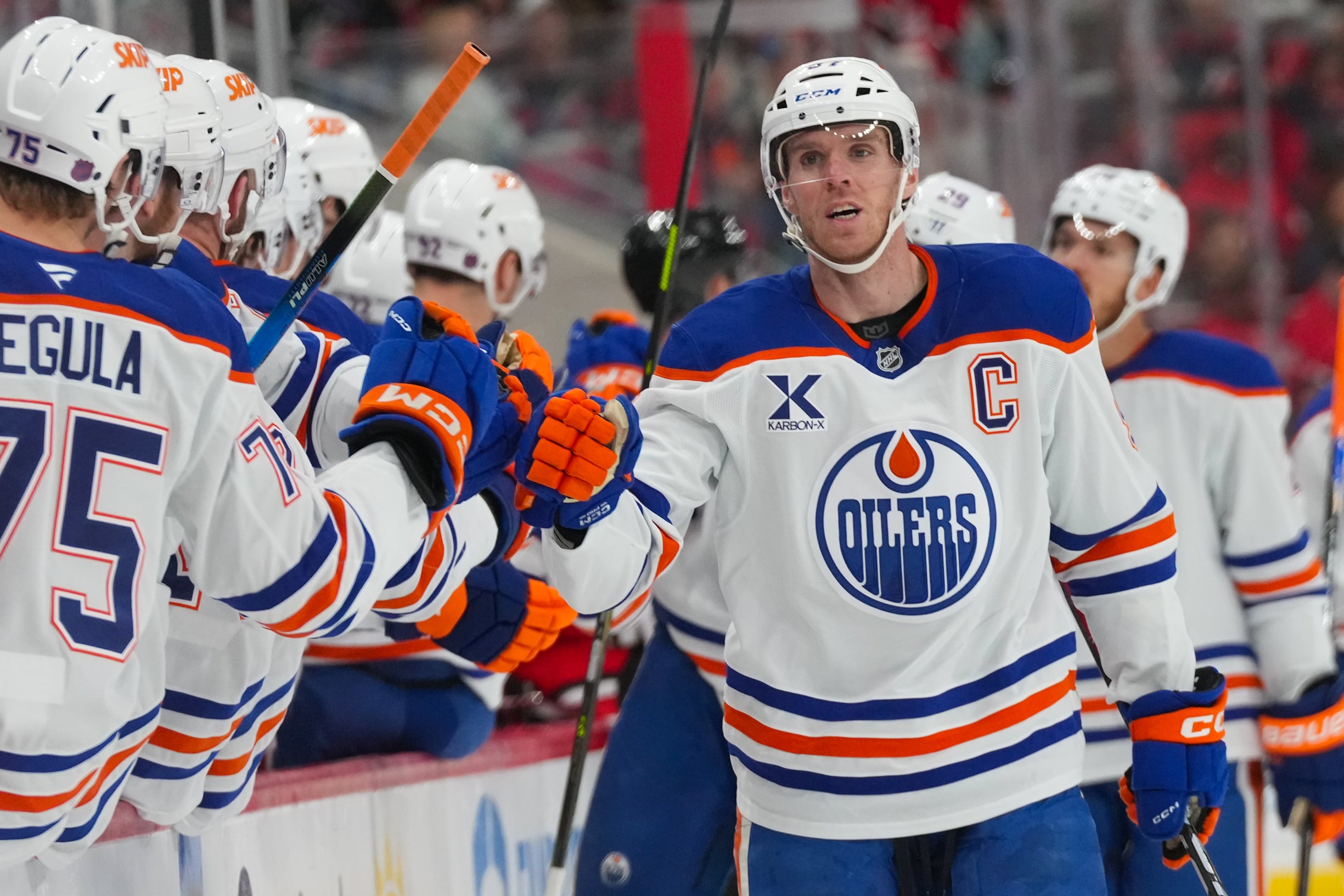
Mike Babcock has spent the opening days of Edmonton Oilers training camp testing a familiar question: Should Connor McDavid and Leon Draisaitl play together, or should each drive his own line?
For now, Babcock has put them together with Vasily Podkolzin. Behind them, Ryan Nugent-Hopkins has centred Isaac Howard and Zach Hyman. Monday’s practice also featured Mattias Ekholm alongside Evan Bouchard, with Jake Walman and Connor Murphy on the second defence pair and Ryan Shea and Shakir Mukhamadullin on the third. Those combinations give Edmonton a starting point, but Babcock has made clear that he is still evaluating them.
“You’re speculating on what I’m going to do,” Babcock said when asked whether McDavid and Draisaitl would stay together. “I’m telling you right now, I don’t have a clue what I’m going to do. I’m going to watch.” That is the right approach. The Oilers know their stars can overwhelm opponents on one line. The harder question is which alignment gives them the most reliable team over 60 minutes.
McDavid and Draisaitl Together: The Case for It
The early return has been encouraging. McDavid and Draisaitl each recorded a goal and an assist in Edmonton’s preseason win over Winnipeg, playing with Podkolzin on an effective top line. Podkolzin is a sensible third member: he can pursue pucks, work along the boards and let the two stars control the attack.
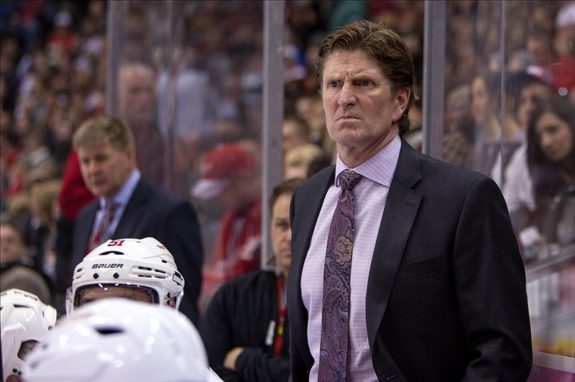
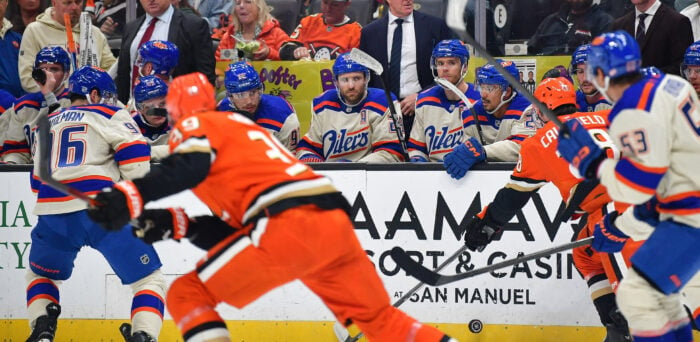
Babcock also sees an ice-time benefit. “You can play them together, and then everyone else gets to play because there’s enough ice time to go around,” he said. “If you play them apart, and the top two lines play 20 minutes, what do the other guys do?” His point goes beyond spreading minutes evenly. If McDavid and Draisaitl share shifts, Babcock can give the third and fourth lines regular work without feeling compelled to rush one superstar back onto the ice. He wants those lines to contribute through pressure and structure, even when they do not score.
“I like our third line to be productive, and I like our fourth line to be productive,” he said. “What matters to me is, did we wear out the other team? Did we play right? Did we come after you?” That philosophy only works, though, if the second line can generate enough offence to punish teams that load up against McDavid and Draisaitl.
Nugent-Hopkins Is the Key Test
The proposed Howard–Nugent-Hopkins–Hyman line has a clear appeal. Hyman gives it a strong presence near the net, Howard brings skill, and Nugent-Hopkins can connect plays while handling centre responsibilities. Nugent-Hopkins says the position feels natural despite spending much of the past two seasons on the wing: “I’m always more comfortable [at centre]. It’s easier for me to jump back into that centre spot.”
But a second line cannot survive on reputation. Nugent-Hopkins recorded 26 even-strength points in 72 games last season. If this group is regularly facing opponents’ next-best defenders while McDavid and Draisaitl draw the toughest attention, it needs to create chances consistently. Howard’s place on the line must also be earned in camp. “We need to be able to produce and play well with the puck,” Nugent-Hopkins said. “There definitely is some emphasis on us to be able to produce and just make sure that we’re a really good and solid second line.”
Edmonton should give that trio a genuine trial. If it controls play and creates chances but runs into poor finishing, there is reason to stay patient. If it struggles to enter the offensive zone or spends shifts defending, Babcock should separate his stars. McDavid with Hyman and Podkolzin, and Draisaitl with Nugent-Hopkins and Howard, would be one combination worth testing. It would restore two elite centres while placing Hyman back with McDavid and giving Howard a chance to learn alongside Draisaitl.
The third line of Trent Frederic, Jason Dickinson and Kasperi Kapanen could provide the forechecking and defensive reliability Babcock wants. Meanwhile, Alex Formenton, Colton Dach and Mathieu Joseph have already caught his eye. “Their line was the best line [in Saturday’s game], and they were the best line just there in practice,” Babcock said.
Should Ekholm Still Be Bouchard’s Partner?
The defence offers another worthwhile experiment. Ekholm and Bouchard have earned considerable trust together, and separating them should not be treated as an automatic upgrade. Yet Ekholm is 36. Edmonton should find out whether it can manage his workload while giving Bouchard a different partner and strengthening another pair.

A trial of Walman–Bouchard, Ekholm–Mukhamadullin and Shea–Murphy would answer several questions. Walman’s mobility could complement Bouchard’s puck movement. Ekholm could provide the positioning and communication that help the 24-year-old Mukhamadullin develop against NHL competition. Murphy could give Shea a steady partner. Mukhamadullin played 50 games for San Jose last season before Edmonton acquired him in the Darnell Nurse trade, so this would be a development opportunity with real NHL experience behind it.
There is a significant condition: Ekholm cannot be asked to carry a developing partner through every difficult matchup simply because he is the veteran. Babcock should judge the pair by whether it exits the defensive zone cleanly, limits chances off the rush and holds up when opponents target it. Bouchard’s results away from Ekholm would need equal scrutiny. If either pair struggles, the established Ekholm–Bouchard partnership remains a valuable option.
Let the Results Set the Lines
Babcock does not need to declare a permanent lineup before the season starts. His best opening test is McDavid–Draisaitl–Podkolzin and Howard–Nugent-Hopkins–Hyman, with enough consistent minutes for the lower lines to show what they can do. On defence, a short, deliberate look at Ekholm with Mukhamadullin could reveal whether Edmonton has more ways to distribute its experience.
The decision points are straightforward. Can Nugent-Hopkins’ line create offence at even strength? Can the bottom six sustain pressure? Can Bouchard and Ekholm each succeed with another partner? Preseason results will offer clues, but regular-season matchups will give Babcock the stronger evidence.
He has already described his plan plainly: “I’m going to watch.” Edmonton’s strongest lineup will be the one that holds up after he does.
Free Newsletter
Get Edmonton Oilers coverage delivered to your inbox
In-depth analysis, breaking news, and insider takes - free.
Subscribe Free →