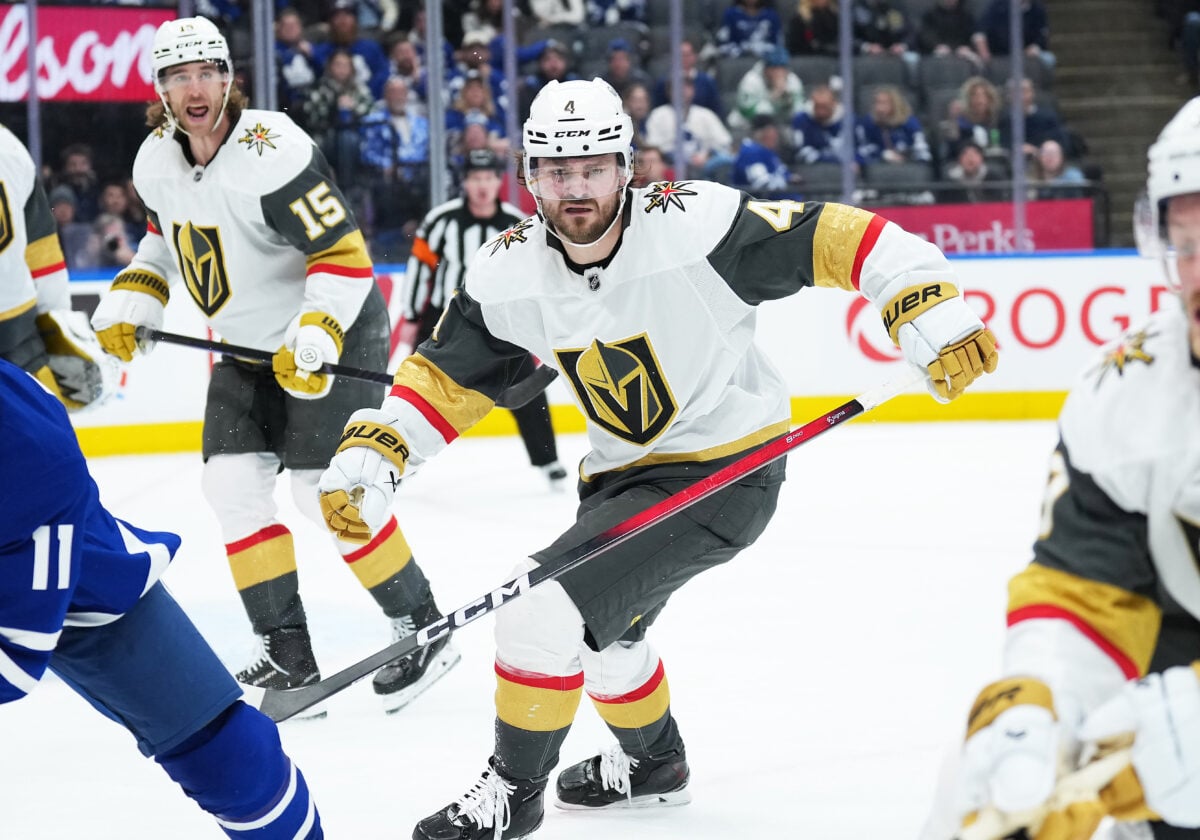
With free agency less than a month away, teams are now preparing themselves for what is out there, and what is out there isn’t all that glamorous. This year’s free agency class is projected to be extremely weak, and only a handful of players will realistically cause a bidding war. One of those players is right-shot defenceman Rasmus Andersson, who is currently in the Stanley Cup Final with the Vegas Golden Knights.
Andersson is a bit of a jack-of-all-trades defenceman. He’s not “elite” in one single category, but he’s a smooth skater, moves the puck up the ice efficiently using his feet or stick, provides an offensive element from the backend, and can be an absolute pest to play against defensively inside the dirty areas. This all sounds great. Why would the Senators not want to be in on this right-shot blueliner?
Do the Senators Have Their Top-Four Solution In-House?
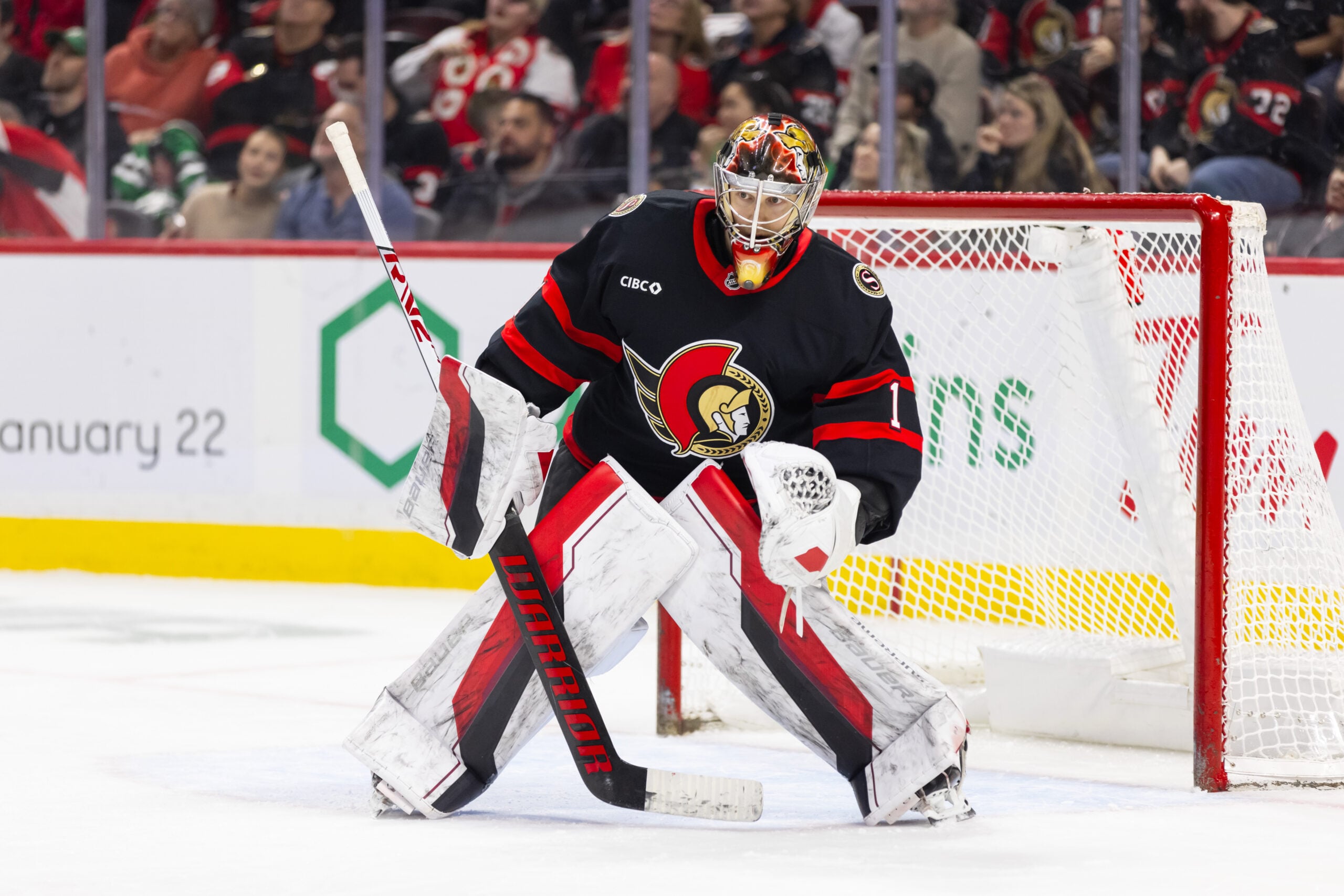
The Senators currently have a hole on the right side of their defence in their top four. Jordan Spence is a pending restricted free agent, and their seventh-overall pick from 2024, Carter Yakemchuk, are two internal players who could fulfill that role. However, the role of playing 20 or so minutes a night for both could be daunting and set them up for failure.
Yakemchuk came into Game 4 of the Senators’ first-round series against the Carolina Hurricanes. It was his NHL Playoff debut, and he arguably didn’t look out of place. He logged just under 20 minutes in that game and assisted on both of Ottawa’s two goals in the 4-2 loss. He registered a goal and an assist in four games during the regular season, while having an impressive rookie campaign in Belleville in the American Hockey League (AHL) with 40 points (10 goals, 30 assists) in 54 games.
The future is bright for Yakemchuk, and he certainly is showcasing the potential of a top-four defenceman. Alas, having two offensive-minded blueliners paired together can create havoc on the defensive side of the puck. It would make more sense for Yakemchuk to be paired up with Kleven on the third pair rather than be with Chabot.
Spence had a bit of an up-and-down season. But when elevated in the lineup down the stretch in the regular season, he showed his potential, and he would have the upper hand in slotting into the No. 4 spot over the rookie Yakemchuk. However, Spence needs a new contract and shouldn’t be painted as an “untouchable” for the Senators. If he can help them fetch more scoring help in their forward group, general manager Steve Staios should be willing to move the 25-year-old right-shot blueliner.
The Roster Domino Effect
Andersson isn’t going to get a short-term deal (most likely) in free agency. As a player who turns 30 later in the year, he will be looking for a contract that will take him past his mid-30s. If the Senators were to give him a six-year deal, how would that impact the rest of the roster?
Artem Zub’s contract expires at the end of next season. He has turned into a perfect partner for Jake Sanderson, and we can’t underestimate how significant his loss was when he left the Carolina series with an injury. Zub’s next contract will see him at 32 years old by the time the 2027-28 season starts. Yes, his age could factor into contract discussions, but defencemen with his kind of defensive skillset can’t be overlooked.
Brayden McNabb of the Golden Knights is an unsung hero for his team. He plays alongside Shea Theodore, the team’s No. 1 defenceman, and is a staunch defensive rearguard who allows Theodore to focus on the offensive side of the puck. That’s Zub in a nutshell. The Senators will want to get a deal done with him sooner rather than later.
Now, let’s assume Zub stays put in Ottawa and that Andersson is also signed. Where does Yakemchuk go now? If Zub and Andersson are both around long-term, that will stifle Yakemchuk’s development path. There would be no room for him to move up. That can create a dissatisfied high-end prospect — look at Simon Nemec in New Jersey. Yakemchuk may view Andersson’s signing as a sign that the organization doesn’t trust him and his potential.
There’s also the factor of money. Andersson is expected to get a significant pay raise from the $4.55 million cap hit he currently has. Many are projecting him to get a contract no lower than $8 million per year and closer to the $9 million mark. That could also increase further if he has an impressive Stanley Cup Final. Paying Andersson as much as he is expected to fetch could make him the highest-paid player on the Senators. Would the organization be comfortable with that? Does that not really matter with the salary cap constantly rising?
Andersson’s Playoff Run Causing “Buyer Beware?”
The Golden Knights gave up four pieces to acquire Andersson from the Calgary Flames this season. That included a first and second-round pick along with a well-respected member in the locker room, Zach Whitecloud. It was a heavy price to pay for a deal that didn’t come with a contract extension, but that’s the cost management sometimes needs to be willing to make to win a Cup. However, is there some “buyer beware” forming from his play throughout these playoffs?
Andersson has been partnered up alongside his former Flames teammate, Noah Hanifin. The two would no doubt have chemistry, but it hasn’t necessarily been showcased on the ice. Courtesy of Natural Stat Trick, the two have played over 300 minutes together at 5v5. Their Corsi is by far the worst at 41.76%. They’ve allowed 141 scoring chances against (SCA) and 62 high-danger scoring chances against (HDCA). Compare that to the McNabb and Theodore pairing, who have allowed 107 SCA and 42 HDCA.
When you separate the two and look at just their individual analytical stats, Andersson ranks near or at the bottom in about every important category. He has the worst Corsi; he’s been on the ice for the most shots against, SCA, and HDCA. Additionally, if you filter for just the Stanley Cup Final games, Hanifin and Andersson are being absolutely caved in by the Hurricanes.
Now, to play devil’s advocate. The Senators are in “win-now” mode. It makes absolute sense to target a player of Andersson’s caliber who could be the piece that helps push them over the edge. The organization doesn’t just want to avoid another first-round exit. Is a right side that consists of Zub, Yakemchuk, Spence, and Nikolas Matinpalo, good enough? I think the obvious answer is no. The team would be banking on Yakemchuk or Spence to stabilize that No. 4 spot. But if they don’t do that? Well, then the team would have to start looking at spending assets and acquiring a player via trade, which is not ideal.
In an ideal world, the Senators roll into next season with Spence or Yakemchuk as their right-shot blueliner on the third pair, and Matinpalo is No. 7 on the depth chart. So while acquiring Andersson to fill that hole makes sense, it would create complications for the organization’s top prospect moving forward, and perhaps his play in the playoffs has turned teams away.
Free Newsletter
Get Ottawa Senators coverage delivered to your inbox
In-depth analysis, breaking news, and insider takes - free.
Subscribe Free →