Dec. 14 marked the 18th anniversary of a major moment in St. Louis Blues history. On that day in 2007, forward Doug Weight was traded to the Anaheim Ducks for forward Andy McDonald. The deal turned out to be a one-sided trade, with the Blues emerging as the clear winner.
Reason for the Doug Weight Trade
At the time, the Ducks were enjoying success, coming off their first and only Stanley Cup championship, while the Blues were well out of the playoff picture. However, Anaheim was tight against the salary cap. With multiple players needing new salaries, they agreed to trade McDonald for Weight.
Weight in Anaheim
The trade was not popular in Anaheim. In fact, many still consider it one of the worst trades in franchise history. McDonald was coming off two seasons of 85 and 78 points. Despite injury issues earlier in his career, the Ontario native was settling in nicely in the NHL.
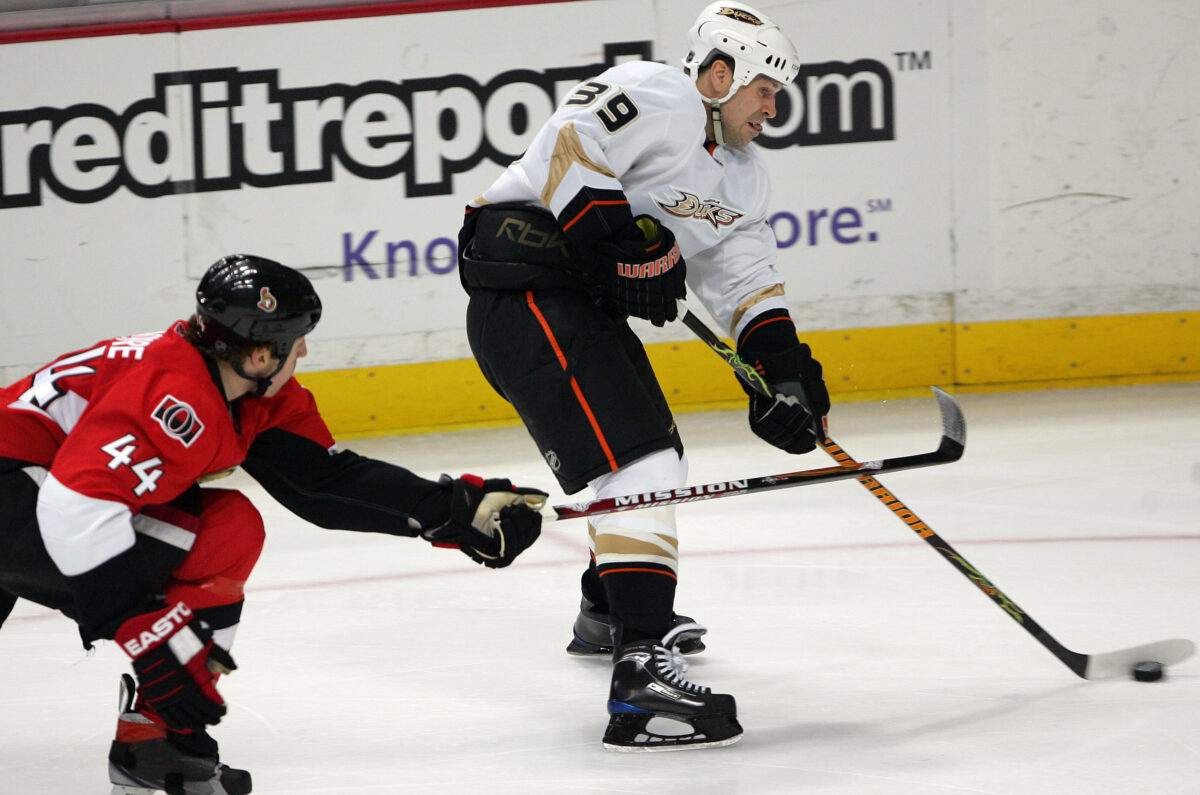
However, financially, the trade made sense, and it probably would have been viewed more positively if Weight had worked out, even if he was not the 100+ point player he once was. But Weight only recorded 14 points in 38 regular-season games. In the playoffs, he recorded just a point in five games. He then signed with the New York Islanders in the offseason (where he would eventually become head coach).
There is no sugarcoating it. The trade did not work for the Ducks, but the opposite happened for the Blues.
McDonald in St. Louis: The Early Years
McDonald recorded 36 points in 49 games with the Blues to close out the 2007-08 season. Alongside players like Keith Tkachuk, Brad Boyes, and Paul Kariya, the team had an offensive core that would contend in future seasons.
In his second season with the club, McDonald signed a four-year extension. In the same season, despite missing games due to a leg fracture, McDonald helped the Blues reach the Stanley Cup Playoffs for the first time since 2003-04.
Blues Were a Maturing Team
The Blues’ 2009 Playoff run ended after a first-round sweep by the Vancouver Canucks, and they missed the postseason in the following two campaigns. To his credit, McDonald did his part, scoring 44 goals in those two seasons. He also served as a leader in the locker room as an alternate captain.
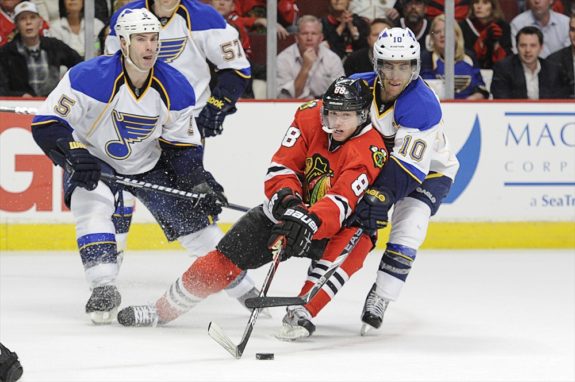
McDonald’s leadership helped young players on the team, like T.J. Oshie, David Backes, and Alex Pietrangelo, adjust to the responsibilities of the NHL and adopt a more competitive mindset. As the only player on the roster to have won a Stanley Cup, McDonald was the experienced veteran they looked to.
Oshie, Backes, and Pietrangelo became key members of a team that became regular contenders in the 2010s. Backes became captain of the Blues in 2011-12, and Pietrangelo replaced him in 2016, following Backes’ departure. Pietrangelo became the first Blues captain to raise the Stanley Cup in 2019.
McDonald’s Style of Play Matched Team Needs
McDonald was key in helping the team return to the playoffs and become future contenders. He was structured, responsible, and challenging to play against. He could also play in all situations, giving his coaches flexibility with the lineup.
Blues Became Contenders Again
By 2011-12, the Blues were regular playoff contenders again. They finished second in the Western Conference and won the Central Division.
Related: St. Louis Blues All-Decade Team
McDonald only played in 25 games that regular season due to injury, but he still made an impact, especially in the first round of the playoffs against the San Jose Sharks. In the five-game series, McDonald scored four goals, including the game-winning goal in Game 4, to help the team win their first playoff series since 2002.
McDonald Trade a Win for the Blues
McDonald retired after the 2012-13 season due to concussion problems. In six seasons with the Blues, he scored 90 goals and 230 points, and helped the team reach the playoffs twice.
The 2007 trade was meant to help the Ducks retain key players with freed-up cap space, keeping their championship window open. As it turns out, the trade helped open the Blues’ championship window. It has been 18 years since this deal, and while McDonald might not be as well-known as players like Brett Hull, Vladimir Tarasenko, and Pietrangelo, acquiring him had a major impact on the team that lasted for years.
