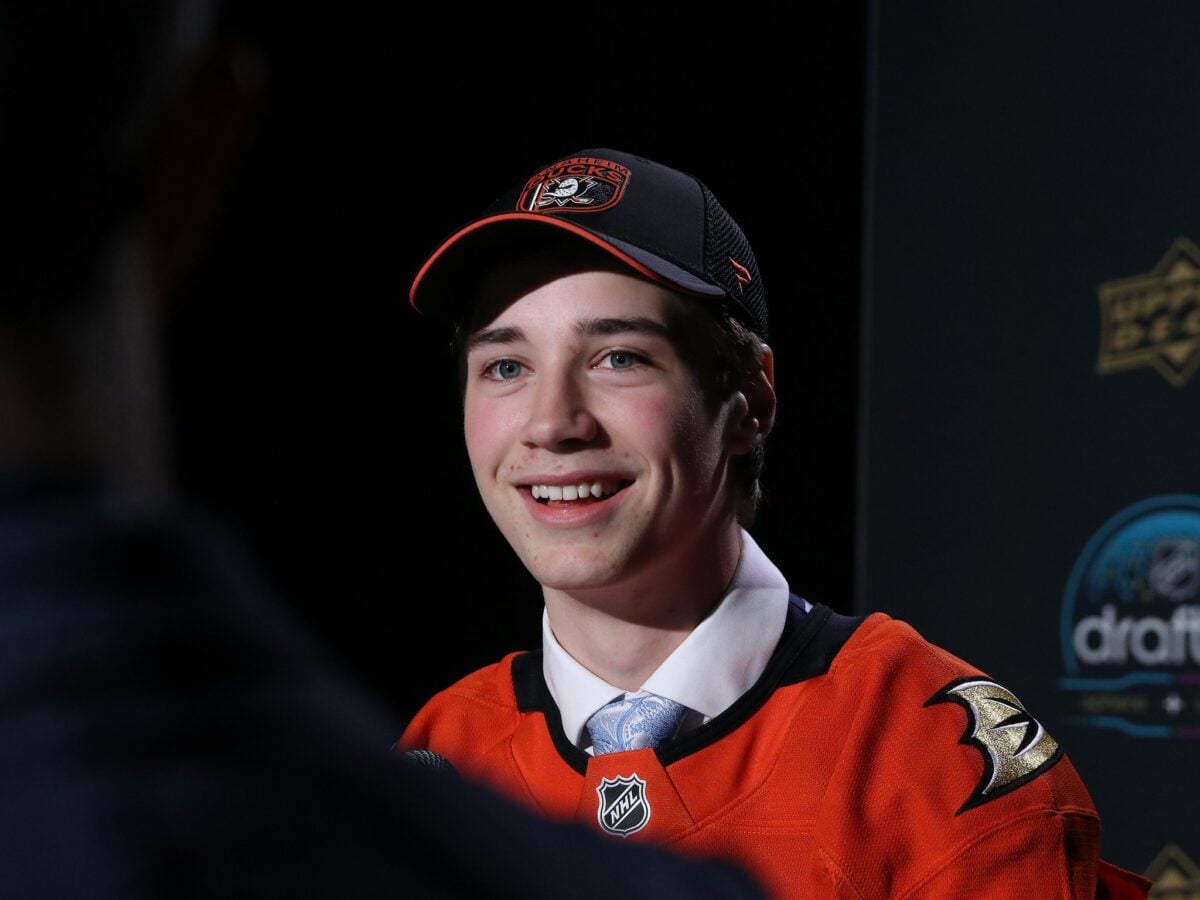
When the Anaheim Ducks called Beckett Sennecke’s name third overall at the 2024 NHL Draft, the reaction was immediate and almost universal. Scouts questioned it. Analysts questioned it. Even Sennecke himself looked stunned, his expression going viral within minutes as the hockey world collectively raised an eyebrow at the pick.
The only people who were not surprised were the ones holding the card.
Anaheim’s scouting staff had done their homework, and they saw something in Sennecke that the broader draft consensus had undervalued. The argument against him at three was straightforward: there were players available with higher ceilings, better combine numbers, and more conventional top-three profiles. The argument for him was more nuanced, and it required trusting a projection that most outside the organization were not willing to make.
The Ducks also had a positional need that shaped the decision. With Leo Carlsson and Mason McTavish already in the fold as center options, the priority was a high-end winger who could slot into the top six and contribute immediately. Questions still surrounded when Ivan Demidov would make the jump to North American hockey, and the urgency at wing was real. Sennecke was the right fit at the right time.
The Player Nobody Fully Understood
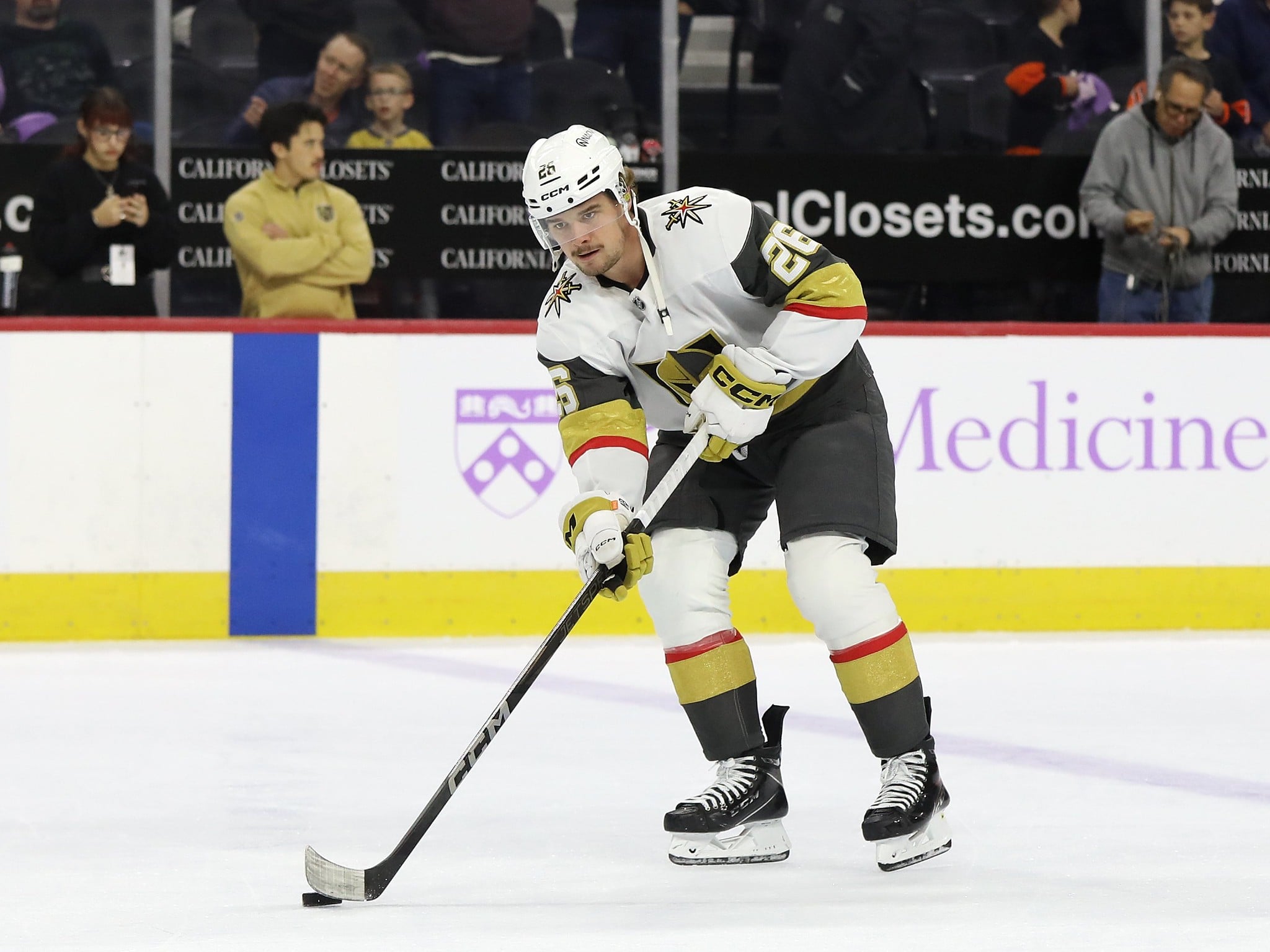
Part of what made Sennecke difficult to evaluate was his physical profile at the time of the draft. He had developed his game as a smaller player, learning to navigate tight spaces with quick hands and shifty puck handling that typically belongs to forwards several inches shorter. By his draft year, he had grown to nearly 6-foot-3 and 182 pounds, and the result was something scouts rarely encounter — a player with a power forward frame running a skill set built for someone half a foot smaller.
That combination does not always translate cleanly to draft boards built around conventional archetypes, and that is exactly why the skepticism existed. His wrist shot is elite, capable of adjusting angle in tight situations to beat goaltenders who think they have the post covered. His playmaking is creative and long-range, with the ability to drive play that opens ice for teammates rather than just finding the obvious outlet. His compete level, the backcheck, the forecheck engagement, and the willingness to attack defenders directly are the kind of detail that shows up in person and gets lost in the numbers.
His 2024 Ontario Hockey League (OHL) Playoff performance should have quieted the skeptics before draft night even arrived. Sennecke posted 22 points (10 goals and 12 assists) in 16 games for the Oshawa Generals in high-pressure elimination hockey. He was not overwhelmed by the moment. He was the moment.
The Rookie Season
Training camp started badly. A foot fracture cost Sennecke six to eight weeks and raised early questions about whether the adjustment to the professional game would be further complicated by lost development time. It was not.
He finished the 2025-26 regular season with 60 points in 82 games and established himself as a legitimate Calder Trophy finalist. For a player drafted amid skepticism, producing at that level in year one is the kind of evidence that closes arguments rather than continuing them.
The standout moment of his rookie year came in the final second of regulation, when Sennecke scored a shorthanded game-tying goal to set an NHL record for a rookie. You do not score that goal without poise, compete, and the kind of clutch instinct that cannot be coached into a player.
Statistical Comparison to Draft Peers
Sennecke’s draft year production looked modest next to his peers on the surface, but the context matters. Macklin Celebrini posted 64 points in 38 games at Boston University and won the Hobey Baker Award. Ivan Demidov put up 60 points in 30 games in Russia’s top junior league at two points per game. Tij Iginla scored 47 goals and finished among the Western Hockey League’s top scorers. Against those numbers, Sennecke’s 68 points in 63 OHL games with Oshawa looked like the weakest return of the group.
It was not a fair comparison, and the Ducks knew it. Sennecke was still filling out a 6-foot-3 frame during that season, playing on a middling Oshawa team, and producing at a rate that climbed significantly as the season went on. He posted 42 points in his final 34 regular-season games before adding 22 points in 16 playoff games. That late surge told scouts more about his trajectory than the full-season totals did.
His NHL rookie season has since settled the debate. The underlying traits Anaheim bet on, the playmaking and the compete level, translated exactly the way the organization believed they would. The raw junior numbers were never the full picture. They rarely are.
Free Newsletter
Get Anaheim Ducks coverage delivered to your inbox
In-depth analysis, breaking news, and insider takes - free.
Subscribe Free →