The atmosphere around Madison Square Garden has shifted. We aren’t talking about a Stanley Cup run or the Presidents’ Trophy right now. Instead, the conversation has turned to something far more uncomfortable for the Rangers faithful: the very real possibility of life without Artemi Panarin, and the underwhelming reality of what his departure might yield.
The 2025-26 season has been defined by inconsistency on the ice and a growing silence off it. With the March 6 trade deadline looming, general manager Chris Drury faces a franchise-altering decision. Panarin, still the team’s most dynamic offensive weapon at 34 years old, is in the final year of that massive seven-year, $81.5 million deal he signed back in 2019. He is set to become the summer of 2026’s most coveted unrestricted free agent (UFA), and right now, the two sides aren’t just on different pages — they’re reading different books.
The Economics of a Standoff
The core of the issue is simple economics clashing with player agency. The Rangers, mindful of the salary cap gymnastics required to keep a competitive window open, were hoping for a team-friendly extension. The hope was that Panarin, comfortable in New York and beloved by the fanbase, would take a haircut to help the team bolster the roster around him.

Reportedly, Panarin has zero interest in a hometown discount. Negotiations have deadlocked because the “Breadman” knows his market value hasn’t dipped enough to justify a pay cut. He remains the team’s leading scorer, the engine that drives the power play, and arguably the only forward consistently creating offense out of thin air.
This leaves the front office in a bind. If the team continues to sputter and no extension is signed by early March, the Rangers cannot afford the catastrophic asset mismanagement of letting a superstar walk for free in July. A trade becomes the only logical failsafe.
The Myth of Leverage
Here is where the cold water hits the face of the fanbase. In a vacuum, trading a player of Panarin’s caliber should yield a king’s ransom — a top-tier roster player, a blue-chip prospect, and high draft picks. But this trade won’t happen in a vacuum; it will happen in a market where the Rangers hold almost no cards.
Related – Rangers Should Consider Trading Trocheck & Soucy
The primary hurdle is the full no-movement clause (NMC). Panarin holds the pen. He decides if he goes, and more importantly, he decides where he goes. We have seen this movie before, and recently. When a player has full control, he can effectively force a trade to a specific contender, stripping the selling team of the ability to create a bidding war.
Furthermore, there is the “rental” factor. Despite his production, Panarin is 34. Acquiring teams are looking at him as a hired gun for a playoff run, not a long-term cornerstone, unless an extension is agreed upon immediately — a complex piece of business to conduct mid-season. Contenders generally do not mortgage their future for a few months of service, especially when the player controls the destination.
The Marchand Precedent
To understand what a Panarin trade actually looks like, we need to look at the recent history of the NHL trade market. The most accurate comparable isn’t a blockbuster from a decade ago; it’s the Brad Marchand deal from the 2024-25 season.
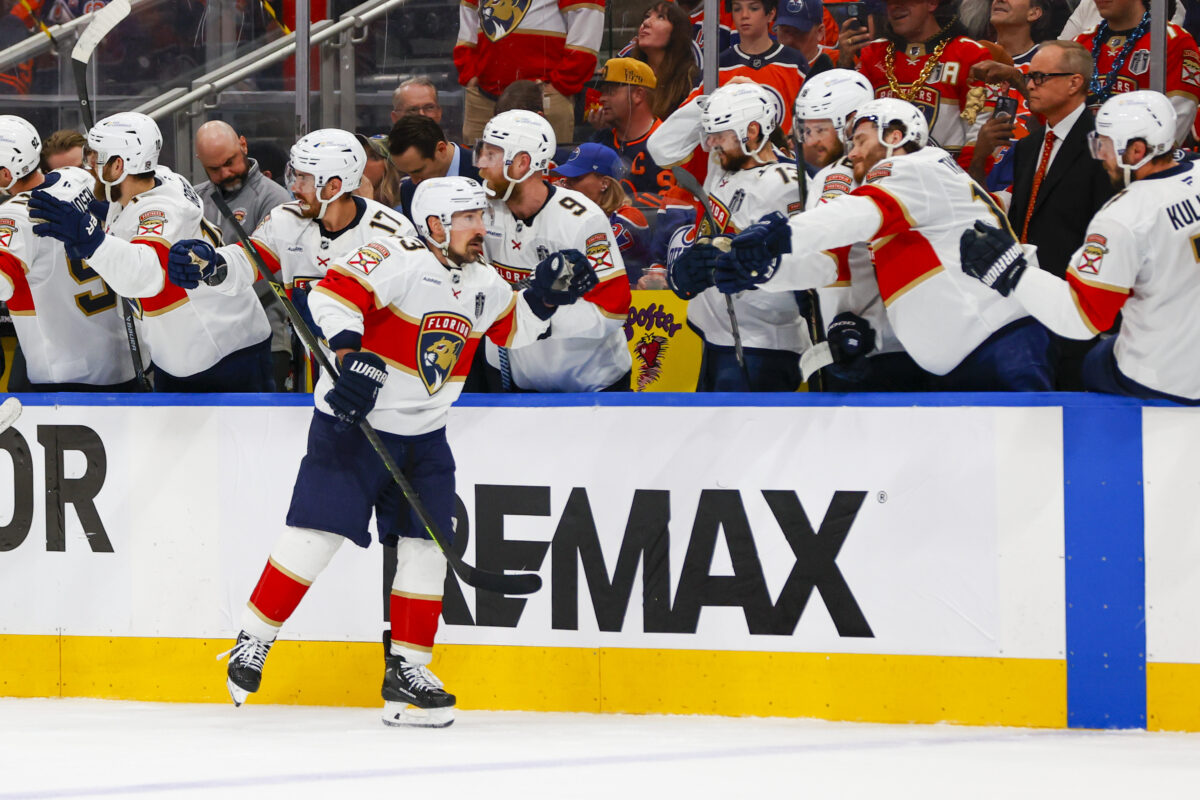
When Marchand forced his way out of Boston to the Florida Panthers, the return was sobering for Bruins fans. It wasn’t a haul of young stars. It was a calculated move to mitigate loss. Marchand, like Panarin, had the NMC and the leverage. He dictated the terms.
The Rangers are staring down the barrel of that exact scenario. Panarin’s camp knows the landscape. If he decides he wants a shot at a Cup with a specific team, the Rangers are merely facilitators trying to salvage value, not dealmakers holding an auction.
Managing Expectations: The Return
So, what comes back to New York?
If you are expecting a “ready-now” top-six forward or a top-pairing defenseman to help the Rangers turn this season around immediately, you will likely be disappointed. Contending teams — the only teams Panarin would waive his NMC for — are not in the business of subtracting from their current roster to add a rental. They want to add Panarin to their core, not swap pieces of it.
Related – 3 Gifts the New York Rangers Should be Asking For Christmas
Based on the Marchand framework and current market chatter, the baseline return looks like asset accumulation rather than immediate help:
- Draft Capital: Expect a first-round pick, likely late in the round given the acquiring team will be a contender, combined with a mid-round pick. This mirrors the conditional pick structure Boston received.
- The “B” Prospect: The deal will likely include a prospect, but probably not the acquiring team’s crown jewel. We are talking about a player with NHL potential but perhaps a lower ceiling — someone who is good, but expendable to the buyer.
The Rangers’ management obviously prefers young players who can step into the lineup tomorrow. They want to retool, not rebuild. But the reality of the rental market makes that incredibly difficult. The “hockey trade” — my star for your star — rarely happens at the deadline, and never happens when the star in question is a pending UFA with a full no-move clause.
The Bottom Line
This is not about the Rangers failing to recognize Panarin’s talent; it is about the brutal math of the salary cap era. The focus for Chris Drury has shifted from “How do we keep him?” to “How do we not lose him for nothing?”

It is a bitter pill for a fanbase that has watched Panarin dazzle at the Garden for years. But if the extension numbers don’t change, the priority becomes asset management. Bringing back a first-rounder and a decent prospect is strictly better than an empty locker in July, even if it feels underwhelming in the moment.
The clock is ticking toward March 6. Unless one side blinks at the negotiating table, the Rangers might soon be forced to take what they can get, rather than what they want.
AI tools were used to support the creation or distribution of this content, however, it has been carefully edited and fact-checked by a member of The Hockey Writers editorial team. For more information on our use of AI, please visit our Editorial Standards page.
