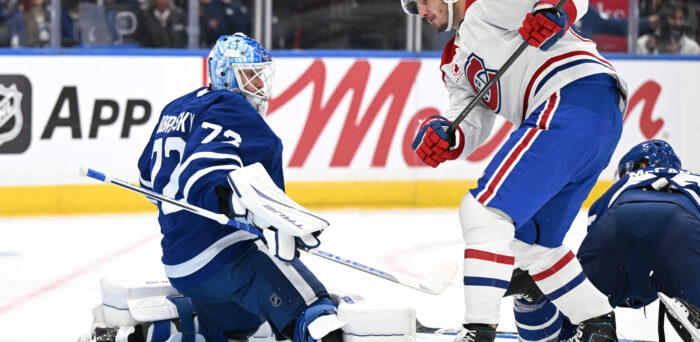
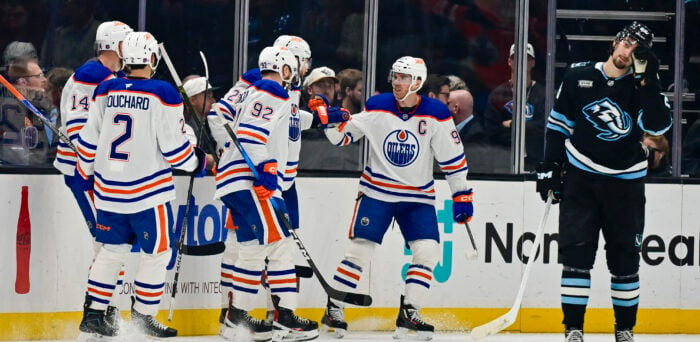
- Rasmus Dahlin (2018)
- Paul Kariya (1993)
- Nathan MacKinnon (2013)
- Dale McCourt (1977)
- Dale Hawerchuk (1981)
- Marcel Dionne (1971)
- Gilbert Perreault (1970)
- Steven Stamkos (2008)
- Jason Spezza (2001)
- John Tavares (2009)
- Pat Lafontaine (1983)
- Alexis Lafreniere (2020)
- Auston Matthews (2016)
- Vincent Lecavalier (1998)
- Denis Potvin (1973)
- Alex Ovechkin (2004)
- Guy Lafleur (1971)
- Bobby Orr (1966)
- Connor Bedard (2023)
- Wayne Gretzky (1979)
- Alexandre Daigle (1993)
- Mario Lemieux (1984)
- Eric Lindros (1991)
- Connor McDavid (2015)
- Sidney Crosby (2005)
- Who Will Be the ‘Next One’?
The NHL Draft is one of the best times of the year simply for the potential that comes with it. Each pick could be the one that transforms a franchise – for better or worse. Heading into the 2026 NHL Draft cycle, teams at the top of the draft are hoping to swing their fortunes and evolve into contenders.
Hitting on these picks can be tough, even when it seems like the prospect is a “sure thing.” Some players wind up shaping a generation while others wind up becoming cautionary tales. But along the way, we all fall in love with the hype. Disclaimer: this is in the lead up to the draft or just before the rookie seasons of those who didn’t wind up being in the draft.
Narrowing this list down was incredibly tough. There are plenty of names that could have made this list at any point: Joe Thornton, Ilya Kovalchuk, Rick DiPietro, the Sedin twins, and about a hundred more. The names below, however, certainly carried an otherworldly level of hype into their NHL careers.
Rasmus Dahlin (2018)
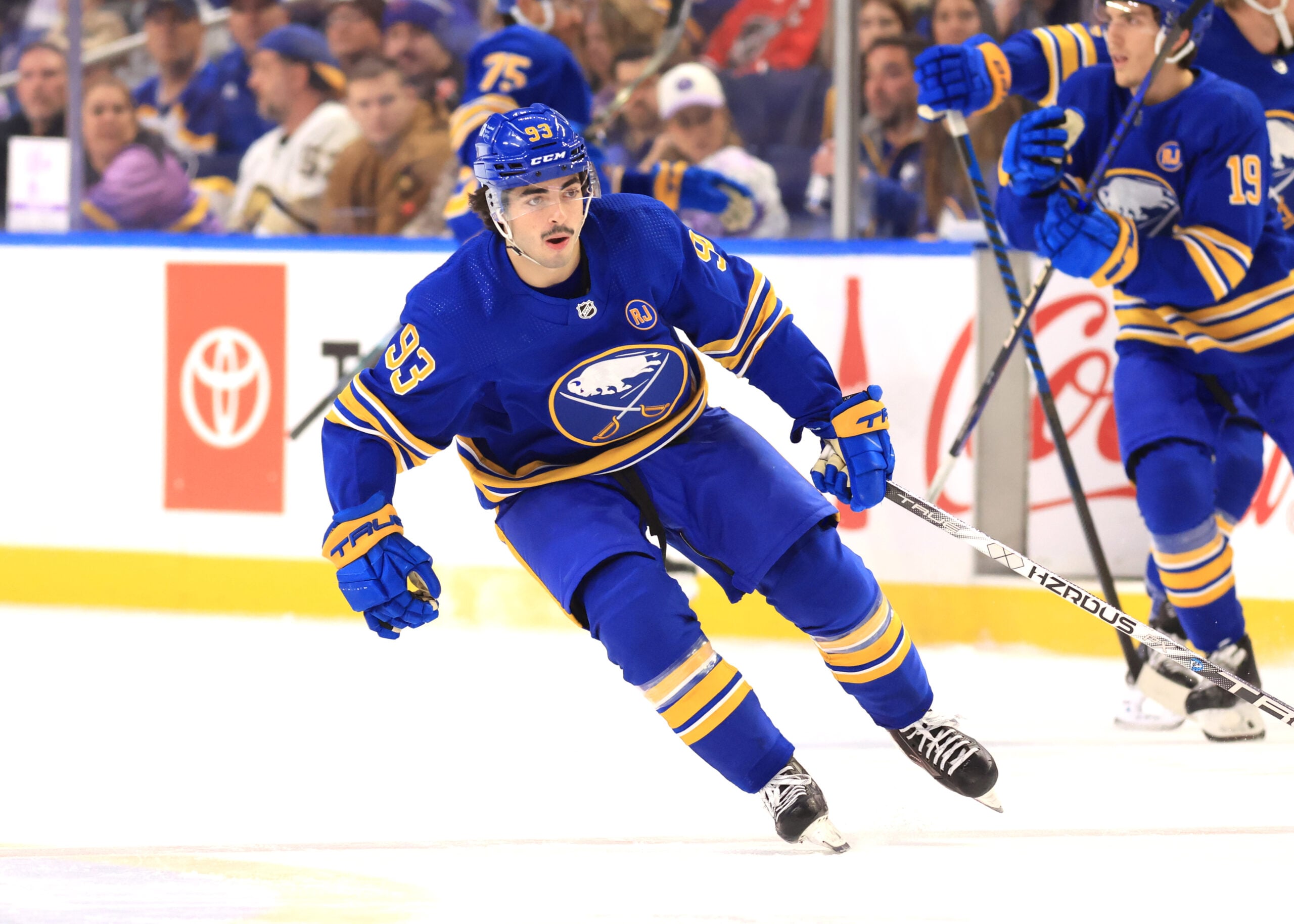
The Buffalo Sabres had already lost one draft lottery for a hyped prospect but managed to claim the top spot in 2018. Their reward? A smooth skating, dynamic offensive defenseman named Rasmus Dahlin. His IQ and puck skills were unlike anything the draft had seen in some time.
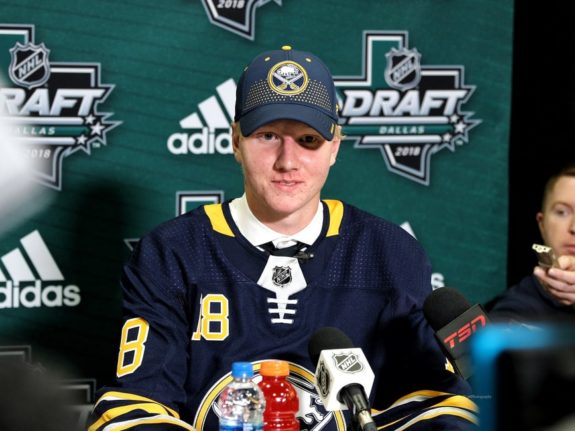
He naturally earned comparisons to fellow Swede Victor Hedman but plays a completely different game. Though he may not have been considered “generational,” he was the clear-cut No. 1 prospect that season and has been a franchise pillar for the Sabres since.
Paul Kariya (1993)
The 1993 NHL Draft carried no shortage of hype (as you will see later on). Chris Pronger and Chris Gratton both had substantial fervor but the hype behind Kariya was real and tangible. Being the first freshman to ever win the Hobey Baker Memorial Award – with a freshman record 100 points, no less – will do that.
Kariya wound up being everything the Anaheim Mighty Ducks could have hoped for with the fourth-overall pick. He registered 669 points in 606 games with the Ducks, building the foundation for his Hall of Fame career. He is also the focal point of one of the most famous calls in hockey history.
Nathan MacKinnon (2013)
The top of the 2013 NHL Draft was loaded with high-end talent like Aleksander Barkov, Jonathan Drouin, and Seth Jones. That said, MacKinnon was the guy right from the start, and that never really seemed in doubt thanks to dynamic skating, elite playmaking, and a relentless drive.
As a pro, MacKinnon has embodied all those traits. It took a few years for MacKinnon to move past the “bust” talk and become a full-fledged superstar but he is now one of the cornerstones of the Avalanche franchise, earning a Hart Trophy, Lady Byng, Ted Lindsay Award, and Rocket Richard Trophy in addition to the Calder Trophy as Rookie of the Year.
Dale McCourt (1977)
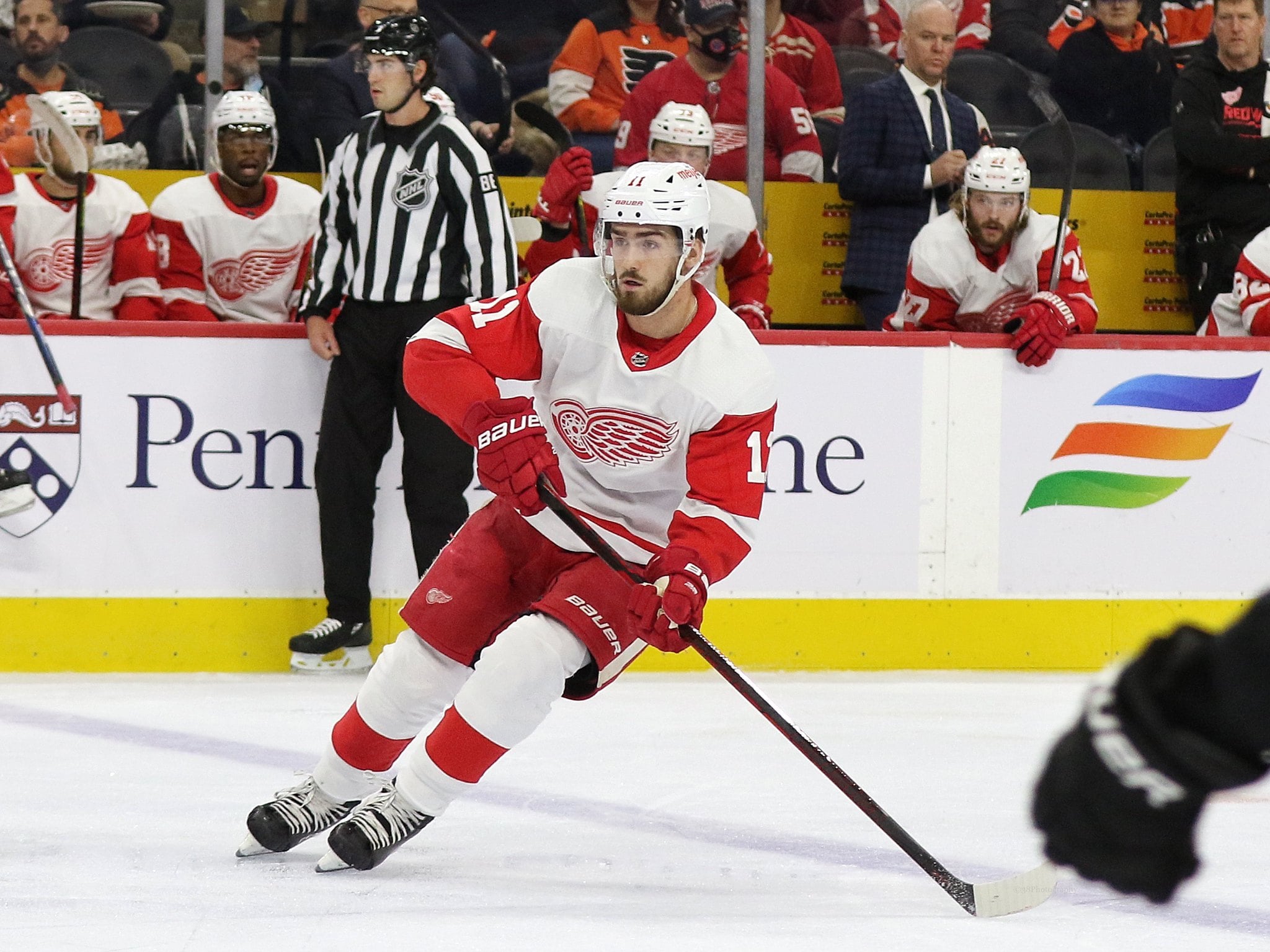
The first overall pick in 1977 to the Detroit Red Wings, McCourt was everything a junior prospect could be. Captain of the Hamilton Fincups, the 50-goal scorer led his team to the Memorial Cup and won MVP. He helped Canada win silver at the World Junior Championships. He put up an astounding 479 points in 296 career junior games.
Despite being a 70-80-point scorer in his first four seasons, he never quite lived up to the hype that comes with going first. He would be dealt to Buffalo after four seasons and change, eventually fizzling out after the 1984-85 season. He remains one of the great “What if?” cases in Red Wings history.
Dale Hawerchuk (1981)
Hawerchuk was one of the original “next one” prospects, earning comparisons to the already-legendary Wayne Gretzky. His puck sense, passing, and instincts were lauded as being on another level, and his junior hockey pedigree – 81 goals and 183 points in his final junior season, First Team All-Star, and Canadian Major Junior Player of the Year honors – echoed that sentiment.
Hawerchuk became an instant star with the Winnipeg Jets, scoring 103 points en route to the Calder Trophy. He would rack up 100 or more points in six of his first seven seasons, including 130 in 1984-85. Hawerchuk was always a quiet superstar, producing at well over a point-per-game-clip well into the latter stages of his career. He retired at 33 years old with more than 1,400 points, begging the question of how much higher up the scoring ranks he could have climbed.
Marcel Dionne (1971)
The Montreal Canadiens had quite the choice to make in 1971. Though the guy they chose did well for himself, they could have also had the dynamic young French star Dionne, who went second overall to the Detroit Red Wings. A prolific junior scorer, he came into the league with almost as much hype as the guy who went first.
Dionne delivered and then some. With Detroit, he was a stud, topping out at 121 points in his fourth season. He signed with the Los Angeles Kings as a free agent and wound up becoming one of the most dynamic scorers of the 1970s and 80s, registering an incredible 1,771 points in 1,348 games.
Gilbert Perreault (1970)
As the NHL expanded in 1970, there was one prospect that the new teams felt could quickly transform their fortunes: Perreault, the explosive young Frenchman. In a stroke of luck, the Sabres drew the pick using an antiquated lottery system, and the fates of both the Sabres and Vancouver Canucks were forever altered.
Perreault would become an icon in Buffalo, helping lead the expansion franchise to the Stanley Cup Final in just his fifth season. He would go on to set franchise records for goals (512), assists (814), and points (1,326) while acting as the face of the franchise for his entire 17-year career.
Steven Stamkos (2008)
Though others were high on defenseman Drew Doughty, Stamkos was building momentum. Scoring 58 goals and 105 points in 61 games will do that, and Stamkos’ shot was being elevated to legendary status before he saw an NHL game.
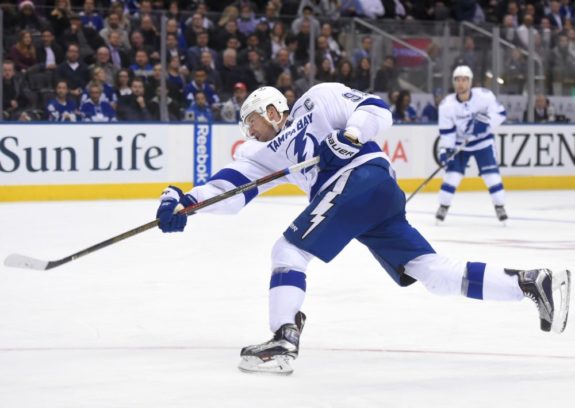
It took all of two seasons for Stamkos to become the franchise icon he has become known as. He scored 51 as a sophomore and even hit the illusive 60-goal mark in 2011-12. He racked up 555 career goals and 1,137 points with the Tampa Bay Lightning before moving on to the Nashville Predators.
Jason Spezza (2001)
In the early 2000s, there were a couple of names that would be talked about for years prior to their draft season. Spezza was one of them, earning exceptional player status in junior hockey, where he continued to dominate. He was long slated to be the first overall pick in 2001 until the electric Ilya Kovalchuk shot up the draft boards to take his spot.
By his third season, Spezza appeared ready to deliver on the hype. He never became the perennial 100-point player so many expected, instead becoming a B+ star for the Ottawa Senators. In 19 years, he would amass 995 points, showing his effectiveness even if he never became a franchise player.
John Tavares (2009)
Like Spezza, Tavares earned exceptional status as a 16-year-old. He also broke Wayne Gretzky’s 16-year-old goal-scoring record and was made the first overall pick long before he was selected by the New York Islanders first overall in 2009. Brian Burke was even ready to trade the house to move up to No. 1 and get him.
On Long Island, Tavares never became the superstar he was envisioned to be, though he was a solid 70-80-point player. As disappointed as they were that he never hit 100 points, Islander fans became apoplectic when Tavares decided to sign with his hometown Toronto Maple Leafs in 2018, where he has since remained.
Pat Lafontaine (1983)
The Minnesota North Stars defied logic by going with Brian Lawton first overall, but it was Lafontaine who was expected to be the first overall pick. The Red Wings, picking fourth, though even more highly of him than they did of the guy they eventually picked – some dude named Steve Yzerman.
By his fifth season, Lafontaine had become a star, though he lagged behind Yzerman. The American-born center would become a cornerstone of the rebuilding Islanders and, eventually, the Sabres before concussions derailed his career.
Alexis Lafreniere (2020)
Lafreniere made waves during his time in the Quebec Major Junior Hockey League (QMJHL). He would score 42 goals as a 16-year-old and become the first prospect since Sidney Crosby to win CHL Player of the Year two years in a row. Though he wasn’t quite as hyped as some names further on, many believed he was the next superstar of the New York Rangers.
To date, Lafreniere hasn’t come close to delivering as a first-overall pick. He has had two of his best seasons recently, topping out with 28 goals and 57 points. At just 24 years old, there is still time for him to find that next level, but so far he isn’t anywhere near what he was projected to be.
Auston Matthews (2016)
Matthews became something of a perfect storm of hype. Though he already had substantial hype attached to his name, it exploded when it was determined that the Toronto Maple Leafs would be picking first. At the time of his selection, he was to be the savior of the franchise and finally lead them to the promised land.
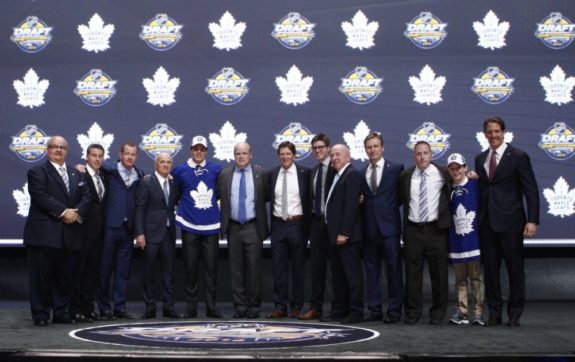
Since then, Matthews has become one of the game’s most prolific scorers. He has two 60-goal seasons under his belt, including 69 goals in 2023-24. He and the Leafs have yet to get over the playoff hump, but he is still in his prime at just 28 years old as of this writing.
Vincent Lecavalier (1998)
What else do you need to say about a guy besides pointing out that his future owner would call him “the Michael Jordan of hockey”? The 6-foot-4 center out of Rimouski had been dominant as a junior and had the size and pedigree to become a superstar.
Though Lecavalier never quite achieved “His Airness” status, he was a franchise cornerstone for the Tampa Bay Lightning. His 874 points for the franchise were impressive, but his efforts in helping them win their first Stanley Cup will be remembered even more fondly.
Denis Potvin (1973)
The Islanders were a new franchise to the NHL at that point, but they had the opportunity of a lifetime in 1973. Potvin, the consensus first-overall pick, had been dubbed “the next Bobby Orr” in the lead-up to the draft. Scout Jim Devellano put it best: “I told Bill [Torrey] that this kid was a guy we just had to get, no matter what we had to do.”
Potvin was everything the Islanders could have possibly hoped for. He won the Calder Trophy as top rookie. He was seven times an NHL All-Star selection. He won three Norris trophies as the league’s best defenseman. Oh, and he helped propel the Islanders to one of the last great dynasties, winning four Stanley Cups to start the 1980s.
Alex Ovechkin (2004)
If you want to truly understand how hyped Ovechkin was, just ask the Florida Panthers. They tried to draft him in 2003, a year before he was eligible, arguing that he would have been available if not for leap years. He dominated at World Juniors and remained impressive playing against older, stronger players in the Russian Super League.
How has Ovechkin fared? He’s done alright for himself. A plethora of individual awards – nine Rocket Richards, three Harts, three Lester B. Pearson Awards, 12 All-NHL selections, an Art Ross Trophy – and a Stanley Cup would have been more than enough. He put the cherry on top by becoming the NHL’s all-time leading goal-scorer, surpassing the great Gretzky in 2025.
Guy Lafleur (1971)
By 1971, the Canadiens had long since rigged the system to their favor. In 1971, they had the choice between Dionne and another electric young French-Canadien forward in Lafleur. He lit up junior, scoring an insane 146 goals in 83 games, making himself the future of the Montreal dynasty.
“Le Demon Blond” did not disappoint. He would rack up a pair of MVPs, three scoring titles, six All-NHL selections, and five Stanley Cups for the lats great Montreal dynasty. His 728 assists and 1,246 points remain as franchise records, and Lafleur remains among the most legendary figures in a franchise known for legendary figures.
Bobby Orr (1966)
The NHL pre-Orr is far different than the one we know now. Defensemen just didn’t do much in the offensive zone, but Orr changed that. He was such an elite talent that the Boston Bruins signed him to a junior contract at age 12, described as “a combination between Eddie Shore and Doug Harvey.”
Orr would only go on to become the greatest defenseman in the history of the game. Orr won the Art Ross twice, the Hart tree times, and an incredible eight straight Norris trophies while ripping off six consecutive 100-point seasons. Knee injuries would derail his career at 27, leaving him as perhaps the greatest “What if?” of all time.
Connor Bedard (2023)
Bedard had become “the next one” by the time the 2023 NHL Draft rolled around. He had dominated in three seasons with Regina of the Western Hockey League (WHL) and was the presumptive first-overall pick long before his name was called.
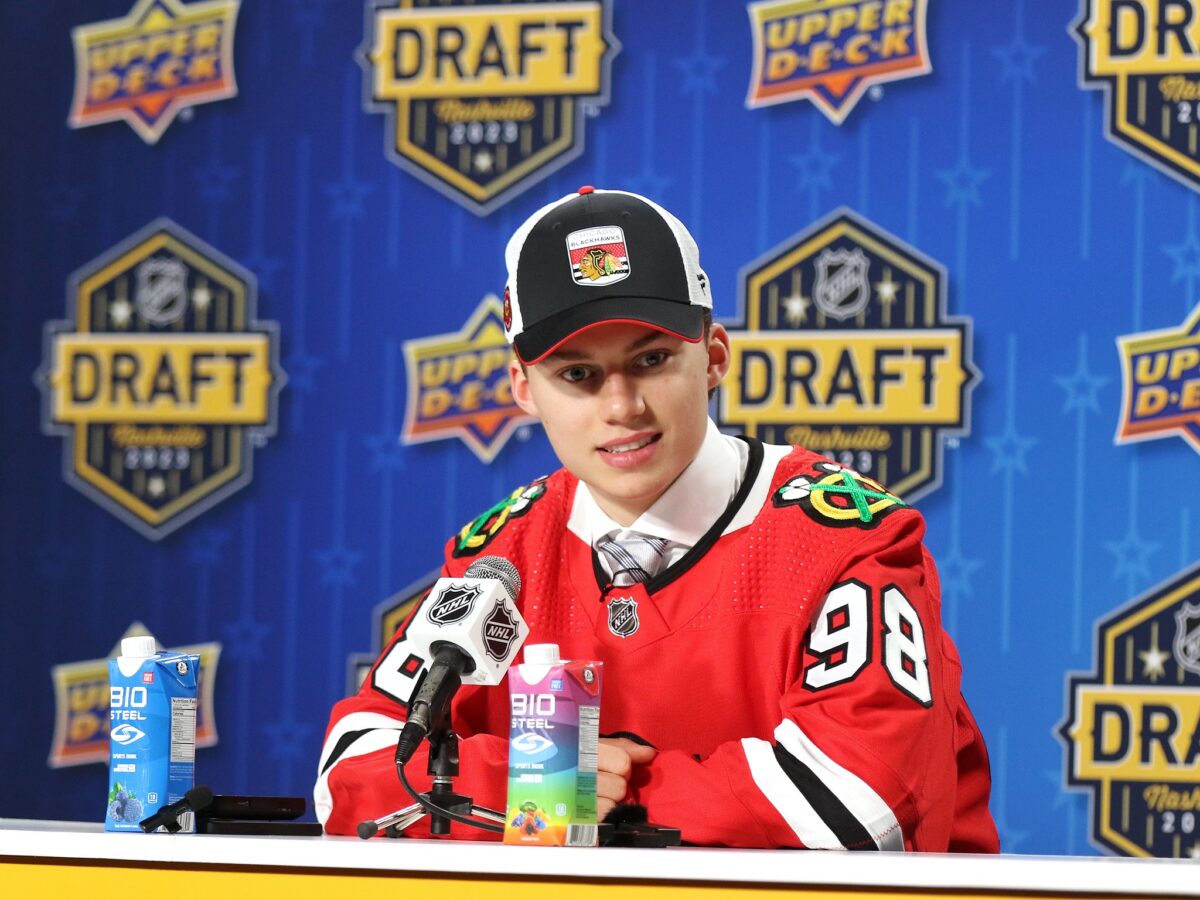
The young Blackhawks pivot has flashed superstar potential in three years in the league and appears ready to finally put it all together. He has an elite shot, the kind that could (and should) net him 50 goals in the near future.
Wayne Gretzky (1979)
Like Orr, Gretzky wasn’t available for the NHL Draft. The young center had debuted with the Edmonton Oilers – of the World Hockey Association (WHA) – before the team merged with the NHL. As part of the merger agreement, teams got to keep two skaters and the Oilers were adamant they keep the Brantford, ON, native.
We all know what came next. Trophy upon trophy, record upon record. Multiple Stanley Cups and one of the last great dynasties. Becoming the face of the game and helping its expansion. If he were available in 1979, the draft hype would have been off the charts.
Alexandre Daigle (1993)
Daigle was perhaps the answer when it came to hyped ‘90s prospects. Called “the Chosen One,” Daigle was as hyped as it gets. The face of the Ottawa Senators, signed to a $12.5 million deal, he was supposed to carry the league into the new millennium.
“Bust” may be a strong term for a guy who played 616 games in his career, but Daigle never lived up to his superstar billing. As it turns out, the 51 points he scored as an 18-year-old rookie are tied for the most he would ever have (he would hit the mark two other times). Daigle is perhaps the best example of what happens when otherworldly talent isn’t matched by a strong work ethic.
Mario Lemieux (1984)
How good of a prospect was Mario Lemieux? So good that the 1983-84 Pittsburgh Penguins appeared to be openly tanking to land the first pick. The 6-foot-4 center was an absolute monster for the Laval Voisins of the QMJHL, scoring 133 goals and 282 points in 70 games during his final season.
Lemieux would only go on to become one of the greatest players who ever lived. Despite injuries, he racked up 690 goals and 1,723 points, six Art Ross wins, three Hart trophies, nine All-NHL nods, and won the Conn Smythe in both Stanley Cup triumphs. Considering the New Jersey Devils, the team who picked second, landed Kirk Muller, it’s safe to say things worked out for the Penguins.
Eric Lindros (1991)
The hype surrounding Lindros was so great that the top three on this list could easily be 1A/1B/1C. Lindros was a combination of size, skill, and speed never before seen, so much so that he was the consensus top pick in 1991. The only problem: he didn’t want to play for the Quebec Nordiques, holders of the top pick.
Lindros was eventually traded after refusing to sign, bringing in a package of high-end players, picks, and prospects (including Peter Forsberg) as well as $15 million cash. Lindros had a very good career plagued by injuries, and the Nordiques would parlay those assets into a pair of Stanley Cups, a deal that worked out for both teams.
Connor McDavid (2015)
Much like Lemieux, there was a seemingly blatant tanking effort going in ahead of the 2015 NHL Draft. The Buffalo Sabres and Arizona Coyotes were in a race for the bottom, the former finishing dead last and hoping for another Perreault-like savior. McDavid had been the consensus top pick for years, dominating with Erie of the Ontario Hockey League (OHL).
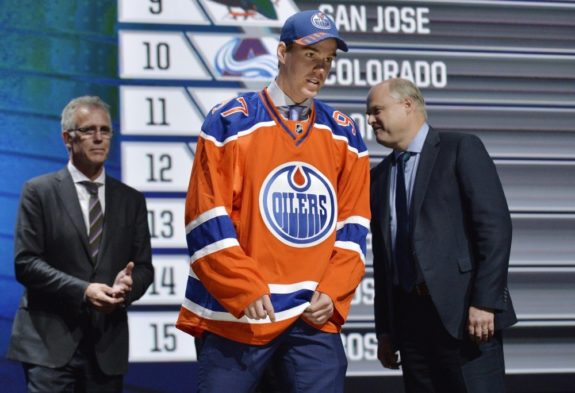
The Oilers swooped in, winning the lottery and altering the course of their history. McDavid has been as prolific as it gets through nearly 800 NHL games: three MVPs, six scoring titles, a Conn Smythe (in a losing effort), and more than 1,200 points. He will go down as one of the one or two best to ever do it when all is said and done.
Sidney Crosby (2005)
Crosby was dubbed “The Next One” long before he was made the first pick in 2005. The dominant center was labeled a generational talent, the prize for one lucky team coming out of the devastating lockout. The moment he was selected, the Penguins – in the throes of bankruptcy – were saved.
Crosby has been everything one could hope for and more. In addition to being a hit at the box office, he helped the Penguins to three Cups, won two MVPs, two scoring titles, two Rocket Richard trophies for the leading goalscorer, and a pair of Conn Smythe trophies. He became the face of the league and continues to be their unquestioned leader 20 years later.
Who Will Be the ‘Next One’?
With the 2026 NHL Draft on the horizon, it looks like Gavin McKenna is the next up. One never knows where the next great NHL star will come from, but those who are hyped to the moon start with a legacy much different from their counterparts. It makes for fun discussions and even more fun retrospectives.
Free Newsletter
Get NHL Entry Draft coverage delivered to your inbox
In-depth analysis, breaking news, and insider takes - free.
Subscribe Free →