The New Jersey Devils enter the 2026-27 season with a lot to prove.
After finishing second-to-last in the Metropolitan Division and missing the Stanley Cup Playoffs last season, the Devils underwent significant changes over the summer. Sunny Mehta took over as general manager (GM), the team traded goaltender Jacob Markstrom, and the forward group received several notable additions, including Anthony Mantha, Evan Rodrigues, and Luke Evangelista.
Now, New Jersey has to turn those offseason changes into tangible results.
The Devils will begin the regular season on Oct. 1, when they face off against Metropolitan Division rival Philadelphia Flyers. October represents a fresh start for this revamped New Jersey roster and will offer the first real glimpse of whether the team’s offseason changes can address some of the issues that plagued them throughout the 2025-26 season.
While it will be too early to draw major conclusions from the opening weeks, October should provide some important indicators of what this team could look like throughout the 2026-27 campaign.
Here are three major storylines to watch as the Devils begin the new season.
Can Jake Allen and Nico Daws Provide Stability in Net?
Undoubtedly, the biggest question surrounding the Devils heading into October is what they will get from their goaltending.
New Jersey traded Markstrom during the offseason, leaving Jake Allen, Nico Daws, and David Rittich as the team’s primary options in net. Allen is expected to open the season as the starter, while Daws is projected to serve as his backup as he enters his first full season as part of the Devils’ NHL roster.
The 36-year-old Allen brings veteran experience to the position. He played 37 games for the Devils last season, posting a 17-17-2 record, a .904 save percentage (SV%) and a 2.74 goals-against average (GAA). Allen has already demonstrated that he can handle an NHL workload and provide the Devils with stretches of reliable goaltending.
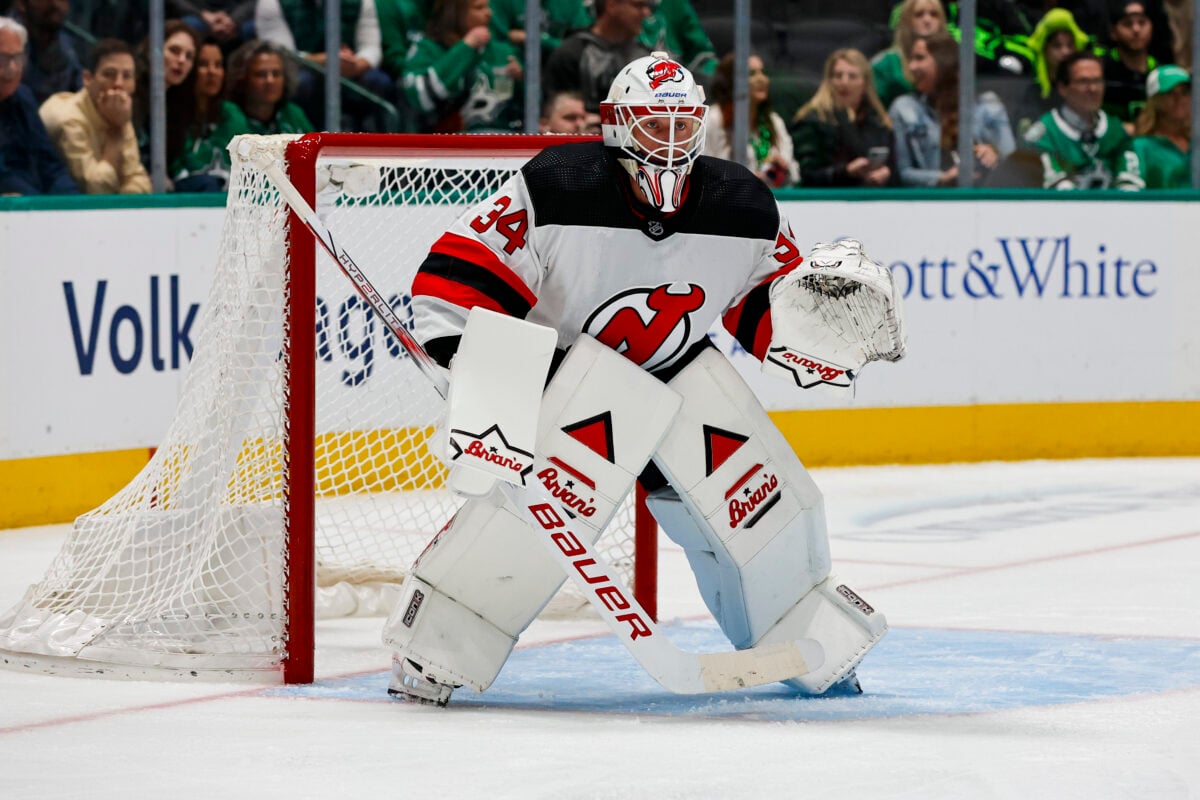
The bigger question will be Daws. The 25-year-old has spent much of his professional career moving between New Jersey and the American Hockey League, and the Devils have certainly viewed him as a goaltender with potential. However, he has never received an extended opportunity to establish himself at the NHL level.
That opportunity is now in front of him, with Mehta and the Devils giving Daws a chance to prove he can be a reliable NHL goaltender.
While he has appeared in only 55 NHL games over five seasons, his overall numbers are a .898 SV% and a 2.96 GAA. New Jersey’s management believes inconsistent opportunities have played a role in his development, and Mehta has specifically discussed the opportunity now in front of him.
That makes October particularly important for Daws. The Devils need him to show that he can provide dependable starts when called upon and give head coach Sheldon Keefe confidence in rotating between his goaltenders. With Allen entering the later stages of his career, New Jersey needs stability from both ends of its tandem. If Allen can provide consistent results while Daws establishes himself as a reliable NHL option, the Devils could have a much-more-stable situation in net.
After goaltending contributed to some of New Jersey’s biggest struggles last season, avoiding another campaign of irregularity between the pipes will be an important part of the team’s success in the upcoming campaign.
How Quickly Will the New Forward Group Come Together?
The Devils spent much of the offseason reshaping their forward group, with secondary scoring emerging as one of the biggest areas in need of improvement.
For years, New Jersey has relied heavily on Nico Hischier, Jack Hughes, Jesper Bratt, and Timo Meier to drive its offense. That reliance became even more problematic last season, when injuries throughout the lineup made it difficult for the Devils to generate consistent scoring from their depth. New Jersey averaged 2.76 goals per game in 2025-26, the sixth-lowest mark in the NHL, highlighting the need for more offensive production throughout the lineup.
The Devils attempted to address that issue with the additions of Mantha, Rodrigues, Evangelista, and Jesper Boqvist. Each brings something different to the forward group, giving New Jersey more options and potentially creating a much deeper offensive edge.
Mantha is coming off a career-best 33-goal season with the Pittsburgh Penguins, finishing with 64 points, a plus-10 rating and seven power-play goals. His scoring ability is an obvious addition to the lineup, but his size could be just as important. At 6-foot-5, Mantha gives the Devils a physical presence they have lacked in their forward group while still possessing the offensive ability to contribute alongside skilled players.
Rodrigues, meanwhile, brings valuable NHL experience and a strong two-way game. His versatility should give Keefe another reliable option throughout the lineup, while Boqvist returns to an organization he is already familiar with and provides additional offensive ability and depth.
Evangelista was one of the Devils’ later offseason additions, but his arrival could have a significant impact. The 24-year-old recorded 56 points, including 12 goals and 44 assists, with the Nashville Predators last season. He could potentially begin the season on a line with Hischier and Meier, giving him the opportunity to play with two of New Jersey’s most talented offensive players. Playing alongside that caliber of talent could provide Evangelista with an ideal environment to build on his production from last season.
The question entering October will be how quickly these pieces can come together. The Devils have plenty of individual talent throughout their forward group, but turning that talent into a cohesive offensive pressure will be the real challenge.
New Jersey does not need every forward to make an immediate impact. More importantly, the team needs to establish a sustainable offensive identity and find enough secondary scoring. If the new additions can complement the team’s established core and consistently contribute, the Devils should have a much more balanced attack than they did last season.
Can the Devils Stay Healthy?
An underrated but crucial storyline for the Devils entering October is whether they can simply stay healthy.
As straightforward as it sounds, injuries were a major factor in New Jersey’s 2025-26 season. The team struggled to maintain consistency as key players spent significant time out of the lineup, with Jack Hughes’ extended absence being one of the biggest setbacks.
Hughes missed roughly two months after a freak non-hockey accident resulted in finger surgery. His availability has been an ongoing concern in recent seasons, as he has also dealt with shoulder injuries and has yet to play a full 82-game season. For a Devils team that relies heavily on its star center to drive the offense, keeping Hughes in the lineup could make a significant difference in 2026-27.
Hughes was far from the only player affected by injuries last season. Markstrom, Arseny Gritsyuk, Luke Hughes, Stefan Noesen, and Johnathan Kovacevic all dealt with significant injuries at various points. Some required surgery, and others missed a considerable stretch of time. With so many important pieces coming in and out of the lineup, the Devils struggled to establish any consistency.
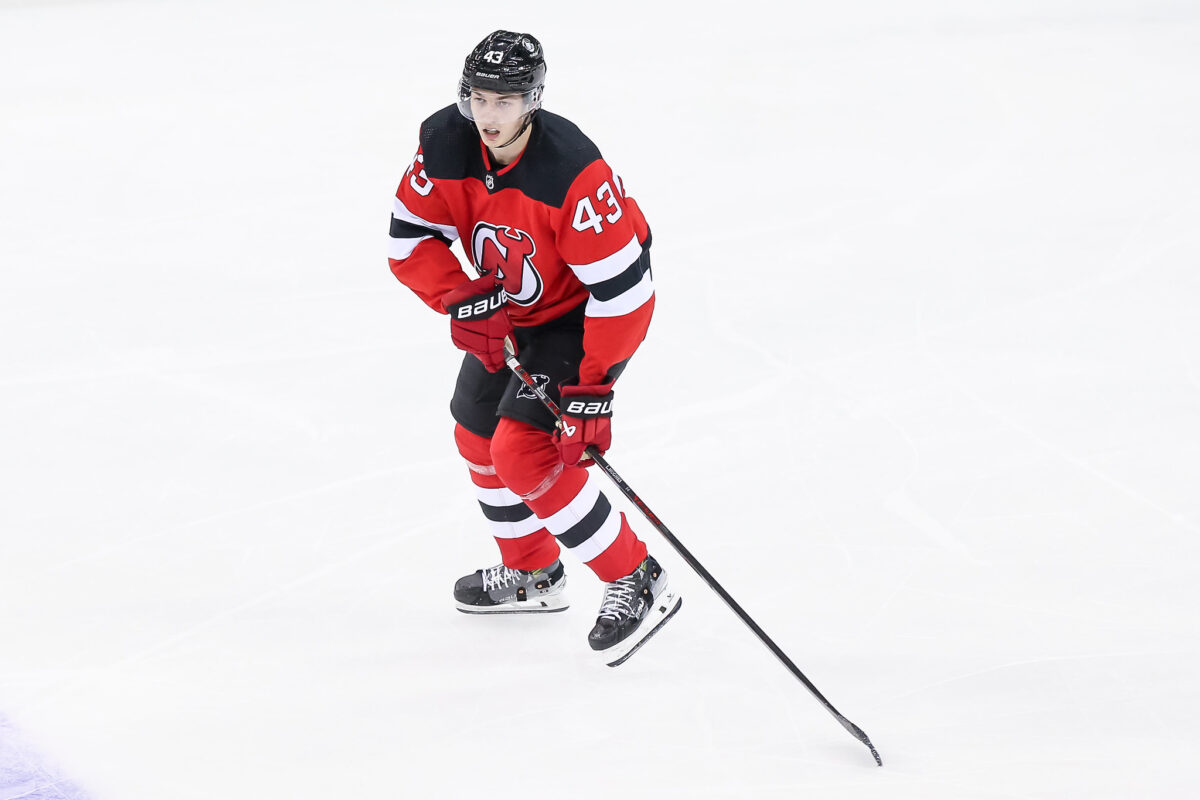
New Jersey started the 2025-26 campaign strongly but saw its season become increasingly difficult as injuries accumulated. The challenge entering October will be to avoid another rollercoaster season and establish good habits that can help the team remain as healthy as possible.
One of the reasons New Jersey added players such as Mantha, Rodrigues, and Evangelista was to create a deeper and more versatile roster. When injuries inevitably occur, the Devils need those additions to help prevent one or two absences from completely changing the team’s identity and altering the way the team plays.
October Can Set the Tone
The Devils definitely do not need to have everything figured out by the end of October. With so many new pieces entering the lineup, there are bound to be growing pains during the first month or two. New players will be learning a new system, different line combinations will be tested, and plenty of adjustments will be made as the season gets underway.
What matters is whether New Jersey begins to show signs that it has addressed the issues that held the team back last season. October should provide the first real glimpse of whether the Devils’ offseason changes can translate into a more stable and well-rounded team on the ice.
With a new GM, a revamped roster, and renewed expectations surrounding the team, there will be plenty for Devils fans to watch closely throughout the opening month.
Free Newsletter
Get New Jersey Devils coverage delivered to your inbox
In-depth analysis, breaking news, and insider takes - free.
Subscribe Free →