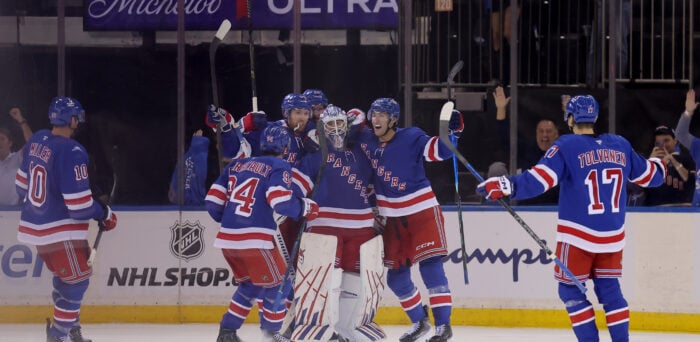
Over the last several years, overtime (OT) hockey has been a widely talked about topic amongst NHL fans. It has been an integral part of giving teams an extra chance to win a game rather than just ending in a tie. In the modern-day NHL, however, games have gone the distance all the way to a shootout (SO). With many fans voicing their displeasure about a skills competition being the determining factor of who comes away with two points or just one, there have been conversations on what should be done to prevent a SO from ending games.
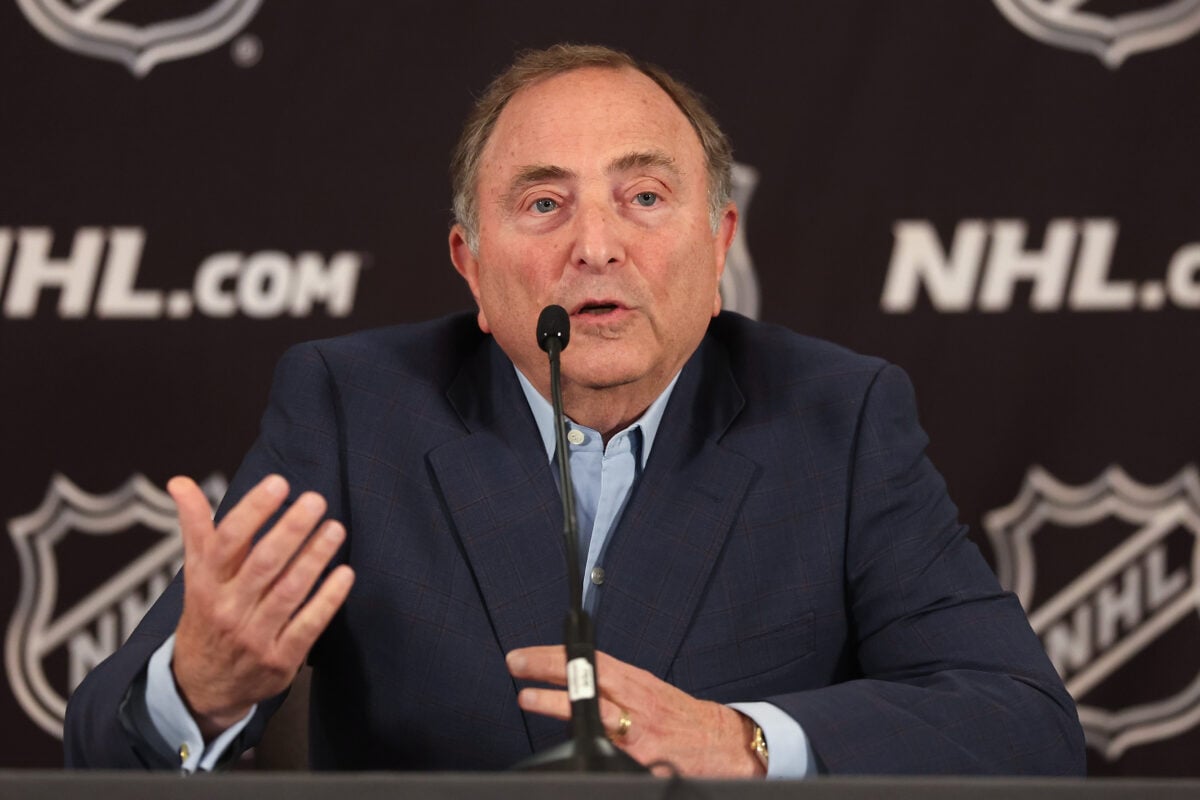
On Wednesday, March 19, NHL commissioner Gary Bettman voiced his opinion on the experiment they did at the 4 Nations Face-Off with upping OT from the normal five minutes to 10. As Frank Seravalli stated on X, Bettman was not a fan of it. Some players like the Colorado Avalanche’s Nathan MacKinnon share the same opinion as Bettman, but some such as the Edmonton Oilers’ Connor McDavid like the idea of making this a regular thing. Though that is the case, they should still consider adopting an extended OT format in the NHL in some way.
How Did We Get to Overtime in the Regular Season to Begin With?
As an additional 20-minute sudden-death period played at five-on-five, the NHL introduced OT to the league in 1921. Over the following years, the league tweaked the rules of overtime immensely – starting in 1927 when they changed it from 20 minutes to 10 minutes. Then, in 1928, they eliminated the sudden-death portion of the period altogether. The biggest change came in 1942. Not seeing much of a reason to keep it in the regular season, the league decided it was time for OT to go, and just have games end in a draw.
In the summer of 1983, the NHL re-instated sudden-death OT to the regular season. Rather than the 10 minutes they changed it to in 1927, the league decided on five minutes, though games would still end in a draw. Not until 2005 did the league decide to get rid of ties, and implemented the SO to ensure there was a winner. Fast-forward to the 2015-16 season, and the NHL, again, changed the format of OT – this time to three-on-three hockey. Since then, we have seen some of the most entertaining hockey, with teams finding different ways to utilize the extra ice given to them. Players with speed and players with unreal skills like MacKinnon, McDavid, and Nikita Kucherov of the Tampa Bay Lightning shine in these moments, giving us extraordinary moments for game-winning goals.
What Do People Have to Say About Overtime?
To no surprise, fans are all over the place with their feelings when it comes to OT and the format of it ending in a SO. Some fans are fine with how things are, while others want to find a way to prevent SOs from happening.
One problem some fans have with OT is the possession aspect of it. When the league first introduced this format, teams were playing a run-and-gun style of game, as they did not entirely know how they should be playing it. Teams have now learned playing with possession from the start helps them be successful and gives them a better shot at winning than playing the old way.
A blip to this from some fan’s point-of-view with teams adapting to playing with possession of the puck is they will often pull it out into the neutral zone, and even their defensive zone, if they do not have a good play to make, or are being pressured heavily. While the main priority is to win, and doing this gives a better chance of that, fans get easily annoyed as teams waste time to set up the perfect play rather than take a risk. For being such a simple thing, the NHL can implement rules like a “shot clock” from the NBA, or even a rule penalizing teams that bring the puck past the red line (i.e. treating it as an icing).
What Other Options Does the NHL Have?
Following the remarks of Bettman not liking the extended format, I put out a poll on X asking if the NHL were to extend OT, what would they like to see. Fifty percent of the votes want to see it extended to 10 minutes, but what if that really is too long for players? Well, they have a few options on the table, beginning with making OT a four-on-four 10-minute session.
Finding a way to ensure the SO is no longer a necessity to the NHL is needed. While it is entertaining at times, it is something that needs to stay as an All-Star Game event for players to have fun with. As mentioned before, one way is to turn OT into a 10-minute period. Now, with the comments made by MacKinnon and Bettman, there would be concerns regarding fatigue and even injuries. While both are part of the game, it would take away from the quality of play these teams have given fans. One solution to this, should the league decide to go this route, would be to make it a four-on-four overtime period rather than three-on-three. While it may not seem like much, having an extra body on the ice will help put less stress on the skaters’ bodies.
Another option the NHL has is to go the route of the ECHL and make overtime seven minutes of three-on-three. Adding two extra minutes is not an absurd amount of time, but could be more than enough to get a winner. The ECHL has excelled with this option as SOs are minimally needed to decide games. While some may argue it is because the level of play is nowhere near as good as it is in the NHL, it could still be worth a shot to see how often teams can find a winner between that fifth and seventh minute of the extra session.
Finally, one that some have suggested, would be to not change overtime and have games end in a tie, with some saying to give neither team a point if that does happen. One issue with that is players do not want to compete without having something to play for (i.e. points in the standings). While an argument can be made it might make them compete harder, forcing teams to walk away with zero points in the standings does nothing good for the league in terms of playoff positioning. When the league integrated the shootout, they did so for the reason of not wanting games to end in ties anymore. With it being a very long shot that the NHL reverts back to ties, teams would have to be given one point in the standings, so games do not feel like a waste of time.
NHL Needs to Adopt Extended Overtime by Any Means
Since the introduction of the current overtime format, games going past OT have drastically gone down. In the 2024-25 season, the NHL has seen a low of 57 shootouts, with a projected end total of 69. In order for this to continue to go down, though it is not a huge number, the NHL should implement one of the formats suggested. Not only would this give fans even more competitiveness in the NHL, but it would boost the entertainment value that OTs have shown over the last few seasons. There is nothing like an adrenaline rush from watching your favorite team play in OT, and 4 Nations showed just how fun it truly can be to watch.
Free Newsletter
Get Commentary coverage delivered to your inbox
In-depth analysis, breaking news, and insider takes - free.
Subscribe Free →