Olympic rosters are never just a list of the best names. They are a collection of jobs. Somebody has to kill penalties when the game tightens, somebody has to take the ugly defensive-zone draws after an icing, and somebody has to spend a whole shift wrestling the puck off the end boards so the stars can start with possession instead of chasing.
That’s the lens I’m using in this article: not whether this player is good, but why Finland picked him, and what problem does he solve? Rasmus Ristolainen is a prime example because his value is immediately apparent when watching the right minutes. He won’t be on the plane to Milan to run a power play or pad points. He’s there to end cycles, own the crease, and keep the game calm enough that Finland’s top forwards can decide it.
Risto announces his return with a big hit on Slafkovsky
byu/FlyersSickoZone inFlyers
A Role Built for Tight Games
If you want to project Ristolainen in Olympic play, start with what he is living every week. The Philadelphia Flyers under head coach Rick Tocchet has been clear about reducing chaos in its own end. Tocchet described an aggressive, calculated zone that overloads the strong side and relies on clean “transfers,” the handoffs that happen when the puck moves side to side. The purpose is simple, keep pucks outside, prevent clean resets, and stop the kind of east-west sequences that turn into backdoor tap-ins.
That description lines up with what Philadelphia want under Tocchet: win the strong side with numbers, keep the puck pinned below the goal line, and take away the clean low-to-high release. The weak side stays compact to protect the slot and the crease, while the closest forward supports the wall, so the defense is not stuck trading one-on-one battles all night. When it clicks, opponents run out of space and time, and the puck comes loose in the corner, a turnover the Flyers can read and exit off of instead of chasing a full-zone reset.
Ristolainen fits because his best value is not the highlight hit. It is the second play after contact, when a cycle would normally reset and keep the defense pinned. When Ristolainen returned in December, Tocchet pointed straight at that detail, praising his ability to “squash a cycle” and “cut off a reset.” That is the exact phrase a coach uses when he trusts a defenseman to end possessions instead of simply surviving them.
Why His Flyers Reads Translate To Finland
Olympic opponents do not need long shifts to hurt you. They need one late switch. The most common trigger is low-to-high movement, followed by a quick pass across the blue line that forces a defender to decide between protecting the net and challenging the point. That is where systems either hold, or crack.
Jack Han’s Hockey Tactics 2025 puts a name to the compromise most teams live in. “Hybrid” plays five tight down low, but flexes into man coverage when the puck is moved to the blue line. The detail that matters for Ristolainen is the low-to-high carry, where the down-low defenseman follows his man to avoid being outnumbered at the point, while the weak-side forward stays on the defensive side to prevent a two-on-one at the net.
The Finland Context and the Players Around Him
Finland’s defense group gives head coach Antti Pennanen several clear archetypes. Miro Heiskanen is the engine, the defender who can turn a retrieval into offense without needing a perfect first pass. Esa Lindell is the stabilizer who keeps the game in front of him. Niko Mikkola and Olli Määttä bring size and calm structure. Henri Jokiharju and Nikolas Matinpalo add right-shot options and puck touches, and Mikko Lehtonen brings power play utility. Ristolainen’s place in that mix is as the match-up tool and crease owner, the guy you trust after icings, after long shifts, and late in periods when the opponent is hunting for a greasy goal.
The easiest pairing fit is the one Finland has used for years in international play, a stopper with a mover. Put Ristolainen next to a partner who can handle retrieval routes and first pass decisions under pressure, and you keep his reads simple and aggressive. Alongside Määttä, it becomes a low-event pair that wins net-front exchanges and exits safely. Alongside Mikkola, it becomes a heavy pair that can hold the interior when the game turns into a cycle battle. Finland does not need him to freelance. It needs him to make the same correct decision five times in a row.
The Special Teams Layer
Pennanen has been clear that special teams can decide Finland’s tournament, and in an Olympic format, there isn’t much room to recover from one bad kill. On the penalty kill, teams often stay in zone and have defenders acting as net front attackers rather than only trying to box them out, because it keeps bodies in shooting lanes and protects the slot. The risk is the same every time: if the puck gets to the top of the crease, that fronting turns into a scramble fast.
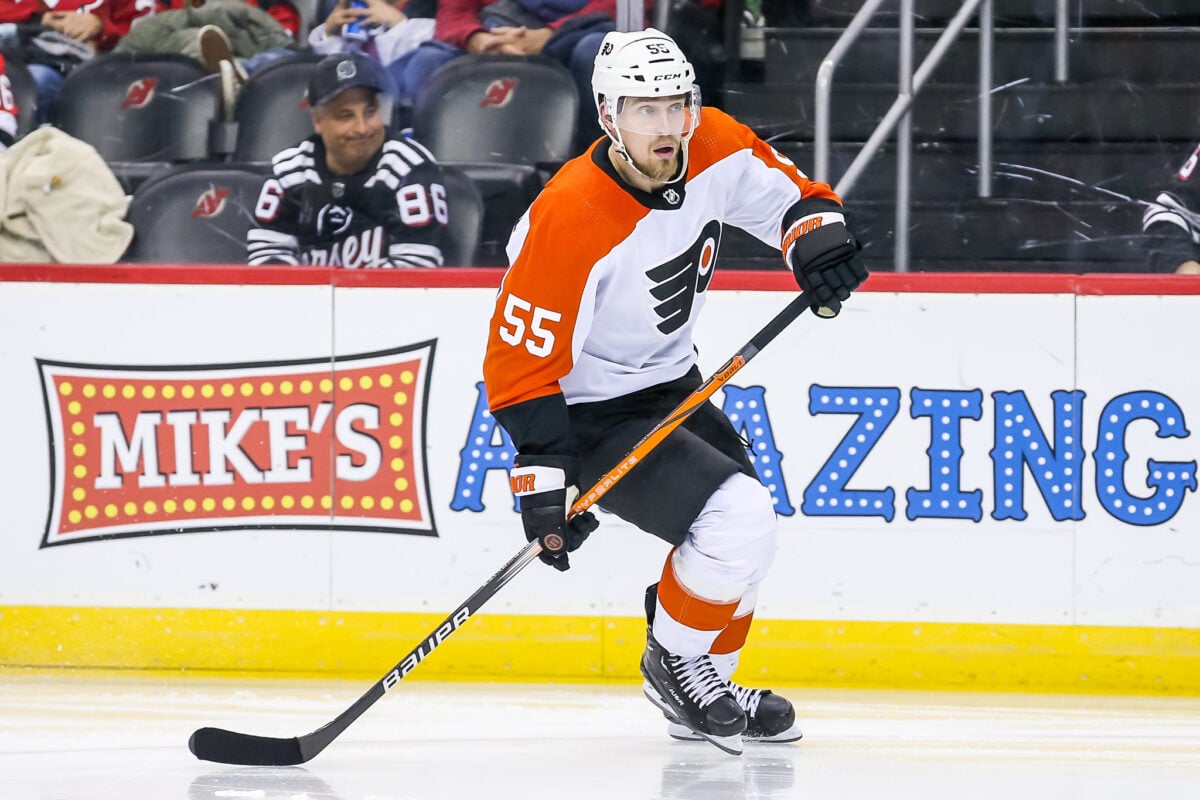
That is a natural lane for Ristolainen. His reach and strength are useful, but the real value is discipline, staying inside the puck, staying attached to sticks, and making rebounds one-and-done so Juuse Saros can play clean. The goal is not to block everything. The goal is to make the first shot the only shot.
The Constraint Finland Cannot Ignore
The risk is not tactical. It is availability and timing. Reuters reported that Ristolainen would miss at least six months after surgery to repair a ruptured right triceps tendon, a timeline that bled into training camp. Finland is betting the December version is what it gets in February, and the Flyers’ own Olympic selection writeup underlined how quickly he was pushed back into heavy minutes when he returned.
If he is healthy, the Olympic role almost writes itself. Finland wants him ending cycles before they become resets, owning the front of the net so the goalie sees pucks clean, and being on time when the puck moves from wall to point to the far side. Those are small details, but in a best-on-best tournament they are the details that keep a one-goal game from turning into a two-goal hole. The version of Ristolainen who “squashes” possessions is not flashy, but it is exactly the kind of defender Finland has leaned on when the bracket tightens.
Free Newsletter
Get Olympics coverage delivered to your inbox
In-depth analysis, breaking news, and insider takes - free.
Subscribe Free →