The 2026 NHL free-agent class is shaping up to be one of the least-dynamic groups in recent memory. While there are several recognizable names expected to hit the open market, the overall lack of elite, franchise-altering talent could create a dangerous environment for general managers (GMs).
When star power is limited, demand often outweighs supply, and that typically leads to inflated contracts. As a result, the 2026 free-agent could favour sellers, and see good players paid like great ones.
Alex Tuch Headlines a Thin Forward Market
Among the forwards available, Alex Tuch stands out as arguably the most attractive option. The Buffalo Sabres winger is in the middle of a strong season, recording 57 points in 65 games, including 28 goals, while helping lead the Sabres to a 9-1-0 stretch that has pushed them to first in the Atlantic Division. With Buffalo on track for what could be their first playoff appearance since 2011, Tuch has firmly established himself as a reliable top-line contributor at the perfect time.
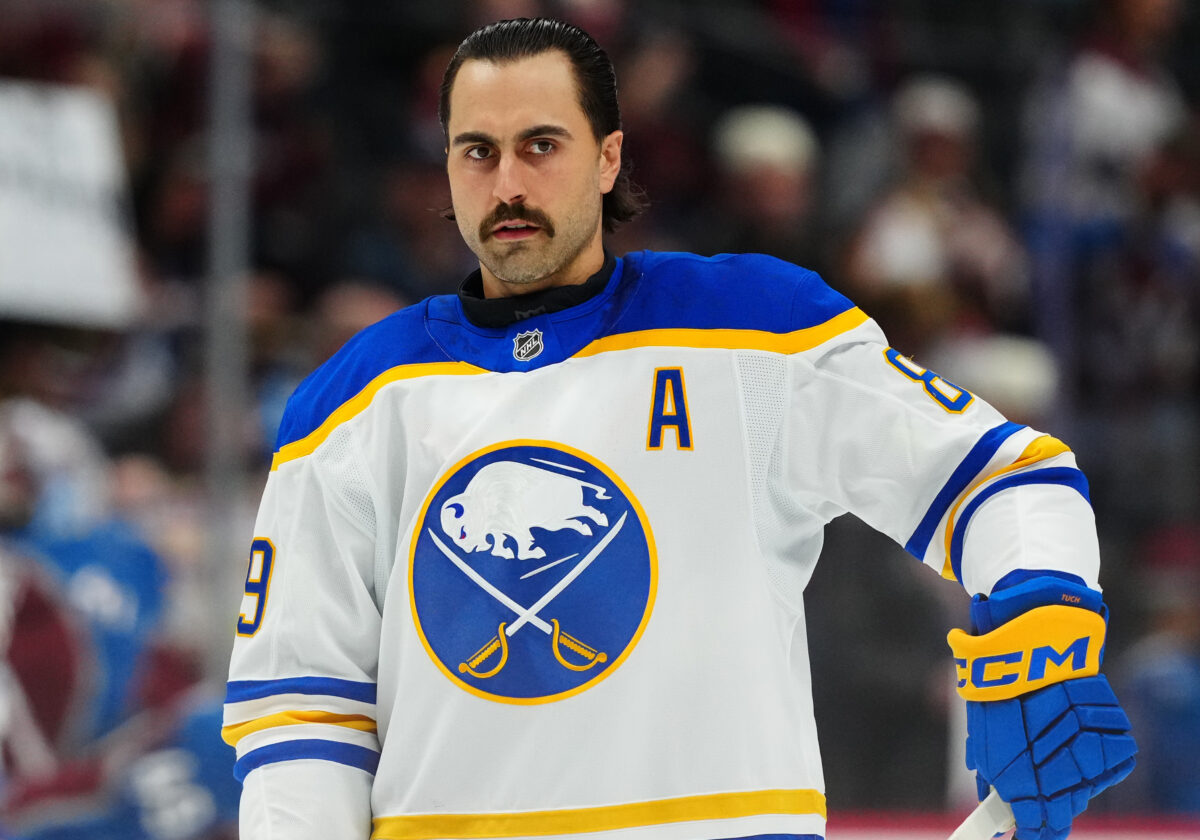
Tuch’s production, highlighted by his ability to operate at a near point-per-game pace, makes him one of the few players in this class capable of driving offense. He brings a rare combination of size, speed, and finishing ability, which will undoubtedly make him a priority target for teams in need of top-six scoring.
Because of the lack of elite alternatives, Tuch’s value on the open market could skyrocket. There is growing belief that he could command a contract in the range of a $10–11 million cap hit , a figure typically reserved for franchise wingers.
In a stronger free-agent class, Tuch might fall just below that top salary tier. However, given the current landscape, teams may have little choice but to bid aggressively if they want to secure a legitimate top-line forward.
Aging Stars Fill Out the Top Tier
Beyond Tuch, much of the forward class is made up of veterans who are well past their prime years. Players such as Evgeni Malkin, Jamie Benn, Anders Lee, and Jaden Schwartz still carry value, but each comes with age-related concerns.
Malkin, for example, remains productive offensively but will be nearing 40 by the time free agency opens. Benn and Lee continue to provide leadership and physical presence, but their offensive output has declined compared to earlier in their careers.
This creates a difficult situation for teams. On one hand, these players can still contribute in meaningful roles. On the other, committing term and money to aging veterans is always risky, particularly in a flat-cap or tightly-managed salary environment.
Because there are limited alternatives, even these aging players could receive contracts that exceed their true on-ice value.
Middle-Six Players Could Cash In
Another major storyline heading into 2026 free agency is the potential for middle-tier players to benefit significantly from market conditions.
Players such as Jack Roslovic, Bobby McMann, Mason Marchment, Michael Bunting, and Scott Laughton are not typically considered marquee free agents. However, in a weak class, their importance increases dramatically.
Teams looking to improve depth scoring or round out their forward group may find themselves competing for these players, which can quickly drive up prices.
It would not be surprising to see several of these players receive contracts with higher cap hits or longer terms than expected, simply because teams are trying to fill gaps without many premium options available.
Defense Market Offers Limited Solutions
The defensive side of the market presents a similar issue. While there are a few notable names, the group lacks true elite, top-pairing difference-makers in their prime.

Rasmus Andersson is likely to be the most sought-after defenseman available. At 29, he is still in his prime and offers a reliable two-way presence. His ability to play significant minutes and contribute offensively makes him a valuable asset for teams looking to upgrade their blue line.
However, beyond Andersson, the list becomes less appealing. John Carlson and Jacob Trouba are both established veterans but are entering the later stages of their careers. Carlson, in particular, will be well into his mid 30s, while Trouba’s role has evolved into more of a defensive and physical presence rather than a true top-pairing option.
With limited options available, teams in need of defensive help may end up overpaying for players who are no longer at their peak.
Goaltending Adds Another Layer of Uncertainty
Goaltending is always one of the most unpredictable elements of free agency, and 2026 will be no different.
Stuart Skinner is among the notable names expected to be available, and his situation will be particularly interesting. If he continues to develop into a reliable 1B starter, he could command significant interest from teams looking for stability in net.
However, the volatility of goaltending performance makes long-term commitments risky. Teams often find themselves overpaying for goaltenders based on short-term success, only to see performance regress.
In a market already lacking elite talent, the risk of overpaying for goaltending could be even higher.
A Market That Could Shift Team-Building Strategies
Rather than aggressively pursuing free agents, the lack of elite talent in the 2026 class could push teams to explore alternative roster-building strategies. With limited high-end options available, front offices may begin prioritizing internal extensions, trade acquisitions, and younger, cost-controlled players over risky long-term deals in free agency.
In many cases, teams could look to lock up their own core players before they ever reach the open market, reducing the overall quality of available talent even further. This trend has already been growing across the league, and a weaker free-agent class could accelerate it.
At the same time, the trade market may become more active. Teams that miss out on free agency or are unwilling to overpay could instead turn to trades as a more controlled way to address roster needs. This would allow GMs to target specific fits without committing to inflated contracts driven by bidding wars.
For contenders, the decision becomes even more critical. Do they overpay in free agency to fill immediate gaps, or do they remain patient and allocate resources more strategically? That balance could ultimately define which teams sustain success and which ones find themselves limited by contracts that don’t age well.
Lessons From Past Free-Agent Markets
History has shown that weaker free-agent classes often produce some of the most regrettable contracts.
When teams lack access to elite talent, they sometimes convince themselves that the next-best option is worth a premium. Over time, those deals can become burdensome, limiting roster flexibility and creating long-term cap issues.
The 2026 class has the potential to follow a similar pattern.
Looking Ahead
While the 2026 NHL free-agent class features several recognizable names, it lacks the high-end talent that typically defines a strong market. As a result, players like Tuch could benefit significantly, positioning themselves for massive paydays.
For teams, however, the risk is clear.
In a market where good players are paid like stars, the margin for error becomes incredibly small. The smartest organizations will be the ones that resist the urge to overspend, even when the market pushes them in that direction.
Because in free agency, sometimes the best move is the one you don’t make.
Free Newsletter
Get Free Agents coverage delivered to your inbox
In-depth analysis, breaking news, and insider takes - free.
Subscribe Free →