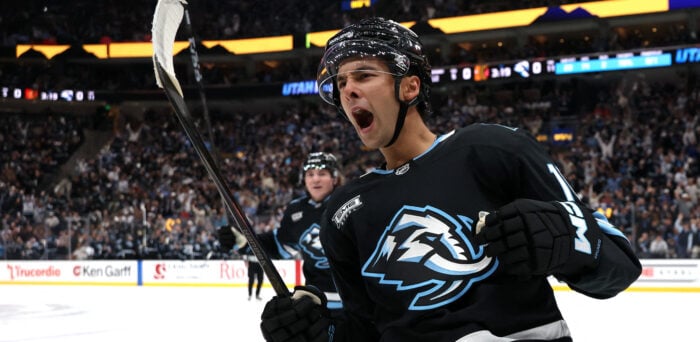
There is a specific kind of satisfaction for a front office when a long-term development project finally hits its stride. In the world of professional hockey, we often fixate on the immediate impact of top-ten draft picks, but the real structural integrity of a roster is built in the middle rounds. Linus Karlsson, the 26-year-old Swede originally acquired from the San Jose Sharks in 2019, has spent the better part of three seasons simmering in the American Hockey League (AHL). After a dominant Calder Cup championship run with Abbotsford last spring, the question surrounding Karlsson was whether his high-IQ, heavy-body game would translate to the pace of the NHL.
The 2025-26 season provided an emphatic answer. Karlsson didn’t just survive the jump; he became a stabilizing force in a Vancouver Canucks lineup that desperately needed one.
2025-26 Performance
Karlsson’s season was defined by a transition from a “tweener” to a trusted everyday regular. While he began on the periphery of the roster, he quickly carved out a permanent role by doing the dirty work that often eludes high-skill prospects. He suited up for nearly every game this season, a testament to both his conditioning and the trust he earned from the coaching staff.
His production was remarkably consistent for a first-year regular. Reaching the double-digit mark in goals and contributing significantly to the team’s total point output, he provided the secondary scoring that has been a historical Achilles’ heel for this franchise. More importantly, he did it with a high shooting efficiency. Karlsson isn’t the type of player to fire pucks from the perimeter; he makes his living in the greasy areas of the ice. A significant portion of his goals came from within ten feet of the net, cleaning up rebounds or redirecting shots from the point.
His skating, which was the primary concern among scouts during his time in Sweden and early AHL days, showed noticeable improvement. While he will never be the fastest player on the ice, his improved footwork allowed him to keep pace with the transition game and, more importantly, put his 6-foot-1 frame in positions to win puck battles along the boards.
Impact for the Canucks
The most significant impact Karlsson had on the Canucks this season was his versatility. For a team navigating a complex rebuilding phase, having a “Swiss Army knife” player is invaluable. Karlsson spent time across the entire forward group, showing an uncanny ability to adapt to his linemates’ styles.
Perhaps the most impressive stretch of his season came during the final two months, when he was slotted onto a line with Teddy Blueger and Max Sasson. This trio became the team’s most reliable checking unit, combining Blueger’s veteran defensive awareness with the high-energy pursuit of Sasson and Karlsson’s strength on the wall. They consistently drew the toughest matchups against opposition stars, yet managed to keep the puck in the offensive zone. Karlsson’s ability to cycle the puck with Sasson, in particular, showed a chemistry that allowed the Canucks to maintain a relentless forecheck deep into the third period of close games.
Future With the Team
Management clearly liked what they saw. The two-year contract extension Karlsson signed in January —carrying a $2.25 million average annual value (AAV) — is a clear signal that he is part of the core moving forward. It’s a win-win deal: the team gets a reliable middle-six forward at a digestible price point, and Karlsson gets the security of knowing his days of riding the bus in the minors are behind him.
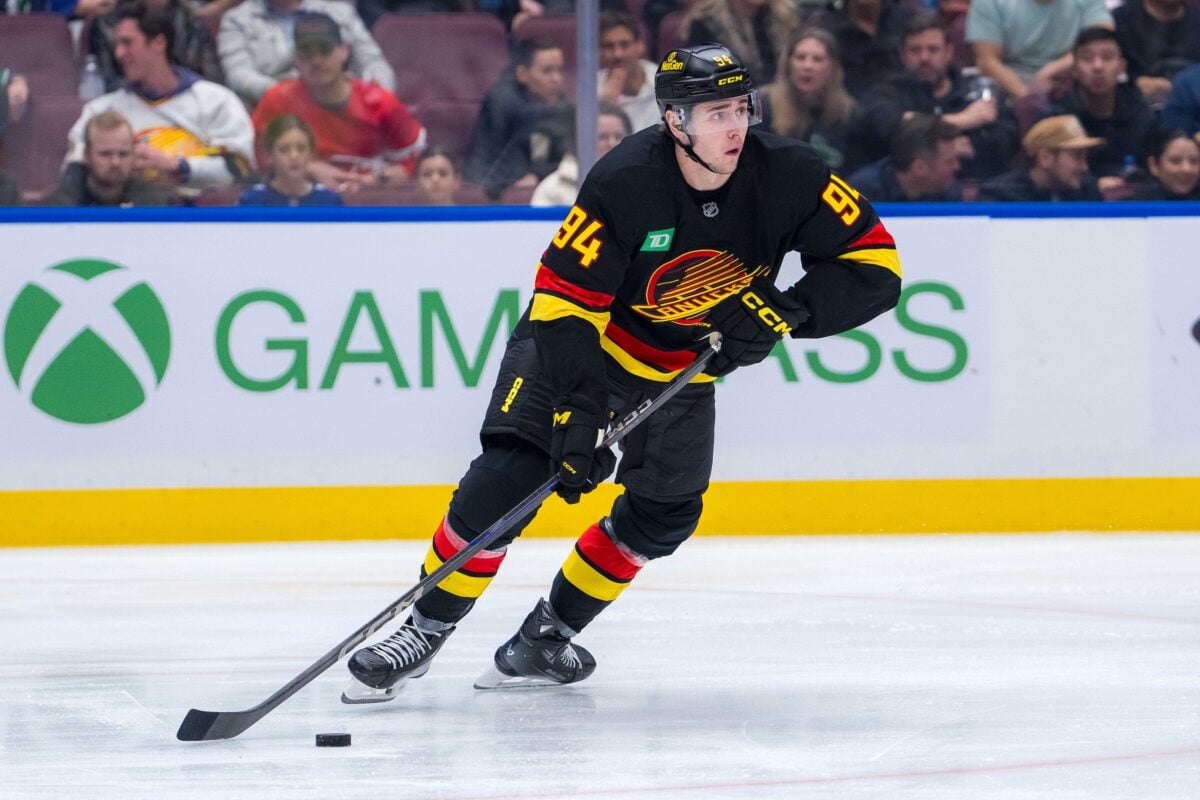
Looking ahead, Karlsson’s ceiling appears to be that of a high-end third-line winger who can chip in on the power play and move up to the top six when necessary. Every championship-caliber team needs a player like this — someone who understands the nuances of the defensive zone but possesses enough offensive touch to punish opponents who focus too heavily on the superstars.
Karlsson’s breakthrough hasn’t gone unnoticed on the international stage, either. Following the conclusion of the NHL regular season, he was officially added to Team Sweden for the World Championship. Representing the “Tre Kronor” is a significant milestone that speaks to his growth as a complete, 200-foot player. While he may not possess the ceiling of a top-line superstar, he represents the type of “winning” depth player that championship rosters are built upon. As younger prospects move up from the minors, Karlsson will likely transition into a leadership role, serving as a blueprint for how to graduate through the system successfully.
Overall Grade
When evaluating a player’s season, you have to measure performance against expectations. Karlsson didn’t just meet the bar; he cleared it with room to spare. He entered the season fighting for a roster spot and ended it as a trusted veteran with a multi-year extension in his pocket. He proved that his high hockey IQ and net-front instincts translate to the highest level of the sport.
For his transformation into a reliable NHL regular and his ability to provide secondary scoring in a difficult environment, Linus Karlsson earns an A. He has become the player the Canucks hoped he would be when they acquired him years ago: a durable, intelligent, and productive winger who makes the team harder to play against every single night.
AI tools were used to support the creation or distribution of this content, however, it has been carefully edited and fact-checked by a member of The Hockey Writers editorial team. For more information on our use of AI, please visit our Editorial Standards page.
Free Newsletter
Get Vancouver Canucks coverage delivered to your inbox
In-depth analysis, breaking news, and insider takes - free.
Subscribe Free →