Some teams have vastly different values assigned to various traits in hockey players—what’s important differs from organization to organization. Which prospects eligible for the 2026 NHL Draft have the best shot, skating, hockey IQ, playmaking, hands, and physicality/compete, and which are the most complete?
Best Shot
Nominees: Alberts Šmits, Mathis Preston, Niklas Aaram-Olsen
One of the best ceiling-raisers for a defenseman is a booming shot, and Alberts Šmits has one. With a 6-foot-3, 205-pound frame, he can put a ton of power into a blast from the point—a one-timer or otherwise. When necessary, his skating allows him to get better looks.
Mathis Preston was a consensus top-10 prospect before the 2025-26 season began, then fell considerably on many boards as time went on. But the talent didn’t vanish overnight. Even if the offensive totals don’t exactly show it, he has a game-breaking release. There’s a lot of power behind his shot.
Rounding things out is Niklas Aaram-Olsen. He scored 20 goals in 29 games in Sweden’s top junior league and had four goals in five games at the U18 World Championship. Those are good, not jaw-dropping totals for a draft-eligible player, but his release is incredible. He’s the type of player you can’t give time and space.
Best Skating
Nominees: Mathis Preston, Tommy Bleyl, Wyatt Cullen
In addition to his shot, Preston is an excellent skater. His effortless movement makes him a serious threat on the cycle and on the rush. He finished with 44 points in 46 games this season in the Western Hockey League (WHL), which was a bit of an underachievement, but Preston’s skill is can’t-miss nonetheless.
As of writing, Tommy Bleyl has the third-most full-season points for a draft-year defenseman in Quebec Maritimes Junior Hockey League (QMJHL) history: 106. But we’re here to talk about his elite mobility. He can take the puck end-to-end, and there’s a level of poise in his game that you don’t see very often.
Wyatt Cullen, a big-time riser, has great mobility. He’s like a shark in the offensive zone, able to circle around his prey until he finds the right play. There’s a lot to like about the 17-year-old forward, but his skating puts it all together.
Best Hockey IQ
Nominees: Gavin McKenna, Carson Carels, Daxon Rudolph
This is probably who you were waiting to see. Gavin McKenna‘s hockey IQ is off the charts, and it’s one of the primary reasons that he’s the consensus pick for the Toronto Maple Leafs at No. 1 overall. He can slow the play down with the best of them, opening up passing lanes for high-danger chances. It can’t be overstated how smart this player is.
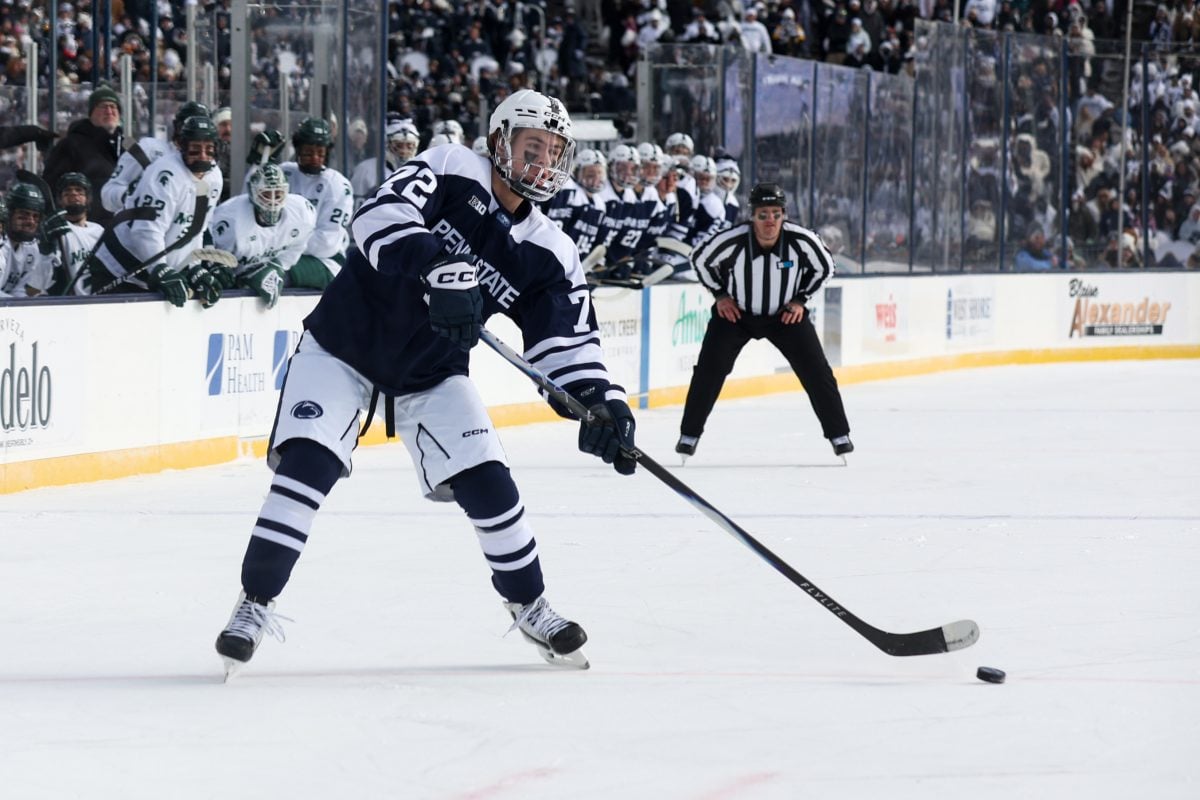
Carson Carels has entered the top-five conversation for the 2026 NHL Draft, with his hockey sense being the bread and butter of his game. He’s arguably the best pure defender in the class, which takes a high level of awareness and intelligence. The offense took a step this season, too, showcasing quality vision.
Daxon Rudolph blooms with offensive potential. The 6-foot-2, 203-pound defenseman is calculated yet dangerous with the puck, making him one of the premier creators from the back end in this year’s draft. His shutdown game also has some juice.
Best Playmaker
Nominees: Gavin McKenna, Viggo Björck, Caleb Malhotra
McKenna’s second appearance is at the top of the playmaker list. Among draft-year or younger prospects this century, he holds the highest and second-highest assist-per-game totals in the WHL and NCAA, respectively (according to QuantHockey). But beyond the production, the 18-year-old winger has impeccable vision and is so effective at manipulating defenses that assists come easily to him.
Next up is Viggo Björck, whose hockey IQ is also a calling card. Last season, he joined Leo Carlsson as the only draft-minus-one prospect in U20 Nationell history with at least 1.10 assists per game across double-digit contests. Playing in the Swedish Hockey League (SHL) as a 17-year-old was a bit of a learning curve at first, but by season’s end, he was putting his elite vision on display in a top-line center role.
Finally, we have Caleb Malhotra. Perhaps he doesn’t have the same level of vision as McKenna and Björck, but what sets him apart is his competitiveness. Malhotra wins pucks off the opposition and has the skating ability, skill level, and IQ to set his teammates up for gorgeous chances. He had 68 assists in 82 games across the Ontario Hockey League (OHL) regular season and the playoffs.
Best Hands
Nominees: Gavin McKenna, Xavier Villeneuve, Wyatt Cullen
McKenna’s third and final appearance comes in the hands department. He has the hockey sense and the playmaking, but what puts it all together is his ability to handle the puck. Even as a freshman at the college level, McKenna put on a show, using his hands to beat defenders and set up chances.
Xavier Villeneuve‘s draft projection has fallen slightly since the start of the season—which was unusually high for a 5-foot-11, 157-pound defenseman—but the potential never left. The name of Villeneuve’s game is his offense, which is partially made possible by his hands. Skating plays a role in what he’s able to do with the puck, but he’s a magician when he has possession at the blue line. He was a point-per-game player in the QMJHL in both 2024-25 and 2025-26.
Cullen is working his way into top-10 discussions somewhat late in the scouting process, and it’s not just the skating leading the way. His hands are exceptional, able to maneuver the neutral zone with the puck on a string and deke defenders out of their skates on the rush.
Best Physicality/Compete
Nominees: Alexander Command, Oscar Hemming, Oliver Suvanto
Alexander Command is very well-rounded. He has a strong shot and vision, but most of all, his energy level is phenomenal. He’s a great forechecker and gets to the middle of the ice frequently in the offensive zone. Sweden’s U20 Nationell isn’t the most demanding league out there, but the skill level he displays while playing a physical style is super impressive.
Oscar Hemming is everything you’d want out of a 6-foot-4, 193-pound forward. He has legitimate skill, which is maximized by his physicality and net-front presence. Though eight points in 19 NCAA games wasn’t exactly the most dominant showing on his behalf, he does the dirty work that generates offense.
Oliver Suvanto is arguably the top shutdown forward in this year’s draft. He’s big, plays hard, and his defensive game is superb—and all of this at the professional level. Generating more offense will be the next step for him, but he has shown flashes in that department.
Most Complete
Nominees: Chase Reid, Ivar Stenberg, Caleb Malhotra
Chase Reid doesn’t have many weaknesses. For starters, his skating was a contender for a top-three spot. He can go end-to-end and is arguably the best offensive zone quarterback in the class next to McKenna. His shot, especially, but also his vision, make him extremely dynamic with the puck. Defensively, he looked really solid this season, shutting plays down and showcasing good positioning.
Ivar Stenberg was in contention for several of the previous categories. His shot, playmaking, skating, and IQ give him first-line upside, evidenced by putting up the highest SHL point total for a draft-year prospect since Daniel and Henrik Sedin (33). When you combine the offensive ability with his defensive presence, you can see why Stenberg’s still in some first-overall debates.
To close it out, Malhotra is on this list once again for reasons previously mentioned. He was nearly a goal-per-game player in the OHL Playoffs, yet his playmaking is his top offensive trait. The 17-year-old center skates well, is smart, and is fully engaged in all three zones. His production is weaker than that of your typical future first-line center, but with the traits Malhotra possesses, there’s no reason to doubt him.
Individual traits aren’t everything, but if you’re looking for upside, these are the types of players you want to draft. Most of them will be picked pretty early, and all of them are first-round contenders.
Free Newsletter
Get NHL Entry Draft coverage delivered to your inbox
In-depth analysis, breaking news, and insider takes - free.
Subscribe Free →