The Montreal Canadiens‘ playoff run featured plenty of surprises, breakout performances, and a few disappointments. While the team exceeded expectations by making a deep run, not every player performed at the same level. Here’s a report card for the Canadiens’ goaltender and defencemen following their postseason campaign.
Jakub Dobes: A+
There is simply no other grade to give Jakub Dobes. Entering the playoffs, the young netminder was still largely unproven at the NHL level. By the end of the postseason, he had established himself as one of the biggest stories of the Canadiens’ run. His 9-6-4 record, 2.66 goals-against average, and .908 save percentage are solid numbers on paper, but they don’t fully capture his impact.
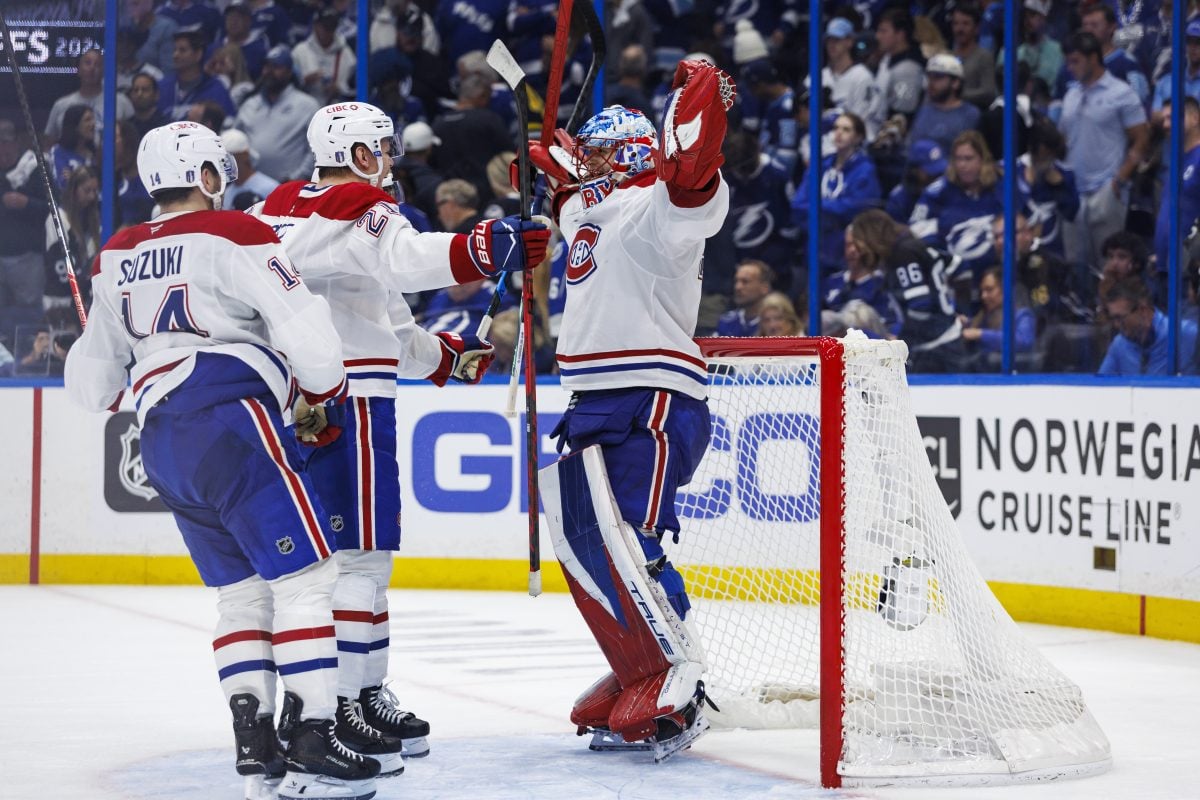
Time and time again, Dobes came up with timely saves when the Canadiens were being outplayed or struggling defensively. He stole games, kept Montreal alive in difficult moments, and showed remarkable poise for a goaltender with so little NHL experience. Without his performances, it’s difficult to imagine the Canadiens advancing as far as they did.
More importantly, Dobes may have changed the organization’s long-term outlook in goal. What was once considered a promising prospect now looks like a legitimate NHL goaltender capable of handling playoff pressure.
Lane Hutson: A
Another player who elevated his reputation during these playoffs was Lane Hutson. The young defenceman led the Canadiens in average ice time at 25:27 per game, a remarkable accomplishment considering both his age and experience level. Not only was he trusted in every situation, but he also delivered offensively with 16 points during the postseason.
Hutson quarterbacked the power play, drove offensive possession, and consistently helped the Canadiens transition the puck up the ice. There were moments where opponents targeted him physically, but he continued to find ways to impact the game.
For a player completing his first playoff run, Hutson looked like a veteran. The Canadiens have known for some time that they had a special talent on their hands. These playoffs confirmed it.
Mike Matheson: C+
Mike Matheson’s postseason was a mixed bag. On one hand, he continued to log significant minutes and was regularly matched against quality competition. On the other hand, there were too many mistakes for a player counted on to be one of the leaders of the blue line.
Turnovers, defensive-zone miscues, and moments where he appeared overwhelmed were more common than Canadiens fans would have liked. Yet despite the struggles, Matheson continued to battle and remained a trusted option for the coaching staff.
Noah Dobson: C-
Noah Dobson’s first playoff run with Montreal was disappointing. The talented defenceman finished with just one point and a minus-7 rating. He was playing through a hand injury; expectations remain much higher for a player acquired at such a significant cost.
The Canadiens gave up two first-round picks and Emil Heineman to bring Dobson to Montreal, and the expectation was that he would become one of the team’s top offensive defencemen. Instead, he struggled to make an impact offensively and looked uncomfortable at times.
The injury certainly deserves consideration, but the results simply were not there. The good news for Montreal is that Dobson remains an elite talent, and there is little reason to believe this playoff performance represents the player he truly is.
Kaiden Guhle: B-
Kaiden Guhle’s offensive production wasn’t particularly notable, but that isn’t what the Canadiens ask from him. Guhle’s game is built around physicality, defensive responsibility, and shutting down opposing forwards.
Throughout the playoffs, he played with intensity and brought a physical presence to the lineup. He wasn’t perfect, and there were moments where he struggled against elite competition, but overall, he fulfilled his role effectively.
Alexandre Carrier: B-
Like Guhle, Alexandre Carrier had an up-and-down postseason that ultimately landed slightly above average. Carrier was far from perfect and occasionally had difficulty handling the pressure of playoff hockey. However, he also made several important defensive plays and provided stability on the back end. The veteran defender wasn’t spectacular, but he wasn’t a liability either. He did the job expected of him and gave the Canadiens valuable minutes throughout the playoffs.
Arber Xhekaj: B
This may be the most surprising grade on the list. After all, Arber Xhekaj didn’t play a single game in the Eastern Conference Final against the Carolina Hurricanes. However, this grade isn’t about comparing him to Hutson or Guhle. It’s about measuring his performance against the expectations placed upon him.
When Xhekaj was in the lineup during the first two rounds, he brought exactly what the Canadiens needed. He played a physical game, intimidated opponents, kept mistakes to a minimum, and contributed solid defensive minutes. Could he have played more? Perhaps. But when he was called upon, he performed his role effectively. Based on expectations, Xhekaj deserves a good grade.
Jayden Struble: C
Jayden Struble started the playoffs on a positive note. His pairing with Xhekaj showed promise early, and he looked comfortable in his role. Unfortunately, his play gradually leveled off as the postseason progressed.
The Canadiens didn’t need Struble to be a star, but they did need a little more consistency from their sixth defenceman. There were stretches where he struggled to make an impact and others where he looked hesitant with the puck.
If there is one major takeaway from Montreal’s playoff run, it’s that the future remains incredibly bright. The Canadiens may not have reached the Stanley Cup Final, but several young players gained invaluable experience. And if these playoffs are any indication, the foundation of something special is beginning to take shape in Montreal.
Free Newsletter
Get Montreal Canadiens coverage delivered to your inbox
In-depth analysis, breaking news, and insider takes - free.
Subscribe Free →