Today marks nine years since the hockey world lost a legend to cancer. A long-time coach and general manager, well respected for his courage and hockey knowledge, Bryan Murray lost a three-year battle with stage four colon cancer that he was first diagnosed with in 2014.
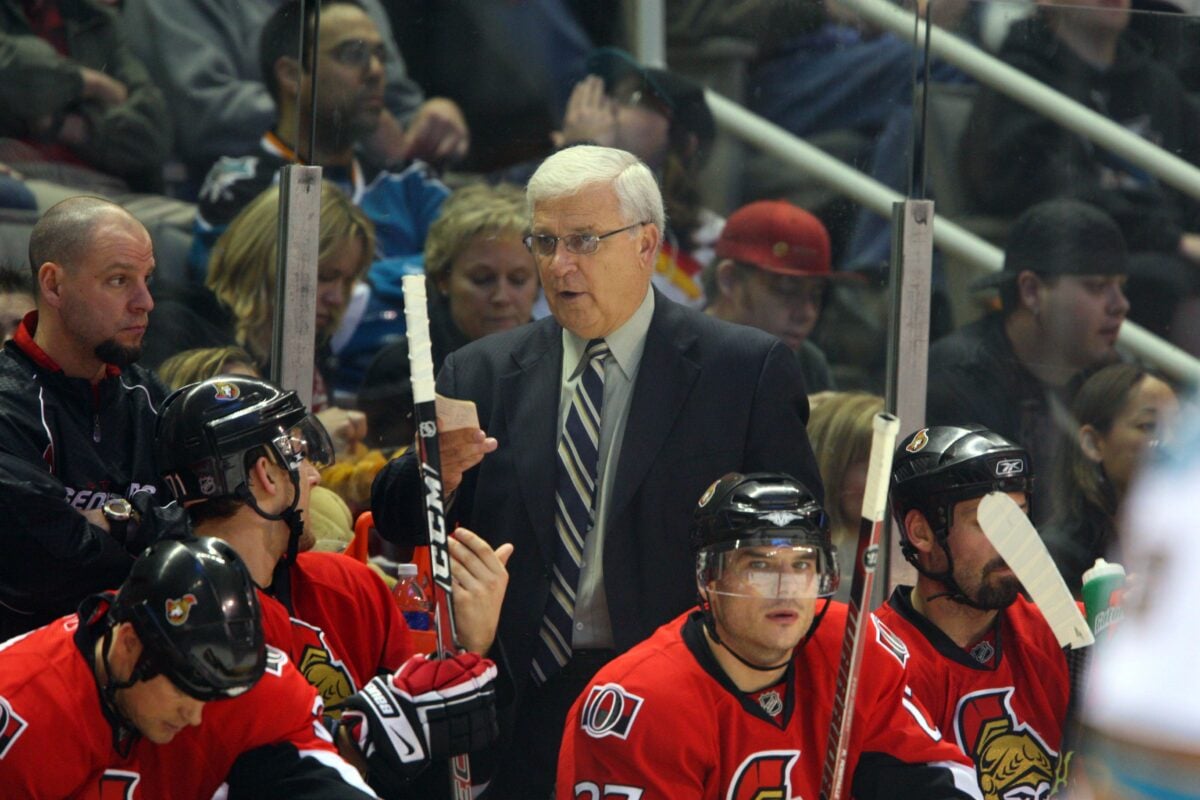
Murray’s time in the NHL consisted of professionalism, leadership and dedication. He proved each of these with five different clubs, only getting better with his strategies and scouting each time. Nearly a decade after his passing, we’ll take a look back at his NHL journey and accomplishments.
First Job With Washington
Murray made a rather quick jump to the NHL after coaching in the Canadian Junior Hockey League for six seasons and leading the Western Hockey League’s Regina Pats to a Memorial Cup in 1980, his first and only stint with the club. He was first brought on by the American Hockey League’s Hershey Bears in the 1980/81 campaign before being promoted to coach the Washington Capitals the season after.
In nearly nine full seasons behind the Capitals’ bench, Murray earned 343 wins in 672 regular-season games and 24 playoff wins in 53 games – all the most in franchise history to this day. Guiding Washington to the playoffs for seven straight seasons and winning his first Jack Adams Award in 1984 were among his greatest achievements in D.C. In 1989/90, however, Murray was fired after a slow first half of the Caps’ season and his brother, Terry, took over.
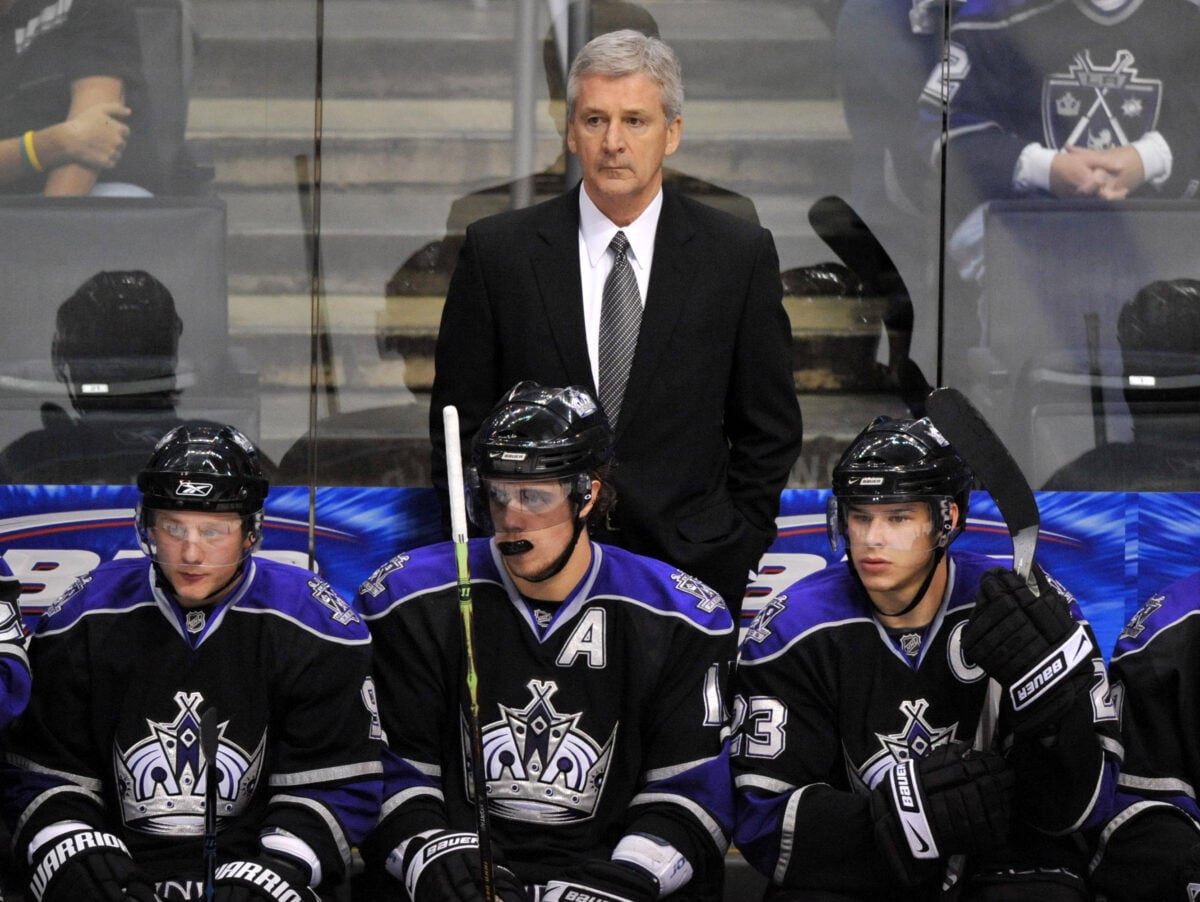
Another giant in the hockey world over the years, Terry coached Washington for the remainder of the campaign and the four seasons after, part of his 24 years as an NHL coach.
2 Roles With the Red Wings
It would only take Murray until the start of the 1990/91 campaign to find his next job, a head coach and general manager gig with the Detroit Red Wings, who were still searching for an identity, with Steve Yzerman and Gerard Gallant, among others, and Niklas Lidstrom on the way.
As Detroit’s bench boss for three of his four seasons, Murray led them to the playoffs each time but couldn’t get past the second round, prompting the great Scotty Bowman to take over in the 1993/94 season. Murray did have some success in all four years as GM, bringing in the likes of Sergei Fedorov and Paul Coffey for a few seasons, but they never led to playoff success, leading to his second termination.
Emergence of the Panthers
It’s with the Florida Panthers where Murray’s reputation of team building began trending upward. Hired to the Cats’ front office in the summer of 1994, he led a stunning emergence of Florida as the club made their first Stanley Cup Final just two years into their existence. This led to Murray’s first Executive of the Year Award and another five seasons with the Panthers.
A few seasons with the likes of Pavel Bure and Ray Whitney to complement Rob Niedermayer were enough to get the Panthers to the playoffs twice. But after not making it out of the first round since that finals run in ‘96, Murray was relieved of his GM duties for Bill Torrey on Dec. 28, 2000, ending his nearly seven-year tenure with the club – including a brief stint as head coach midway through 1997/98.
Mighty Duck Tales
Florida was a great team to build from the ground up, but the Mighty Ducks of Anaheim – now known as the Anaheim Ducks – needed a hockey mind themselves as an up-and-coming franchise also. Murray’s experience fit into their plans, first as head coach in 2001/02, and as GM and senior vice president of hockey operations for two seasons.
He only spent a total of three years in Anaheim, but Murray helped the Mighty Ducks to their first Stanley Cup Final in 2002/03, as well as finding the likes of Ryan Getzlaf and Corey Perry in the 2003 Draft. Also recruiting his old friend from Florida in Rob Niedermayer, Petr Sykora and Adam Oates to the club was enough to drive the offence for parts of those three seasons.
It seems like a successful three-year track record, so why didn’t it last longer? That answer is simple: another team came a-calling, and Murray’s desire to go home won him over.
Homecoming to Ottawa
In the summer of 2004, Murray resigned from his front office position in Anaheim and accepted a role that involved him going closer to his hometown of Shawville, QC, to be the next head coach of the Ottawa Senators. This would turn out to be his most iconic destination as the final 12 years of Murray’s career came with the Senators – three as head coach and nine as general manager, with a mixture of executive VP of hockey ops, senior advisor and club president titles attached.
Behind the Sens’ bench, Murray led yet another club to their first Cup Final in 2006/07, only to be downed in five games by the same Ducks he helped build. After one last stint as coach, replacing John Paddock midway through the 2007/08 season, Murray moved to Ottawa’s front office to oversee the roster. It is with Ottawa that Murray showcased his hockey knowledge in his moves as GM.
He took gambles trading for eventual fan-favourites like Craig Anderson, Mark Methot, Kyle Turris and Bobby Ryan. He selected names like Erik Karlsson and Thomas Chabot in the draft and dug even deeper to find key pieces like Mark Stone, Mike Hoffman and Jean-Gabriel Pageau. Even when he was put in tough positions with stars like Dany Heatley and Jason Spezza, Murray managed to get decent returns like Milan Michalek and Nick Paul.
All of these additions turned out to be great pieces to the puzzle to lead Ottawa back to the conference finals in 2016/17 – only to be denied their destiny by a Chris Kunitz knuckle puck in Game 7 overtime against the Pittsburgh Penguins. Ironically, the Sens have not made it this far since, and it was the last bit of Senator hockey Murray would see before his passing a few months later.
He would step down from his GM role in 2015/16 in the midst of his fight against cancer, and after serving as a senior advisor to Pierre Dorion in 2016/17, Murray lost his three-year fight.
Career Achievements
With 35 years in the sport, Murray’s multi-talent as a coach and exec earned him a Jack Adams Award, an Executive of the Year Award – now known as the Jim Gregory General Manager of the Year Award – and three Stanley Cup Final appearances.
He was also the first inductee into the modern-day Senators’ Ring of Honour on Jan 24, 2017 – ironically against the team he started his career with in the Capitals. The entire Ottawa organization not only recognized Murray’s contributions to the club since ’07, but mainly his impact as a mentor and the respectful executive he was.
Murray’s courageous fight against cancer (from: ‘Senators GM Bryan Murray credits complementary cancer treatments for “physical and mental strength”’ Ottawa Citizen, April 7, 2016) – even while still active in the Senators’ front office – not only displayed his love and passion for the game, but also sent a message to the entire hockey community that no one is in the fight alone. He also made it known the importance of catching any disease sooner rather than later, which is why he was always public with his diagnoses.
It is still rare to see two-way transitions between a coach and GM work out, but Murray found ways to build teams from the bottom. Regardless of whether he has no cups to his name, Bryan Murray will always be remembered as one of the most respected and loyal contributors to the hockey world.
Free Newsletter
Get Hockey History coverage delivered to your inbox
In-depth analysis, breaking news, and insider takes - free.
Subscribe Free →