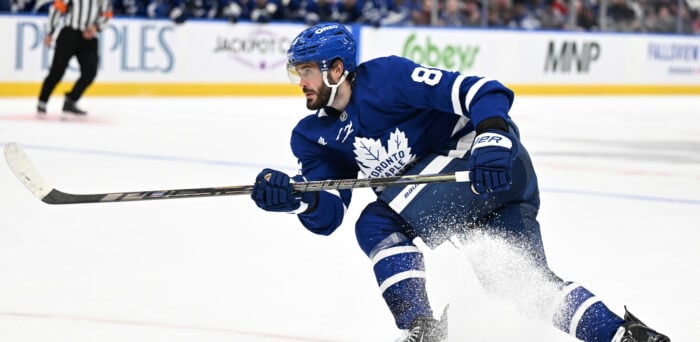
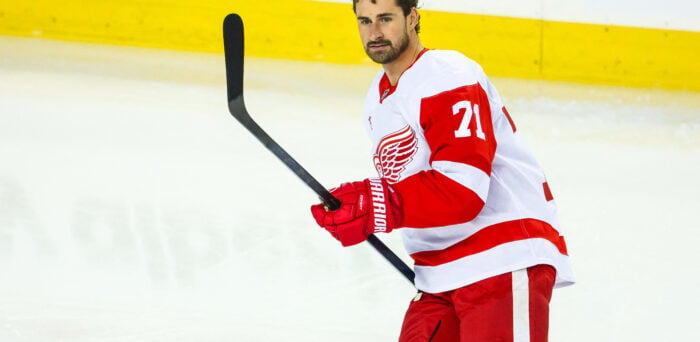
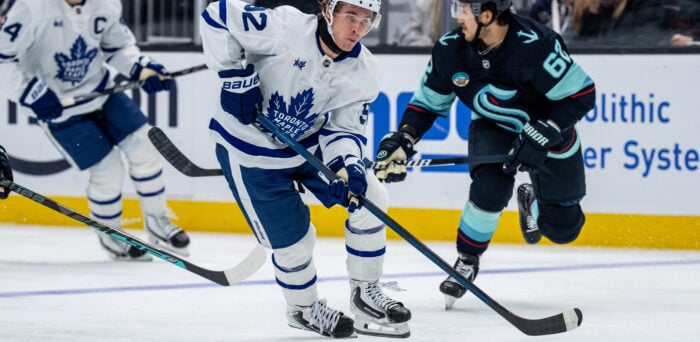
The Toronto Maple Leafs are still finding their footing under new head coach Jim Hiller. There have been encouraging moments, including a strong offensive performance against the Colorado Avalanche, but then on Tuesday the team fell behind again and lost to the Utah Mammoth. The club’s early-season inconsistency has raised questions about whether the summer changes will be enough. General manager John Chayka has reshaped the roster, added significant talent and brought in new voices. Now comes the harder part: making everything work together.
In a recent discussion section, readers shared their thoughts about Toronto’s star players. They raised an interesting point. Perhaps the Maple Leafs’ problem has never been simply a lack of talent. Maybe the team has struggled to find the right balance between offence, defence, physical play and leadership. That question deserves a closer look, especially as Toronto continues to search for answers at the back end.
Problem One: Did the Maple Leafs Have Too Much of the Same Thing?
One reader made an interesting observation about Toronto’s former core of Auston Matthews, William Nylander, John Tavares and Mitch Marner. The argument was that the Maple Leafs had plenty of offensive talent but too many players who brought similar strengths and weaknesses to the lineup. The commenter also questioned whether that group had enough physical and mental toughness when playoff games got tougher.

It’s a strong opinion, but it raises a reasonable question. A team can have several excellent offensive players and still lack the right balance. Scoring matters, obviously, but so do defensive responsibility, winning battles along the boards, handling difficult matchups and finding ways to contribute when the offence isn’t coming easily. Those qualities don’t necessarily show up in a points column.
I’m not convinced that calling the former core soft tells the whole story. Matthews, Nylander, Tavares and Marner were talented players who contributed plenty to Toronto over the seasons. The question is whether the organization did enough to complement those strengths with the right supporting players and a clear team identity.
Chayka has made significant changes, including acquiring Kirill Marchenko and adding depth. But adding talent and building a balanced team aren’t necessarily the same thing. Toronto needs players who can contribute in different situations, take pressure off its stars and help the team win when the offence isn’t clicking. That’s the challenge facing the new management group.
Problem Two: Can the Maple Leafs Find Some Stability on Defence?
The other issue that continues to deserve attention is Toronto’s defence. The Maple Leafs have allowed at least three goals in regulation in each of their past five games, according to a recent Daily Faceoff assessment. That doesn’t mean every goal is the defence’s fault, but it does suggest that the team hasn’t yet found the consistency it needs.
Chris Tanev’s situation adds another layer to the discussion. One reader questioned the value of his contract given his injury history and the physical demands of his style of play. It’s a fair question when evaluating any veteran defenceman. Tanev’s defensive value is considerable when he’s available, but teams have to account for durability when building a roster around players whose jobs involve blocking shots, battling in front of the net and facing difficult assignments.

Chayka has publicly defended the quality of his blue line, pointing to Tanev’s loss last season and the importance of his defensive contributions. That’s understandable. A player like Tanev can make a difference that doesn’t always show up in the scoring statistics. Still, Toronto needs more than one dependable defensive presence. The group has to function as a unit, and the forwards must help ease the pressure on their defencemen.
The question isn’t whether Toronto needs to trade someone or make another dramatic change immediately. It’s whether the current group can become more reliable as the season progresses. If the Maple Leafs keep giving up too many quality chances, management will eventually have to decide whether the answer lies in better execution, different combinations, or another personnel move.
What’s Next for the Maple Leafs?
The Maple Leafs have made enough changes that patience is warranted. New players need time to learn their teammates’ habits, and a new coach needs time to establish how he wants the team to play. The early results shouldn’t automatically trigger another round of sweeping changes.
But patience shouldn’t mean ignoring the warning signs. Toronto needs its offensive stars to produce, its supporting players to fill important roles and its defence to become more consistent. Those things have to come together if the Maple Leafs hope to return to the playoffs and become a more difficult team to play against.
For me, the bigger question is whether Chayka has assembled the right mix of players to give Hiller a realistic chance to succeed. The talent is there. The challenge now is turning that talent into a team that can win in more than one way.
Free Newsletter
Get Toronto Maple Leafs coverage delivered to your inbox
In-depth analysis, breaking news, and insider takes - free.
Subscribe Free →