For the Montreal Canadiens to have an irrefutably successful 2026-27 season, they theoretically need to win the Atlantic Division. While the logic behind that argument is relatively sound, it’s still far from a certainty that they accomplish the feat in question. Winning a division in professional sports is banner-worthy for a reason. It’s hard to do. Winning the stacked Atlantic?
Let’s just say, it would be very impressive, but the standard for success for the Canadiens is so high by design. Last season, they not only reached Round 3 as the youngest team in the NHL. They also iced a Habs team with a 50-goal scorer for the first time since 1990, a separate 100-point scorer for the first time since 1986 (who also won the Frank J. Selke Trophy) and the rookie scoring leader (for the second straight season).
So, it’s clear the Canadiens have a bright future ahead, to the point it would be hard to consider 2026-27 an all-out failure, even if they did fail to finish first in the Atlantic. The margin of error isn’t that razor-thin that anyone should be looking at this as something akin to a final kick at the can. Regardless of how well they do (or don’t), everyone should still be looking at next season as them building toward something greater. Looking at it through that lens, there are certainly some things that could soften the blow of a disappointing result. Here are the top five:
5. At Least a Second-Round Finish
Will the Canadiens be one of the four best teams in the NHL? A regular-season division title would certainly imply as much, just like an Eastern Conference Final berth did last season, but there are just too many variables in play that can get in the way of them making it to Round 3 again. That having been said, the Canadiens have for all intents and purposes established themselves as a playoff-calibre team with the talent to legitimately contend.
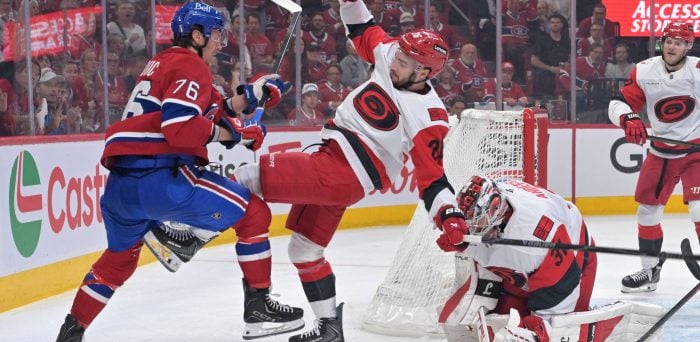
After knocking off the Tampa Bay Lightning, who many perceived as contenders in their own right, in Round 1 and then the Buffalo Sabres, who actually won the Atlantic last season, in Round 2, the Canadiens would probably be seen as having taken a sizeable step back if they didn’t make it at least that far. Depending on the quality of theoretical opposition and how the series in question plays out, fans should be able to live with an earlier-than-anticipated exit, even if the next logical step for the team should technically be playing for the Stanley Cup.
4. Reinbacher Graduating to the NHL
The Canadiens are at least past the point where just making the postseason should be the goal, which had effectively been what would have separated a successful 2025-26 from an unsuccessful one. On the equivalent to this list from last season, one entry had defensive-prospect David Reinbacher graduating to the NHL. He obviously didn’t, but, even with the shine having worn off on his projection somewhat one year later, he remains a focal point.
All on its own, Reinbacher establishing himself as an everyday NHLer would admittedly be underwhelming. However, taking into account all the Canadiens have invested in him, namely a fifth-overall pick, and his development, namely parts of the last three seasons since he was drafted, it would still be a positive sign were he to build on the first two NHL games of his career that he got in last year, albeit as an injury replacement.
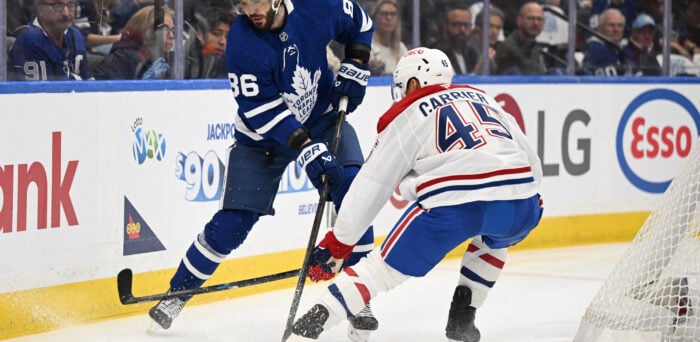
The Canadiens need a top-four right-handed defenseman, even after having acquired Noah Dobson. It’s one of their biggest gaping holes in the lineup. While the Habs admirably have contingencies in place should Reinbacher fail to make it, clearly the preference is for him to live up to his potential. They wouldn’t have used a fifth-overall pick on him otherwise. With Alexandre Carrier projected to move on via unrestricted free agency in 2027, the preference must be for him to arrive sooner rather than later, and there’s no time like the present.
3. Caufield Winning the Rocket
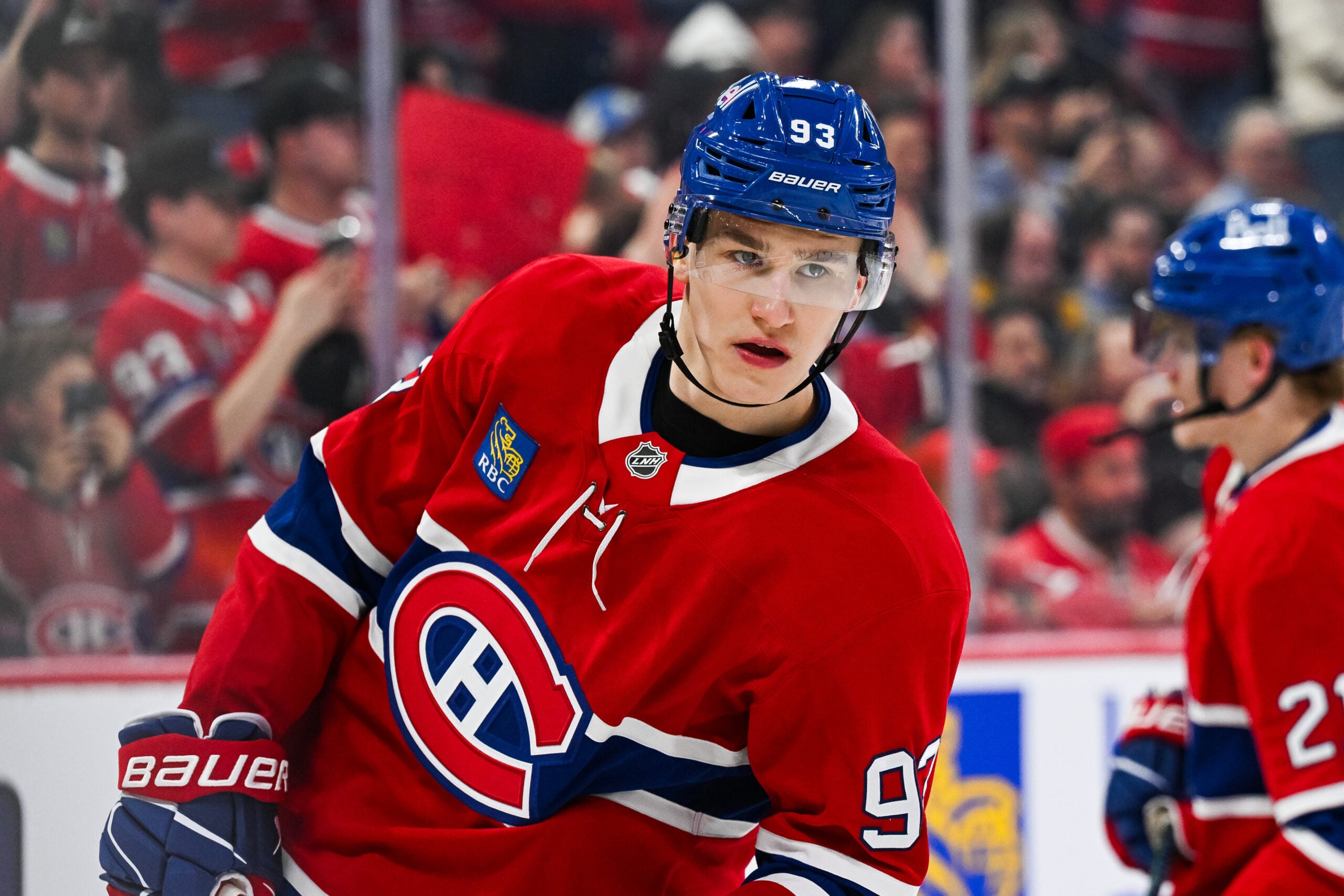
Speaking of entries on last year’s list, Cole Caufield checked one off the list by becoming the team’s first 40-goal scorer since 1994 (Vincent Damphousse), which certainly seemed like a huge step forward for the franchise as a whole. Then he went ahead and scored 50 too, giving the Canadiens their first such player since Stephane Richer in 1990.
To be fair, Caufield did it on the strength of a career-high 19.8% shooting percentage, making it unlikely he replicates the feat, at least in back-to-back seasons. However, with him having come within literally a few goals of beating Nathan MacKinnon for the Maurice “Rocket” Richard Trophy, he has yet another goal for which to shoot this coming season. If he were to give the Habs their first-ever player Rocket Richard Trophy winner, to effectively bring home the award named after the Habs legend, the season, regardless of how it ultimately panned out, would still be looked back on fondly.
2. Hutson Winning the Norris
Caufield is still (arguably) only the third-most-likely Canadiens player to bring home major hardware in 2026-27. The likeliest, Lane Hutson, has a better chance at being considered for one of the game’s top awards in the James Norris Memorial Trophy, which obviously gets handed to the league’s top-voted defenseman.
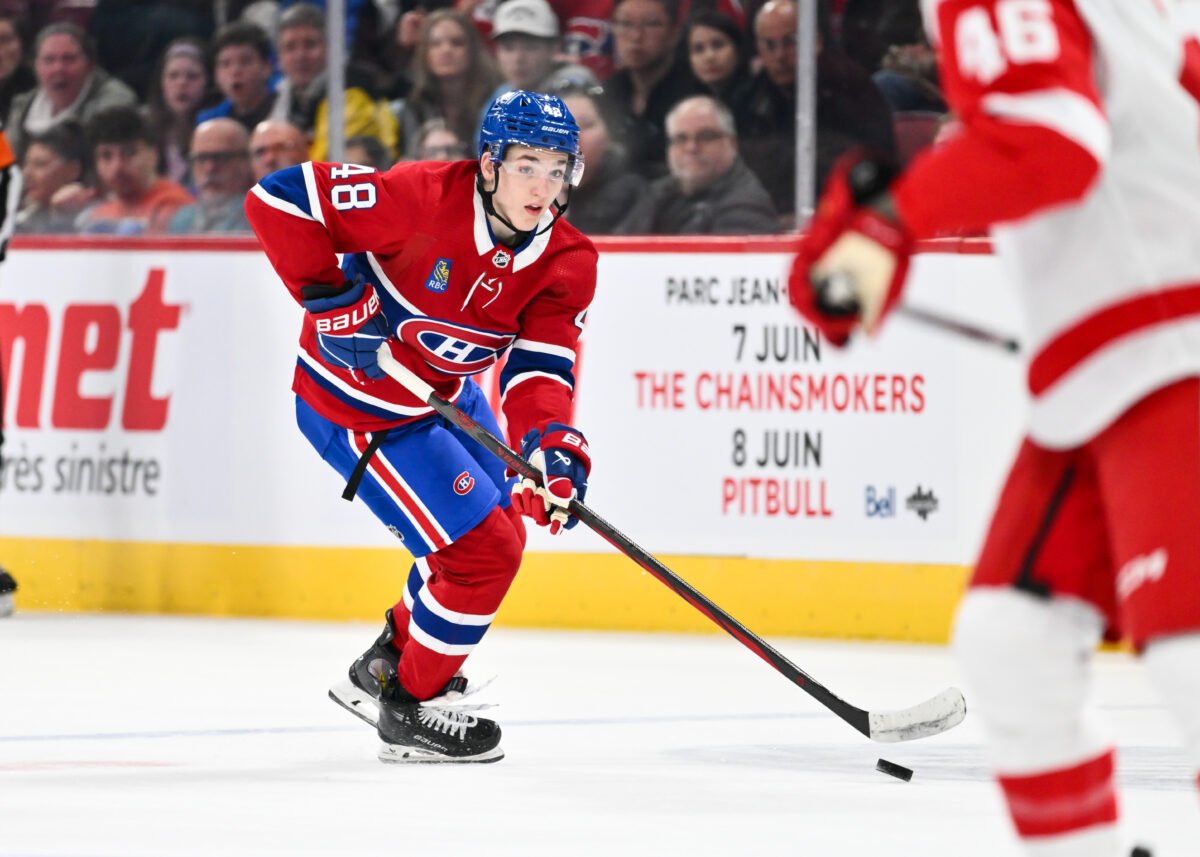
Hutson’s accolades up to now have been repeated ad nauseam. This isn’t that type of list. Instead, it’s worth reinforcing the significance of the award, which P.K. Subban captured for the lockout-shortened 2012-13 season, as the last Canadiens player to do so.
Were Hutson to win it, thereby joining the ranks of other ex-Habs like Larry Robinson, who won it twice and whose franchise single-season assists record for a defenseman he just tied, he’d solidify the Habs as legitimate contenders, even if not for this specific season. It turns out having a Norris-calibre defenseman on the roster is key to championship success, with approximately 2/3 of recipients having at least won one Cup in their careers.
Granted, the phenomenon hasn’t been witnessed as much in the current era due to a watered-down product. However, there’s reason to believe the Canadiens could buck the recent trend, based on their salary-cap structure, thanks to a string of team-friendly deals like Hutson’s eight-year, $70.8 million contract. And, oh, yeah: A Norris would further establish his as one of the top contracts in the NHL, if not the absolute best. That isn’t just vanity talking either… it’s practicality if they want to consistently compete, nay, contend.
1. Hage Establishing Himself as the No. 2 Centre Canadiens Need
At the end of the day, everyone, except maybe a few holdouts of rival fan bases, knows, regardless of whether or not Hutson wins the Norris, the calibre of defenseman he is. Top-prospect Michael Hage remains a mystery, especially after he opted to return to university instead of sign with the Canadiens at the end of last season, to the chagrin of many fans.
Drafted as a centre at No. 21 in 2024, Hage could quasi-realistically step right in to fill the role of the team’s ever-elusive No. 2 pivot, especially seeing as he’s getting another year of development under his belt, with the reported express purpose of developing into (more of) an NHL-ready player (and winning a championship as “the” guy at the University of Michigan).
The Canadiens do have Oliver Kapanen, who’s coming off an undeniably successful rookie season playing centre on the second line. If he can build on that, they wouldn’t necessarily need Hage, but, if scouting reports are accurate, Hage simply projects as a blue-chipper who makes the players around him better, instead of just complementing them, like Kapanen, all due respect to him, is seen as doing with Ivan Demidov. That should be at the top of the wish list of any team in this situation, the best player possible to fill a role, not just someone to make do. And, as it happens, Hage is a real possibility to be “that” guy for them.
Forget the Cup for now. If the Canadiens can ice an absolutely complete lineup, the championship will presumably come eventually. And, not for nothing, but for Hage to be given the runway he needs to actually establish himself as the team’s No. 2 centre, the few games he would get in at the end of the regular season after finally signing on with the Canadiens wouldn’t really be enough, even if he would be joining the Habs as a theoretically complete player.
You’re talking about a few weeks (or rounds) for him to find his footing at least.
Free Newsletter
Get Montreal Canadiens coverage delivered to your inbox
In-depth analysis, breaking news, and insider takes - free.
Subscribe Free →