In hockey, there is no shortage of talk about answering the bell, standing up for your teammates and showing up when it matters most. On Wednesday night, the Ottawa Senators did all three.
I generally prefer to focus on the objective measures of performance when evaluating a hockey game. Shot attempts, expected goals, scoring chances and the quality of a team’s play over 60 minutes tell us far more than vague narratives about heart, character, and desire. Those words are often overstated in sports, particularly after a big win, when they become convenient explanations for why one team prevailed over another.
But Wednesday night felt different. With Brady Tkachuk returning to Ottawa amid the fallout from his departure, the game carried an emotional weight that extended well beyond the two points available in the standings. And after watching the Senators deliver their most complete performance of the season against the Florida Panthers, it is difficult to dismiss the importance of everything that cannot be measured in a box score. For one night, Ottawa’s heart, care, and commitment to the occasion deserved every bit of recognition they received.
More Than a Game
To understand why the atmosphere was so charged, however, you have to look beyond the trade itself.
After the 2026 Winter Olympics and during the lead-up to the trade, and in the days surrounding his return, the Tkachuk family did little to make the situation easier for Ottawa fans to swallow. Matthew and Keith Tkachuk made comments on their podcast that subtly suggested Brady should consider asking out of Ottawa. Matthew’s decision to attend the Senators’ playoff games on the road rather than in Ottawa only added to the frustration among fans.
The family also repeatedly mocked Canadian media for questioning them about their celebrations with Donald Trump (From ‘Brady Tkachuk turned his back on Ottawa. How hostile will his Panthers return be?’ – The Athletic, 10/21/2026). They were entitled to their opinions, but the dismissive attitude toward questions that were entirely reasonable only deepened the disconnect between the Tkachuks and the Ottawa market.
Perhaps one of the most frustrating moment, in my view, came when Brady suggested he would donate the jerseys thrown onto the ice to the Boys and Girls Clubs he had previously supported.
On the surface, donating jerseys to charity sounds like a positive gesture, but the issue was the context. For a fanbase that had watched its captain depart under contentious circumstances, bringing up previous charitable donations felt like a reminder of what he had done for the city as though that history should change how Ottawa fans felt about his departure. It also came across as tone-deaf, as if his past contributions should define his legacy in Ottawa, without recognizing that for many fans, his decision to leave the Senators the way he did will be what he is remembered for.
Whatever good he did for the community, it does not erase the disappointment surrounding his departure. It came across less as an attempt to move forward and more as a reminder to Ottawa of his past contributions. Frankly, I doubt the Boys and Girls Club, or anyone in Ottawa for that matter, particularly wants his jersey right now.

By Wednesday night, this was about far more than a former captain returning to his old rink. The fans had made their feelings clear, and the Senators had an opportunity to give them something far more satisfying than another round of public back-and-forth.
They took it.
Ottawa Set the Tone
The Senators played their best game of the season by a considerable margin, immediately establishing themselves as the aggressors. Ottawa opened with an 11-1 advantage in shots, setting the tone with an intensity and offensive urgency that had been missing from some of its recent performances.
Tim Stützle was outstanding, entering the zone with ease and creating chances whenever he touched the puck. He scored on the power play, which had been struggling before this game, and later set up Stephen Halliday for an assist off the rush. Stützle has been exceptional at generating offence in transition this season, and his ability to carry the puck through the neutral zone and create opportunities at speed was on full display against Florida.
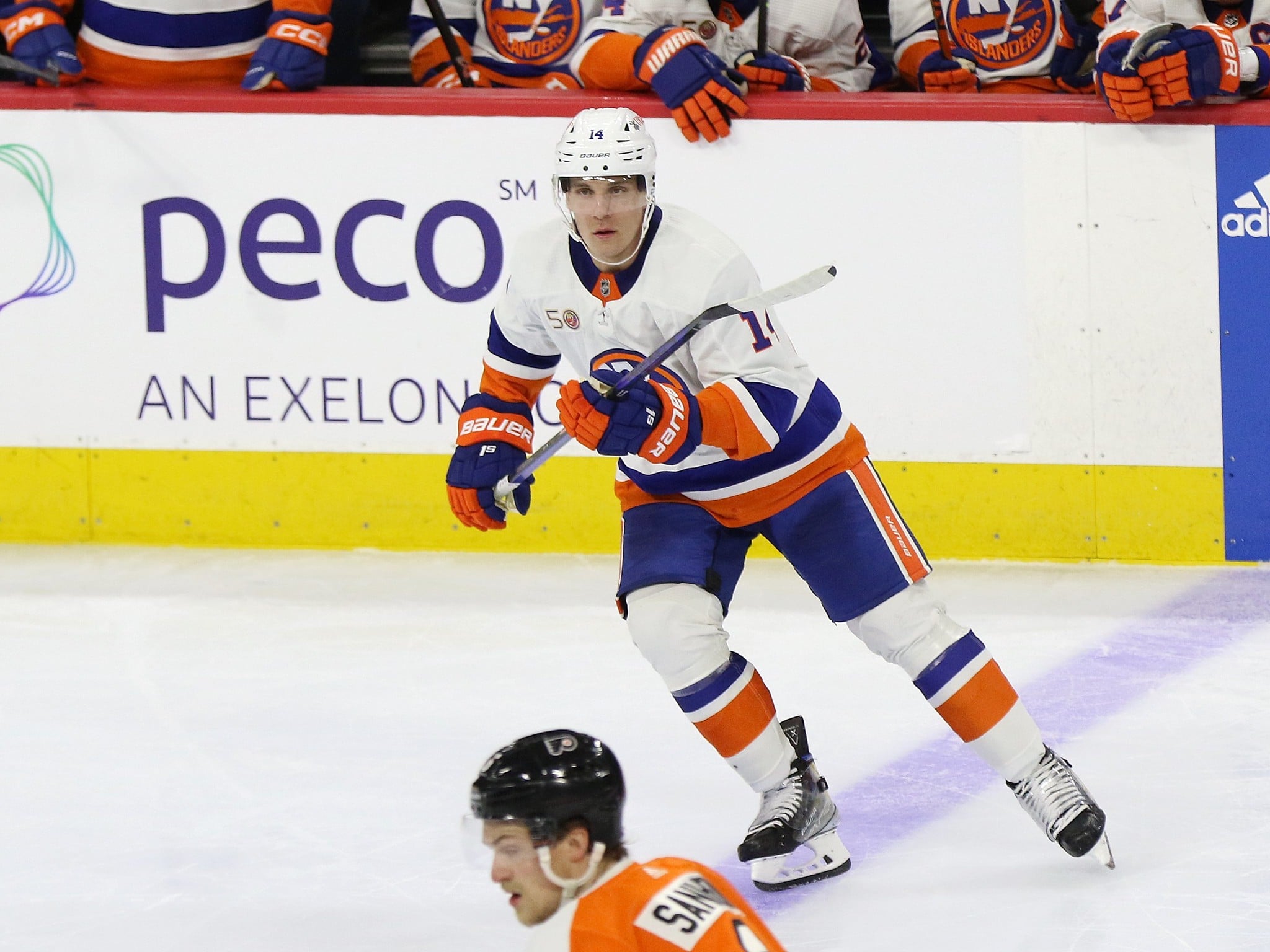
Jake Sanderson played 22 minutes and controlled the game whenever he was on the ice. He makes a world of difference for this team, providing the poise, mobility and defensive reliability Ottawa needs in every situation.
Dylan Cozens also made several important plays, including taking a hit to make a play that helped set up Warren Foegele’s goal, while adding an assist of his own. Shane Pinto was equally effective, turning defence into offence and finishing a breakaway with the kind of speed that has made him such an important piece of Ottawa’s forward group.
The individual performances were impressive, but the more significant development was how Ottawa played collectively. The Senators didn’t just feed off the atmosphere. They understood the kind of game Florida wanted to play and repeatedly found ways to counter it.
The Senators Beat Florida at its Own Game
The Panthers understood the moment, too. They were always going to accept being the villains in Ottawa for a night. Florida came out playing the aggressive, physical game that has become its trademark, throwing hits, pinching its defencemen and attempting to suffocate the Senators with an aggressive forecheck.
Florida wanted to dictate the terms of engagement, turn the game into a physical battle, force Ottawa into mistakes, and use their relentless pressure to create opportunities.
The Senators had other ideas.
Rather than getting caught up in the physicality or trying to answer every hit with one of their own, Ottawa repeatedly made the right play under pressure. Its players were willing to take a hit to make a pass, recognizing that Florida’s aggressive approach could leave enormous gaps if the puck moved quickly enough.
The goals from Pinto and Foegele were excellent examples of how Florida’s aggressive approach could be exploited. Brady Tkachuk, in particular, was overzealous on the play that led to Pinto’s goal, stepping out of position to deliver a hit and leaving space for Ottawa to attack. Rather than disrupting the Senators’ play, his decision helped create the opening Pinto needed to break through. It was a fitting example of how Florida’s desire to impose itself physically could backfire when the Panthers prioritized aggressiveness over maintaining their defensive structure.

Ottawa also repeatedly used passes into open ice, allowing its forwards to skate onto the puck with speed rather than receive it flat-footed under pressure. It was a simple but effective way to counter Florida’s game plan. The Panthers wanted to suffocate Ottawa, but the Senators understood that quick execution could turn that pressure against them.
This is where the objective measures become important. Ottawa wasn’t simply winning the emotional battle. It was executing a tactical plan that consistently generated quality opportunities. The Senators recognized that Florida’s aggression could be exploited and had the composure to make the passes required to do it.
Florida’s physicality also crossed the line on multiple occasions. The Panthers continued to deliver questionable contact, including Aaron Ekblad catching Pinto with a flying elbow.
Yet even as Florida tried to impose itself physically, Ottawa refused to be intimidated or distracted. The Senators absorbed the contact, made their plays and continued to attack and even responded with physicality without that being a distraction to their overall game.
That composure was just as important as their offensive execution.
Greig Embraced the Role of Antagonist
Perhaps the most satisfying part of the performance for Ottawa fans was how little Florida’s physicality seemed to affect the Senators. Ottawa was not intimidated, but it also refused to get sucked into playing a game that favoured the Panthers.
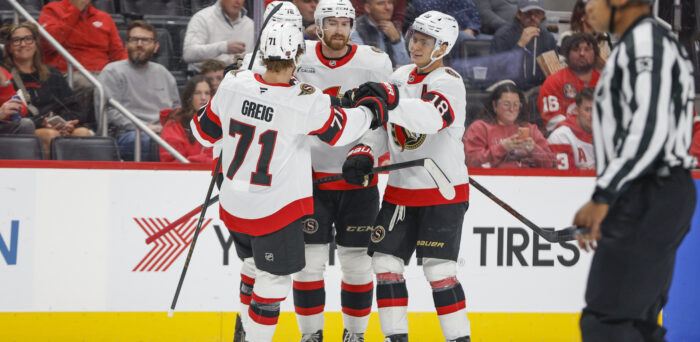
Ridly Greig was particularly effective in the second and third periods, embracing the role of antagonist. He appeared to be involved in every confrontation with Brady Tkachuk, delivering hits and chirping at his former captain while refusing to back down. He also drew a penalty on Sam Bennett, giving Ottawa another opportunity to capitalize.
Greig understood the assignment. He was happy to make life uncomfortable for Brady Tkachuk, but he did not allow the sideshow to become the main event. He remained involved in the game itself, providing the sort of edge that can make a difference in a matchup this emotionally charged.
Cozens also stood his ground physically, and the Senators as a group showed they were not going to be pushed around in their own building.
The contrast with Florida’s top line was striking. The Tkachuks and Bennett appeared far more interested in the extracurricular activity than in generating meaningful offence. Matthew Tkachuk’s decision to snow goaltender Linus Ullmark added to the theatrics, while Brady seemed determined to show the crowd that the boos were not getting to him.
But there is a difference between playing with emotion and allowing emotion to become the focus.
The trio finished with an expected goals percentage of just 29 per cent. For a line expected to drive Florida’s offence, that is a difficult result to defend. Whatever satisfaction the Tkachuks may have taken from the confrontations, Ottawa was getting the better of the actual hockey.
The Senators had found the balance Florida could not: play with an edge, stand up for one another and keep the focus on winning.
Ottawa Refused to Sit Back
The underlying numbers reinforced what was visible on the ice. Ottawa controlled the play, out-chanced Florida and finished with approximately 59 per cent of the expected goals. This was not a game in which the Senators rode a hot start, scored a few timely goals, and spent the rest of the night hanging on.
They were the better team.
Even more impressive was what happened in the third period. Teams protecting a lead in an emotionally charged game can become passive, retreating into a defensive shell and inviting the opposition to attack. Against a team as dangerous and relentless as Florida, that approach can be an invitation to disaster.
Ottawa did not turtle.
The Senators continued to pressure the Panthers, and the Pinto line, in particular, hemmed Florida in its own zone on multiple occasions. Rather than surrendering possession and allowing the Panthers to build momentum, Ottawa continued to dictate where the game was played.

The fact Samuel Ersson faced just one shot after replacing Ullmark in relief offered another indication of how thoroughly the Senators controlled the latter stages of the game. They were not merely hanging on to a lead. They were limiting Florida’s opportunities to get back into the contest.
That distinction matters. Ottawa has had stretches this season when its results looked better than its underlying performance, relying on goaltending to compensate for inconsistent possession and offensive production. Against Florida, the Senators paired their intensity with structure, puck management and sustained offensive pressure.
It was a complete performance against an opponent that specializes in making games uncomfortable.
The One Concern
There was, however, one significant negative to emerge from the night.
Ullmark, who had arguably been Ottawa’s most valuable player through the early part of the season, left the game with an injury in the third period.
His importance to the Senators cannot be overstated. Ullmark entered the game with a .945 save percentage, the league’s best, and had been a major reason Ottawa was winning even when its possession numbers and offensive production were not particularly impressive.
The Senators have shown that they can control a game against one of the league’s most aggressive teams. What they cannot afford is to lose the goaltender who has kept them competitive when those performances have not been there.
The hope is that Ullmark, who was placed on injured reserve Thursday, does not have a serious injury. Ottawa is beginning to demonstrate that it can win games through territorial dominance and offensive execution rather than relying on its goaltender to bail it out. Losing Ullmark for any extended period would be a significant setback, particularly as the team looks to establish consistency in its play.
For one night, though, the Senators had an answer for everything Florida threw at them.
A Great Night for Ottawa
There is a temptation to overstate what one regular-season game means. The Senators have not settled every question about their season, and one emphatic victory does not erase the challenges that lie ahead. But some games carry a weight that extends beyond the standings, and this was one of them.
Brady Tkachuk’s return gave Ottawa’s fans an opportunity to express months of frustration. They took full advantage, making their feelings known throughout the night. The atmosphere was outstanding, and the crowd played its part in making this a game that felt different from an ordinary October matchup.
The players responded in kind.
They matched Florida’s physicality without losing their discipline. They exploited the Panthers’ aggressive approach instead of playing into it. They controlled the chances, maintained their pressure in the third period and delivered one of their most complete performances of the season.

For the Senators and their fans, it was a small measure of vengeance and vindication. After months of dealing with the fallout from their former captain’s departure, Ottawa got one night to turn the page on its own terms.
There was no need for a speech, a social media post, or another round of public back-and-forth. The Senators had a more effective response available to them: play excellent hockey in front of their own fans and make sure their former captain had to watch.
Brady Tkachuk received the reception he deserved. The Senators delivered the performance their fans needed.
For one night, the boos, emotion, and lingering bitterness surrounding his departure all had a purpose. Ottawa channeled that energy into its best game of the season, and when the final horn sounded, the players had given their fans something far more satisfying than a chance to jeer their former captain.
They had given them a win they could savour.
The Senators met the moment. And in a season that has already given Ottawa plenty to think about, that was worth celebrating.
Free Newsletter
Get Ottawa Senators coverage delivered to your inbox
In-depth analysis, breaking news, and insider takes - free.
Subscribe Free →