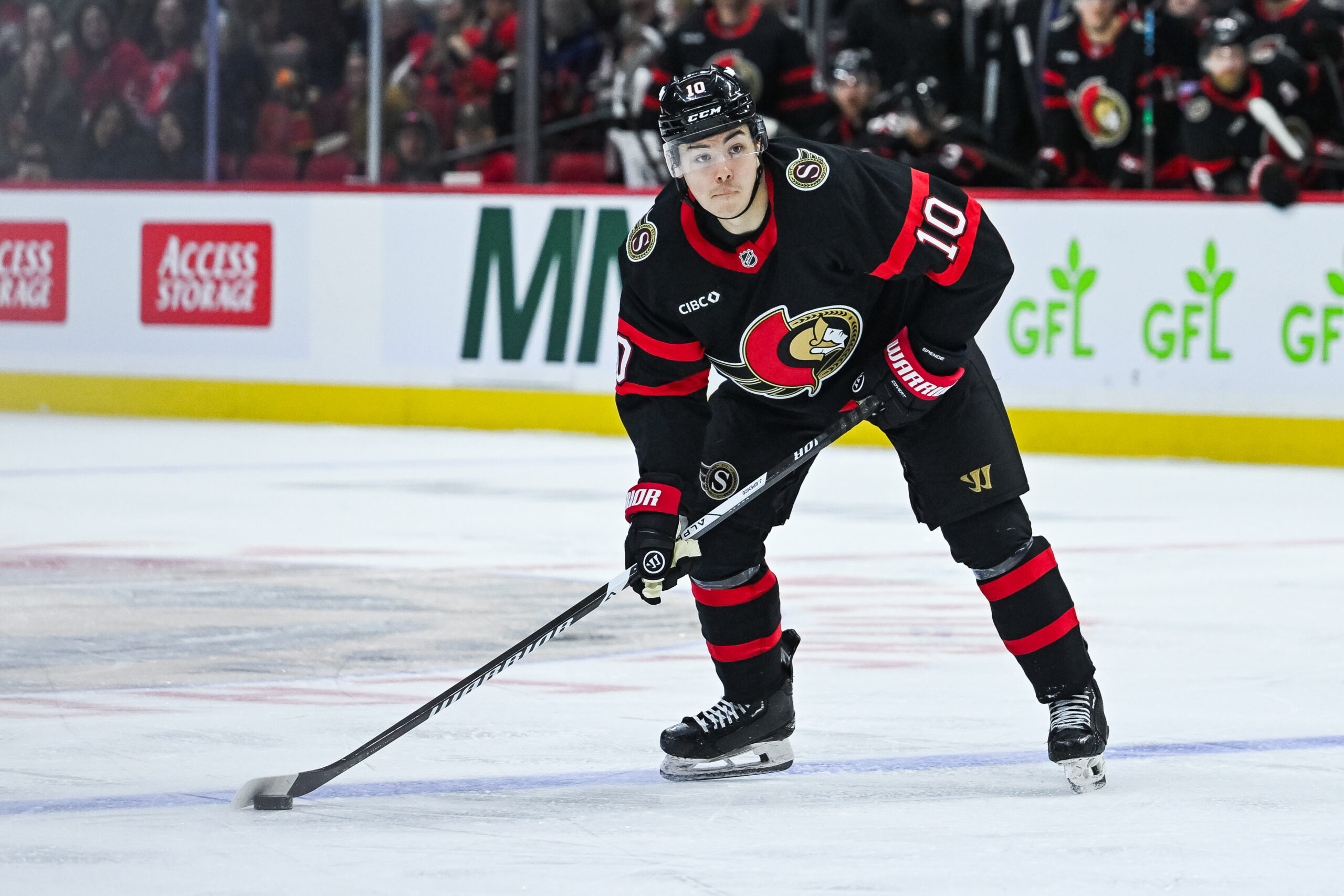
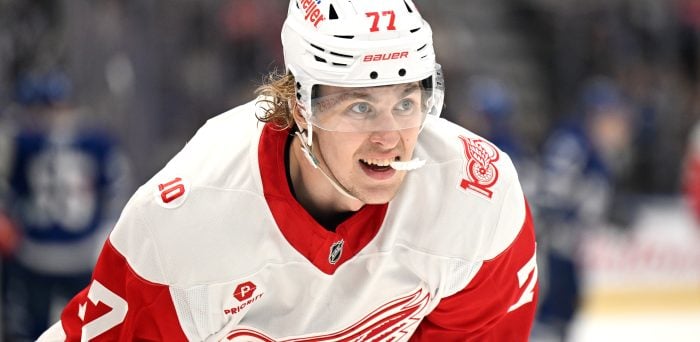
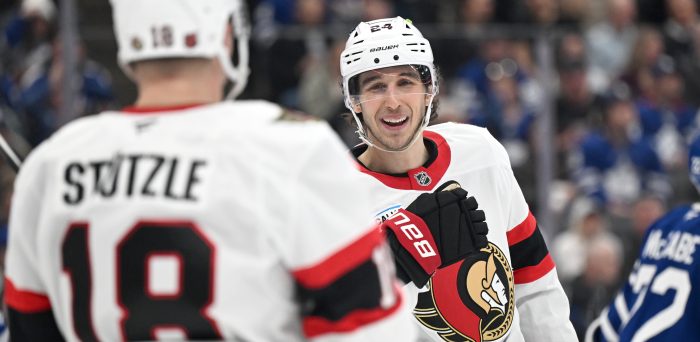
The Ottawa Senators have given up the fourth-fewest even-strength goals among all teams (36), and there are multiple reasons for that. Improved play from Linus Ullmark between the pipes, solid two-way games from all four lines, and head coach Travis Green’s strategies are all factors in their strong five-on-five play.
But the most obvious reason of all for their defensive success is their blue line. A defensive core that has led Ottawa to the fewest goals and shots against per game throughout not just the first 25 games, but for multiple stretches in the past couple of seasons – be it fully healthy or not (from ‘The Senators boast arguably the NHL’s best defence. Can they survive the injuries?’ The Athletic, Oct. 6, 2026).
Tyler Kleven has not only been a prime example of what Ottawa wants out of their defensive defencemen since joining the club, but because of his playing style, he has quietly emerged as one of the league’s best shutdown defenders over the last few seasons. It’s time to acknowledge how much he impacts this team.
Simple and Advanced Evidence
When Kleven was selected 44th overall by the Senators in the 2020 Draft – a time when some teams had to take a wild guess on players who weren’t fully scouted – the expectation was that he would be a hard-nosed defender to play against. Six seasons and 190 games later, that has become the exact case for Ottawa.

After becoming a full-timer on the Sens’ blue line in the 2024-25 season, Kleven led the club’s defenders in both on-ice expected goals against per 60 (2.5) and on-ice shot attempts against per 60 (55.97). Those numbers slightly improved in 2025-26 with a 2.49 OIxGA/60 and 53.51 OISAA/60.
This season’s numbers are slightly higher, but Kleven is taking over in the basic statistics. He might be sixth on the team in hits with 43, but Ottawa’s identity is all about physicality for one thing, and Kleven is on pace for 151 at this rate. He does, however, lead the way in shot blocks with 52 – on track for 182 – and has also allowed 1.87 high-danger shot attempts against per game.
Kleven’s defensive game has always been strong, but has still grown since turning pro. It shows in his total ice time this season, where he’s played the fifth-most minutes on the team at 448:41 – averaging 18:42 a game. Those are a lot of minutes for a third-pairing defenceman, but it shows how reliable Kleven has become over these past few seasons.
Yet only 14.5% of his shifts start in the defensive zone – that’s seventh on the team and 84th in the league out of all defenders. For reference, Artem Zub, highly regarded as Ottawa’s best shutdown defenceman, starts a shift 19.7% of the time in his own end, per MoneyPuck.
Where Kleven really thrives – as lots of defensive defencemen do – is the penalty kill, where he’s played 58:36 through his first 24 games; only Tim Stutzle and Shane Pinto have played more minutes, and they are the club’s best two-way centres right now.
True, the Senators operate at just 75.9% on the kill – despite slightly jumping up from 25th to 19th in the league this month – but that’s more on the system, not the types of defenders Ottawa has for it.
This includes Kleven, who, thanks to his style of defending, leads all Sens’ blueliners in short-handed ice time by a big gap, including over eight minutes ahead of Zub. Why wouldn’t a coach give him those minutes with his 6-foot-5, 225-pound frame to clear the net front or win board battles?
Even with how sturdy defensively he is, he can also chip in offensively. He’s on track for the same 18 points he recorded last season, which only helps Ottawa’s blue line in scoring behind Jake Sanderson and Thomas Chabot – especially if Carter Yakemchuk continues to grow.
Who He Plays With Is Important
Though Kleven is capable of being a defensive difference maker, it takes two to make a sturdy pair. He can’t be the only defender carrying the load, and this is part of the reason why Green will sometimes swap Yakemchuk and Nikolas Matinpalo with Kleven on the third pair.
In theory, putting Kleven and Yakemchuk together makes sense in terms of splitting roles – one handles defence while the other creates offence. While this concept worked last season when Jordan Spence was with Kleven, Yakemchuk is still growing and learning to defend in his own zone at the NHL level.
Kleven-Yakemchuk hasn’t been the worst pair by any means, as they have averaged four goals for and against in roughly 84 minutes together. But that doesn’t compare to the 33 goals for and 18 against that Kleven-Spence provided for parts of last season before that pair was separated going into the playoffs.
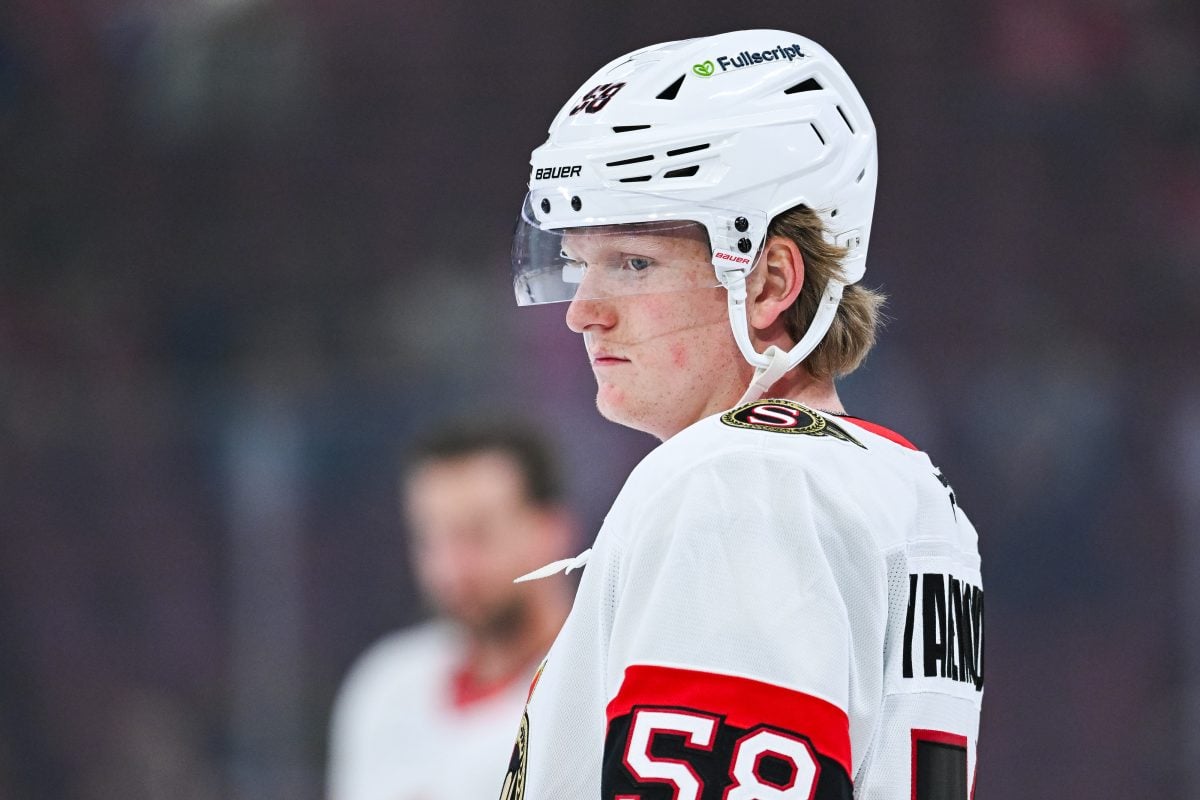
Mattinpalo, who is in his third full season with the Sens as well, has skated over 147 minutes with Kleven. That pairing has conceded 2.03 goals against per 60 minutes, but if you factor in expected goals against per 60, they’re on track to give up just 1.71 together, which would be second amongst all the team’s current defensive pairs and forward lines.
Because of his limited giveaway numbers and overall similar style to Kleven, Mattinpalo has a slight edge in games played at 20 while Yakemchuk is at 15 on the third pair. What’s also important to consider is that analytics are suggesting the Kleven-Yakemchuk pair will finish last on the team in xGA/60 at 2.77.
While Kleven-Mattinpalo is the best defensive option for Ottawa, coach Green continuing to swap Yakemchuk will work out best for both his development and familiarizing chemistry between the three defenders. It’s just about picking and choosing which games best suit the different pairs, depending on either the opponents or what strengths better suit the Senators.
One thing is for sure: Kleven has not only proven to be one of the Sens’ most reliable players but also helps them be a contending team. With his numbers, he should now be competing with – maybe not the Jaccob Slavin types yet – but definitely the Dylan Sambergs and Jonas Siegenthalers of the league for the best ‘shutdown guy’ role.
Free Newsletter
Get Ottawa Senators coverage delivered to your inbox
In-depth analysis, breaking news, and insider takes - free.
Subscribe Free →