While the 2026-27 season may still seem relatively fresh, the St. Louis Blues have already played a quarter of their games. In fact, their game Thursday against the Pittsburgh Penguins puts them one game over the quarter mark.
The Blues entered Thursday with a 10-9-2 record and 22 points. They are within striking distance of a playoff spot in the Western Conference. There have been highs and lows through the first quarter. Let’s hand out some distinctions for the Blues.
Team MVP: Jimmy Snuggerud
Jimmy Snuggerud has emerged as the Blues’ MVP through the first quarter of the season. He leads the team with 10 goals and 15 points heading into Thursday’s game. A strong 21.7% shooting percentage has anchored his offensive production. His goals have come from power-play one-timers and a willingness to go to the net.

Beyond scoring, Snuggerud has solidified his role by logging 17:46 of ice time per night, maintaining a plus-3 rating, and a 51.9% Corsi-for percentage. He has emerged as a leader on the Blues and an elite scorer, being on pace for 40 goals, something a Blue has not done since Vladimir Tarasenko reached the mark in 2016-17.
Best Forward: Mason McTavish
I could repeat what I said about Snuggerud, but I want to give the new Blue some praise. Mason McTavish has quickly justified the Blues’ draft-day trade, emerging as one of the team’s most valuable centers. After the Blues spent two first-round picks to acquire him, McTavish made an immediate impact, scoring just 94 seconds into the team’s season opener. He piled up 10 points in just October. Through 22 games, McTavish has seven goals and 12 points while posting a decent 13.2% shooting percentage. Furthermore, his scoring has come when the team has needed it most. Of his seven goals, three have been game winners.
Beyond his scoring touch, McTavish’s value as a top forward comes from his ability to anchor the second line and control the middle of the ice. He has strong chemistry with his linemates (old and new) and creates chances for them using his large frame to create space. He has also been the team’s best option in the faceoff dot, winning 54.4% of his draws.
Best Defenseman: Philip Broberg
Philip Broberg has firmly established himself as the Blues’ top defenseman. He has more than lived up to the contract extension he signed last season. Through the team’s first 21 games, the 25-year-old blueliner has already tallied five goals and nine assists for 14 points—putting him on a 55-point pace that would shatter his career-high of 34 points. Broberg has become the quarterback of the Blues’ power play, racking up six power-play points and using his elite skating to carry the puck cleanly across the offensive blue line. His scoring has also been remarkably clutch, highlighted by two game-winning goals.
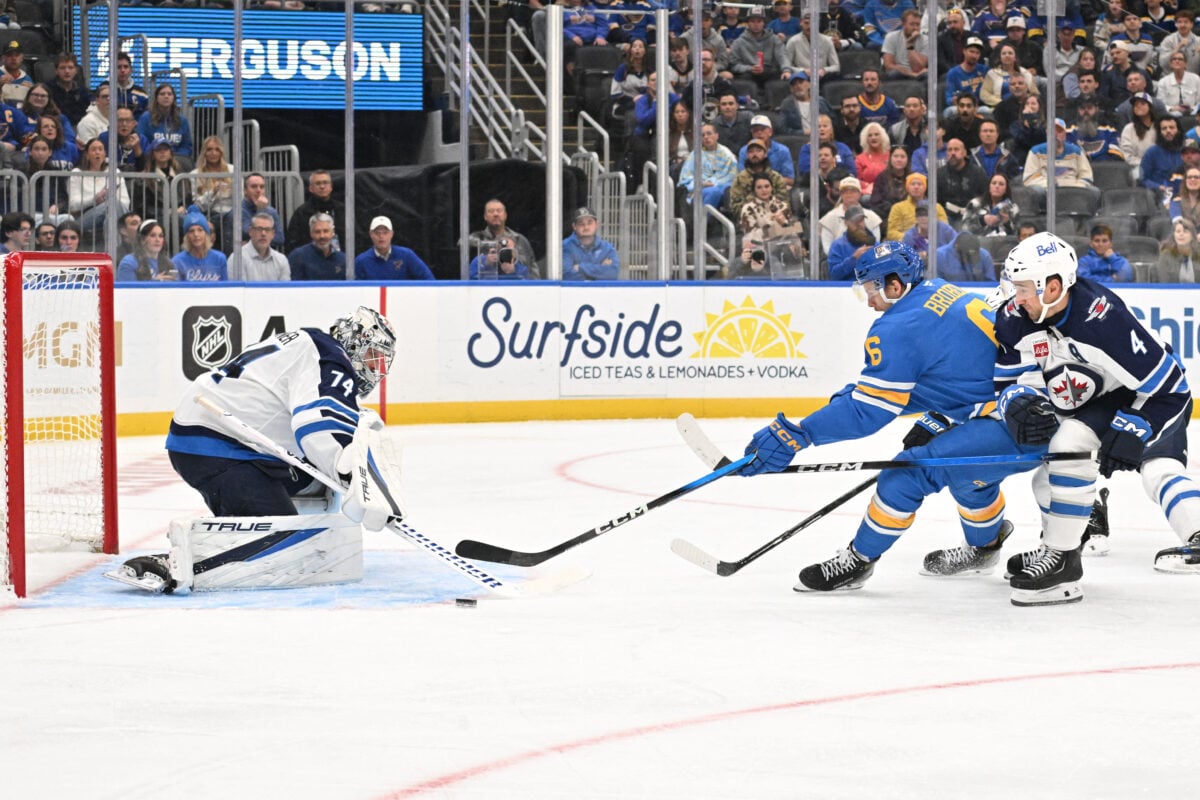
Beyond his dynamic point production, Broberg’s role is defined by his massive workload and steady two-way presence in all situations. He leads the Blues’ defense by averaging a career-high 24:35 of ice time per game, regularly logging close to 30 minutes against top competition while maintaining a plus-2 rating. Using his large frame and smooth transition speed, Broberg excels at retrieving pucks under forechecking pressure, killing penalties, and turning defensive stops into immediate rush chances for the forwards.
Blues’ Vezina Winner: Joel Hofer
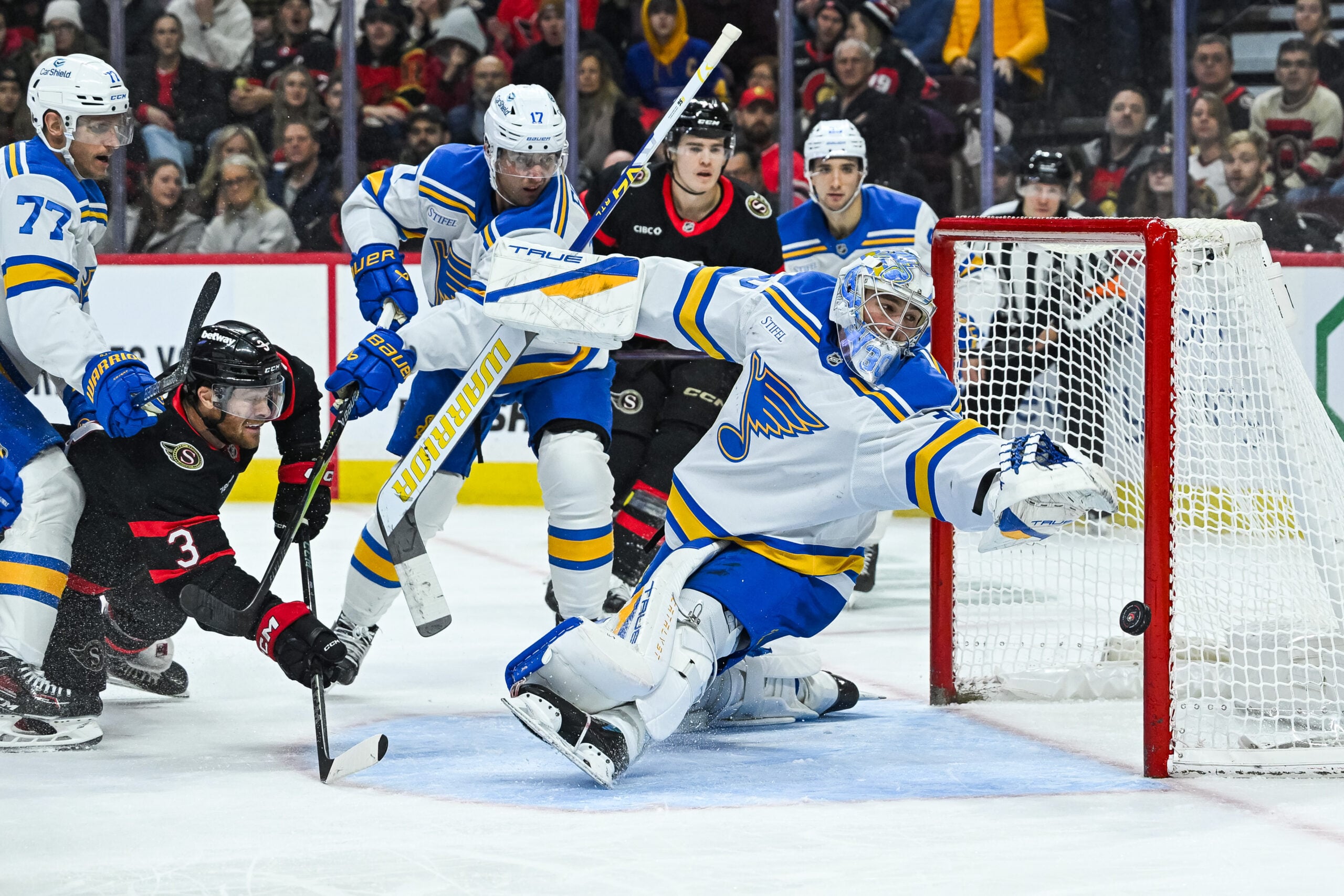
This is not a hard case to argue for. Joel Hofer entered the season as the Blues’ starting goaltender and has done enough to keep the job. He’s not only been the best goalie on the team, but also one of the best in the league. Starting 15 of the club’s first 21 games, the 26-year-old has posted an 8–6–1 record backed by a stellar 2.28 goals-against average (GAA) and a .921 save percentage (SV%), along with two shutouts. Hofer’s dominance has been especially impressive given his heavy workload, as he has turned away 398 of the 432 shots he has faced while frequently bailing out an inconsistent Blues offense.
Hofer’s value lies in his composure, athleticism, and puck-handling ability under pressure. Standing 6-foot-5, he has consistently stolen the show for the Blues, highlighted by a 25-save shutout on opening night in Dallas and a 29-save 1–0 shootout shutout over the Utah Mammoth on Nov. 12. Furthermore, Hofer’s aggressive puck-playing skills help create better chances off the breakout.
Biggest Surprise: Justin Barron
Justin Barron has been the Blues’ biggest surprise through the first quarter, transforming from a late-preseason waiver claim into a dynamic top-four contributor. Claimed off waivers from the Nashville Predators to serve as a depth option after Logan Mailloux suffered a broken hand, the 25-year-old defenseman has already surpassed his entire 2025–26 point total (nine points in 52 games) by tallying three goals and nine assists for 12 points in his first 18 appearances with St. Louis. His breakout began with a career-best four-point explosion in a win against the Vegas Golden Knights on Oct. 22, and his offensive timing has consistently swung games in the Blues’ favor.

Beyond his unexpected scoring surge, Barron has stunned the organization with his two-way reliability and ability to elevate the Blues’ defensive pairings. Averaging 16:47 of ice time per game with a plus-3 rating, Barron leads all St. Louis blueliners in five-on-five expected goal share at 56.17%.
Biggest Disappointment: Jordan Binnington
Jordan Binnington has been the Blues’ biggest disappointment. He is failing to bounce back from a rough 2025–26 campaign and losing his starting job to Hofer. Across his five appearances, the 33-year-old veteran has posted a 2–3–1 record with a rough 4.56 GAA and an .843 SV%. Rather than providing the steady veteran presence the Blues hoped for in the final year of his contract, Binnington has given up five or more goals in four of his six starts, including six in Tuesday’s crazy 8-6 win.

The contrast between Binnington’s struggles and Hofer’s elite play has turned the former Stanley Cup hero into a dilemma for general manager Alexander Steen. As the Blues continue their rebuild, they may be open to moving Binnington at the trade deadline. However, his play is doing nothing to increase his value. As things stand, Binnington is an expensive backup who cannot be trusted with routine starts.
Final Thoughts
Ultimately, the first quarter of the 2026–27 season has painted a clear picture of a Blues franchise in the midst of a promising, if uneven, transition. While Binnington’s steep decline underscores the fading of the old guard, the rapid emergence of young core pieces like Snuggerud, McTavish, Broberg, and Hofer—alongside unexpected gems like Barron—proves that the next wave of talent in St. Louis is already arriving ahead of schedule. If the Blues can find more consistency around their young stars and get steady goaltending behind Hofer, what began as a transitional campaign could quickly turn into a legitimate push for the Stanley Cup Playoffs.
Free Newsletter
Get St Louis Blues coverage delivered to your inbox
In-depth analysis, breaking news, and insider takes - free.
Subscribe Free →