You can feel a distinct shift in the atmosphere. The baseline expectation for the Montreal Canadiens is no longer about simply showing up, playing with high energy, and feeling good about a moral victory in November. The blueprint laid out by general manager (GM) Kent Hughes has crossed a critical threshold. The top-end of the lineup is nearly completely locked in, the offensive dynamic is clear, and the conversation surrounding this team as opening night approaches has evolved from when they will contend to how they will sustain it.
While the headline-grabbing flair of Lane Hutson’s edge-work or Ivan Demidov’s high-octane skill garners the highlight reels, the real key to elevating a playoff contender into a legitimate Stanley Cup contender lies in the backbone of the roster. It requires building a blue line that can suffocatingly close space and a bottom six that makes opponents dread taking the ice for a 40-second shift.
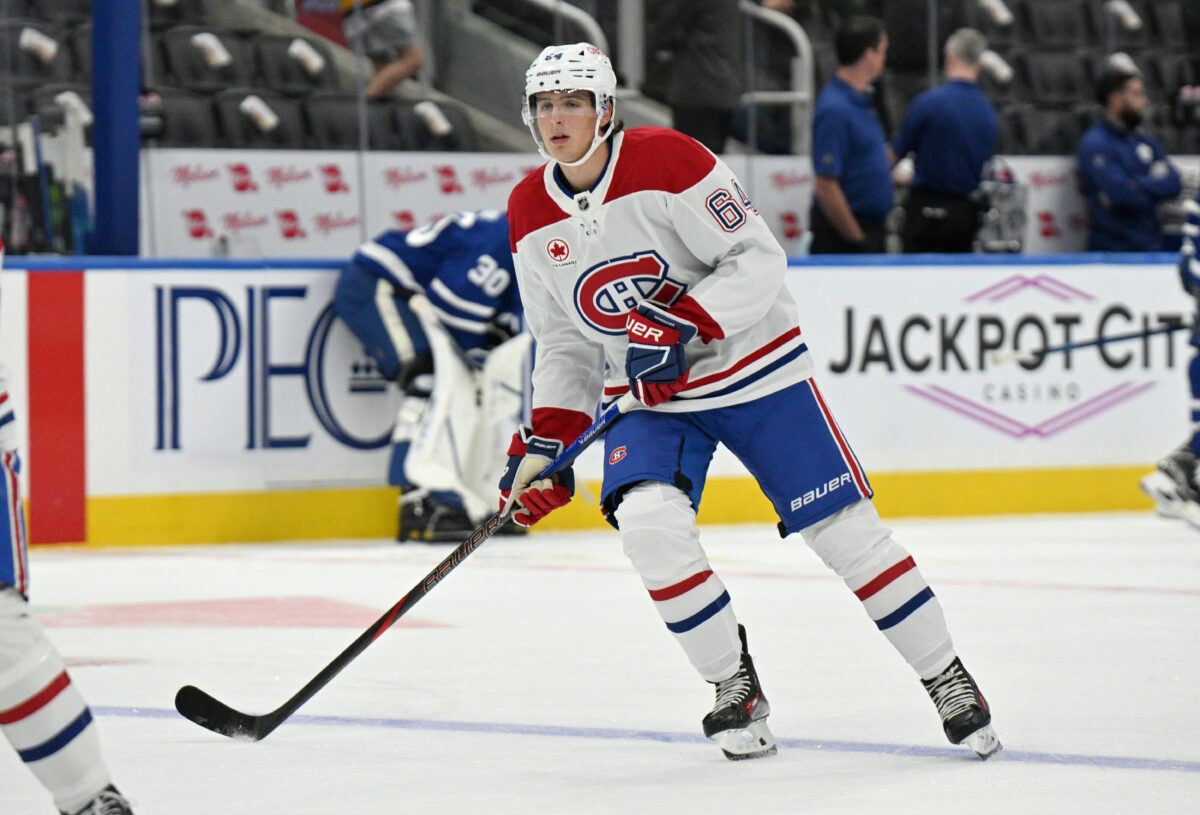
That is why the integration of David Reinbacher on defense and Florian Xhekaj’s persistent push for an NHL roster spot represent a fundamental evolution in how this team operates. It isn’t just about accumulating talent anymore, it’s about a complete overhaul of the team’s internal identity.
Canadiens’ Blueline Balancing Act
Start on the back end, where Reinbacher’s emergence on the opening roster changes the entire structural dynamic of head coach Martin St. Louis’ defence-corps. When the Canadiens selected him fifth overall, the immediate noise focused on what he wasn’t, as in, he wasn’t a flashy offensive engine like some of the skill forwards left on the board, because at the time, the Canadiens’ system did need those types of players as well.
But a deep-dive scouting analysis on Reinbacher’s evolution, showed he possesses a refined, pro-ready toolkit tailored for high-stakes hockey. Now, after a few injury riddled seasons of development, Reinbacher plays a physical, highly mobile style that mirrors Kaiden Guhle on the left side.
Now with Guhle out, he is the likeliest candidate to take a full-time role. Over the last few seasons, when healthy, Guhle established himself as the benchmark for Montreal’s defensive identity because he closes gaps with violent efficiency, uses a long stick to break up transitions, and plays with an edge that lets opposing forwards know the front of the net is high-rent district.
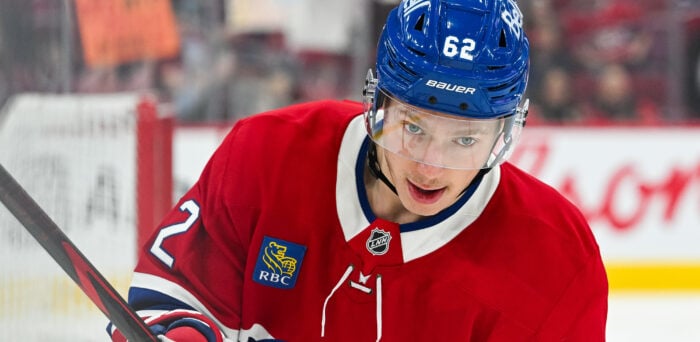
Reinbacher gives Montreal that blueprint on the right-hand side. Standing 6-foot-3 and now over 200-pounds, with fluid, high-end mobility, he doesn’t just defend space; he denies it. His skating stride can allow him to match most top-line’s speed step-for-step, pin opponents along the boards, and transition the puck out of trouble with a clean first pass. With a strong showing at training camp this September, the young Austrian has increased his odds of cracking the lineup immensely.
Having both Guhle and Reinbacher capable of playing top-four minutes would alter the team’s identity on the back end. Suddenly, Montreal goes from a blue line that had to rely heavily on dynamic, high-risk offensive playmakers to survive into a defensive corps that can also physically wear down heavy Atlantic Division forechecks over an 84-game schedule.
Fourth Line Identity Crisis
Up front, the shift in identity is even more pronounced when you examine how Florian Xhekaj is forcing his way into the bottom six. It’s easy to look at the name on the back of the sweater and assume Florian is simply an echo of his older brother, Arber. But doing so sells the younger Xhekaj short on what he brings as a forward.
As highlighted by Eric Engels in Sportsnet’s profile on Xhekaj’s relentless drive and resolve, he is a 6-foot-4 menace who plays with a fearlessness and unpredictability that makes him an intimidating opponent.
For years during this roster rebuild, Montreal’s fourth line often defaulted to a holding area, players floating through low-event minutes just trying not to get scored on. Xhekaj can fundamentally reshape that concept. He gives the fourth line a mean, aggressive, physical identity built on sustained pressure, mean-spirited forechecking, and a willingness to finish every hit along the boards.
Place Xhekaj on a fourth line alongside a detail-oriented player like Phillip Danault, or sometime in the future, a speedy young centre with an ability to also play on the wing in Owen Beck, and the entire temperature of a game changes. Xhekaj isn’t just a physical presence; he possesses subtle hands around the crease and the foot speed to keep pace with the modern game’s tempo. When a fourth line can pin opponents in their own zone, lay heavy checks, and generate secondary scoring, it shifts the competitive standard for the entire bench. It also eases the burden on the top six, giving the coaching staff another line, one they can trust as their top lines get a chance to rest and not over burden them with excessive amounts of ice time.
This is where the overarching identity of the Canadiens takes shape.
A few years ago, Montreal was a young, fast team that was easy to push around when the games got heavy. By integrating players like Reinbacher and Xhekaj, Hughes and St. Louis are building a roster that matches skill with snarl. It frees up Nick Suzuki, Cole Caufield, and Juraj Slafkovsky to drive the offense, knowing there is physical accountability and reliable defensive structure operating behind them.
The core skill will sell the jerseys and highlight the power play. But if the Canadiens are going to transform from an entertaining young group into a genuine Stanley Cup contender, it will be because players like Reinbacher and Xhekaj carved out their space and play their roles while helping to give this roster a stronger backbone.
AI tools were used to support the creation or distribution of this content, however, it has been carefully edited and fact-checked by a member of The Hockey Writers editorial team. For more information on our use of AI, please visit our Editorial Standards page.
Free Newsletter
Get Montreal Canadiens coverage delivered to your inbox
In-depth analysis, breaking news, and insider takes - free.
Subscribe Free →