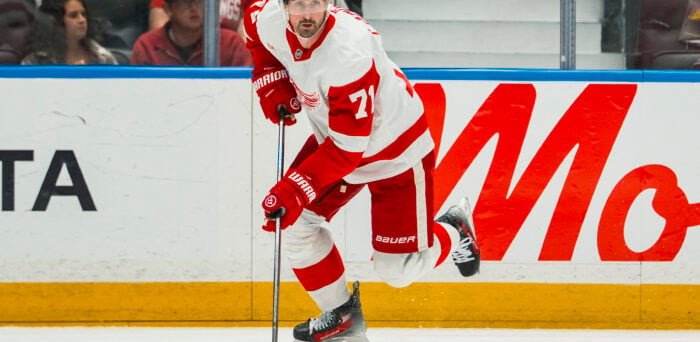
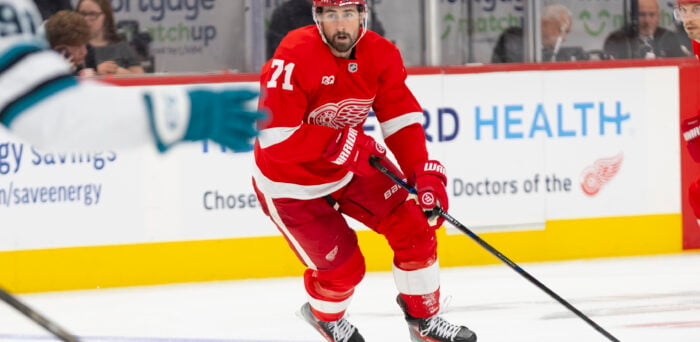
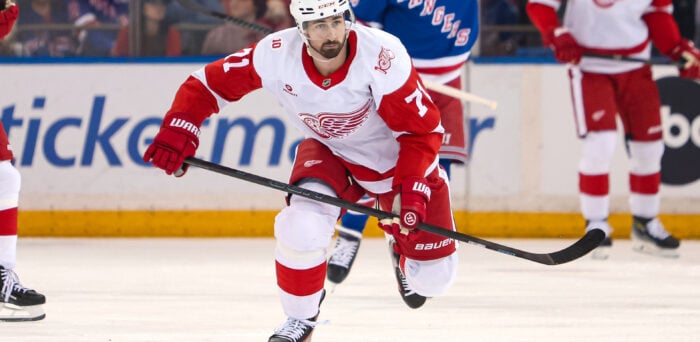
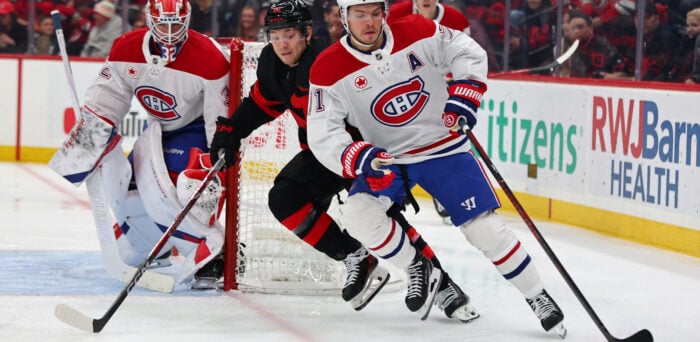
It’s poetic that the Montreal Canadiens’ first game since acquiring Dylan Larkin is against the Los Angeles Kings, a team that in the recent past had been near-universally seen as having the best prospect pipeline in hockey. However, around the point at which the Habs began stockpiling their own prospects and developing a top-ranked farm system themselves, things started to take a turn for the worse for the Kings.
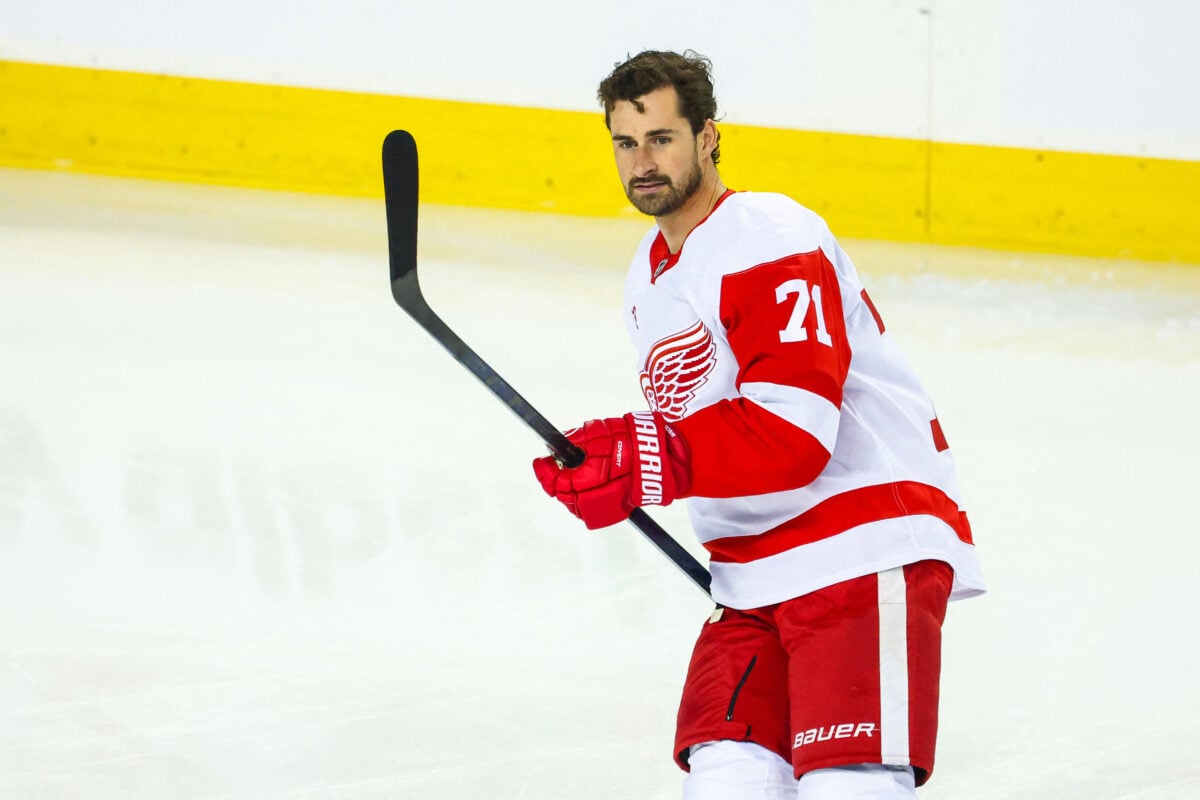
There were understandable moves that just didn’t ideally pan out, like acquiring Kevin Fiala for then-prospect Brock Faber (and a first-round pick), and there were glaring mistakes that appeared as such in the moment, like acquiring Pierre-Luc Dubois for Gabriel Vilardi, Rasmus Kupari, Alex Iaffalo and a second-round pick. Regardless of how Dubois has resurrected his career upon having been traded to the Washington Capitals, at the time he was still an overrated player who had requested a trade out of Winnipeg, which, however you choose to frame it, was a flag. Larkin should be no exception to that level of common sense.
Larkin vs. Drouin
It’s very similar to how Jonathan Drouin had refused to report to the American Hockey League once upon a time before then-Tampa Bay Lightning general manager (and coincidentally Detroit Red Wings GM when Larkin initially made his trade request) Steve Yzerman traded him to the Canadiens for defensive-prospect Mikhail Sergachev. It’s a case of Canadiens management looking past what would under normal circumstances have been a disqualifying black mark against a player’s character, who just so happened to eventually be used at centre.
To be fair, that’s where comparisons between Drouin and Larkin should end. Whereas Drouin was still largely an unknown (who would never truly live up to his potential), Larkin is an established veteran, out of whom the Canadiens have a good idea what they’re going to get: the No. 2 centre they need, in effect a borderline No. 1, who should seamlessly slot in under Nick Suzuki. The reason this is as much of a gamble as it is, is because Larkin is 30 years old. He’s hardly a spring chicken, meaning, while it’s a near certainty he works out in some capacity, for how long he does should be a matter of concern, when Michael Hage, the Canadiens’ ex-top prospect and arguably the top player in U.S. collegiate hockey currently who is going the other way to the Red Wings in this blockbuster trade, is only 20 (and would have seemingly filled the same hole that Larkin will, probably as soon as by the end of this season, according to reports).
That will be the sticking point for many regarding whether this trade is justifiable… along with whether or not the Canadiens end up winning the Stanley Cup in the next few years, which in effect corresponds to their championship window, taking into account Larkin’s contract, which pays him an average of $8.7 million up until 2031. One shouldn’t necessarily expect him, despite being relatively consistent in terms of production from year to year, to remain as effective as he has been in the recent past. However, he is a legitimate talent who should fortify the team at centre for the next three years at least. The questions shouldn’t surround his skill level, but his compete level instead, taking into account how, as Wings captain, he was unable to lead the team to so much as a playoff spot in six seasons (in addition to his trade request and decision to sit out). There should also be a question of whether general manager Kent Hughes should have given as much as he did, including 2027 and 2029 first-round picks.
Canadiens Come Across as Desperate
Taking everything into account, the Wings shouldn’t have held all that much leverage and, while there had been calls for the Canadiens to make a move in light of recent injuries, at 14-6-4 neither the Habs nor Hughes should have been as desperate as the trade’s terms make them appear. So, yes, they significantly overpaid for Larkin. They also arguably overpaid for Phillip Danault when they reacquired him from the Kings last December, trading away a 2026 second-round pick for a then-32-year-old bottom-six centre then mired in a significant scoring slump.
While the Danault trade has worked out for all intents and purposes and the Larkin one on its own certainly won’t break the Canadiens, they find themselves at risk of continuing down a path where they go all in, at the risk of the health of their farm system… and, if they’re not careful in acquiring the right players, at the risk of the health of their overall organization too.
Hughes made a point of addressing the elephant in the room at the media availability with Larkin on Monday morning, saying they still do place a premium on character and Larkin meets that requirement despite appearances to the contrary.
“Our due diligence did more than convince us of the character coming into our room. We have zero concerns,” he said. Fair enough, but the Kings didn’t acquire Dubois in acknowledgement he could be a bad fit. They objectively remain a case study of what not to do, just with the benefit of a few championships this century that make their current struggles easier to look past. The Canadiens may not have the same luxury, but you’d think they would at least have had the benefit of hindsight.
This can still work out for the Canadiens. Larkin can be the centre they’ve needed coincidentally since Danault (and Jesperi Kotkaniemi) left for greener pastures in 2021. The problem is Hage could have been as well, giving it all a sense of lacking rhyme or reason.
It’s going to take time to sort out how well Hughes did here or didn’t, namely regarding whether Larkin is indeed the fit the Canadiens are gambling on him being. Waxing poetic over the hypothesis Hughes was justified to have pulled the trigger is a stretch, especially so soon. Give it a few games at least. Beating the Kings doesn’t mean what it used to.
Free Newsletter
Get Montreal Canadiens coverage delivered to your inbox
In-depth analysis, breaking news, and insider takes - free.
Subscribe Free →