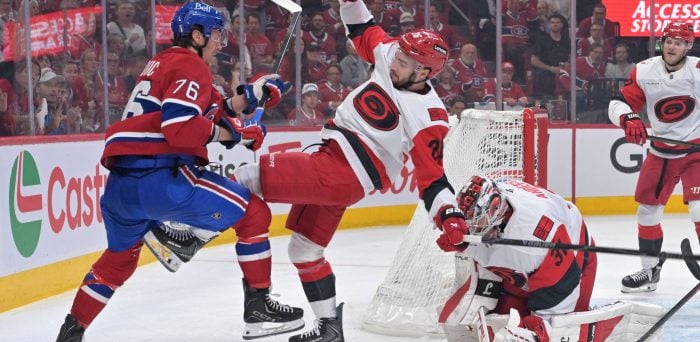
One minute and 52 seconds. That’s all Arber Xhekaj played in Game 7 against the Buffalo Sabres. No impact on the scoresheet, barely a blip on the ice time report. And yet, the Canadiens won, advanced to the Eastern Conference Final, and Xhekaj, dressed and ready on the bench for all 65 minutes, was part of that.
That’s not a contradiction. That’s actually the whole point.
The Numbers Don’t Capture What He Does
During the first round against the Tampa Bay Lightning, Xhekaj played inspired hockey in a limited role, never logging more than 11 minutes in any game, yet finished Game 3 with eight hits, an assist, two shots, and a plus-2 rating in just 14 shifts. The ice time was small. The impact wasn’t.
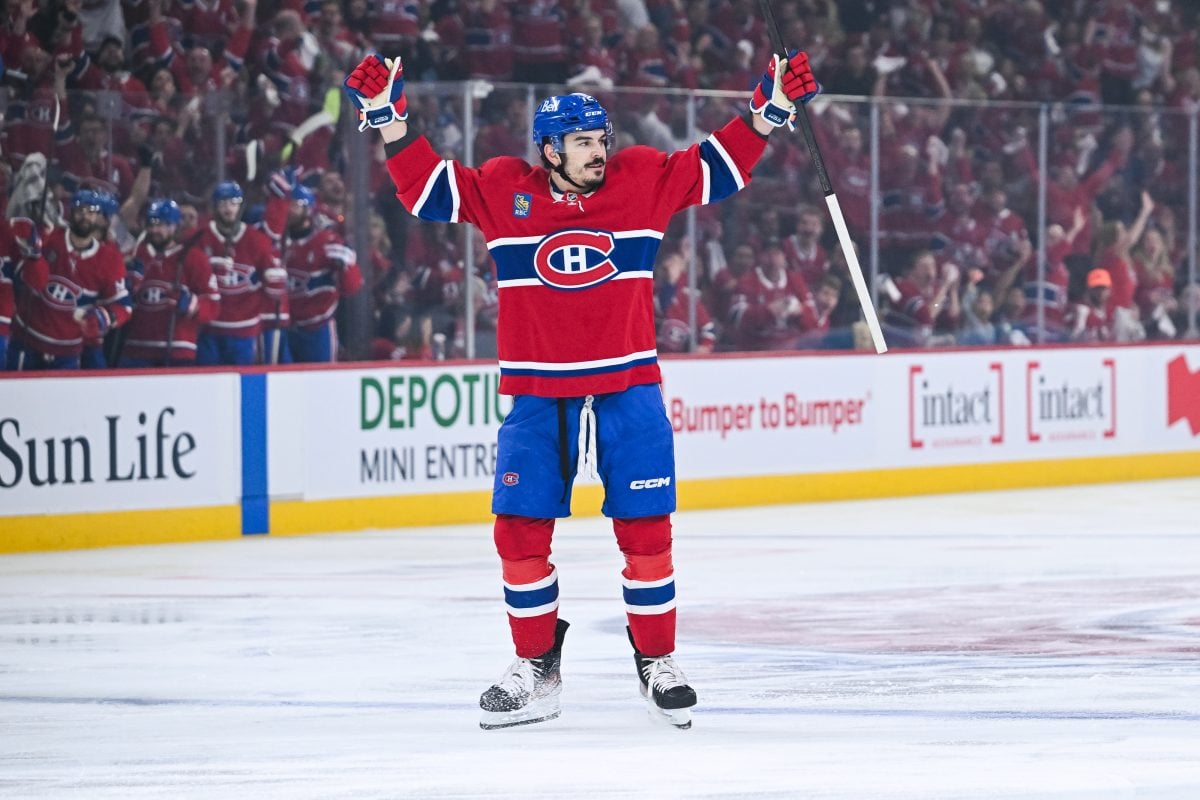
Through 12 playoff games this postseason, he has accumulated 44 hits, six blocked shots, 28 penalty minutes, and a plus-4 rating. For a player who sometimes goes entire periods without touching the ice, those numbers tell you his shifts are not wasted.
But the stat that might matter most is one that doesn’t appear in any box score. At one point during the first round, Xhekaj led the entire NHL Playoffs in puck possession percentage at 72.22 percent. When he’s on the ice, he’s not just surviving, he’s winning.
He Makes Everyone Else Bigger
The most honest description of what Xhekaj brings to this team didn’t come from analytics. It came from Sportsnet analyst and former NHL defenceman Kevin Bieksa, who put it simply after Game 3 of the Capitals series last spring: “Everyone gets 20 pounds heavier and grows three inches bigger with Xhekaj in the lineup. They all feel like they can take shots at Wilson, because at the end of the day, Anderson or Xhekaj is gonna be the one that answers the bell.”
His own teammates have said the same thing. Jayden Struble, Xhekaj’s defensive partner during the first round, called him “a menace out there” and said the two of them had become a strong shutdown pairing with some offensive upside.
Xhekaj himself described his role with characteristic bluntness: “I just try and make everyone grow a few inches out there on our team.” That’s not a boast. It’s an accurate description of how intimidation works in playoff hockey. When opponents know there’s a 6-foot-4, 240-pound enforcer on the bench who will be sent out the moment things get too comfortable, they play differently. They think twice before taking a run at a smaller teammate. They keep their heads up a little more. That’s real value, even when it’s invisible on a time-on-ice report.
St. Louis Knows the Card He’s Holding
Head coach Martin St. Louis has never been fully comfortable handing Xhekaj a big role, and there are legitimate reasons for that. The discipline concerns are real. In Game 2 against the Sabres, Xhekaj took a needless slashing penalty on Jordan Greenway with the score 3-0, exactly the kind of lapse that has made St. Louis reluctant to lean on him in high-stakes moments.
But St. Louis has also been remarkably candid about the strategic value of simply having Xhekaj available. After Game 1 of last year’s first-round series against Washington, when Xhekaj watched from the press box as the Capitals ran Montreal’s players at will, St. Louis told reporters: “I have Xhekaj. It’s a card. I might play him, I don’t know yet, but it’s good to have.”
That’s the real framework here. Xhekaj isn’t a top-four defenceman. He was never going to be. But as The Hockey Writers‘ Ryan Szporer noted earlier in this series, physicality has repeatedly proven to be a playoff ingredient that Montreal can’t manufacture on demand except when Xhekaj is in the building.
As one of the most physical and intimidating players in the organization, he has the rare ability to influence a game without ever touching the scoresheet. His heavy hits, willingness to drop the gloves, and fearless presence in front of the net give the Canadiens an edge that can tilt the ice in playoff hockey.
What This Means Against Carolina
The Eastern Conference Final against the Carolina Hurricanes will test everything Montreal has built. Carolina is big, disciplined, and suffocating on the forecheck. They don’t back down from anyone. The Canadiens will need players who match that energy.
That doesn’t necessarily mean Xhekaj plays 20 minutes a night. It means having him ready, truly ready, not just dressed as a formality, gives St. Louis a lever to pull when the series gets physical. And against Carolina, it will.
Xhekaj himself said it best during the Tampa series: “Near the end of the year, I started to get my confidence back. I started feeling good with the puck, making plays, making hits, making reads. I feel like nothing else really matters right now. It’s just your next shift.”
That mentality, show up, be ready, make your shifts count, is exactly what a seventh defenceman needs to have. And it’s what makes Xhekaj genuinely useful even when he’s logging 1:52 in Game 7.
The Sheriff Still Has a Role to Play
Xhekaj is not a cornerstone of this Canadiens team. He doesn’t need to be. What he is, a physical, fearless, psychologically influential presence who makes his teammates feel protected – and his opponents feel uncomfortable – is something you can’t find on the waiver wire or manufacture in a practice drill.
One minute and 52 seconds in Game 7. The Canadiens won. Xhekaj was there. Sometimes, that’s the job.
Free Newsletter
Get Montreal Canadiens coverage delivered to your inbox
In-depth analysis, breaking news, and insider takes - free.
Subscribe Free →