When Mitch Marner’s agent Darren Ferris went on the PuckPedia podcast and said Marner “was never protected by his organization,” I found myself thinking about that phrase. I’m not sure I completely disagree. I’m also not sure I completely agree. And that probably tells you where I stand on the whole Mitch Marner situation.
I have always had mixed feelings about Marner’s time with the Toronto Maple Leafs. There were nights when he was one of the most entertaining players in hockey. The skill, creativity, and ability to make something happen with the puck were obvious.
But there were also moments when the expectations became overwhelming, and eventually Marner became attached to every playoff disappointment Toronto experienced.
Ferris’ comments bring up an interesting question. What does it actually mean to protect a star player?
What I Get About Marner’s Story
I understand the argument that the Maple Leafs could have done more to support Marner. Toronto is one of the toughest places in hockey to play. That is not new information. The pressure is enormous, and every mistake gets magnified.
Marner wasn’t just another player. He was a hometown kid who grew up wanting to wear the Maple Leafs jersey. That created a special connection with fans, but it also created expectations that most players never have to carry.

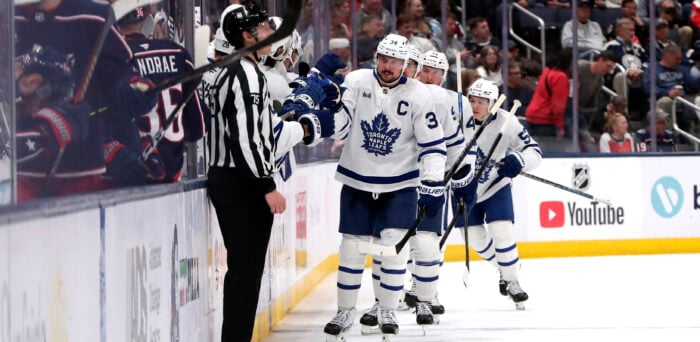
(Mandatory Credit: John E. Sokolowski-Imagn Images)
When the playoffs did not go well, Marner often became the symbol of a much bigger problem. And that is where Ferris has a point. Organizations need to protect their best players. They need to make sure one player does not become the explanation for every team failure.
The Maple Leafs did not lose a playoff series because of Mitch Marner alone. Hockey does not work that way. Auston Matthews, William Nylander, coaches, management, goaltending, injuries, everything plays a role. Maybe Toronto could have done more to remind people of that.
What I Don’t Get About Marner’s Story
This is where I shake my head a little. Ferris mentioned that Marner was not protected because the Maple Leafs did not include performance bonuses in his entry-level contract. I understand why that would bother an agent. Agents want their clients recognized, and they want every possible dollar available. That is their job. He also said that Marner went against his advice to sign the contract under pressure.
But I’m not convinced that this was really the issue. Performance bonuses are complicated because of the salary cap. Teams make those decisions for a variety of reasons. It does not necessarily mean a player is not valued.
And the Maple Leafs did eventually pay Marner like a star player. They gave him a massive contract. With Matthews, they made him one of the two faces of the franchise. They trusted him with important minutes and big responsibilities. So I’m not sure the argument that he was never valued completely holds up.

The other part I struggle with is that protection cannot mean avoiding criticism. Great players in great markets are judged differently. Connor McDavid has faced criticism. Nathan MacKinnon has faced criticism. Auston Matthews has faced criticism.
That is part of being a superstar. Protection does not mean exemption.
The Truth Is Probably Somewhere Between
The easiest thing to do is choose a side. Either the Maple Leafs failed Mitch Marner, or Mitch Marner failed the Maple Leafs. I don’t think either one tells the complete story.
Maybe Toronto should have done more to protect him from the noise. Maybe Marner needed to create more defining moments when the pressure was highest. Both things can be true.
That is what makes this story interesting. Marner was not a bad Maple Leafs player. He was a talented player who produced, created memorable moments, and helped make the team better. He’s already among the franchise leaders in several all-time categories.
But he also played in a market where regular-season success is not enough. The playoffs decide how players are remembered.
The Bottom Line for Marner, Ferris, and the Maple Leafs
Ferris’ comments are worth discussing because they raise a bigger question about how NHL teams handle their stars. The Maple Leafs may not have protected Marner perfectly. But the responsibility was never completely theirs either.
Marner’s Toronto story was about talent, expectations, pressure, and the challenge of becoming a champion in the world’s most demanding hockey market. The truth is probably not found in blaming one side. It is found somewhere in the middle.
Free Newsletter
Get Toronto Maple Leafs coverage delivered to your inbox
In-depth analysis, breaking news, and insider takes - free.
Subscribe Free →