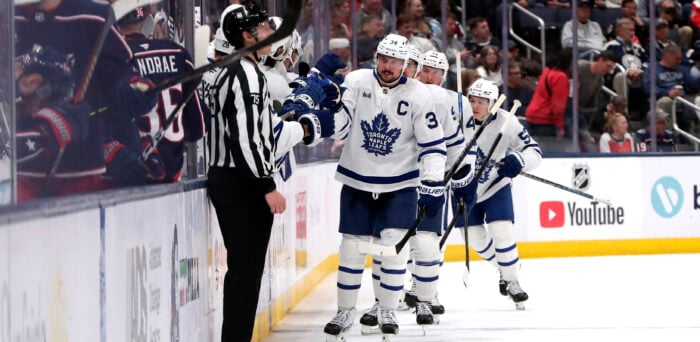
There’s a pretty good argument that the biggest change to the Toronto Maple Leafs this summer didn’t happen on the ice. The roster looks different. Sergei Bobrovsky is in goal, Darren Raddysh is a new defenceman, Gavin McKenna is the organization’s newest blue-chip prospect, and a completely different collection of forwards has been assembled around Auston Matthews, William Nylander, and John Tavares. But John Chayka has been working on something much bigger than the lineup.
More than 30 people have left the organization. The front office has been rebuilt, the scouting department reorganized, the analytics operation reshaped, and new people brought in to handle development and performance. Chayka talks about creating an “ecosystem” where information moves between departments instead of getting stuck in silos. That sounds like management language, but the idea underneath is simple: the Maple Leafs are trying to change how they do business.
Chayka Isn’t Just Changing the Roster: He’s Changing Everything
This is where the Chayka experiment gets interesting. The new GM inherited a team that had gone from an Atlantic Division winner to a 78-point, 28th-place disaster in one season. Brad Treliving was fired before the season was even over, Craig Berube was gone afterward, and then Chayka and Mats Sundin arrived and started pulling apart much of what had been built before them.
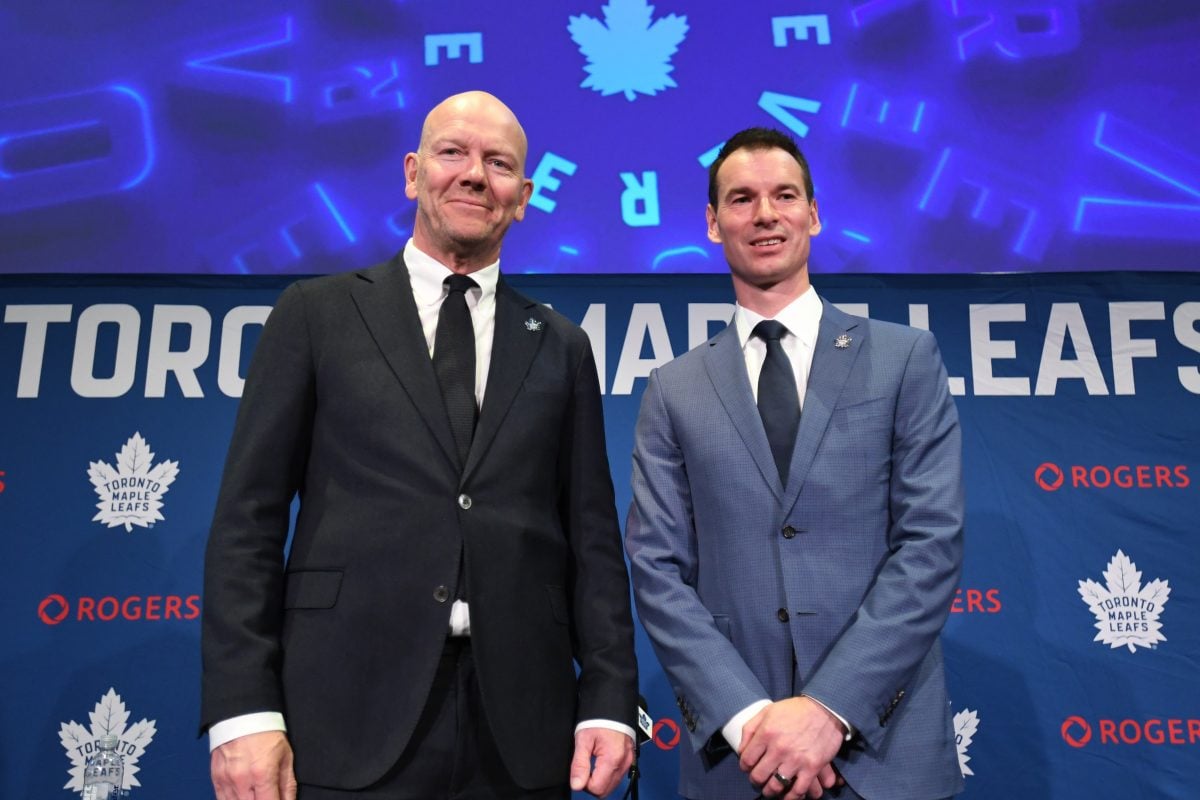
The number that really jumps out is more than 30 departures. That included assistant GMs, members of the analytics department, the medical staff, media relations and people who had been with the organization for years. This wasn’t simply a matter of changing a few names on an organizational chart. Chayka says the goal was to modernize processes and create more alignment, with the changes intended to set the organization up for the next 10 years.
And maybe the most interesting piece is the attempt to connect everything. Freddie Hamilton was brought in as chief of staff to help ensure player development, research and development, analytics, coaching, and the minor-league operation aren’t all working independently. Chayka used the Los Angeles Dodgers as an example of the kind of connected organization he has in mind. The idea is that information should travel through the organization and make everybody smarter. [from “Inside the Maple Leafs’ strategy during a franchise-altering offseason,” The Athletic, by Jonas Siegel and Chris Johnston, Sept. 14, 2026].
That makes this summer about considerably more than trying to fix what went wrong last season. Chayka has changed the roster, but he also seems to be trying to change the machine that builds and develops it. Whether it works is another question. But this is clearly intended to be a long-term project, not simply a one-year cleanup job.
Everything Still Starts With Auston Matthews
For all the organizational upheaval, however, one enormous piece of continuity remains: Auston Matthews is still here. That may be the most important fact of the entire summer. Matthews had just watched the team collapse into one of the worst seasons in franchise history, and he was coming off a difficult year personally. His knee injury added another layer to an already uncomfortable situation. When asked about his future in the spring, he couldn’t predict what would happen.
Then Chayka arrived. One of the first things the new GM did was connect with Matthews about something much more important than contracts or line combinations: how to win and what mattered to him. Chayka wanted to know what mattered to Matthews, what mattered to the group, and how they could collectively get things right.
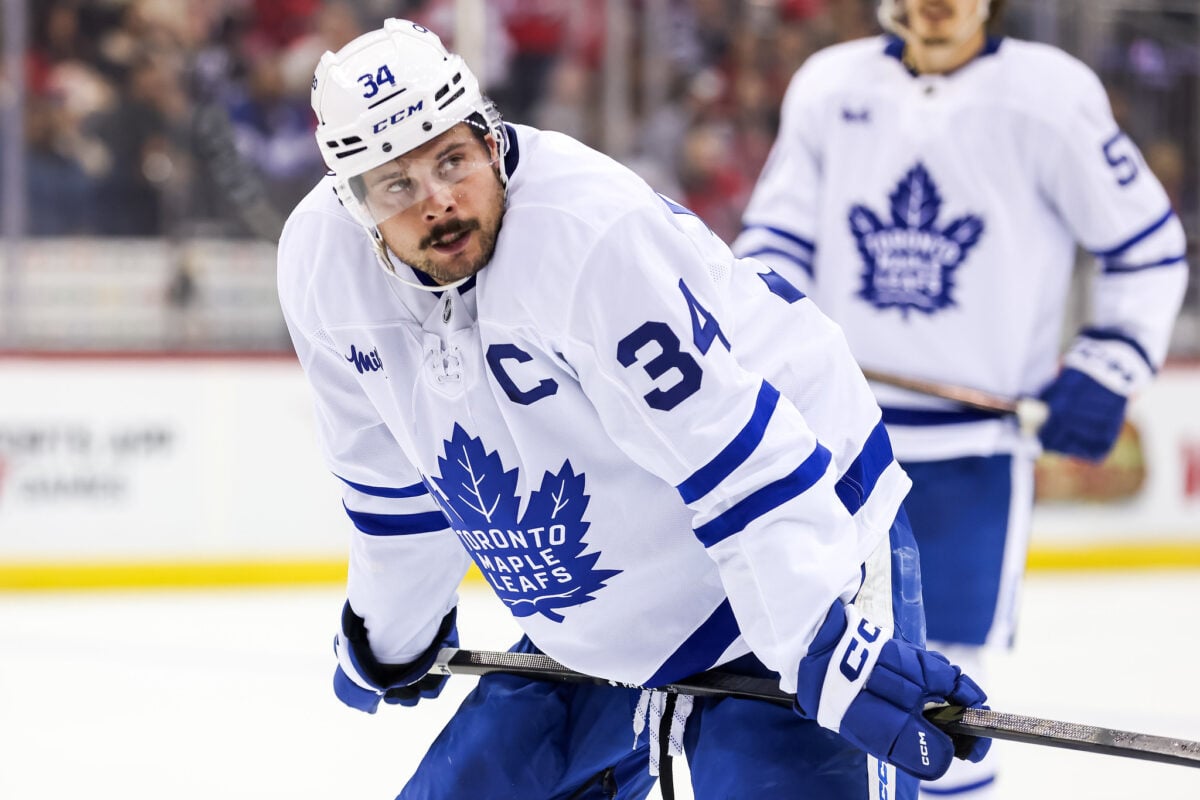
That conversation matters because Matthews isn’t just another player on this roster. He’s the centre of the whole thing. He still has two years left on his contract, but the 2028 free-agency possibility hangs over every major decision the organization makes. Chayka knows that. So does Matthews.
And perhaps that’s why the summer has been so aggressive. The message to Matthews hasn’t been, “Trust us; we’ll figure this out.” The message has been more like, “Here’s what we’re going to do about it.”
That includes surrounding him with players who can handle the hard parts of playoff hockey, adding a goalie Chayka believes he would want in net in a Game 7, fixing what the organization considered a glaring hole on defence and bringing in a potentially generational young talent in McKenna. The hope, Chayka said, is that clearer roles will let Matthews, Nylander, and Tavares focus on what they do best.
What’s Next for the Maple Leafs?
It would be easy to look at this summer and simply say the Maple Leafs changed their roster. That doesn’t really capture what happened. Chayka and Sundin changed the roster, the front office, the scouting structure, analytics, player development and performance. They are trying to create an organization where all those pieces actually work together. That’s a pretty ambitious project for a team that just finished 28th.
But Matthews sits right in the middle of all that change. The Maple Leafs aren’t rebuilding around him in the traditional sense. They’re trying to build an organization that can finally give their best player the kind of team he’s been waiting for.
The next question is the obvious one: Will all this change actually translate into winning? Training camp starts Wednesday. That’s when the talking stops, and the new experiment begins.
Free Newsletter
Get Toronto Maple Leafs coverage delivered to your inbox
In-depth analysis, breaking news, and insider takes - free.
Subscribe Free →