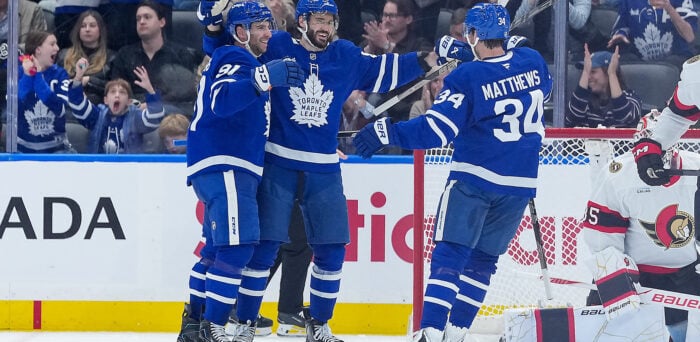
Sometimes the most interesting thing about an NHL game isn’t who scores the goals. It’s what happens when a team gets into trouble and how it responds. Last night, the Toronto Maple Leafs lost a game 3-2 in overtime. They had a 2-1 lead when Gavin McKenna put the puck on Darren Raddysh‘s stick. Raddysh then slapped a bomb past Arturs Silovs, the Pittsburgh Penguins goalie.
Then, after getting the primary assist on the go-ahead goal, McKenna got one shift after that and none in overtime.
I’ve been watching the Maple Leafs lately, and one thing seems so curious to me. The Maple Leafs general manager, John Chayka, took huge risks in building this team during the offseason. Yet he hired a coach who doesn’t dare put one of his most gifted playmakers on the ice in three-on-three, overtime hockey.
Time after time, the Maple Leafs try to go into a shell and protect a lead rather than build on it. Once they get ahead, they stop playing to win and start playing not to lose. That’s a pretty dangerous habit for a team trying to find its way.
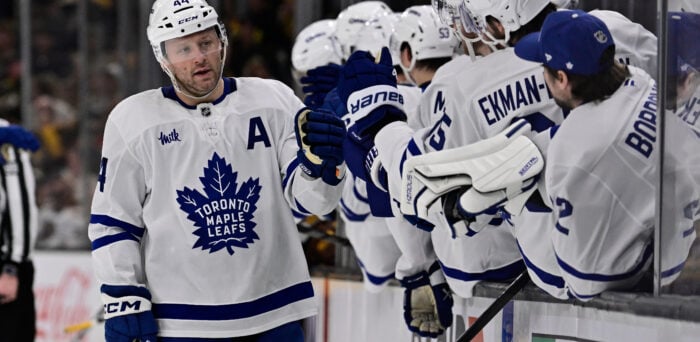
Meanwhile, Sergei Bobrovsky finally showed up with a strong game to remind Maple Leafs fans he can still stop pucks. His performance was encouraging, but his reaction afterward told us even more. He hates to lose. I hope the Maple Leafs coaching staff puts two and two together.
The Maple Leafs Keep Playing Not to Lose, and It’s Costing Them
There’s something so frustrating about watching a team build a lead and then seem to decide its job is finished. That’s been a recurring problem with Toronto. Instead of continuing to attack and putting pressure on the opposition, the Maple Leafs retreat into a defensive shell. They give up the ice, start blocking shots and hope they can hang on. Sometimes they do. Last night, as we saw, they gave away points they should have held on to.
I get that coaches don’t want their players taking unnecessary chances late in a game. But there’s a difference between being responsible defensively and being so worried about making a mistake that you stop doing what made you successful. When you back off, you invite the other team to come at you. Eventually, the pressure builds, and one bounce off a player in front of the net or one mistake can undo everything. In today’s NHL, you can’t spend the final minutes of a game simply trying to survive.

What makes this more frustrating is the way Jim Hiller seems reluctant to use some of the offensive talent available to him. Gavin McKenna has been the best example all season. In some ways, I get it during the last few minutes of five-on-five hockey. McKenna can make mistakes, as his plus/minus shows.
But in overtime? Here’s a young player with exceptional hands, vision and the ability to see opportunities that other players might miss. Yet when the game goes into overtime, he never gets a chance to make a difference. That’s especially puzzling.
There’s more open ice, fewer players and more room for creativity. That’s precisely the kind of situation where McKenna could help. I’m not suggesting he should be out there for every important shift, but surely you want players who can create something rather than simply protect what you have. Toronto needs to remember that playing to win and playing not to lose aren’t the same thing.
Sergei Bobrovsky Shows There’s Still Plenty of Fight Left in Him
Something about Sergei Bobrovsky’s performance was encouraging. It was his best outing of the season by far, and he gave Toronto the kind of goaltending it has been waiting for. He made important saves, kept his team in the game and reminded everyone that the ability that made him one of the NHL’s best goalies hasn’t simply disappeared. One good performance doesn’t fix everything, but it gives a team something to build on.
What caught my attention, though, was Bobrovsky’s reaction afterward. There was a sense of frustration and disappointment that seemed to go beyond the result. We’ve seen him look almost resigned after difficult outings this season. This time, he looked like a competitor who was genuinely angry that his best effort hadn’t produced the result he wanted. I liked seeing that. A veteran goalie knows when he’s given his team a chance, and he also knows when he hasn’t done enough.
That kind of self-expectation is part of what makes the best players successful.

Bobrovsky has been through enough in his career to know that one difficult stretch doesn’t define him. He’s won Stanley Cups, collected major awards and played some of his best hockey when the pressure was greatest. Perhaps this performance can become a turning point. His new team needs him to believe he can still be that goalie, and he needs a little help from the players in front of him. Sometimes confidence comes back one game at a time. This looked like a useful start.
What’s Next for the Maple Leafs?
I see a bit of a contrast here. Toronto seems to be coaching with an eye toward avoiding mistakes, while Bobrovsky’s reaction reminded me that competing means wanting more. Hockey is an emotional game, and sometimes a little anger is healthy. Players who hate losing often find ways to turn things around.
For the Maple Leafs, I’d like to see a little more daring. Take chances and trust the players who can make something happen. For Bobrovsky, I hope this performance becomes the beginning of a better stretch. Neither situation is settled, but both offer something worth watching.
If there’s one thing I’ve learned from following this game for as long as I have, it’s that sometimes the difference between a team that gets somewhere and one that stays stuck is simply the willingness to do something a little differently.
Free Newsletter
Get Toronto Maple Leafs coverage delivered to your inbox
In-depth analysis, breaking news, and insider takes - free.
Subscribe Free →