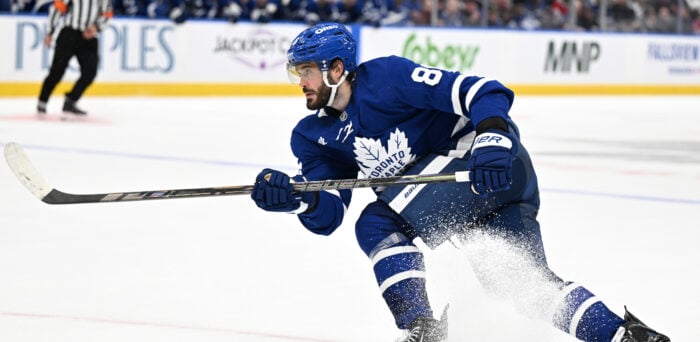
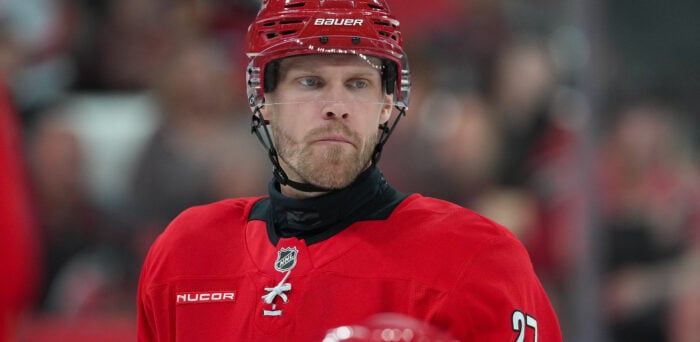
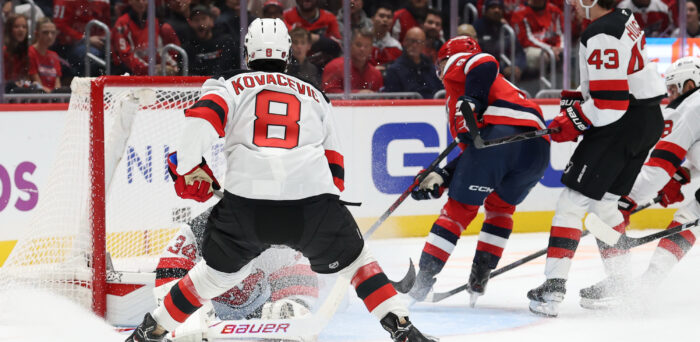
The Toronto Maple Leafs are six games into the season, sitting at 3-2-1, and I think we’re still trying to figure out exactly what this team is. There’s an interesting little reminder here, too. The Maple Leafs had the same record after six games last season, and we all know how that story ended. I’m not suggesting this team is headed down the same road, but it does remind us how little we can learn from the standings in October.
This is a different group, with more speed, more offensive options, and plenty of new faces who need time to figure each other out. There are reasons to be encouraged, particularly up front, but there are also some concerns about how Toronto moves the puck out of its own zone. Six games aren’t enough to draw firm conclusions, but they’re enough to identify a couple of things worth watching.
Maple Leafs’ Forward Depth Is Better, but the Lines Need Work
One encouraging development has been the new top line of Kirill Marchenko, Auston Matthews, and Jack Roslovic. The underlying numbers suggest this group has controlled play, generated chances, and spent plenty of time in the offensive zone. They’ve controlled roughly 62 percent of the shot attempts and 72 percent of expected goals in their minutes together. The goals haven’t quite followed, but I’m not particularly worried about that yet. When a line is creating that much, you’d expect the finishing to come around.
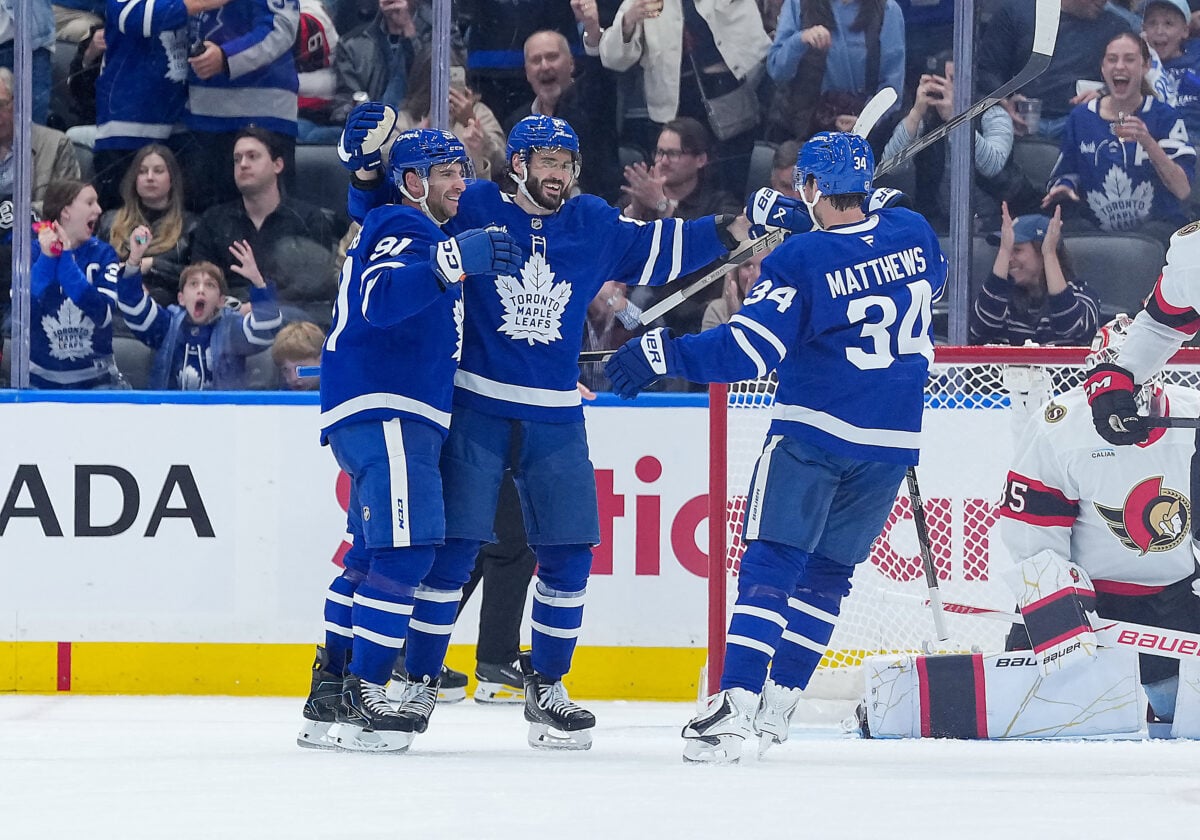
The other positive has been pairing Easton Cowan with veterans Nick Paul and Colton Sissons. There’s something to be said for putting a young, talented puck carrier between two responsible players who understand their jobs. That line has worked well, even against tougher opposition, and it’s given Matthews room to focus on his offensive game. The problem is finding a dependable second line to complete the attack. The talent is there, and Gavin McKenna appears to be getting more comfortable with every game. If the coaching staff can find the right combinations, Toronto could have three lines that make life difficult for opponents. That’s a pretty good place to start.
Maple Leafs’ Breakout Problems Are Becoming Hard to Ignore
The defence was always going to be a work in progress, and Chris Tanev’s injury certainly doesn’t make the job any easier. Toronto has already experimented with different pairings, trying to balance Morgan Rielly’s offensive instincts with the need for dependable defensive play. Oliver Ekman-Larsson and Troy Stecher have done a reasonable job in their minutes, but the bigger question is whether this group has enough quality and depth to handle a full season. The Maple Leafs arguably needed another top-four defenceman even before Tanev went down.

But I think the bigger issue is how Toronto gets the puck out of its own zone. Against the Vegas Golden Knights and Colorado Avalanche, the Maple Leafs struggled badly in the second period. Too often, the defencemen resorted to rimming the puck around the boards, only for the forwards to collect it without a clear idea of what to do next. The long change makes second periods difficult enough. When a team can’t break out cleanly, it spends too much time defending and eventually gets worn down.
Some of this is about personnel, but some of it is about structure and communication. The Maple Leafs can’t rely on individual skill from players like William Nylander, Marchenko, Cowan, and McKenna to carry the puck through the neutral zone every night. They need a more reliable plan. That’s something Jim Hiller and his staff have to address.
What’s Next for the Maple Leafs?
I’d like to see Toronto spend the next stretch of games working toward two things: finding a dependable three-line attack and establishing a more coordinated breakout. The forwards have the talent to create offence, and the early numbers suggest the Matthews line is doing plenty of the right things. Finding the right second-line combination could make a real difference. On defence, though, the coaching staff may need to simplify things while Tanev is unavailable and consider whether outside help will eventually be necessary.
The good news is that this team has been competitive in its games, the special teams have generally been effective, and there’s plenty of hockey left to play. We don’t need to panic over a 3-2-1 start, just as we shouldn’t assume everything is fine because the record looks respectable. This is a new group learning how to play together.
If the Maple Leafs can clean up their breakouts and get the lines working together, I think there’s good reason to believe this season could become a lot of fun. The next few weeks should tell us a little more about what we’re dealing with.
Free Newsletter
Get Toronto Maple Leafs coverage delivered to your inbox
In-depth analysis, breaking news, and insider takes - free.
Subscribe Free →