- Why Secondary Scoring Is Ottawa’s Biggest Need
- Cap Flexibility Gives Ottawa Options
- Mock Trade #1: Senators Add Speed and Energy with Kiefer Sherwood
- Mock Trade #2: A Bold Swing for Brayden Schenn
- Mock Trade #3: Blake Coleman Brings Playoff DNA
- Senators Buyers, Not All-In — Yet
- Senators Need Balance
The Ottawa Senators find themselves at a familiar crossroads ahead of the NHL trade deadline. Sitting just a few points outside a playoff spot, the Senators are close enough to justify adding help, yet flawed enough to know exactly where upgrades are needed. According to Dave Pagnotta, the message from Ottawa’s front office is clear: adding secondary scoring up front is the priority.
Pagnotta, speaking on NHL Now (NHL First Shift), explained that general manager Steve Staios has been surveying the market for months, checking in on a few offensive options that could slide into the Senators’ middle six. With cap space available and the team still firmly in the race, Ottawa appears ready to pounce if the right opportunity presents itself.
Why Secondary Scoring Is Ottawa’s Biggest Need
Ottawa’s offensive structure has leaned heavily on its core stars. Brady Tkachuk remains the emotional engine of the lineup, while Tim Stützle drives much of the playmaking. However, beyond that top unit, production has been inconsistent, placing additional pressure on the first line to carry the load night after night.
Related: Senators Surge, but Staios Hunts for Reinforcements
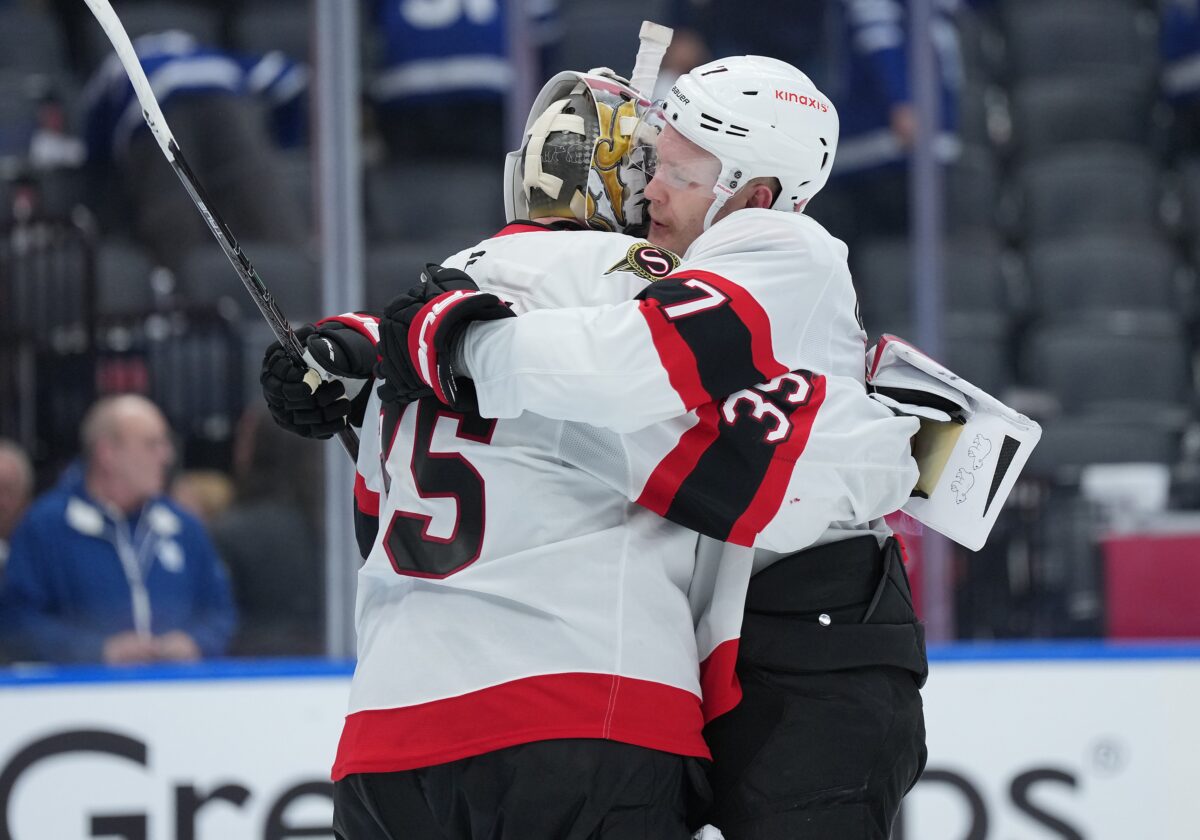
Pagnotta noted that Ottawa understands this imbalance. While goaltending and defence have been scrutinized at times, the Senators’ internal belief is that adding another legitimate scoring threat — particularly someone capable of playing second-line minutes — could materially change their playoff outlook.
The front office also recognizes that goaltender Linus Ullmark is not a short-term rental solution. Ullmark is under contract beyond this season, so Ottawa feels more comfortable investing assets to help the forward group now rather than waiting for the offseason.
Cap Flexibility Gives Ottawa Options
One of the biggest advantages Ottawa holds is financial flexibility. The Senators have roughly $3.7 million in cap space, a number that will continue to accrue as the season progresses. That gives Staios the ability to explore both rental options and players with term, without being boxed into a single type of deal.
Importantly, Ottawa is not limiting itself to expiring contracts. While rentals remain on the table, the Senators are open to acquiring players who can help now and remain part of the solution moving forward. That mindset explains why names like Kiefer Sherwood, Brayden Schenn, and Blake Coleman have surfaced in trade conversations.
Mock Trade #1: Senators Add Speed and Energy with Kiefer Sherwood
Senators acquire:
Kiefer Sherwood
Canucks acquire:
2026 third-round pick
Ridly Greig
Kiefer Sherwood of the Vancouver Canucks is a strong middle-six choice because he’s fast, good at forechecking, and can score better than people think. The Senators sometimes have trouble maintaining pressure outside their top line, so Sherwood’s energy would be a bonus.
In return, the Canucks would be getting a young forward in Ridly Greig that they can control for the future, and a mid-draft pick.
Ottawa’s getting a player who can fit in on the second or third line, kill penalties, and help with scoring, and he won’t disrupt the team’s budget. This kind of move makes sense because the Senators want more scoring but don’t want to spend too much or commit to long contracts.
Mock Trade #2: A Bold Swing for Brayden Schenn
Senators acquire:
Brayden Schenn (50% salary retained)
St. Louis Blues acquire:
2027 first-round pick (Top 10 protected)
Tyler Boucher
2026 fourth-round pick
If the Senators want a proven solution, the St. Louis Blues’ Brayden Schenn checks nearly every box. A veteran leader with playoff experience, he can play center or wing, contribute on the power play, and bring a physical edge that complements Tkachuk perfectly.
The Blues have been open to listening to offers for Schenn, particularly if they decide to lean further into a retool. Retaining salary makes the cap math work for Ottawa while maximizing the Blues’ return. This deal would signal that the Senators believe their window is opening. Schenn would instantly stabilize the second line and reduce the burden on the team’s younger forwards to produce in high-leverage situations.
Mock Trade #3: Blake Coleman Brings Playoff DNA
Senators acquire:
Blake Coleman
Calgary Flames acquire:
2026 second-round pick
Logan Hensler
Calgary Flames’ Blake Coleman is the definition of a “playoff” forward. He brings relentless forechecking, defensive responsibility, and timely scoring — attributes the Senators have been missing deeper in their lineup. While not a flashy name, Coleman’s impact often shows up in momentum swings and matchup advantages.
The Flames, operating as a seller (for now), would gain a young defenceman with upside in Logan Hensler and an additional high pick. Ottawa adds a player who can potentially play in the top four, contribute on special teams, and raise the competitive floor of the roster. For a team still learning how to win meaningful games late in the season, Coleman’s experience could prove invaluable.
Senators Buyers, Not All-In — Yet
The Senators are looking to score more, but they aren’t going to make a desperate trade just because the deadline is coming. Pagnotta said that Staios is doing his research, checking out who’s selling and thinking about how any new players would fit into the team’s future.
Ottawa’s close to a playoff spot, so they’re still thinking about buying, but they won’t mess up their future by making bad deals. They want to improve their chances without ruining everything they’ve built.
Senators Need Balance
The Senators know exactly what they need: more offence from their middle six. With cap space available, multiple trade targets identified, and a playoff berth still within reach, Staios has positioned himself to act when the right deal becomes available.
Whether it’s a depth scorer like Sherwood, a proven leader like Schenn, or a playoff-tested grinder like Coleman, Ottawa’s next move could define not just this season, but how quickly this core takes the next step. Here’s where they break it down — the Senators don’t need a blockbuster. They need balance.

Free Newsletter
Get Ottawa Senators coverage delivered to your inbox
In-depth analysis, breaking news, and insider takes - free.
Subscribe Free →